Webinar: The Biggest Release Sales Comp Has Ever Seen. Come See For Yourself (Wednesday, October 7)
Register
- Commission management software automates the end-to-end monthly cycle — from CRM data ingestion and calculation logic through rep statements, dispute resolution, and payroll export — replacing the fragile spreadsheet workflows that break down at scale.
- The best platforms provide deal-level traceability, so every rep can see exactly how each closed deal contributes to their payout, reducing disputes and building trust across Sales, Finance, and Operations.
- Qobra leads the category for mid-market and enterprise teams with native automation of the full commission cycle, real-time dashboards, and ratings of 4.8/5 on G2 and 4.9/5 on Capterra — trusted by JCDecaux, ElevenLabs, AstraZeneca, SAP, and GoCardless.
- Your evaluation should prioritize five capabilities: data connector depth, plan-builder flexibility, real-time rep visibility, audit-ready reporting, and payroll integration speed.
If you are running the monthly commission process in spreadsheets — pulling CRM exports, applying tiered rate logic in nested formulas, copy-pasting results into rep statements, and fielding Slack messages from reps who think their numbers are wrong — you already know the process does not scale.
Commission management software exists to solve that exact problem. It connects directly to your CRM and ERP, applies your compensation plans automatically, generates transparent statements for every rep, and exports clean payroll files — all with an audit trail that Finance can trust.
But the market has expanded fast. Dozens of vendors now claim to "automate commissions," and the differences between them are not always obvious from a landing page. This guide evaluates the 10 best commission management software platforms in 2026, scored against the criteria that matter most to the Operations, Finance, and Sales teams who actually run the monthly commission cycle.
Whether you are replacing spreadsheets for the first time or migrating from a legacy tool, this article gives you a structured framework to evaluate, compare, and shortlist.
What Is Commission Management Software?
Commission management software is a category of tools that automate the calculation, tracking, reporting, and payment of variable compensation — primarily sales commissions, but often extending to bonuses, SPIFs, and other incentive structures.
At its core, the software replaces manual spreadsheet workflows with a system that:
- Ingests deal and attainment data from CRMs (Salesforce, HubSpot), ERPs, billing systems, or flat files
- Applies compensation plan logic — quota attainment tiers, accelerators, decelerators, splits, overrides, and caps — automatically
- Generates rep-facing statements that show each deal, the applicable rate, and the resulting commission amount
- Provides audit trails so Finance can verify every calculation back to its source data
- Exports payroll-ready files to accounting or HRIS systems
The category has matured significantly since 2023. Modern platforms now include real-time dashboards, plan modeling and simulation, ASC 606 compliance reporting, and workflow-based dispute resolution — features that were once reserved for enterprise-only solutions.
Who Uses Commission Management Software?
Three teams typically share ownership:
The strongest tools serve all three audiences from a single platform — which is exactly the approach Qobra was built around.
The Monthly Commission Process (Where Teams Break Down)
Before evaluating tools, it helps to understand the monthly commission cycle — because this is where most teams encounter pain. The process typically follows five stages:
Stage 1: Data Ingestion
Operations pulls closed-won deals, bookings, or revenue data from the CRM and maps it to commission-eligible transactions. Common failure points include duplicate records, missing fields, and mid-month CRM changes that invalidate earlier snapshots.
Stage 2: Calculation
The compensation plan logic is applied. This includes quota attainment calculations, tiered rate lookups, accelerators and decelerators, multi-party splits, and manager overrides. In spreadsheets, this is where nested IF statements become unmanageable — and where errors compound silently.
Stage 3: Rep Statements
Each rep receives a statement showing their attainment, eligible deals, commission amounts, and any adjustments. Without a dedicated tool, Operations often spends days building and distributing these manually.
Stage 4: Dispute Handling
Reps review their statements and flag discrepancies — a missing deal, a wrong close date, or a disputed split. In spreadsheet-driven processes, disputes are tracked in email threads or Slack messages, creating bottlenecks and audit gaps.
Stage 5: Payroll Export
Once disputes are resolved and Finance signs off, the final commission file is exported to payroll or the HRIS. The export must reconcile with accruals, account for clawbacks, and arrive on time to meet payroll deadlines.
The tools in this guide are evaluated against their ability to automate, accelerate, and audit each of these five stages.
How We Evaluated the 10 Best Commission Management Platforms
Every platform in this list was assessed across six dimensions, weighted toward the capabilities that matter most during the monthly commission run:
Platforms were also evaluated on ease of implementation, vendor support quality, and third-party review scores from G2, Capterra, and TrustRadius.
The 10 Best Commission Management Software Platforms in 2026
1. Qobra — Best for Automating the Full Monthly Commission Cycle

What it is: Qobra is a commission management platform built to serve Operations, Finance, and Sales from a single tool. It automates the entire monthly cycle — from data ingestion through calculation, rep statements, dispute handling, and payroll export — with deal-level traceability at every step.
Why it stands out: Where most platforms focus on one or two stages of the commission process, Qobra was designed to own the full cycle. Operations teams can build and modify compensation plans using a no-code plan builder that supports tiered rates, accelerators, multi-party splits, overrides, and custom logic — without relying on the vendor's professional services team for every change.
For Sales teams, Qobra provides real-time commission dashboards that show reps exactly what they will earn when they close a deal. Email notifications keep reps informed about deal-level impacts, which reduces the volume of disputes and builds trust in the process. Finance teams get visibility into commissions at the team level, individual level, and down to specific commission amounts — accessible at any time, not just at month-end.
Key capabilities:
- Native CRM integrations with Salesforce, HubSpot, and other data sources, plus flexible API connectors
- No-code plan builder supporting complex compensation logic without vendor dependency
- Deal-level traceability so every commission amount can be traced back to its source deal
- Real-time rep dashboards with proactive email notifications on deal impacts
- Structured dispute resolution with full audit trail
- Payroll-ready exports and finance-grade reporting
- ASC 606 compliance support for commission accounting
Ratings: G2: 4.8/5 | Capterra: 4.9/5
Trusted by: JCDecaux, ElevenLabs, AstraZeneca, SAP, GoCardless, DataSnipper, Factorial, Go1, Quantcast, Make
Best for: Mid-market and enterprise teams (50-5,000+ reps) that want a single commission tool trusted by Operations, Finance, and Sales — with real-time access and proactive updates that make confidence in the process the default.
AI-Powered Agents — A Unique Differentiator
Qobra includes three purpose-built AI agents that handle real work — not just analytics overlays. The Architect replaces hours of plan implementation with minutes of conversation, building or editing compensation plans autonomously on the platform. The Sales Coach answers rep questions about their commissions instantly, reducing admin ticket volume and building trust between sales teams and operations. The Analyst creates reports and dashboards from plain-language requests and surfaces proactive business intelligence — flagging anomalies, identifying trends, and delivering insights that would take hours of manual analysis.
2. CaptivateIQ — Best for Highly Customizable Plan Logic
What it is: CaptivateIQ is an incentive compensation management platform that emphasizes flexibility in plan design through a spreadsheet-like interface combined with automated workflows.
Key strengths: The platform's SmartGrid interface allows Operations teams to build compensation plans using familiar spreadsheet logic while benefiting from automation, versioning, and audit trails. It supports complex plan structures and offers strong data integration capabilities.
Considerations: The flexibility of the SmartGrid can create a steeper learning curve for new admins. Organizations with straightforward plans may find simpler tools more efficient.
Best for: Teams with highly complex or frequently changing compensation plans that need granular control over calculation logic.
3. Spiff by Salesforce — Best for Salesforce-Native Workflows
What it is: Spiff, now part of Salesforce, is a commission management platform that integrates deeply with Salesforce and emphasizes real-time visibility for reps directly within their CRM workflow.
Key strengths: The Salesforce-native experience means reps can view commission estimates without leaving the CRM. The platform also offers a visual plan designer and strong automation for mid-market teams.
Considerations: The Salesforce acquisition has shifted Spiff's roadmap toward enterprise use cases. Teams outside the Salesforce ecosystem may find integration options more limited.
Best for: Salesforce-centric organizations that want commission visibility embedded in the CRM experience.
4. Performio — Best for Enterprise Finance Teams
What it is: Performio is an incentive compensation management platform built with a strong emphasis on finance-grade reporting, ASC 606 compliance, and complex enterprise plan structures.
Key strengths: Performio excels at handling large-scale enterprise compensation programs with multiple plan types, geographies, and business units. Its reporting and compliance features are designed for finance teams that need audit-ready outputs.
Considerations: Implementation timelines tend to be longer than lighter-weight alternatives, and the platform may be more than what smaller teams need.
Best for: Large enterprises with complex, multi-geography compensation programs that require robust compliance and financial reporting.
5. Xactly Incent — Best for Large-Scale Enterprise Deployments
What it is: Xactly Incent is one of the longest-standing enterprise incentive compensation platforms, offering plan management, analytics, and benchmarking data from over 19 years of pay and performance data.
Key strengths: Xactly's benchmarking data and AI-driven analytics give enterprise teams insights into compensation effectiveness that newer platforms cannot match. The platform supports very large and complex plan structures.
Considerations: The platform's enterprise positioning means longer implementation cycles, higher costs, and a user interface that some teams find less intuitive than newer entrants.
Best for: Large enterprises (1,000+ reps) that need benchmarking data and advanced analytics alongside core commission management.
6. Varicent — Best for Integrated Sales Performance Management
What it is: Varicent is a sales performance management platform that includes incentive compensation alongside territory planning, quota setting, and revenue intelligence capabilities.
Key strengths: Varicent's breadth makes it appealing for organizations that want commission management integrated with broader SPM processes — territory design, quota allocation, and performance analytics — in a single platform.
Considerations: The broader platform scope means commission-specific features may not be as deep as purpose-built commission tools. Pricing and complexity reflect the wider feature set.
Best for: Organizations that want commission management as part of a broader sales performance management suite.
7. Commissionly — Best for Small Teams on a Budget
What it is: Commissionly is a lightweight commission tracking tool designed for small sales teams that need basic automation without enterprise complexity or pricing.
Key strengths: Quick setup, straightforward pricing, and enough automation to replace spreadsheets for teams with simple plan structures. The platform covers core calculation, rep statements, and basic reporting.
Considerations: Limited support for complex plan logic (multi-tier accelerators, cross-team splits, custom rules), fewer native integrations, and minimal compliance or audit features compared to mid-market and enterprise tools.
Best for: Small teams (under 30 reps) with straightforward commission structures that need an affordable step up from spreadsheets.
8. QuotaPath — Best for Revenue Operations Alignment
What it is: QuotaPath is a commission tracking and compensation planning platform that positions itself at the intersection of RevOps and Finance, with a focus on plan modeling and attainment forecasting.
Key strengths: Strong plan-modeling capabilities let RevOps teams simulate the impact of plan changes before committing. The platform also offers a clean rep-facing experience and solid HubSpot integration.
Considerations: Calculation engine flexibility is more limited than platforms like CaptivateIQ or Qobra for highly complex plan structures. Enterprise reporting and compliance features are still maturing.
Best for: RevOps-driven teams that want commission management paired with plan modeling and forecasting.
9. Visdum — Best for SaaS-Specific Compensation Models
What it is: Visdum is a commission management platform purpose-built for SaaS businesses, with native support for recurring revenue metrics like ARR, MRR, expansion, and churn-based compensation.
Key strengths: SaaS-native data models mean less custom configuration for companies that pay commissions on subscription metrics. The platform integrates with common SaaS billing tools and CRMs.
Considerations: The SaaS focus means non-SaaS businesses (manufacturing, services, retail) may find the platform less relevant. The vendor is newer and smaller than established players.
Best for: SaaS companies that need commission logic built around recurring revenue metrics out of the box.
10. Everstage — Best for Revenue Team Engagement
What it is: Everstage is a sales commission platform that focuses on gamification and rep engagement alongside core calculation and reporting capabilities.
Key strengths: Everstage combines commission automation with engagement features like leaderboards, earnings estimators, and coaching insights. The platform offers a clean rep-facing experience and strong customer support.
Considerations: The gamification focus may be less relevant for organizations primarily seeking back-office automation for Finance and Operations workflows.
Best for: Sales-led organizations that want to use commission visibility as a motivational and coaching tool.
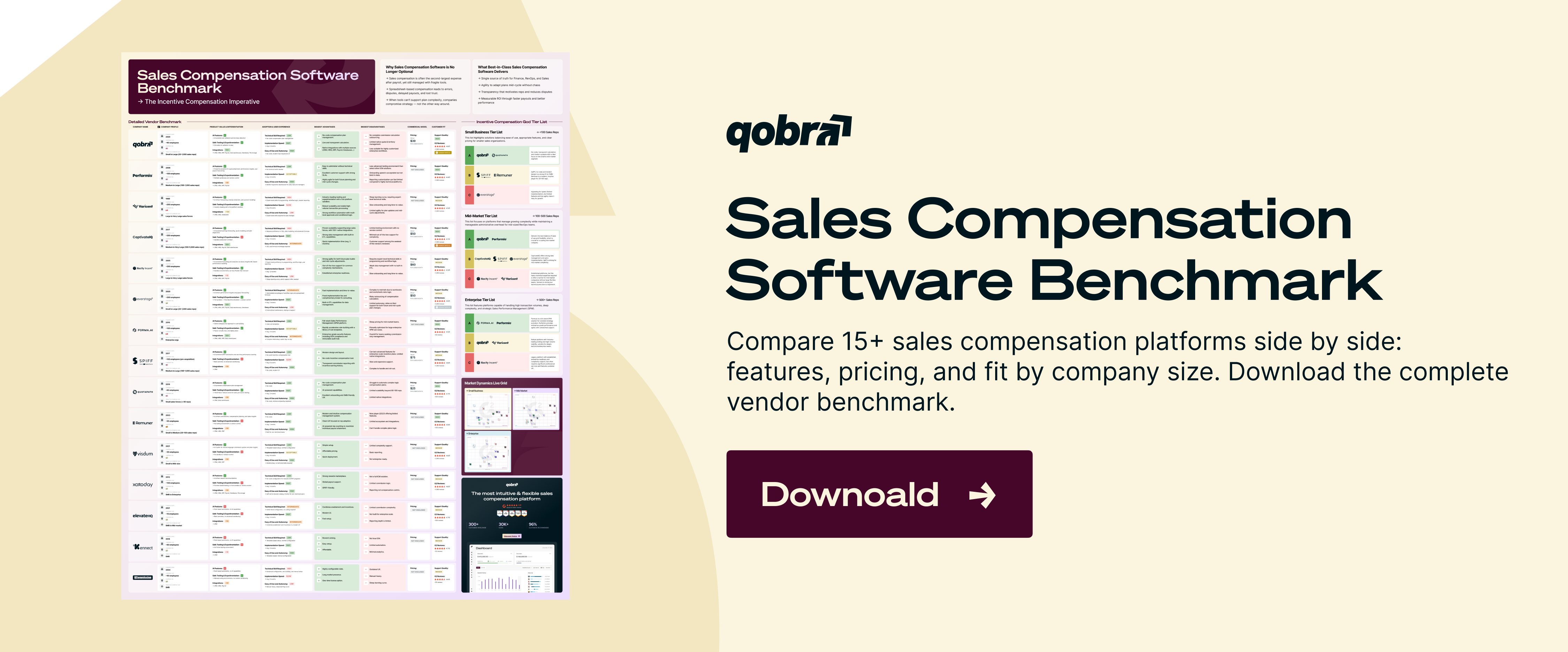
Feature Comparison Table
What to Test in Your Evaluation
Vendor demos show ideal scenarios. Your evaluation should stress-test the five stages of the monthly cycle with your own data and plans. Here is a structured testing framework:
1. Data Ingestion Test
- Import your actual CRM data (not sample data) and verify that deal records, amounts, close dates, and owner fields map correctly.
- Simulate a mid-month CRM change (e.g., a deal close date moves forward) and confirm the platform handles the update without manual intervention.
- Check for duplicate handling — what happens when the same deal appears twice in an import?
2. Plan Builder Test
- Recreate your most complex compensation plan in the platform's plan builder. If you cannot do this without vendor professional services, factor that dependency into your evaluation.
- Test edge cases: a rep who hits exactly 100% of quota, a deal split three ways, a clawback triggered by a churned deal.
- Modify a live plan mid-quarter and confirm the platform recalculates correctly without corrupting historical data.
3. Rep Experience Test
- Have 2-3 actual reps log in and review their statements. Can they understand, without explanation, how their commission was calculated?
- Ask a rep to submit a dispute and track how Operations receives, reviews, and resolves it.
- Check mobile access — can reps review their commissions from a phone?
4. Finance Workflow Test
- Generate a payroll export and compare it against your manual calculation. Look for rounding differences, missing reps, and incorrect totals.
- Run an ASC 606 report (if applicable) and verify that the amortization schedules align with your accounting policies.
- Confirm the audit trail — can Finance trace any commission amount back to the source deal and the applicable plan rule?
5. Integration and Scalability Test
- Test the payroll export format against your actual HRIS or accounting system requirements.
- Measure calculation speed with your full rep population and plan complexity. A platform that takes hours to calculate for 500 reps is a problem.
- Verify API availability for custom integrations and data extraction.
Best Practices for Implementing Commission Management Software
Selecting the right platform is only half the challenge. These best practices help ensure a successful rollout:
- Start with your most painful plan, not your simplest. If the platform cannot handle your most complex compensation structure, you will end up maintaining a parallel spreadsheet — which defeats the purpose.
- Involve Finance from day one. Commission management is not just a Sales Ops tool. Finance needs to validate calculation logic, approve reporting formats, and confirm payroll integration before go-live.
- Run a parallel period. Calculate commissions in both the new platform and your existing process for at least one full cycle. Compare outputs deal-by-deal before cutting over.
- Invest in rep training, not just admin training. The platform's value depends on reps trusting it. If reps do not understand how to read their statements or submit disputes, they will continue messaging Operations directly.
- Document your plan logic in plain language before building it in the tool. Every stakeholder — Operations, Finance, Sales leadership — should be able to read and approve the plan logic document. Then translate it into the platform.
- Set up structured dispute workflows early. A clear dispute process with defined SLAs reduces friction and builds confidence. Do not let disputes live in Slack threads.
- Automate payroll export from the start. Manual export and reformatting is a common source of errors. Configure the payroll integration during implementation, not as a "phase 2" task.
Frequently Asked Questions
What Is the Difference Between Commission Management Software and ICM Software?
Commission management software and incentive compensation management (ICM) software are often used interchangeably. Technically, ICM is the broader category — it can include bonuses, SPIFs, MBOs, and non-sales incentives alongside commissions. Commission management software focuses specifically on sales commission calculation, tracking, and payment. In practice, most modern platforms in this guide handle both.
How Long Does It Take to Implement Commission Management Software?
Implementation timelines vary based on plan complexity, data source count, and team size. Lightweight tools like Commissionly or QuotaPath can be set up in days. Mid-market platforms like Qobra typically go live in 2-6 weeks, including plan configuration and data integration. Enterprise platforms like Xactly or Varicent may require 3-6 months for full deployment across large organizations.
Can Commission Management Software Handle Complex Plan Structures?
Yes — but the depth of support varies. The best platforms handle multi-tier accelerators, decelerators, caps, floors, multi-party splits, manager overrides, clawbacks, and custom rules without requiring engineering support. Test your most complex plan during evaluation to confirm.
Do I Still Need Spreadsheets After Implementing Commission Management Software?
The goal is to eliminate spreadsheets from the commission process entirely. However, some teams maintain a lightweight spreadsheet during the first 1-2 cycles for parallel validation. Once you confirm the platform calculates correctly, the spreadsheet should be retired. If you find yourself maintaining a permanent parallel spreadsheet, the platform is not meeting your needs.
How Does Commission Management Software Help With ASC 606 Compliance?
ASC 606 requires companies to capitalize and amortize commission costs over the period of benefit. Commission management software automates this by tracking each commission payment, associating it with the relevant contract, calculating the amortization schedule, and generating the journal entries Finance needs for accurate reporting.
What Should I Budget for Commission Management Software?
Pricing models vary: per-rep-per-month, flat platform fees, or tiered pricing based on features and scale. Expect to pay £15-£50 per rep per month for mid-market tools, with enterprise platforms running higher based on customization and support requirements. Always factor in implementation costs and the ongoing cost of plan changes that require vendor involvement.