Sales Compensation Software Benchmark | Compare 15+ Platforms (Features, Pricing, User Reviews, etc.)
Download
- A commission plan is the variable-pay framework that aligns sales behavior with company strategy by tying earnings to measurable outcomes (not just activity).
- Key components to define: base salary, commission rate, quota, accelerators/decelerators, caps, and clawbacks — each shapes incentives and risk allocation.
- Design steps: set clear business objectives, choose measurable KPIs, select the appropriate structure (straight, tiered, margin, recurring or hybrid), and derive rates from OTE (e.g., Target Variable / Annual Quota = base commission rate).
- Before launch, simulate the plan with historical data, document rules clearly, communicate to the team, and implement with commission automation connected to your CRM rather than spreadsheets.
- Common pitfalls: over-complexity, misaligned incentives, opaque calculations, and unrealistic quotas — review and iterate regularly to keep the plan fair, motivating, and profitable.
Is your sales compensation plan truly driving the right behaviors, or is it just rewarding activity? A well-crafted commission plan is one of the most powerful tools in a company's arsenal. It's more than a payment mechanism; it's a strategic lever that aligns your sales team's efforts with your most critical business objectives. When designed correctly, it motivates top performance, attracts elite talent, and fuels sustainable growth. But a poorly constructed plan can lead to misaligned priorities, demotivated teams, and even unethical behavior.
This guide provides a comprehensive framework for designing, implementing, and optimizing a commission plan that works. We'll explore the fundamental components, various structures, and the step-by-step process to build a system that is clear, fair, and effective.
What is a Sales Commission Plan?
A sales commission plan is a structured compensation framework that defines how salespeople are rewarded for their performance. It forms the variable component of their total earnings, paid in addition to a fixed base salary. At its core, the principle is simple: the more a salesperson sells or contributes to the company's revenue goals, the more they earn.
This system directly links an individual's financial rewards to the results they generate, making it a potent motivator. According to a Glassdoor study, sales professionals with variable incentives report a 44% average increase in performance.
A comprehensive plan is detailed in a formal document and typically includes several key components:
- Base Salary: The fixed, guaranteed portion of a salesperson's income.
- Commission Rate: The percentage or fixed amount earned on a sale. This can be based on revenue, gross margin, or other metrics.
- Quota: The minimum performance target a salesperson must achieve within a specific period (e.g., month or quarter) to earn their full target commission.
- Accelerators (Boosters): Increased commission rates that apply once a salesperson exceeds their quota. For example, the rate might jump from 5% to 8% for all revenue generated beyond 100% of the target.
- Decelerators: Reduced commission rates for performance below a certain threshold of the quota, designed to discourage underperformance.
- Cap (Ceiling): A predefined maximum limit on the total commissions an individual can earn in a period. This is often debated, as it can demotivate top performers.
- Clawback: A contractual clause that allows the company to reclaim previously paid commissions if a customer cancels their contract or fails to pay, protecting the company from paying out on "bad" deals.
The Core Objectives of a Commission Plan
A well-designed plan serves multiple strategic purposes that benefit both the sales team and the broader organization. The primary goals should always be clearly defined before you begin structuring the mechanics.
Motivate and Engage Sales Teams
The most fundamental objective is to incentivize performance. By directly tying earnings to results, you empower your sales team and give them a clear path to increasing their income through hard work and skill. This creates a high-performance culture where effort is tangibly rewarded.
“The growth of a company is 100% driven by sales, and the variable compensation plan determines their sales behavior, therefore their performance, and therefore the achievement of objectives.”
Align Sales Behavior with Company Strategy
A commission plan is a powerful tool for steering behavior. You can structure it to encourage specific actions that support your overarching business goals.
- Entering new markets? Offer a higher commission rate or a bonus for the first ten clients in a new region.
- Increasing profitability? Base commissions on gross margin instead of just revenue.
- Boosting customer retention? Include a recurring commission component for renewals in your SaaS business.
An effective plan ensures your sales team is not just selling, but selling the right products to the right customers.
Ensure Fairness, Transparency, and Retention
Clarity is crucial. A transparent plan that is easy to understand and perceived as fair builds trust and reduces disputes. When salespeople know exactly how their earnings are calculated, they feel more secure and motivated. This transparency is a key factor in attracting and retaining top sales talent, who are often drawn to companies with clear and lucrative compensation structures.
Drive Profitability and Control Costs
Variable compensation helps manage costs effectively. Since a significant portion of a salesperson's pay is tied to generated revenue, compensation expenses naturally scale with the company's performance. This pay-for-performance model ensures that you are rewarding tangible results, which helps maintain a healthy and sustainable cost of sales. A Deloitte report found that companies with optimized variable pay systems reduced their overall salary costs by 15%.
Common Types of Commission Plans
There is no one-size-fits-all solution for commission structures. The best model depends on your industry, sales cycle, company maturity, and strategic objectives. Here are some of the most common types:
| Plan Type | How it Works | Best For | Pros | Cons |
|---|---|---|---|---|
| Straight-Line Commission | A single commission rate is applied to all sales. (e.g., 5% of all revenue generated). | Simple sales cycles; roles focused purely on generating revenue. | Easy to understand and calculate. | Doesn't incentivize profitability or specific product sales. |
| Tiered Commission | The commission rate increases as the salesperson reaches higher levels of attainment. | Motivating overachievement; companies in high-growth mode. | Strongly incentivizes top performers. | Can be complex to model and communicate. |
| Gross Margin Commission | Commission is based on the profit from a sale, not the total revenue. | Businesses where discounting is common or product margins vary widely. | Encourages profitable deals and protects margins. | Requires reps to have visibility into deal profitability. |
| Territory Volume Commission | All sales reps in a specific territory or team pool their commissions, which are then distributed. | Collaborative sales environments; team-based sales goals. | Fosters teamwork and shared accountability. | Can lead to "free-rider" problems where some reps contribute less. |
| Recurring Commission (SaaS) | Reps earn a commission on the initial sale and often a smaller, recurring commission on renewals. | SaaS and other subscription-based businesses. | Promotes customer retention and long-term value. | Can become complex to track over multiple years. |
Example: Tiered Commission Structure
Let's imagine a salesperson with a quarterly quota of £150,000.
- Tier 1 (0-80% of quota): 4% commission rate
- Tier 2 (81-100% of quota): 6% commission rate
- Tier 3 (101%+ of quota): 9% commission rate (accelerator)
If the salesperson closes £180,000 in a quarter, their commission would be calculated as:
- First £120,000 (80%) at 4% = £4,800
- Next £30,000 (up to 100%) at 6% = £1,800
- Final £30,000 (above 100%) at 9% = £2,700
- Total Commission: £9,300

How to Design an Effective Commission Plan: A Step-by-Step Guide
Building a robust commission plan requires careful planning and a data-driven approach. Rushing the process or relying on overly simplistic templates can lead to unintended consequences. Follow these steps to create a plan that aligns with your goals.
Step 1: Define Your Business Objectives
Start with the "why." What is the primary goal you want your sales team to achieve this year? Is it aggressive new customer acquisition? Expanding into an enterprise segment? Increasing the average deal size? The objectives of your commission plan must be a direct reflection of the company's strategic priorities.
Step 2: Select Clear and Measurable KPIs
Once you know your objectives, choose the key performance indicators (KPIs) that you will use to measure success. These will form the basis of your commission calculations. Avoid vanity metrics and focus on what truly matters. Common KPIs include:
- Total Revenue Booked
- Annual Contract Value (ACV)
- Gross Margin per Sale
- Number of New Logos Acquired
- Customer Renewal Rate
- Product-Specific Revenue Targets
Step 3: Choose the Right Commission Structure
Based on your objectives and KPIs, select one of the commission models discussed earlier (or a hybrid). If your goal is market penetration, a simple straight-line plan might be effective. If you want to drive overperformance, a tiered structure with strong accelerators is a better choice.
Simulate Your Plan Before Launching
Before rolling out a new plan, stress-test it with historical data. Model how your top, average, and low performers would have been compensated under the new structure. This helps identify potential loopholes, ensures the plan is financially sound, and confirms that it rewards the right behaviors. This forecasting prevents costly surprises down the road.
Step 4: Calculate Fair and Motivating Commission Rates
Determining the right commission rates is a critical balancing act. The rates must be high enough to motivate your team but sustainable for the business. A common approach is to work backward from the On-Target Earnings (OTE), which is the total expected compensation (base salary + variable) for a salesperson who meets 100% of their quota.
Simple Formula:Target Variable Compensation / Annual Quota = Base Commission Rate
For example, if a rep's OTE is £120,000 (split 50/50 between base and variable) and their annual quota is £1,000,000:
- Target Variable: £60,000
- Base Rate: £60,000 / £1,000,000 = 6%
Step 5: Document and Communicate the Plan Clearly
A plan is only effective if it's understood. Document every detail in a formal commission plan document that is easy to read and accessible to all. Hold a kickoff meeting to present the new plan, explain the rationale behind it, and answer any questions. Clear communication is essential to ensure buy-in and avoid confusion.
Step 6: Implement and Track with the Right Tools
This is where many companies stumble. Managing commissions on spreadsheets is time-consuming, prone to errors, and lacks transparency. A single formula error can lead to thousands of dollars in miscalculations, causing distrust and disputes.
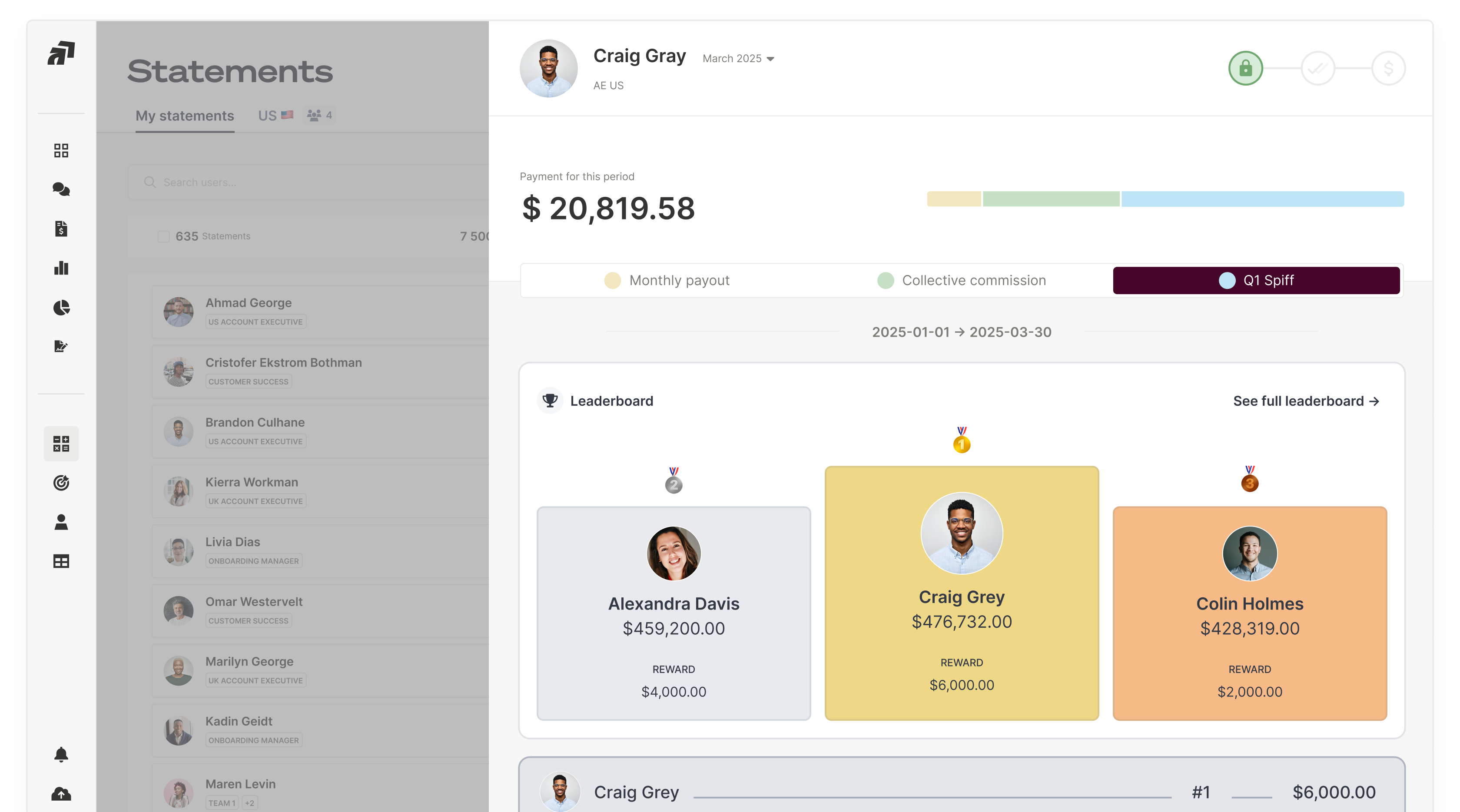
This is where dedicated commission automation software becomes invaluable. Platforms like Qobra are designed to handle this complexity effortlessly. By connecting directly to your CRM (like Salesforce or HubSpot), Qobra automates calculations in real-time. Sales reps get a live dashboard showing their performance and projected earnings, which eliminates surprises and keeps them motivated. For sales ops and finance teams, it reduces the time spent on calculations from days to minutes and provides a fully auditable trail.
Step 7: Review and Iterate
A commission plan should not be set in stone. The market changes, your business strategy evolves, and your plan should adapt accordingly. Schedule formal reviews at least annually, or quarterly if your business is fast-moving. Gather feedback from the sales team and analyze performance data to identify areas for improvement.
Common Pitfalls to Avoid
Even with the best intentions, commission plans can fail. Be aware of these common mistakes.
- Overly Complex Plans: If a salesperson needs a Ph.D. in mathematics to understand their paycheck, your plan is too complicated. Simplicity drives motivation. If it's not clear what actions lead to rewards, the incentive is lost.
- Misaligned Incentives: Be careful what you wish for. A plan that rewards only new revenue might cause reps to neglect existing customers. A plan focused on volume can lead to heavy discounting that erodes profitability. Ensure your plan rewards long-term value, not just short-term wins.
- Lack of Transparency and Trust: Hidden calculations or frequent errors destroy morale. Salespeople who don't trust the numbers will spend more time shadow accounting and disputing their pay than selling. Providing real-time visibility into commissions is one of the most effective ways to build trust.
- Setting Unattainable Quotas: Quotas should be challenging but achievable. If the majority of your team consistently misses their target, it's a sign that the quotas are unrealistic, which leads to widespread demotivation and turnover.
Warning: Don't Sacrifice the Customer Experience
An overly aggressive commission plan can encourage the wrong behaviors. If reps are incentivized to close deals "at all costs" to hit a monthly or quarterly target, they might oversell, misrepresent product capabilities, or use high-pressure tactics. This can lead to unhappy customers, high churn rates, and long-term damage to your brand's reputation.
A well-architected commission plan is a dynamic and strategic asset. It's the engine that powers your sales team, translating high-level business goals into focused, everyday action. By prioritizing clarity, fairness, and alignment, you can build a system that not only rewards performance but also cultivates a thriving sales culture. Embracing modern tools to automate the process frees up your team to focus on what they do best: selling.
Frequently Asked Questions
What is the difference between a bonus and a commission?
A commission is a percentage or fixed amount paid directly based on a sales transaction (e.g., 5% of a deal's value). A bonus is typically a lump-sum payment awarded for achieving a specific, often non-transactional, goal (e.g., a £5,000 bonus for signing a company's largest-ever client or hitting a quarterly team target).
How often should a commission plan be reviewed or updated?
It's best practice to review commission plans annually. This allows you to align the plan with the upcoming year's business objectives. However, in fast-growing startups or rapidly changing markets, a quarterly review may be necessary to ensure the plan remains relevant and motivating.
What is a typical commission rate for sales?
Commission rates vary significantly by industry, product margin, and sales role. For software (SaaS), rates often fall between 8% and 12% of the annual contract value (ACV). In other B2B sectors, a rate of 2% to 10% of total revenue is common. The key is to ensure the On-Target Earnings (OTE) are competitive for your industry and location.
Should sales commissions be capped?
This is a highly debated topic. Proponents of capping argue it helps with financial forecasting and controls costs. However, most sales leaders are against capping commissions. A cap can severely demotivate your top performers, encouraging them to stop selling once they've hit their maximum earnings or, worse, seek employment elsewhere with a more rewarding, uncapped plan.