Sales Compensation Software Benchmark | Compare 15+ Platforms (Features, Pricing, User Reviews, etc.)
Download
- Start by defining and communicating a clear compensation philosophy (market alignment, performance recognition, internal equity, total rewards) so employees understand the “why” before the “what.”
- Execute a three-phase rollout—Preparation (surveys, audience segmentation, manager training, toolkit with FAQs and personalized statements), Announcement (leadership briefings, town hall, intranet resources, one-on-ones), and Reinforcement (office hours, feedback channels, and onboarding integration).
- Prioritize manager enablement with deep-dive training, a manager-only FAQ, conversation scripts, and a clear escalation path—managers are the primary, trusted channel for individual questions.
- Use transparent, empathetic, jargon-free messaging and provide practical tools (personalized compensation statements, simulators and dashboards for variable pay) to make impacts tangible and data-driven.
- Measure and iterate: track KPIs (helpdesk tickets, pulse surveys, retention), solicit anonymous feedback, address legal/operational issues, and provide ready-to-use templates (emails, scripts, FAQs) for consistency.
How do you announce a fundamental change to the way your employees are paid without causing confusion, anxiety, and distrust? Introducing a new compensation plan is one of the most sensitive initiatives a company can undertake. It directly impacts every employee's financial well-being, career perception, and sense of value. Get it wrong, and you risk damaging morale and increasing turnover. Get it right, and you can build trust, improve engagement, and align the entire organization with your strategic goals.
The success of a new compensation structure doesn't just depend on its design; it hinges almost entirely on how it's communicated. A well-executed communication strategy transforms a complex, potentially fraught process into an opportunity to reinforce your company culture and demonstrate a commitment to fairness and transparency. This guide provides a comprehensive framework for planning, announcing, and embedding your new compensation plan effectively.
The Foundation: Building a Transparent Compensation Philosophy
Before you can explain a new compensation plan, you must first define its underlying principles. A compensation philosophy is the cornerstone of your strategy, a clear statement explaining why you pay your employees the way you do. It serves as your north star for all pay-related decisions and is the first thing you should share with your team.
A robust compensation philosophy is built on several key pillars:
- Market Alignment: How your company positions its pay relative to the market (e.g., at the 50th percentile, 75th percentile). This decision is influenced by your industry, company size, financial health, and talent strategy.
- Performance Recognition: How performance, both individual and company-wide, influences pay. This is where you clarify the link between contributions and rewards, a key driver in a pay-for-performance model.
- Internal Equity: The commitment to ensuring fair pay for employees in similar roles, based on factors like experience, skills, and impact, not on demographics.
- Total Rewards: An acknowledgment that compensation is more than just base salary. It includes variable pay, bonuses, equity, benefits, and non-monetary perks.
Your philosophy should articulate how different factors contribute to an employee's total compensation package. These often include the employee's role and level of responsibility, their qualifications and experience, the industry and competitive landscape, their geographical location and associated cost of living, and their achievement of specific goals.
Communicating this philosophy first helps employees understand the logic behind the new structure. It shows that decisions are not arbitrary but are based on a consistent, structured framework designed to be fair and competitive.
Crafting Your Communication Strategy: A Step-by-Step Plan
A successful rollout requires meticulous planning across three distinct phases: preparation, announcement, and reinforcement. Rushing any of these stages can undermine the entire initiative.
Phase 1: Preparation - Before the Announcement
This is the most critical phase. The work done here will determine the success of your launch.
- Gauge Current Understanding: Before you introduce new concepts, you need a baseline. Survey managers and employees to understand their current knowledge of compensation. Do they understand terms like "salary bands" or "benchmarking"? This will help you tailor your educational materials.
- Define Key Messages & Segment Audiences: Your message needs to be consistent, but the delivery may differ. Identify what each group needs to know:
- Executives: Focus on the strategic rationale, financial impact, and alignment with business objectives.
- Managers: Equip them to answer tough questions. They need deep knowledge of the mechanics and the ability to explain individual impacts.
- Employees: Provide clarity on the "why," what's changing for them personally, and where to find more information.
- Appoint Your Communicators: Decide who will deliver the message. While HR and leadership will own the overall strategy, managers are the most crucial channel for one-on-one conversations. Employees naturally turn to their direct supervisors with questions about pay. Ensure these communicators are well-trained, aligned, and confident.
- Prepare Your Toolkit: Develop all necessary assets in advance. This includes:
- A Master FAQ Document: Anticipate every possible question, from "Why is this changing now?" to "How was my new salary calculated?".
- Manager Training Materials & Scripts: Run dedicated training sessions for managers. Provide them with talking points and scripts for handling difficult conversations with empathy.
- Personalized Compensation Statements: Each employee should receive a clear, simple document outlining their new compensation structure, including base pay, variable components, and total rewards.
- Simulation Tools: For roles with significant variable pay, like sales, providing a simulator is invaluable. It allows employees to project their potential earnings under different performance scenarios, building trust and excitement.
Phase 2: The Announcement - Rolling Out the Plan
The goal during the announcement is to control the narrative and deliver a clear, transparent, and empathetic message.
A typical rollout cadence might look like this:
Timeline | Action | Channel | Key Objective |
|---|---|---|---|
Week 1 | Executive & Senior Leadership Briefing | C-Level Meeting | Ensure top-level alignment and sponsorship. |
Week 2 | Manager Training Session | Mandatory Workshop | Equip managers with all tools and knowledge. |
Week 3 | All-Hands Company Meeting | Town Hall / Webinar | Announce the change, explain the philosophy and high-level structure. |
Week 3 | Release of Digital Resources | Intranet / HR Portal | Publish FAQs, recorded webinar, and policy documents. |
Weeks 3-4 | One-on-One Manager/Employee Meetings | In-person or Video Call | Discuss individual impact using personalized statements. |
When communicating, don't beat around the bush. Present the changes clearly and walk employees through the rationale. Tell the full story, explain how they will be impacted, and use simple language. Avoid corporate jargon that can create confusion and distrust. This is a critical moment to build on the principles of pay transparency.
Lead with Empathy, Always
Compensation is deeply personal. It's connected to an employee's sense of worth, financial security, and life goals. Acknowledge the sensitivity of the topic. Frame the changes from their perspective, emphasizing benefits like fairness, clarity, and career growth potential. Reassure them that the goal is to create a more equitable and rewarding system for everyone.
Phase 3: Post-Announcement - Reinforcement and Feedback
The conversation doesn't end after the announcement. Consistent follow-up is essential to embed the new system and address any lingering issues.
- Open Feedback Channels: Don't wait for employees to come to you. Proactively solicit feedback. Create an anonymous survey or a dedicated email alias for questions and concerns.
- Host Office Hours: Schedule open sessions with HR and leadership where employees can ask follow-up questions in a group setting.
- Monitor and Measure: Track key metrics to gauge the success of the rollout. Are help desk tickets related to compensation decreasing? What are the themes in your anonymous feedback? How is employee sentiment tracking in pulse surveys?
- Integrate into the Employee Lifecycle: The new compensation plan should become part of your ongoing processes. Weave it into onboarding for new hires, performance reviews, and promotion discussions to ensure it becomes a living, breathing part of your company culture.

Equipping Managers: Your Most Critical Communication Channel
While leadership sets the vision, managers are on the front lines, translating the new plan into reality for their teams. Their ability to handle conversations with confidence and empathy will make or break the initiative. An unprepared manager can quickly erode trust, while a well-equipped one can reinforce it.
Why Managers Are Key to Success
Employees trust their direct managers more than distant executives. When they have questions about how a new compensation plan affects them personally, their manager is their first port of call. If a manager seems uncertain, defensive, or dismissive, employees will assume the worst. If they are clear, empathetic, and knowledgeable, they can build confidence in the new system.
The Cost of Unprepared Managers
Underinvesting in manager training is a common mistake. An unprepared manager might give incorrect information, appear evasive, or become defensive when challenged. This not only damages their relationship with their team but also undermines the entire compensation strategy, leading to grievances and a loss of top talent.
Essential Training and Tools for Managers
Your manager enablement program should be robust and practical. Provide them with:
- Deep-Dive Training: Go beyond the all-hands presentation. Hold dedicated sessions where managers can ask pointed questions and role-play difficult conversations.
- A Detailed Manager-Only FAQ: This should include answers to sensitive questions they might face, such as "Why did my colleague get a bigger increase than me?" or "What if I disagree with the new salary band for my role?".
- Conversation Scripts and Talking Points: Provide a structured guide for their one-on-one meetings. This isn't to make them sound robotic, but to ensure they cover all key messages consistently and accurately.
- Opening: "Thanks for meeting. The goal today is to walk through the new compensation plan and what it means for you personally."
- Explaining the 'Why': "As we discussed in the all-hands, the company has moved to this new model to ensure we are paying fairly and competitively against the market."
- Presenting the Statement: "Here is your personalized statement. Let's go through each component: your new base salary, your bonus potential, and your total rewards package."
- Handling Questions: "That's a great question. Let's look at the data..."
- A Clear Escalation Path: Define a clear process for managers to escalate questions they can't answer. This empowers them to say, "I don't have the answer right now, but I will find out from HR and get back to you," which is far better than guessing.
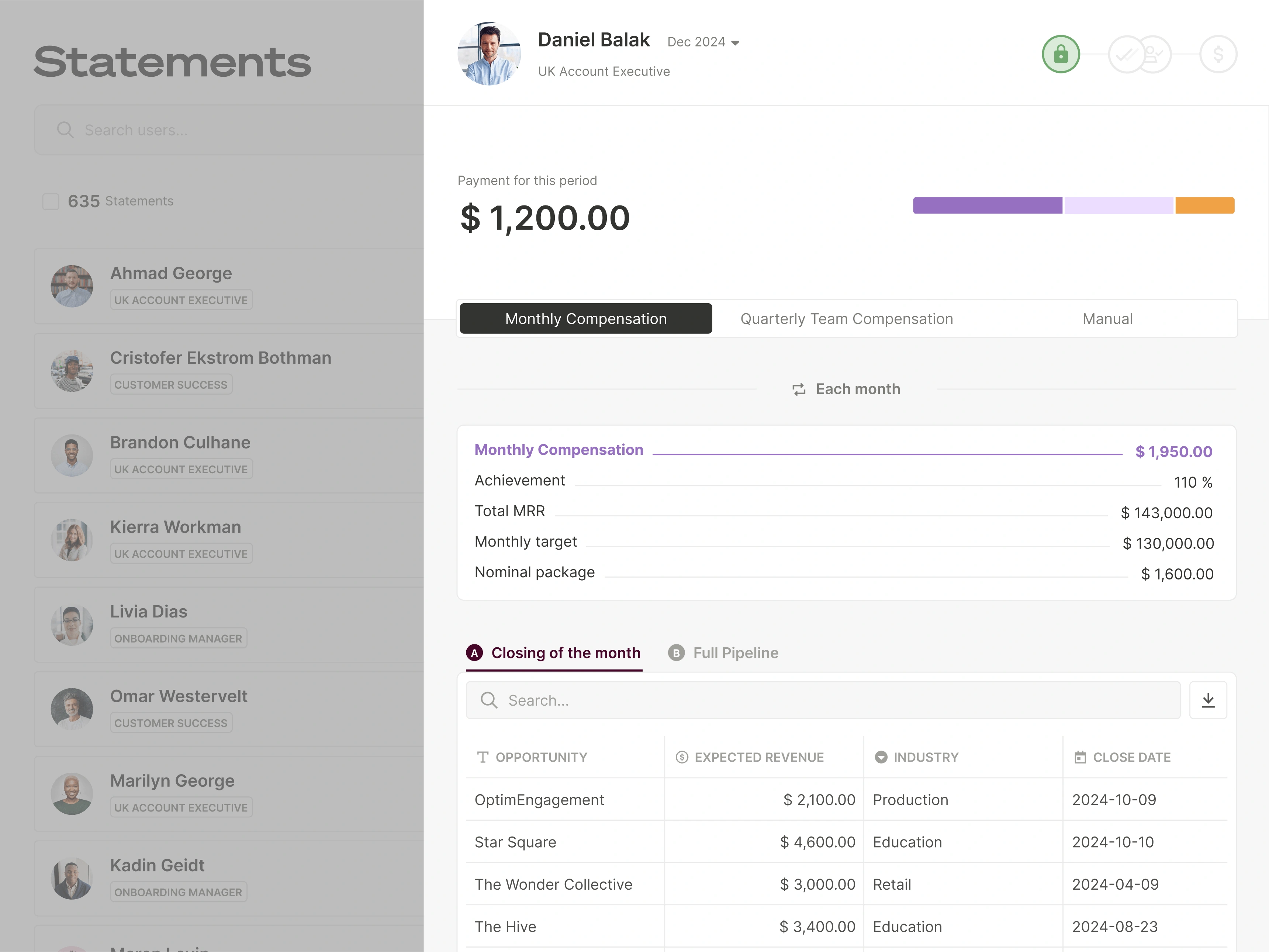
For sales teams, where variable pay is a primary motivator, this training is even more crucial. Managers must be able to explain changes to commission structures with absolute clarity. This is where modern incentive compensation management solutions become indispensable. Platforms like Qobra provide dashboards that give both reps and managers real-time visibility into earnings, making these conversations data-driven and transparent rather than abstract and confusing.
A successful rollout of a new compensation plan is a masterclass in change management. It requires a solid philosophical foundation, a meticulously planned communication strategy, and empowered managers who can translate policy into meaningful, personal conversations. By investing in transparency, empathy, and continuous dialogue, you can turn a potentially disruptive event into a powerful tool for building a more engaged, motivated, and loyal workforce.
Frequently Asked Questions
Why is the compensation plan changing?
Companies update their compensation plans to stay competitive in the talent market, ensure internal fairness, simplify complex old structures, or better align employee incentives with new business goals. A good communication plan will clearly articulate the specific business rationale behind the change, linking it to the company's long-term success and its commitment to rewarding employees fairly.
Who is affected by these changes?
Your communication should specify exactly which employee groups are impacted. It could be the entire company, a specific department (like sales), or certain job levels. For those not affected, it's still important to communicate this to them to prevent rumors and misinformation from spreading.
How will my personal compensation be impacted?
This is the most critical question for every employee. The answer should be delivered in a private, one-on-one meeting with their manager. Each employee should receive a personalized statement that clearly breaks down their new compensation, showing the before and after. For any variable components, providing examples or access to a simulator can help clarify potential earnings. Using a dedicated tool like Qobra for sales teams automates this process, providing instant clarity on commissions and eliminating manual calculation errors.
How do you ensure the new plan is fair?
Fairness in compensation is achieved through a structured approach based on objective data. Explain how the new plan uses external market data (benchmarking) to set competitive salary ranges and internal job evaluations to ensure roles of similar scope and impact are paid equitably. Highlighting the move towards a more structured, data-driven system is key to building trust in the fairness of the compensation.