Webinar: The Biggest Release Sales Comp Has Ever Seen. Come See For Yourself (Wednesday, October 7)
Register
- Performance-based bonus = variable pay tied to SMART, strategy-aligned KPIs that convert individual/ team impact into measurable reward (complementing fixed salary).
- Select and qualify KPIs by role: ensure relevance, a balance of leading vs lagging indicators, clear targets, measurement frequency and ownership.
- Choose a calculation method (percentage of salary or bonus pool) and use a weighted formula—e.g., Bonus = Target Bonus × Weighted Performance Score—with thresholds, tiers and optional caps.
- Implement with clear governance, documented rules and regular communication; set payout cadence (quarterly/annual) and prefer automation (compensation software) for real-time transparency and fewer errors.
- Ensure legal, tax and equity compliance, avoid unclear or perverse incentives, review the plan annually and monitor ROI and behavioral outcomes to iterate.
How can you transform your compensation plan from a simple expense into a strategic driver of growth and motivation? For many companies, the answer lies in a well-designed performance-based bonus structure. By directly linking financial rewards to tangible achievements, you can align your team's efforts with key business objectives, foster a culture of excellence, and retain your top performers.
A robust incentive system does more than just reward hard work; it provides clarity, purpose, and a shared sense of ownership in the company's success. But designing a system that is fair, motivating, and easy to manage can be a complex challenge. Poorly designed incentives can backfire, leading to unintended behaviors and frustration. This guide provides a complete blueprint for creating, calculating, and implementing a performance-based bonus structure that drives real results.
What is a Performance-Based Bonus Structure?
A performance-based bonus structure is a compensation system where a portion of an employee's earnings is variable and tied directly to the achievement of specific, pre-defined goals. This supplemental wage is granted as a reward for meeting or exceeding established benchmarks, making it a powerful tool for reinforcing key business objectives.
This approach fundamentally shifts compensation from being solely about tenure or title to being about impact and results. The total compensation package is typically composed of two main elements:
- Fixed Salary: The base pay an employee receives, determined by their role, responsibilities, and market standards. This component remains constant regardless of performance.
- Variable Salary (Bonus): A fluctuating component directly linked to performance against Key Performance Indicators (KPIs). This is the incentive that drives employees to exceed their targets.
Many modern organizations use a "3P" salary system to create a holistic framework:
- Pay for Position: The market rate for the job title and scope of the role.
- Pay for Person: Compensation based on an individual's unique skills, qualifications, and experience.
- Pay for Performance: The variable component linked to achieved results against defined goals.
By integrating these elements, companies ensure that pay is not only competitive but also a direct reflection of an individual's contribution to the business's success.
Key Types of Performance Bonuses
Performance bonuses are not one-size-fits-all. The right model depends on your company's goals, culture, and the specific roles you're incentivizing. Here are some of the most common types.
Individual Bonuses
These bonuses reward personal contributions and are ideal for roles where an individual's impact is easily measurable.
- Goal-Based Bonus (MBOs): This is one of the most popular models, where a bonus is paid for achieving one or more objectives set for an individual. These goals are typically defined annually or quarterly and should be clearly defined, measurable, and achievable. An employee often participates in the goal-setting process with their manager, ensuring alignment and buy-in.
- Commissions: Common in sales teams, commissions are an uncapped bonus linked to a defined percentage of sales revenue or profit margin. This system is straightforward and highly motivating for salespeople, as their earnings are directly tied to the deals they close. However, it can be discouraging for new hires who are still ramping up.
- Project or Milestone Bonus: A one-time reward given for the successful completion of a specific project or reaching a critical milestone. This is effective for incentivizing focused effort on high-priority, time-bound initiatives.
Collective Bonuses
These bonuses are designed to foster collaboration and reward the combined efforts of a group, department, or the entire company.
- Team Bonus: When success depends on collaboration, a team bonus can be highly effective. The payout is based on the achievement of collective goals. To ensure fairness, these bonuses can be structured in a few ways:
- Based on Grade or Role: The bonus amount is tailored to acknowledge varying levels of responsibility within the team.
- Based on Individual Contribution: The team's overall success unlocks the bonus pool, but individual payouts are adjusted based on each member's contribution to the team's goals.
- Profit-Sharing Bonus: This model involves distributing a portion of the company's profits among its employees. It’s a powerful way to create a sense of ownership and align everyone toward the common goal of profitability. It works best when employees' efforts have a direct and visible impact on the company's bottom line. Calculating the available portion can be determined by analysing the company's profit margin.
- Attendance Bonus: In industries where punctuality and presence are critical to operations—such as manufacturing, healthcare, or customer service—an attendance bonus can be used to reward reliability. It's a monetary incentive for employees who maintain excellent attendance records.
Designing Your Performance-Based Bonus Structure: A Step-by-Step Guide
Creating an effective bonus system requires careful planning and a structured approach. Follow these four steps to build a framework that is clear, fair, and aligned with your business strategy.
Step 1: Define Clear Performance Metrics (KPIs)
The foundation of any performance-based bonus is the metrics used to measure success. These metrics, or Key Performance Indicators (KPIs), must directly align with your company's strategic goals. The key is to ensure they are SMART: Specific, Measurable, Achievable, Relevant, and Time-bound.
What gets measured gets done. The KPIs you choose will dictate your team's focus. For example, if you only incentivize new customer acquisition, you might neglect customer retention. A balanced set of KPIs is crucial for sustainable growth.
Here are some examples of relevant KPIs across different departments:
| Department | Key Performance Indicators (KPIs) |
|---|---|
| Sales | Annual Recurring Revenue (ARR), Customer Acquisition Cost (CAC), Net Revenue Retention (NRR) |
| Marketing | Marketing Qualified Leads (MQLs), Lead Conversion Rate, Customer Lifetime Value (CLV) |
| Customer Success | Customer Satisfaction (CSAT), Net Promoter Score (NPS), Churn Rate |
| Production | On-Time Delivery Rate, Defect Rate, Production Output |
| Human Resources | Time to Hire, Employee Turnover Rate, Employee Engagement Score |
Step 2: Choose a Calculation Method
Once you've defined your metrics, you need to decide how the bonus payout will be determined. There are two primary methods organizations use:
- Percentage Method: This is the most straightforward approach. The bonus is calculated as a percentage of a person's base salary. For example, an employee earning £80,000 with a target performance bonus of 10% would receive an £8,000 bonus if they meet 100% of their targets. This method is predictable and easy to communicate.
- Bonus Pool Method: In this model, the company allocates a total sum of money for bonuses (the "pool"). This pool is then divided among eligible employees based on their individual or team performance. For example, a department might be allocated a £100,000 pool, and individual shares are determined by performance review scores or goal achievement levels. This method gives the company more control over total bonus expenses.
Set Clear Thresholds and Caps
To manage costs and expectations, it's wise to establish a threshold—a minimum level of performance required to qualify for any bonus. You may also consider a cap, or a maximum payout, to keep the plan financially sustainable, especially for uncapped commission plans where a single large deal could create an outsized payout.
Step 3: Develop the Calculation Formula
This is where you connect performance to the final payout amount. This involves assigning weights to your KPIs to reflect their strategic importance.
- Equal Weighting: Every KPI is given the same importance (e.g., four KPIs are each weighted at 25%).
- Tiered Weighting: Critical KPIs receive higher weights (e.g., 40%, 30%, 20%, 10%) to focus efforts on what matters most.
The general formula to calculate the bonus is:
Bonus Payout = Target Bonus Amount × Weighted Performance Score
Let's walk through an example. Consider a Marketing Manager with a base salary of £90,000 and a target bonus of 15% (£13,500). Their bonus is based on three KPIs:
| KPI | Weight | Target | Actual Result | Achievement % | Weighted Score |
|---|---|---|---|---|---|
| Generate MQLs | 50% | 1,000 | 1,200 | 120% | 60% (120% × 50%) |
| Lead Conversion Rate | 30% | 5% | 4.5% | 90% | 27% (90% × 30%) |
| Website Traffic | 20% | 500,000 | 550,000 | 110% | 22% (110% × 20%) |
| Total | 100% | Overall Score: | 109% |
The manager's overall weighted performance is 109%.
Bonus Calculation: £13,500 (Target Bonus) × 109% (Performance Score) = £14,715
Step 4: Implement and Communicate the Structure
A bonus plan is only effective if it's understood and trusted by your employees. The implementation process is critical.
Governance and Communication: Clearly document the plan, including the KPIs, formulas, and payout schedules (quarterly, semi-annually, or annually). Hold training sessions to ensure every employee understands how their performance translates into a bonus.
From Manual Spreadsheets to Automated Solutions: Managing these calculations manually on spreadsheets can be a nightmare. It's time-consuming, prone to errors, and lacks the transparency needed to truly motivate employees. When a salesperson has to wait until the end of the month to find out their commission, the motivational link is broken.
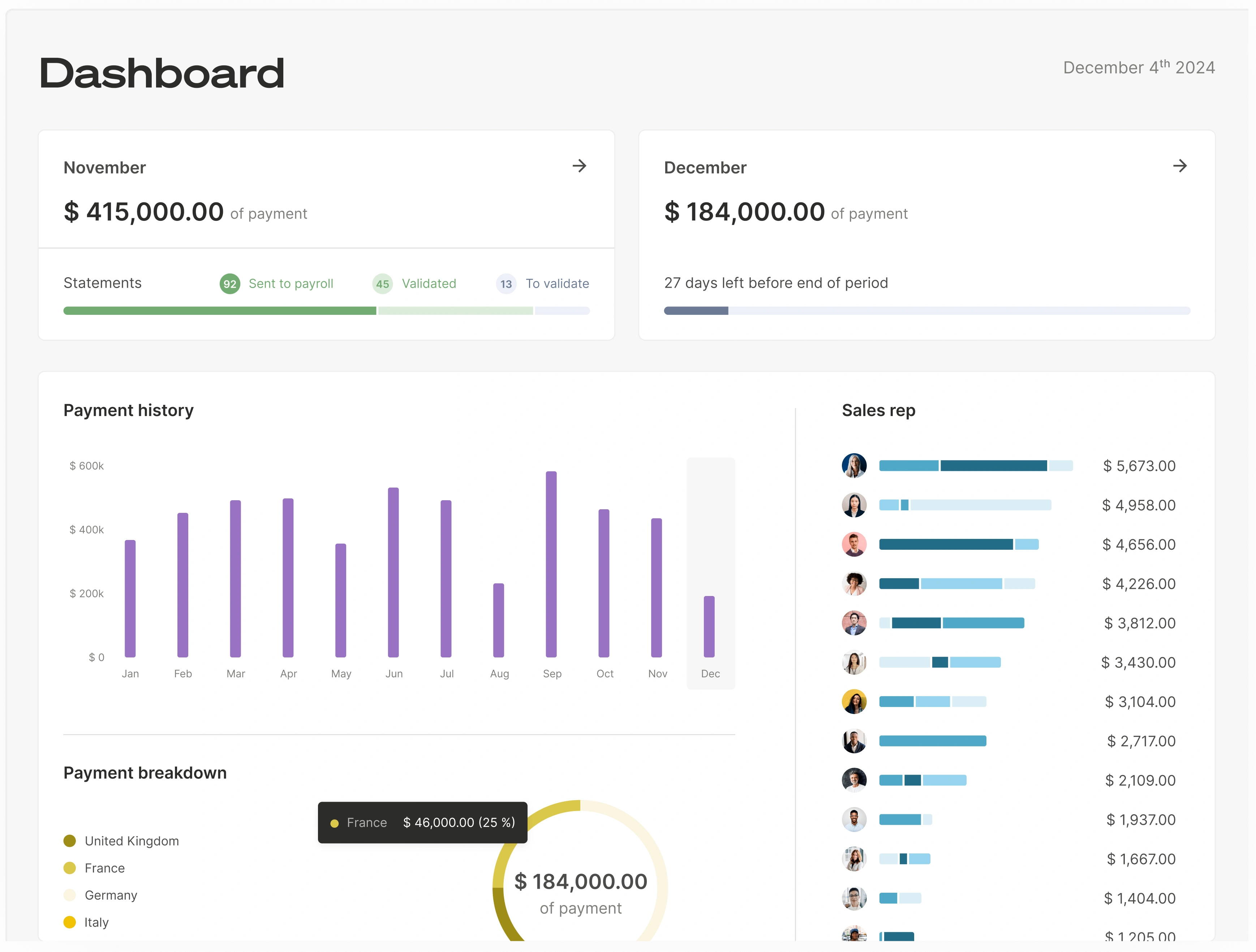
This is where automated compensation platforms like Qobra revolutionize the process. By integrating directly with your CRM and other data sources, Qobra calculates commissions and bonuses in real-time. Sales reps and other employees can see their potential earnings update with every new deal or achieved milestone, creating a powerful and immediate feedback loop. This not only saves finance and operations teams dozens of hours but also builds trust and keeps your team focused and driven. For businesses tired of the limitations of spreadsheets, switching to commission software is a game-changer for performance management.
Common Pitfalls to Avoid
Even the most well-intentioned bonus plans can fail if not carefully managed. As research from Harvard Business School has shown, poorly designed incentives can lead to counterproductive behavior. Be mindful of these common mistakes:
- Setting Unclear or Unrealistic Goals: If targets are perceived as unattainable, employees will quickly become demotivated. Goals must be challenging yet achievable.
- Incentivizing the Wrong Behavior: A classic example is a customer support team bonused solely on the number of tickets closed per day. This might encourage them to rush through calls and sacrifice service quality. Ensure your KPIs reflect both quantity and quality.
- Lack of Transparency: If employees don't understand how their bonus is calculated, they may perceive the system as unfair. This erodes trust and defeats the purpose of the incentive. Continuous performance tracking and open communication are essential.
- Overly Complex Structures: A bonus plan with too many metrics, complicated formulas, or confusing conditions will fail to motivate because no one understands it. Simplicity is key.
- Failing to Evolve the Plan: Business priorities change, and your bonus structure must adapt. Review and update your plan at least once a year to ensure it remains aligned with current company objectives.
Legal and Tax Considerations
Performance bonuses are considered supplemental wages and are subject to income and payroll taxes. Ensure your payroll process is equipped to handle these calculations correctly. Additionally, be consistent in applying the bonus structure across similar roles to avoid potential claims of discrimination. It's always best to consult with legal and tax professionals to ensure compliance.
A performance-based bonus structure is a dynamic tool for driving business results. By setting clear goals, choosing the right metrics, and ensuring transparent calculations, you can create a powerful system that rewards excellence and aligns your entire organization. While manual management can be a significant hurdle, leveraging modern automation tools can unlock the full motivational potential of your compensation plan, turning it into a true strategic asset for growth.
Frequently Asked Questions
How much is a typical performance bonus?
On average, performance bonuses range from 1% to 5% of an employee's base salary for non-executive roles. However, this can vary significantly based on industry, role, and company performance. Senior leadership and sales positions often have much higher bonus potential, sometimes reaching 10-50% or more of their salary, especially when discussing their total On-Target Earnings (OTE).
How often should performance bonuses be paid out?
The frequency of payouts depends on your business cycle and the nature of the goals. Quarterly bonuses are effective for maintaining short-term focus, especially in fast-paced environments like sales. Annual bonuses are better suited for rewarding long-term strategic achievements. Some companies use a combination of both.
Are performance bonuses taxable?
Yes. In most countries, performance bonuses are treated as supplemental income and are subject to the same taxes as regular wages, including income tax, Social Security, and Medicare in the United States. The tax withholding rate for bonuses may be different from that of a regular paycheck.
Can a bonus structure be changed once it's implemented?
Yes, and it should be reviewed periodically to ensure it remains aligned with business goals. However, any changes should be communicated well in advance, ideally before the start of a new performance period. Abruptly changing the rules mid-cycle can damage morale and trust. Explain the "why" behind the changes and provide a clear transition plan.