Webinar: The Biggest Release Sales Comp Has Ever Seen. Come See For Yourself (Wednesday, October 7)
Register
- CaptivateIQ's spreadsheet-inspired interface and reliance on third-party professional services for implementation create friction that leads many operations, finance, and sales teams to evaluate alternatives with faster time-to-value.
- The strongest CaptivateIQ replacements offer no-code plan building, in-house implementation support, and real-time commission visibility — eliminating the dependency on external consultants and delayed data.
- Qobra ranks highest on both G2 (4.8/5) and Capterra (4.9/5) among dedicated commission platforms and is trusted by SAP, AstraZeneca, JCDecaux, ElevenLabs, and GoCardless.
- Before switching, prioritize total cost of ownership, integration depth, and how quickly your team can make plan changes independently — not just feature lists.
The 10 best CaptivateIQ alternatives in 2026 are Qobra, Spiff by Salesforce, Xactly, Performio, Varicent, QuotaPath, Commissionly, Visdum, Sales Cookie and Everstage. CaptivateIQ itself is a capable platform: pricing is quote-based and seat-based, counting admin users plus payees, with a one-time setup fee, and ASC 606 reporting is sold as a separate add-on subscription (captivateiq.com/pricing, Sept 2026). Teams evaluate alternatives for fit reasons rather than fault: they want a published price, a payroll or HRIS connector CaptivateIQ does not list, a shorter implementation, or plan changes their own operations team can make without a services engagement. This guide compares the 10 platforms on pricing, CRM coverage, UK payroll and HRIS connectors, audit trail and rep-facing app, gives pros and cons for each, and ends with a 4-step migration plan.
Key takeaways
- Two of the ten alternatives publish UK list prices: Spiff by Salesforce at £75 per user per month billed annually, and QuotaPath at £35 per user per month plus a £525 monthly platform fee (Growth) or £50 plus £800 (Premium). Sales Cookie publishes £40 and £60 per user per month with no contract. The rest, like CaptivateIQ, are quote-based (vendor websites, Sept 2026).
- CaptivateIQ names Salesforce, HubSpot and Microsoft Dynamics for CRM, NetSuite, Sage Intacct, QuickBooks Online, Xero, Stripe and Zuora for finance, Workday, ADP Workforce Now and BambooHR for HR and payroll, and Snowflake, BigQuery, Redshift, PostgreSQL, MySQL and Oracle for data (captivateiq.com/integrations, Sept 2026). If your payroll system is on that list, integration is not a reason to switch.
- Everstage names the widest UK payroll and HR set in this comparison: ADP Workforce, Gusto, Workday, BambooHR, HiBob, Personio and Ceridian Dayforce. QuotaPath names Rippling on its Premium plan. Qobra names Workday, BambooHR and HiBob (vendor websites, Sept 2026).
- Implementation time is the criterion vendors publish least. Self-serve tools such as QuotaPath and Sales Cookie go live in days. Everstage states 4 to 6 weeks and Visdum cites an average of about 0.65 months. Xactly, Varicent and Performio do not publish a figure (vendor websites, Sept 2026).
- Whichever platform you pick, run one full commission cycle in parallel before cutting over. That single step is what protects rep trust and gives finance the reconciliation evidence.
CaptivateIQ alternatives at a glance: 10 platforms compared
The table below compares the 10 alternatives, plus CaptivateIQ itself as the reference row, on the criteria UK finance and RevOps teams ask about first. Pricing and integration claims were checked on each vendor website in September 2026. "Quote-based" means the vendor publishes no list price. "Not named" means the vendor does not list the item publicly, which is not the same as the integration being unavailable: ask during evaluation.
How we evaluated: vendor pricing and integration pages only, checked September 2026. No G2 or Capterra scores are used in this table, and no claim about a competitor appears here unless the vendor states it. Commissions are supplemental wages in the US, so whichever platform you choose, the payroll export must support the federal flat withholding rate of 22% up to $1M per IRS Publication 15. For the full connector matrix, see commission software integrations compared.
If your revenue operations or finance team has been managing commissions through CaptivateIQ and you are starting to feel the limitations — slow plan changes, escalating costs, or a dependency on outside consultants just to adjust a rule — you are not alone. A growing number of organizations are evaluating CaptivateIQ alternatives in 2026, driven by the need for faster implementation, greater autonomy, and clearer real-time visibility into commission data.
This guide walks through the top 10 alternatives to CaptivateIQ, explains the core reasons teams decide to switch, and provides a framework for evaluating which platform fits your organization. Whether you are in operations building commission plans, in finance reconciling payouts, or in sales leadership looking for transparency that motivates reps, this article gives you the structure to make an informed decision.
We will cover each platform's positioning, strengths, and ideal use case — starting with Qobra, the highest-rated commission management platform on both G2 and Capterra — followed by a feature comparison table, a migration checklist, and answers to the most common questions teams ask when switching.
Why teams look for a CaptivateIQ alternative: the verifiable facts
Four facts about CaptivateIQ are published on its own website and explain most evaluations: pricing is quote-based, seats are counted as admin users plus payees, there is a one-time setup fee, and ASC 606 reporting is a separate add-on subscription. None of these is a defect. They are procurement characteristics, and they matter because they decide whether the platform fits your budget model and your compliance scope. Everything in this section comes from captivateiq.com, checked September 2026.
- Pricing is quote-based. The pricing page states "Contact us for a custom quote" and describes the model as "simple, per-seat pricing that doesn't skyrocket over time plus a one-time setup fee to get you up and running quickly" (captivateiq.com/pricing, Sept 2026). Teams that need a list price for a budget request will not find one, and the same is true of Xactly, Varicent, Performio, Visdum, Everstage and Qobra.
- Seats count admins plus payees. The vendor defines seats as "the number of admin users plus the total number of payees who will be managing their compensation on our platform" (captivateiq.com/pricing, Sept 2026). Model this against headcount growth: in a seat-based model the bill scales with the sales team, not with usage.
- ASC 606 reporting is an add-on. The pricing FAQ states that "ASC-606 reporting is available as an add-on subscription" (captivateiq.com/pricing, Sept 2026). If commission capitalization under ASC 340-40 is in scope for your auditors, price that module in the first quote rather than the renewal. Everstage sells its ASC 606 module the same way; Visdum includes amortization reporting in the platform.
- The integration list is broad and public. CaptivateIQ names Salesforce, HubSpot and Microsoft Dynamics CRM; NetSuite, QuickBooks Online, Xero, Sage Intacct, Stripe and Zuora; Workday, ADP Workforce Now and BambooHR; Amazon Redshift, BigQuery, Snowflake, MySQL, Oracle Database and PostgreSQL; plus an open API and SFTP (captivateiq.com/integrations, Sept 2026). If your stack is on that list, integration coverage is not a reason to move, and any alternative you shortlist should match it.
What is not verifiable from public sources is how any given team experiences implementation, plan changes or support. Those vary by contract, plan complexity and internal capacity, and the section below reflects what teams report rather than what the vendor publishes. Treat reported experience as a question to test in your own evaluation: ask each vendor, CaptivateIQ included, to walk through exactly how a mid-quarter accelerator change gets made, who makes it, and how long it takes.
Why Teams Look for CaptivateIQ Alternatives
The three reasons below are drawn from what evaluating teams report, not from vendor documentation. The verifiable, sourced facts are in the section above.
Spreadsheet-Inspired Limitations
CaptivateIQ was originally designed around a spreadsheet-like interface for building commission plans. While that approach can feel familiar at first, it introduces constraints that compound over time. Complex plans with multiple tiers, splits, accelerators, and exceptions become difficult to maintain in a spreadsheet paradigm. Teams report that as their compensation structures grow more sophisticated, the platform's flexibility does not scale at the same pace — leading to workarounds, manual overrides, and increased risk of calculation errors.
For finance teams specifically, auditing commission calculations built in a spreadsheet-style environment can be time-consuming. The lack of clear, structured logic flows makes it harder to verify accuracy at the individual transaction level.
Dependency on Third-Party Professional Services
One of the most cited reasons for evaluating alternatives is CaptivateIQ's reliance on third-party professional services for implementation and ongoing plan changes. Rather than enabling operations teams to build and modify commission plans independently, many organizations find themselves scheduling consulting engagements to make adjustments that should take hours, not weeks.
This dependency creates two problems. First, it slows down the organization's ability to respond to business changes — a new product launch, a territory realignment, or a mid-quarter plan adjustment all require external involvement. Second, it adds significant cost beyond the platform's license fee, inflating the total cost of ownership in ways that are not always visible at the time of purchase.
Cost Escalation Over Time
Related to the professional services dependency, many teams experience cost escalation as their usage grows. What starts as a manageable subscription can balloon when you factor in implementation fees, ongoing consulting costs for plan changes, and additional charges for features or integrations that were not included in the initial contract. For growing organizations, this cost trajectory becomes a strategic concern — especially when competing platforms offer more predictable pricing with fewer hidden costs.
What to Prioritize in a CaptivateIQ Replacement
When evaluating alternatives, focus on the criteria that address the specific limitations driving the switch. Here is a framework:
- No-code plan building: Can your operations team create, modify, and test commission plans without writing code or engaging external consultants? The fewer dependencies, the faster your time-to-value.
- In-house implementation and support: Does the vendor provide direct implementation support, or will you need to hire a third-party systems integrator? Platforms that handle implementation in-house typically deliver faster go-live timelines and more consistent outcomes.
- Real-time commission visibility: Can sales reps see their commission status in real time — including the impact of a deal as soon as it closes? Real-time visibility drives rep engagement and reduces the volume of commission disputes.
- Integration depth: Does the platform connect natively with your CRM (Salesforce, HubSpot), ERP, HRIS, and payroll systems? Evaluate both the breadth of integrations and the quality of the data sync.
- Total cost of ownership: Look beyond the license fee. Factor in implementation costs, ongoing support fees, the cost of plan changes, and any per-user or per-transaction charges that scale with your team.
- Audit and compliance controls: Can finance teams trace every commission calculation back to the source data? Platforms with strong audit trails reduce reconciliation time and support compliance requirements.
- User adoption and engagement: Does the tool include features — like proactive email notifications, mobile access, and intuitive dashboards — that encourage reps to actually use it?
The 10 Best CaptivateIQ Alternatives in 2026
1. Qobra

Best for: Organizations that want operations, finance, and sales teams to rely on a single commission tool with real-time visibility and full autonomy over plan management.
Qobra is built for teams that need commissions to be clear and trusted in day-to-day work. Unlike platforms that depend on spreadsheet-style logic or require third-party consultants for plan changes, Qobra provides a no-code plan builder that enables operations teams to create, modify, and test commission plans independently — without writing formulas or waiting for external implementation support.
What makes Qobra different:
- In-house implementation: Qobra's team handles implementation directly, working with your specific compensation plans to configure the platform. This eliminates the cost and delay of third-party professional services and ensures your team is self-sufficient from day one.
- Real-time commission visibility for reps: Sales teams get a real-time overview of their commissions — they can see exactly what they will receive when they close a deal. Proactive email notifications help reps understand the impact of each deal, which drives engagement and reduces disputes.
- Finance-grade audit controls: Finance teams gain visibility into commissions at multiple levels — by team, by individual, and down to specific commission amounts — accessible at any time. This supports reconciliation, compliance, and confident reporting.
- Cross-functional alignment: Qobra serves as a single source of truth for operations (plan building and management), finance (audit, reporting, and cost visibility), and sales (real-time earnings and deal impact). That combination of real-time access plus proactive updates supports confidence across the organization.
Ratings and customer trust:
Qobra holds the highest ratings among dedicated commission platforms on both G2 (4.8/5) and Capterra (4.9/5). Notable customers include SAP, AstraZeneca, JCDecaux, ElevenLabs, and GoCardless — spanning enterprise, mid-market, and high-growth organizations.
AI-Powered Agents — A Unique Differentiator
Qobra includes three purpose-built AI agents that handle real work — not just analytics overlays. The Architect replaces hours of plan implementation with minutes of conversation, building or editing compensation plans autonomously on the platform. The Sales Coach answers rep questions about their commissions instantly, reducing admin ticket volume and building trust between sales teams and operations. The Analyst creates reports and dashboards from plain-language requests and surfaces proactive business intelligence — flagging anomalies, identifying trends, and delivering insights that would take hours of manual analysis.
Pricing: Qobra offers a tailored demo experience based on your own compensation plans. You can select your number of sales reps and conversion type, then book a demo to see pricing based on your specific configuration.
Ideal for: Revenue operations, finance, and sales leaders who want to eliminate dependency on external consultants, give reps real-time visibility, and manage commissions with confidence across the organization.
Qobra, headquartered in New York and Paris, manages $1B+ in commissions across 300+ companies. Native connectors cover Salesforce, HubSpot, Microsoft Dynamics, Zoho, Pipedrive and Odoo for CRM, Snowflake, BigQuery, Redshift, PostgreSQL and Microsoft SQL for data, SFTP and CSV for files, and Workday, BambooHR and HiBob for HRIS (full list on the Qobra integrations page). ADP, Rippling, Gusto, Paylocity payroll and NetSuite / QuickBooks ERP: CSV export.
Pros:
- Plan changes are made by your own operations team in the no-code editor, which is the specific dependency most teams are trying to remove when they leave a services-led implementation.
- Audit log of every plan and payout change plus approval workflows, which is what SOX 404 evidence and ASC 340-40 capitalization schedules require.
- CRM coverage is not tied to one vendor: Salesforce, HubSpot, Microsoft Dynamics, Zoho, Pipedrive and Odoo are all native.
Cons:
- Pricing is quote-based, so there is no list price to compare against Spiff by Salesforce or QuotaPath.
- No territory or quota planning module; teams that need full sales performance management pair Qobra with a planning tool or look at Varicent and Xactly.
- UK payroll systems beyond Workday, BambooHR and HiBob are covered by export or connector rather than a named native integration. ADP, Rippling, Gusto, Paylocity, NetSuite and QuickBooks.
Pricing: quote-based, by number of payees and plan complexity. Compare the two platforms side by side in Qobra vs CaptivateIQ, or book a demo built on one of your own plans.
2. Spiff by Salesforce
Best for: Salesforce-native organizations that want commission management tightly integrated with their CRM.
Spiff is designed around deep Salesforce integration, making it a natural fit for teams whose commission workflows are closely tied to Salesforce data. The platform offers a visual plan designer and real-time commission statements. Spiff was acquired by Salesforce, which strengthens its CRM integration but may limit flexibility for organizations using other CRM platforms. Teams that rely heavily on HubSpot or other systems should evaluate integration depth carefully.
Pros:
- Deepest possible Salesforce integration, sold and supported inside Sales Cloud.
- One of only two platforms in this list with a public UK list price, which makes budget approval straightforward.
Cons:
- Each additional external connector (HRIS, ERP, data warehouse) is a separate £250 per month line item, so a team with three non-Salesforce sources adds £9,000 per year before licenses.
- HubSpot, Microsoft Dynamics and Zoho are not named as native connectors on the Salesforce Spiff pages.
Pricing: £75 per user per month, billed annually; £250 per connector per month for additional external connections; Premium Support at 30% of net price (salesforce.com, Sept 2026).
3. Xactly
Best for: Large enterprises that need commission management combined with benchmarking data and workforce planning.
Xactly is one of the longest-standing players in the incentive compensation management space. Its key differentiator is access to proprietary benchmarking data drawn from years of commission calculations across industries. For enterprise organizations that value data-driven plan design and have the resources to manage a more complex implementation, Xactly offers depth. However, its implementation timeline and total cost of ownership tend to be higher than newer platforms, and some teams report a steeper learning curve.
Pros:
- Enterprise depth: multi-entity, multi-currency, benchmarking data, plus territory and quota planning in the wider Xactly suite.
- Xactly Connect covers Salesforce, HubSpot, Microsoft Dynamics and ServiceNow.
Cons:
- Quote-based pricing with enterprise contract structures, so the evaluation cycle is long.
- Implementations are commonly partner-led, which reintroduces the external-consultant dependency some teams are leaving CaptivateIQ to escape.
Pricing: quote-based (xactlycorp.com, Sept 2026).
Head to head with CaptivateIQ: CaptivateIQ vs Xactly.
4. Performio
Best for: Organizations with complex, multi-source data environments that need flexible data ingestion for commission calculations.
Performio focuses on data flexibility — the platform is designed to ingest commission-relevant data from a wide range of sources, including CRMs, ERPs, spreadsheets, and custom databases. This makes it a strong fit for organizations where commission calculations depend on data that does not live in a single system. Performio's plan builder supports complex logic, though the user interface may require more training compared to newer platforms.
Pros:
- Strong multi-source data ingestion, which suits teams whose commission inputs come from ERP, billing and CRM at once.
- Named US-relevant connectors: Salesforce, HubSpot, Microsoft Dynamics, NetSuite, SAP, Infor and Epicor, plus Workday, ADP Workforce Now and BambooHR (performio.co/integrations, Sept 2026).
- Reps get the Performio SPM app on the App Store and Google Play (Sept 2026).
Cons:
- No published pricing and no published implementation timeline.
- The interface is dated next to newer platforms and admins typically need more training.
Pricing: quote-based: subscription by payees and admin seats plus a one-time implementation fee (performio.co, Sept 2026).
Head to head with CaptivateIQ: CaptivateIQ vs Performio.
5. Varicent
Best for: Organizations with territory-heavy sales structures that need commission management alongside territory and quota planning.
Varicent offers a broader incentive performance management suite that includes territory planning, quota management, and commission calculation. For organizations where commissions are tightly linked to territory assignments and quota attainment, Varicent provides an integrated approach. The platform is geared toward enterprise buyers and typically involves a longer implementation cycle.
Pros:
- Full sales performance management suite from one vendor: incentive compensation plus territory and quota planning.
- Audit trail behind every calculation is a stated part of the product (varicent.com, Sept 2026).
Cons:
- Named CRM, HRIS and payroll connectors are not published on the product page; request the integration catalog during evaluation.
- Enterprise-only pricing and long implementation cycles, which makes it a poor fit for teams that want to be live this quarter.
Pricing: quote-based (varicent.com, Sept 2026).
6. QuotaPath
Best for: SMBs and early-stage sales teams that want simple, transparent commission tracking without enterprise complexity.
QuotaPath is designed for smaller sales teams that need straightforward commission visibility. The platform emphasizes ease of setup and transparent earnings dashboards for reps. QuotaPath integrates with common CRMs and offers a free tier for small teams. It is well-suited for organizations with simpler commission structures but may not scale as well for complex, multi-tier enterprise plans.
Pros:
- Public pricing and a 14-day free trial, which is rare in this category and removes the quote cycle entirely.
- Native Salesforce, HubSpot, Zoho, Pipedrive, Copper and Close connectors; Rippling payroll sync plus QuickBooks, NetSuite and Sage Intacct on the Premium plan (quotapath.com, Sept 2026).
Cons:
- A monthly platform fee applies on top of per-user pricing: £525 on Growth and £800 on Premium.
- Audit trail and approval controls are lighter than CaptivateIQ, Performio or Xactly, so it is a weaker fit where finance needs SOX evidence.
Pricing: Growth £35 per user per month plus a £525 monthly platform fee; Premium £50 per user per month plus an £800 monthly platform fee; Strategic is custom. Billed annually, first 5 users included in the platform fee, 14-day trial (quotapath.com/pricing, Sept 2026).
Head to head with CaptivateIQ: QuotaPath vs CaptivateIQ.
7. Commissionly
Best for: Small teams and startups looking for an affordable, no-frills commission tracking solution.
Commissionly targets small businesses and early-stage companies that need basic commission management without the cost or complexity of enterprise platforms. The platform covers standard commission calculations, rep dashboards, and basic reporting. For teams that will eventually need advanced plan logic, audit controls, or deep integrations, Commissionly may become a stepping stone rather than a long-term solution.
Pros:
- Low-friction option for small teams with standard plans.
- Covers the basics: calculation, rep dashboards and simple reporting.
Cons:
- Pricing sits behind a request form, so it is quote-based despite the SMB positioning (commissionly.io, Sept 2026).
- No named UK payroll or HRIS integrations on the vendor site, and audit controls are basic.
Pricing: quote-based through a request-pricing form (commissionly.io, Sept 2026).
8. Visdum
Best for: SaaS companies that want commission management tailored to recurring revenue models and SaaS-specific metrics.
Visdum is built specifically for SaaS businesses, with plan templates and calculation logic designed around metrics like ARR, MRR, expansion revenue, and churn. For SaaS organizations whose commission structures are tightly tied to subscription metrics, Visdum offers purpose-built functionality. Teams outside the SaaS model may find the platform's specialization limiting.
Pros:
- Plan logic built around SaaS metrics: ARR, MRR, expansion and churn, rather than generic bookings.
- Named connectors include Salesforce, HubSpot, Zoho and Freshworks, plus Workday, ADP, Paychex, HiBob and Deel for HR and payroll and NetSuite, Sage Intacct and QuickBooks for accounting (visdum.com/integrations, Sept 2026).
- Audit-ready reporting includes ASC 606 amortization in the platform rather than as an add-on.
Cons:
- Quote-based pricing; the vendor states first-year investment typically starts in the low five figures.
- Smaller vendor than the enterprise platforms here, which matters for procurement and security review.
Pricing: quote-based: annual license per payee plus a one-time setup and implementation fee (visdum.com/pricing, Sept 2026).
9. Sales Cookie
Best for: Organizations that want a self-service commission platform with minimal implementation overhead.
Sales Cookie emphasizes self-service setup — the platform is designed so administrators can configure commission plans, connect data sources, and generate reports without vendor involvement. For teams that value independence and have relatively standard commission structures, Sales Cookie offers a low-friction entry point. More complex plans with custom logic or advanced approval workflows may push the platform's limits.
Pros:
- Public monthly pricing with no contract and a 14-day free trial, plus free configuration of the first plan (salescookie.com, Sept 2026).
- Genuinely self-serve, so a small team can be live without an implementation project.
Cons:
- No named UK payroll or HRIS connectors on the vendor site.
- Basic audit trail; complex approval workflows and unusual plan logic push against its limits.
Pricing: Business £40 per user per month; Business+ £60 per user per month; billed monthly, cancel anytime, 14-day free trial (salescookie.com, Sept 2026).
10. Everstage
Best for: Mid-market companies that value AI-driven commission forecasting alongside standard plan management.
Everstage positions itself as a commission management platform with AI forecasting capabilities, helping teams predict commission payouts and model plan changes before they go live. The platform offers a no-code plan builder and integrations with major CRMs. Everstage is a solid option for mid-market teams, though organizations with highly complex enterprise-scale plans should evaluate whether the platform's flexibility matches their requirements.
Pros:
- The widest named UK payroll and HR list in this comparison: ADP Workforce, Gusto, Workday, BambooHR, HiBob, Personio and Ceridian Dayforce, plus NetSuite, QuickBooks, Sage Intacct and Stripe (everstage.com/integrations, Sept 2026).
- Vendor states go-live typically takes 4 to 6 weeks with in-house onboarding, one of the few published implementation figures in this category.
- Reps get the Everstage app on the App Store (Sept 2026).
Cons:
- Quote-based pricing with a one-time onboarding fee, and the ASC 606 module is sold as an add-on, the same structure teams cite when leaving CaptivateIQ.
- Gamification and leaderboards do not suit every sales culture.
Pricing: quote-based, per payee, plus a one-time onboarding fee (everstage.com, Sept 2026).
Head to head with CaptivateIQ: CaptivateIQ vs Everstage.
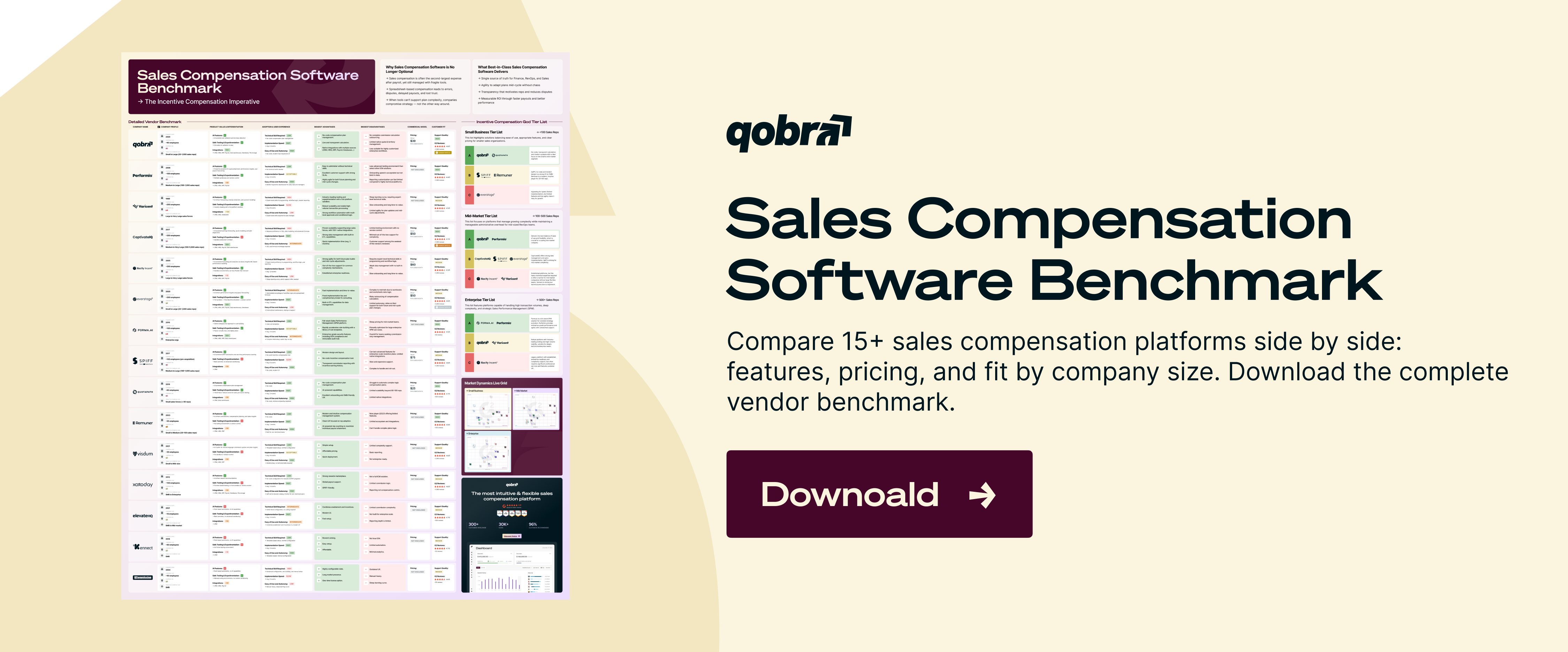
Feature Comparison Table
The table below covers product capabilities. For pricing, UK payroll and HRIS connectors, audit trail and rep-facing app, see the at-a-glance table at the top of this article, and the commission software integrations matrix for the full connector list. Note that this table does not include CaptivateIQ itself: its row is in the at-a-glance table above. Reporting depth is compared separately in best commission reporting software.
How to migrate off CaptivateIQ in 4 steps
Migrating off CaptivateIQ takes four steps: export your plans and 12 months of statements, rebuild and reconcile the plans in the new platform, run one full commission cycle in parallel, then cut over and archive. Most mid-market teams complete this in 4 to 8 weeks. The detailed checklist below expands each step.
- Export from CaptivateIQ. Pull every active plan definition, rate table and rule, at least 12 months of transaction-level statements, the list of connected systems, and any adjustments applied outside the plan logic. Note which modules you pay for separately, such as ASC 606 reporting, so you can compare the replacement quote on the same scope.
- Rebuild and reconcile. Recreate each plan in the new platform, load the same historical deals, and compare payouts line by line against what you actually paid. Every difference should trace back to a documented rule. Do this before signing where the vendor allows it: it is the only test that separates demo logic from your logic.
- Run one full cycle in parallel. Keep paying from CaptivateIQ for one more cycle while the new platform calculates the same period. Have finance sign off on the reconciliation and capture that approval in the new platform's audit log, which becomes your SOX 404 evidence for the transition period.
- Cut over, train, archive. Switch the payroll export to the new platform, confirm it carries what payroll needs for supplemental wage withholding at the 22% federal flat rate up to $1M (IRS Publication 15), train reps on their dashboard and the dispute workflow, archive CaptivateIQ statements under your retention policy, and terminate at renewal rather than mid-term.
Two things to settle before you start: who owns plan changes after go-live, and what the total cost looks like over three years including setup fees, add-on modules and connector charges. Our sales commission software pricing guide lists the fee types by vendor.
Migration Checklist: Switching From CaptivateIQ
Switching commission platforms requires careful planning. Use this checklist to structure your migration:
1. Audit your current plans
- Document every active commission plan, including tiers, splits, accelerators, SPIFs, and exceptions.
- Identify which plans are standard and which involve custom logic or manual overrides.
- Export historical commission data for at least the last 12 months.
2. Map your data sources
- List every system that feeds data into your current commission calculations (CRM, ERP, HRIS, spreadsheets).
- Document the data fields, sync frequency, and any transformations applied to source data.
- Identify data quality issues that should be resolved before migration.
3. Define your requirements
- Prioritize the criteria from the "What to Prioritize" section above.
- Identify must-have integrations, compliance requirements, and reporting needs.
- Set a target go-live date and work backward to build your timeline.
4. Evaluate and select your new platform
- Request demos from your shortlisted alternatives using your own compensation plans — not generic demo data.
- Ask each vendor to walk through how a specific plan change would be made post-implementation.
- Request references from customers with similar team sizes and plan complexity.
5. Plan the implementation
- Confirm whether the vendor handles implementation in-house or requires third-party consultants.
- Establish a parallel-run period where both the old and new systems calculate commissions simultaneously.
- Define acceptance criteria: what needs to match before you cut over.
6. Validate and go live
- Run parallel calculations for at least one full pay period.
- Reconcile outputs between the old and new systems at the individual transaction level.
- Train reps, managers, and finance stakeholders on the new platform before cutover.
- Communicate the switch to all affected teams with clear timelines and support resources.

Frequently Asked Questions
What are the best alternatives to CaptivateIQ for mid-market teams?
For mid-market teams the strongest CaptivateIQ alternatives are Qobra, Everstage and Performio. Qobra suits teams that want Ops, Finance and Sales on one platform with plan changes made in-house. Everstage suits teams that need the widest UK payroll coverage (ADP Workforce, Gusto, Workday, BambooHR, HiBob, Dayforce) and publishes a 4 to 6 week go-live. Performio suits multi-source data environments and names Workday, ADP Workforce Now and BambooHR. All three are quote-based, so compare on total three-year cost including setup and add-on modules (vendor websites, Sept 2026).
Is there a cheaper alternative to CaptivateIQ?
CaptivateIQ does not publish a list price, so a direct price comparison is not possible; what you can compare are the alternatives that do publish. Sales Cookie lists £40 and £60 per user per month billed monthly with no contract. QuotaPath lists £35 per user per month plus a £525 monthly platform fee on Growth, or £50 plus £800 on Premium, billed annually. Spiff by Salesforce lists £75 per user per month billed annually plus £250 per month per extra connector. Whether any of these is cheaper for you depends on payee count, plan complexity and whether you need ASC 606 reporting, which CaptivateIQ and Everstage sell as add-ons (vendor websites, Sept 2026).
CaptivateIQ vs Qobra: what is the difference?
Both are dedicated commission platforms with quote-based pricing, and both name Salesforce, HubSpot and Microsoft Dynamics for CRM. The practical differences are three. CaptivateIQ prices per seat counting admins plus payees with a one-time setup fee, and sells ASC 606 reporting as an add-on subscription. CaptivateIQ names Workday, ADP Workforce Now and BambooHR for payroll and HR, where Qobra names Workday, BambooHR and HiBob plus CSV and SFTP export. And Qobra is built for operations teams to build and change plans in the no-code editor themselves. See the full side-by-side comparison on the Qobra vs CaptivateIQ page.
Which CaptivateIQ alternative has the fastest implementation?
For self-serve setup, QuotaPath and Sales Cookie are the fastest: both offer a 14-day free trial and can be configured without a vendor project, and Sales Cookie configures the first plan free. Among full platforms, Everstage publishes the shortest figure at 4 to 6 weeks and Visdum cites an average of about 0.65 months. Xactly, Varicent and Performio do not publish implementation timelines and are typically longer, with partner-led projects common at Xactly and Varicent. Whatever the vendor states, add one full commission cycle for the parallel run before cutover (vendor websites, Sept 2026).
Does CaptivateIQ integrate with ADP and Workday?
Yes. CaptivateIQ names Workday, ADP Workforce Now and BambooHR on its integrations page, alongside Salesforce, HubSpot and Microsoft Dynamics for CRM, NetSuite, Sage Intacct, QuickBooks Online, Xero, Stripe and Zuora for finance, and Snowflake, BigQuery, Redshift, PostgreSQL, MySQL and Oracle Database for data, plus an open API and SFTP (captivateiq.com/integrations, Sept 2026). If ADP Workforce Now and Workday are your systems, integration coverage is not a reason to switch, and any alternative you shortlist should match that list. Confirm which ADP product the connector supports, since ADP Workforce Now, ADP Run and ADP Vantage are different platforms.
What Is the Main Reason Teams Switch From CaptivateIQ?
The most common driver is the dependency on third-party professional services for implementation and ongoing plan changes. Teams that need to move quickly — adjusting plans for new products, territory changes, or mid-quarter updates — find that waiting for external consultants creates friction and cost that compounds over time. Platforms that enable in-house plan management, like Qobra, eliminate that dependency.
How Long Does It Take to Migrate From CaptivateIQ to a New Platform?
Migration timelines vary depending on plan complexity and the number of data sources involved. With a platform that handles implementation in-house, most organizations can go live within 4 to 8 weeks. Enterprise implementations with highly complex plans may take longer. Running a parallel calculation period of at least one pay cycle is recommended before full cutover.
Can I Keep My Existing Commission Plans When I Switch?
Yes. A well-designed commission platform should be able to replicate your existing plans during implementation. The key question is whether you can replicate them yourself using a no-code builder or whether you will need the vendor's professional services team to do it. Platforms that offer no-code plan builders give you the flexibility to make changes independently after go-live.
How Do I Compare Total Cost of Ownership Across Platforms?
Look beyond the annual license fee. Factor in implementation costs (in-house vs. third-party), the cost of making plan changes post-implementation, per-user or per-transaction pricing tiers, and any charges for additional integrations or support. Ask each vendor for a total cost projection over three years, including all foreseeable fees.
What Should I Look for in a Commission Platform's Audit Trail?
A strong audit trail lets finance teams trace every commission calculation back to the source data — the deal record, the plan rule that triggered the calculation, and the payout amount. Look for platforms that provide transaction-level detail, version history on plan changes, and exportable reports that support compliance and reconciliation workflows.
Related comparisons
- Qobra vs CaptivateIQ: side-by-side on plan building, integrations and audit trail.
- CaptivateIQ vs Everstage, CaptivateIQ vs Xactly, CaptivateIQ vs Performio and QuotaPath vs CaptivateIQ: head-to-head pages for the four most common shortlists.
- Sales commission software pricing guide 2026: list prices, quote structures, setup fees and add-on modules by vendor.
- Commission software integrations compared: CRM, HRIS, payroll and data warehouse matrix.
- Best commission reporting software: dashboards, statements and finance reporting compared.
Next step: bring one closed quarter of CaptivateIQ statements and your current plan documents to a Qobra demo. We rebuild one plan in the no-code editor and run the calculation next to your existing numbers so you can compare payout by payout before deciding.