Sales Compensation Software Benchmark | Compare 15+ Platforms (Features, Pricing, User Reviews, etc.)
Download
- Sales incentives are strategic, often short-term rewards designed to drive specific behaviors and outcomes, distinct from commissions which are the core, transactional pay for doing the job.
- Used correctly, incentives align seller behavior with business priorities (e.g., new product adoption, territory expansion or new logos), boost morale and improve retention by making exceptional performance visible and rewarded.
- Choose rewards to match your team: monetary (SPIFs, gift cards, profit-sharing) for immediacy, experiential (travel, events, professional development) for memorability, and recognition/status (President’s Club, public praise) for social motivation.
- Design programs with clear, measurable objectives, attainable-but-stretch targets, proportional rewards, transparent rules and a high-energy launch, then communicate progress with leaderboards and regular updates.
- Measure impact with KPIs like incremental revenue lift, quota attainment, product mix and retention, calculate ROI, run A/B tests when possible, and scale reliably using an ICM platform with CRM integration and real-time dashboards.
How do you keep your sales team motivated month after month, especially when a simple "good job" no longer has the same impact? While a solid compensation plan is the foundation, truly exceptional performance is often unlocked by something more: a strategic and engaging sales incentive program. These programs are not just about dangling a carrot; they are a powerful lever for aligning sales behaviors with business objectives, boosting morale, and driving sustainable growth.
Incentives serve as a direct investment in your company's bottom line. Studies have shown a strong correlation between rewards and employee retention, with a significant percentage of employees stating that financial bonuses and other incentives are key factors in both staying with a company and feeling motivated to perform. When designed thoughtfully, they can lead to more successful deals, improve employee engagement, and ultimately drive higher levels of team loyalty. The key is to move beyond a one-size-fits-all approach and craft a program that resonates with your team's unique drivers.
What's the Difference? Sales Incentives vs. Sales Commissions
To build an effective strategy, it's crucial to first understand the distinct roles that commissions and incentives play. Though often used interchangeably, they serve very different purposes in a salesperson's total earnings and motivation.
Sales Commission is a core component of a salesperson's compensation. It is a pre-determined amount, usually a percentage of the revenue or profit from a sale, paid for performing the fundamental duties of the job. It’s transactional, private, and directly tied to the individual's sales volume. Commission structures are designed to reward consistent performance and can vary widely:
- Straight Commission: Earnings are based solely on sales, with no base salary. This high-risk, high-reward model is becoming less common.
- Tiered Commission: The commission rate increases as a salesperson surpasses certain sales targets, encouraging them to exceed their initial goals.
- Gross Margin Commission: Commission is calculated based on the profit of a sale, not just the revenue, focusing reps on closing profitable deals for the business.
Commission is the expected reward for meeting job requirements. It answers the question: "What will I be paid for my sales?"
Sales Incentives, on the other hand, are rewards offered for achieving specific, often short-term, goals that go above and beyond standard expectations. They are strategic tools designed to motivate specific behaviors, foster healthy competition, and celebrate exceptional achievements. Unlike commission, incentives are often public and can be non-monetary. They answer the question: "What can I win for being a top performer?"
Commission is what you earn for doing your job. An incentive is what you win for excelling at it. While commission provides a stable foundation, incentives create the excitement and drive that push teams from good to great.
The Strategic Role of Incentives in Driving Sales Performance
A well-designed incentive program does more than just motivate individuals to sell more. It becomes a critical tool for sales leaders to steer the entire team's focus and energy toward specific strategic priorities.
For instance, if the company is launching a new product, an incentive can be structured to reward the first few reps who close deals for that specific offering. If the goal is to increase market share in a new territory, a special bonus can be attached to new logos acquired in that region. This targeted approach aligns individual actions with high-level business objectives, ensuring the sales team is actively contributing to the company's most important goals.
Furthermore, incentives have a profound impact on team culture and retention. According to a Deloitte study, 44% of employees will stay at their job if they are rewarded with bonuses or financial incentives. These programs demonstrate that hard work is recognized and valued, which boosts morale and job satisfaction. When teams work towards a collective goal, such as a team trip, it can also curtail cutthroat competition and promote a powerful sense of camaraderie.
A Spectrum of Rewards: Choosing the Right Incentive for Your Team
The most effective incentive programs are not one-size-fits-all. The ideal reward depends on your team's demographics, culture, and individual preferences. Offering a variety of options ensures that every member of the team feels motivated by a prize they genuinely desire.
Monetary and Financial Incentives
These are the most traditional and often effective rewards because of their direct and tangible value.
- SPIFs (Sales Performance Incentive Funds): Short-term, immediate cash bonuses for achieving specific, time-sensitive goals, like selling a particular product or booking a set number of demos in a week.
- Gift Cards and Vouchers: Offering more flexibility than cash, gift cards for popular retailers, restaurants, or online services allow winners to choose their own reward.
- Profit Sharing: Tying a portion of a bonus to the overall profitability of the company gives salespeople a greater sense of ownership and encourages them to consider the bigger picture.
Non-Monetary and Experiential Rewards
Often more memorable than cash, experiences create lasting positive associations with the company and the achievement.
- Travel: For top performers, an all-expenses-paid trip is a powerful motivator. This can range from hotel vouchers for a weekend getaway to plane tickets to a destination of their choice, or even a team-wide trip if a collective goal is met.
- Events and Entertainment: Tickets to a major sporting event, a sold-out concert, or a fine-dining experience can be highly coveted rewards that employees might not purchase for themselves.
- Professional Development: Investing in a salesperson's growth is an incentive that pays long-term dividends. This could include sending them to a prestigious industry conference, paying for an advanced certification, or providing access to an executive coach.
Recognition and Status-Based Incentives
Never underestimate the power of public praise. Recognition-based incentives tap into the human desire for appreciation and status.
- President's Club: An exclusive club for the top-performing salespeople, often rewarded with an annual luxury trip and company-wide recognition.
- Public Acknowledgment: Featuring top performers in company newsletters, on leaderboards, or during all-hands meetings provides valuable social proof of their success.
- Exclusive Access: An incentive like a one-on-one lunch with the CEO or another senior executive can be a highly motivating and unique reward, offering valuable networking and mentorship opportunities.
Know Your Audience
The best way to choose effective incentives is to ask your team what motivates them. A simple survey can reveal whether they prefer cash, experiences, extra time off, or professional development opportunities. Tailoring the rewards ensures maximum engagement and impact.
How to Design an Effective Sales Incentive Program: A Step-by-Step Guide
A successful incentive program requires careful planning and clear execution. Simply announcing a prize for "top seller" is not enough. Follow these steps to build a program that is fair, motivating, and aligned with your business goals.
Step 1: Define Clear and Measurable Objectives
What specific business outcome are you trying to achieve? Your objective should be directly linked to a company priority. Vague goals like "increase sales" are ineffective. Instead, be specific:
- Increase new logo acquisition by 15% in Q3.
- Boost the cross-sell rate of Product B to existing customers by 25%.
- Reduce the average sales cycle length by 10 days for enterprise deals.
Step 2: Set Attainable Yet Challenging Targets
The goals for the incentive should be achievable but require a genuine stretch. If the target is too easy, the company won't see a significant return. If it's perceived as impossible, the team will disengage before they even start. Use historical data to set a realistic baseline and then define a challenging, yet reachable, target.
Step 3: Align the Reward with the Achievement
The value of the incentive should be proportional to the effort required and the value of the achievement to the company. A small bonus for landing a multi-million pound contract will feel underwhelming, while an extravagant trip for a minor accomplishment can set a poor precedent.
| Objective | Target | Incentive | Duration |
|---|---|---|---|
| Drive Adoption of New Product | Be one of the first 5 reps to close a deal for "Product X" | $500 cash bonus (SPIF) | 1 Month |
| Increase Q4 Revenue | Exceed quarterly quota by 20% or more | All-expenses-paid weekend trip for two | 1 Quarter |
| Team-wide Quota Attainment | Entire team achieves 110% of the quarterly goal | Team dinner at a Michelin-starred restaurant | 1 Quarter |
Step 4: Establish Transparent Rules and Timeline
Clarity is non-negotiable. The rules of engagement must be simple, easy to understand, and communicated clearly from the start. Key questions to answer include:
- Who is eligible to participate?
- What is the exact start and end date?
- How will progress be tracked and communicated?
- When and how will the rewards be distributed?
This is where manual processes using spreadsheets often fail, leading to disputes and mistrust. Using a dedicated platform ensures that everyone has access to the same real-time data and a clear understanding of the rules.
Step 5: Communicate and Launch with Excitement
Generate buzz around the program. A formal launch during a team meeting, complete with clear documentation and a visual leaderboard, can build initial momentum. Maintain that energy throughout the program's duration with regular updates on progress and shout-outs to those leading the pack.

Measuring Success: ROI and Key Performance Indicators
To justify the investment and refine future programs, you must measure the impact of your sales incentives. This requires moving beyond anecdotal feedback and focusing on concrete data.
Key Metrics to Track
- Incremental Revenue Lift: How much additional revenue was generated directly as a result of the program compared to a baseline period?
- Quota Attainment Rate: Did the percentage of reps hitting or exceeding their quota increase during the incentive period?
- Product Mix: If the goal was to push a specific product, what was the change in its percentage of total sales?
- Employee Engagement & Retention: While harder to quantify, track metrics like voluntary turnover and use pulse surveys to gauge morale and motivation.
Calculating the ROI of Your Program
A simple way to calculate the return on investment for your incentive program is with this formula: (Incremental Gain from Program - Cost of Program) / Cost of Program. A positive result indicates that the program generated more value than it cost. To make this calculation easier, you can use a dedicated ROI calculator for your commissions and incentives.
The Technology Stack: Automating and Scaling Your Incentive Strategy
As companies grow, managing sales incentives on spreadsheets becomes a significant operational bottleneck. These manual processes are notoriously prone to error, time-consuming for finance and operations teams, and lack the real-time visibility needed to keep salespeople motivated. Discrepancies and delays in payouts can quickly erode trust and undermine the entire purpose of the program.
This is where Incentive Compensation Management (ICM) platforms come in. Modern solutions like Qobra are designed to automate the entire lifecycle of compensation and incentives, transforming it from an administrative burden into a strategic advantage.
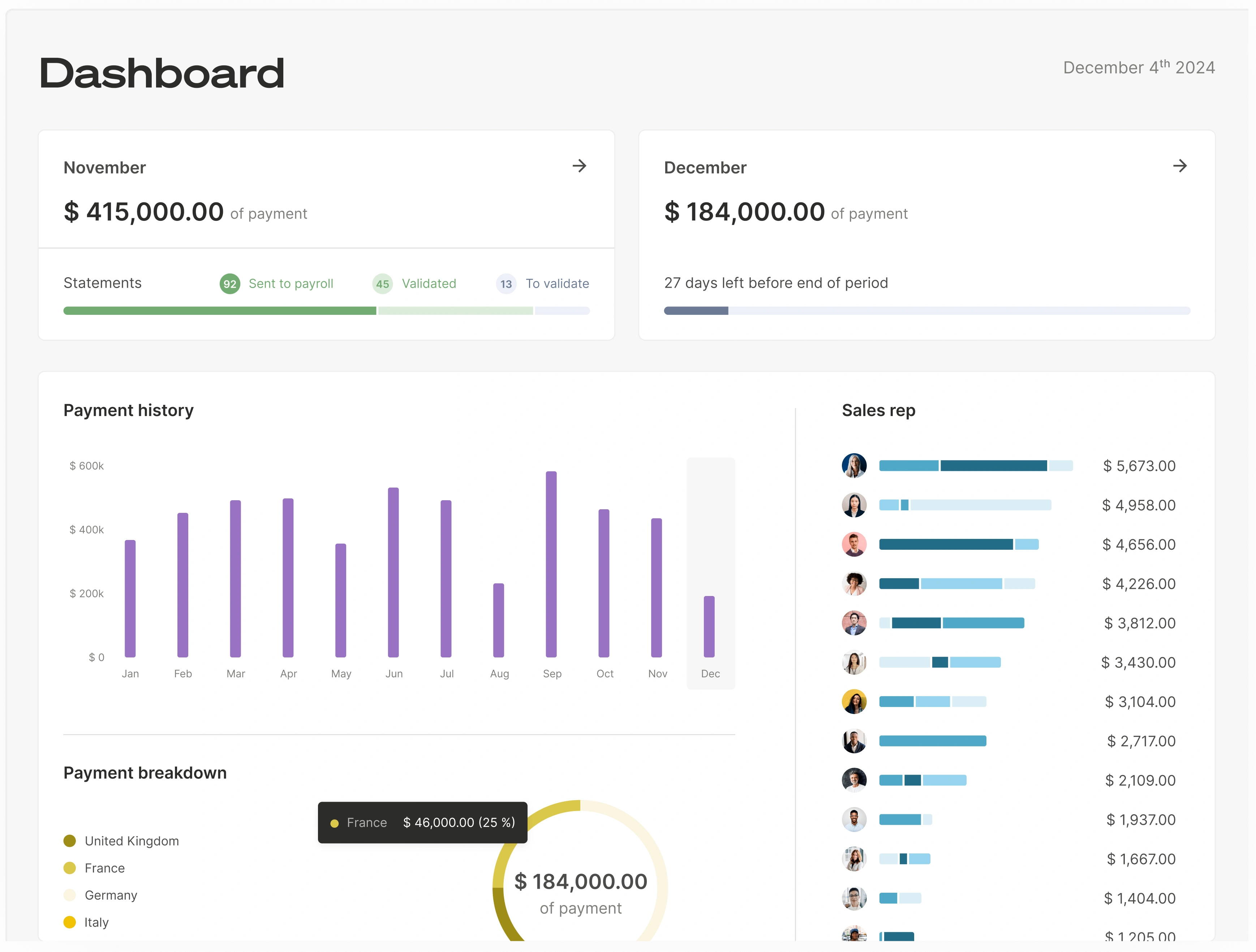
By centralizing all compensation rules and data, these platforms provide a single source of truth. Key benefits include:
- No-Code Flexibility: Sales Ops and Finance leaders can design, model, and deploy complex incentive plans without writing a single line of code. This agility allows for rapid adjustments to market conditions or business priorities, using resources like pre-built plan templates to get started quickly.
- Real-Time CRM Integration: With native, bi-directional integrations for tools like Salesforce and HubSpot, deal data flows automatically into the platform. This ensures that calculations are always based on the latest information, eliminating manual data entry and reducing errors by up to 95%.
- Transparent Dashboards: Sales reps get a real-time, personalized view of their performance, potential earnings, and progress towards incentive goals. This immediate feedback loop is a powerful motivator, allowing them to see exactly how their efforts translate into rewards.
- Reliable Automation: The automated calculation engine handles even the most complex rules, freeing up hours of administrative time each month. This allows teams to focus on strategic analysis and optimizing performance rather than debugging spreadsheets.
By embracing automation, companies can ensure their incentive programs are accurate, transparent, and scalable, providing the sales team with the clarity and motivation they need to succeed.
In summary, sales incentives are far more than just a reward; they are a critical component of a modern sales strategy. When thoughtfully designed, clearly communicated, and powered by the right technology, they align your team around key objectives, foster a culture of high performance, and ultimately become a powerful engine for business growth.
Frequently Asked Questions
How often should we run sales incentive programs?
The frequency depends on your sales cycle and business objectives. Short-term SPIFs can be run weekly or monthly to drive immediate behaviors. Larger, more significant incentives, like a President's Club, are typically based on annual performance. A healthy mix of short-term and long-term programs often yields the best results.
What's the difference between an incentive and a bonus?
While similar, an incentive is typically tied to a specific, pre-defined performance goal (e.g., "sell 10 units of Product X and win £500"). A bonus is often more discretionary and may be tied to overall company or individual performance without a specific, contest-like structure. Incentives are proactive tools to drive future behavior, whereas bonuses are often reactive rewards for past performance.
How do you budget for a sales incentive program?
Start by modeling the potential impact. Estimate the incremental revenue or profit you expect the program to generate. The budget for the rewards should be a reasonable percentage of that projected gain. It's also wise to set a cap on total payouts to protect the company from unexpected over-performance, especially when launching a new program.
Can you incentivize non-sales behaviors?
Absolutely. Incentives can be used to encourage any behavior that contributes to business success. This could include rewarding reps for completing training modules, maintaining clean CRM data, generating a certain number of positive customer reviews, or excelling at team collaboration. This helps build a more well-rounded and effective sales organization.