Sales Compensation Software Benchmark | Compare 15+ Sales Compensation Platforms
Download
- Qobra fits sales teams that want to connect the sales plan to commission pay: Qobra automates commission calculations, integrates natively with Salesforce and HubSpot, and adds AI for natural-language plan creation, an "Explain my comp" assistant and agents that simulate future earnings.
- Sales planning tools cover different stages: Anaplan offers enterprise-scale revenue planning with scenario modelling, Gong analyses calls, emails and meetings to improve forecast quality, HubSpot Sales Hub pairs CRM with pipeline management and the AI-powered Breeze feature, and Salesforce Sales Cloud builds planning and forecasting into the CRM.
- Anaplan suits enterprise-scale organisations with complex hierarchies, while mid-market teams often find Salesforce Sales Cloud or HubSpot Sales Hub a better fit because both combine CRM with native planning capabilities.
- Sales planning software can pull standard and custom objects and fields from a CRM such as Salesforce or HubSpot, sync with data warehouses such as Snowflake, and push finalised commission data to an HRIS or payroll system.
- Qobra syncs CRM data automatically throughout the day, and on demand in one click, so sales reps see how each deal impacts their earnings.
Are your sales plans gathering dust in a spreadsheet, disconnected from the daily reality of your sales team? Do you spend weeks building a strategy only for it to become obsolete after the first market shift? A static plan can't keep up with a dynamic business. The key to unlocking consistent growth lies in moving from rigid, error-prone manual planning to an agile, data-driven approach. But how do you make that leap, and what are the essential features to look for in a modern solution?
The right platform doesn't just help you set revenue targets; it connects your entire sales motion, from high-level strategy to the daily motivation of each representative. It transforms planning from an annual chore into a continuous, strategic advantage that powers efficiency, boosts productivity, and aligns everyone toward a common goal.
The End of Annual Guesswork: Why Sales Planning Software Matters
Sales planning tool is a specialized solution designed to help businesses define and manage sales targets, strategically allocate resources, and monitor progress to optimize performance. Acting as a central nervous system for your sales strategy, it moves beyond the limitations of spreadsheets to create a dynamic, interconnected, and actionable framework.
For many organizations, the annual planning cycle is a time-consuming ordeal involving manual data entry, endless spreadsheet tabs, and a high risk of transcription errors. This approach is not only inefficient but also creates a plan that is immediately outdated and difficult to adjust.
The importance of dedicated sales planning tools is rooted in their ability to align sales priorities with broader business objectives. When your plan is built directly on real-time operational data from your CRM and other systems, it reflects the true state of your organization. This data-driven foundation allows leaders to make informed decisions about territory assignments, quota distribution, and resource allocation. It enhances overall sales efficiency by ensuring that every seller is positioned for success with fair, balanced territories and achievable targets.
Ultimately, this approach transforms your sales plan from a simple document into a living strategy. It provides the agility needed to pivot in response to market changes, new product launches, or competitive pressures. Automating and simplifying the planning workflow saves time and fosters a more agile organization, ready to seize new opportunities.
Core Features to Look for in Top-Tier Sales Planning Tools
When evaluating sales planning software, it's easy to get lost in a long list of features. However, the best platforms excel in a few core areas that form the foundation of an effective sales strategy. These capabilities work together to ensure your plan is built on accurate data, reflects your unique organizational structure, and can be easily translated into action.
Data Integration and Hierarchy Management
A reliable sales plan starts with reliable data. The most powerful tools offer a direct, automated connection to your CRM, pulling in both standard and custom objects and fields without manual data entry. This not only frees up countless hours during setup but also eliminates the costly errors that come with manual transcription. Look for a solution that allows you to structure the plan based on your company's actual operations and results.
Equally important is organizational flexibility. Your sales structure isn't static, and your tools shouldn't be either. A responsive hierarchy manager is essential for ensuring that segmentation, allocation, and target setting accurately reflect your sales organization. The best software allows you to make both minor adjustments and broad, sweeping changes efficiently. You should be able to add, remove, or modify hierarchy levels across and within regions, ensuring the plan always matches your go-to-market strategy.
Segmentation, Territory Planning and Pipeline Visibility
Effective planning requires a deep understanding of your customer base. A top-tier tool should empower you to explore records and even imported third-party data at scale, backed by robust analytics. This allows you to easily filter, evaluate, and segment customers by key demographics, attributes, and historical data. By analyzing segments, you can identify high-potential accounts and design more effective sales representative territory plans.
Once segments are defined, the platform should facilitate intelligent assignment. This means moving beyond slow, manual calculations for balancing accounts, reps, and territories. Modern solutions use automation and business rules to align assignments with your priorities and constraints. This ensures territories are balanced, reps have an equitable shot at success, and your sales resources are deployed for maximum impact.
A clear view of your pipeline is equally critical. Sales managers need to track active deals at every stage and understand which leads are most likely to close. Without pipeline visibility, territory and quota decisions are made in the dark. The best planning tools surface this data continuously, so adjustments can be made before targets are missed.
Target Setting, Quota Planning and Metric Allocation
A plan is only as good as the targets it sets. A key feature is a powerful metric allocation engine that helps you set, distribute, and track performance targets across teams. This goes beyond simple revenue quotas and should include other relevant measurements like budgets, pipeline generation, and headcount. The ability to cascade targets down through the sales hierarchy ensures alignment from the top down.
However, setting targets is only half the battle. To truly drive sales performance, these targets must be connected to what motivates salespeople most: their compensation. While planning software helps define the "what," a dedicated incentive compensation platform makes it real. It translates quota attainment into visible, real-time earnings, creating a powerful feedback loop that fuels motivation and drives the right behaviors every day.
Leading Sales Planning Tools: a Practical Overview
No single tool fits every organization. When evaluating sales planning software, the right choice depends on your team size, your existing stack, and the specific stage of your entire sales process you want to address first.
Here is a quick overview of tools that frequently appear in this category:
- Qobra: while the other tools in this list focus on defining quotas and territories, Qobra closes the loop by connecting your sales plan to incentive compensation. Qobra automates commission calculations and integrates natively with CRMs like Salesforce and HubSpot. Qobra syncs CRM data automatically throughout the day, and on demand in one click, so reps see how each deal impacts their earnings. For sales managers, this turns the plan into an execution engine rather than a static document.
- Anaplan: a connected planning platform built for enterprise-scale revenue planning. Users benefit from strong scenario modeling and cross-functional alignment between sales and finance. Best suited for large organizations with complex hierarchies.
- Gong: a revenue intelligence platform that captures and analyzes customer interactions (calls, emails, meetings) to surface insights on deal health and forecast accuracy. Not a planning tool per se, but a critical input for improving forecast quality.
- HubSpot Sales Hub: an all-in-one platform that pairs CRM with pipeline management, sales automation, and reporting. A strong option for growing teams that want to manage leads, deals, and quota tracking in one place. Its AI-powered Breeze feature analyzes buyer intent to help reps prioritize outreach.
- Salesforce Sales Cloud: the reference CRM for enterprise teams, with native planning, forecasting, and sales analytics platform capabilities built in. Pros: deep customization and a mature ecosystem. The learning curve and cost can be significant for smaller teams.
Important: this list is not exhaustive. Many specialized tools address specific parts of the planning cycle (capacity planning, territory carving, incentive compensation). The key is to identify your primary bottleneck first and select the tool that solves it most directly.
The Strategic Impact of Connecting Sales Planning with Incentive Compensation
A meticulously crafted sales plan can fall flat if your sales team isn't motivated to execute it. This is the critical gap where sales planning and incentive compensation must connect. While your planning tool sets the strategic direction—defining territories, accounts, and quotas—a compensation management platform provides the fuel by making the rewards for execution tangible and transparent.
Sales commission tools like Qobra are designed to bridge this gap, transforming compensation from a complex, opaque back-office task into a strategic lever for sales performance. By automating commission calculations and integrating directly with your CRM, these tools give reps clear visibility into their earnings on every deal. Qobra adds AI on top: natural-language plan and view creation, an "Explain my comp" assistant, and agents that can simulate future earnings — directly connecting planning and motivation. This eliminates disputes, builds trust, and keeps sellers focused on high-value activities. When a rep sees exactly how each sale impacts their take-home pay, the sales plan becomes more than just a set of numbers; it becomes a personal roadmap to success.
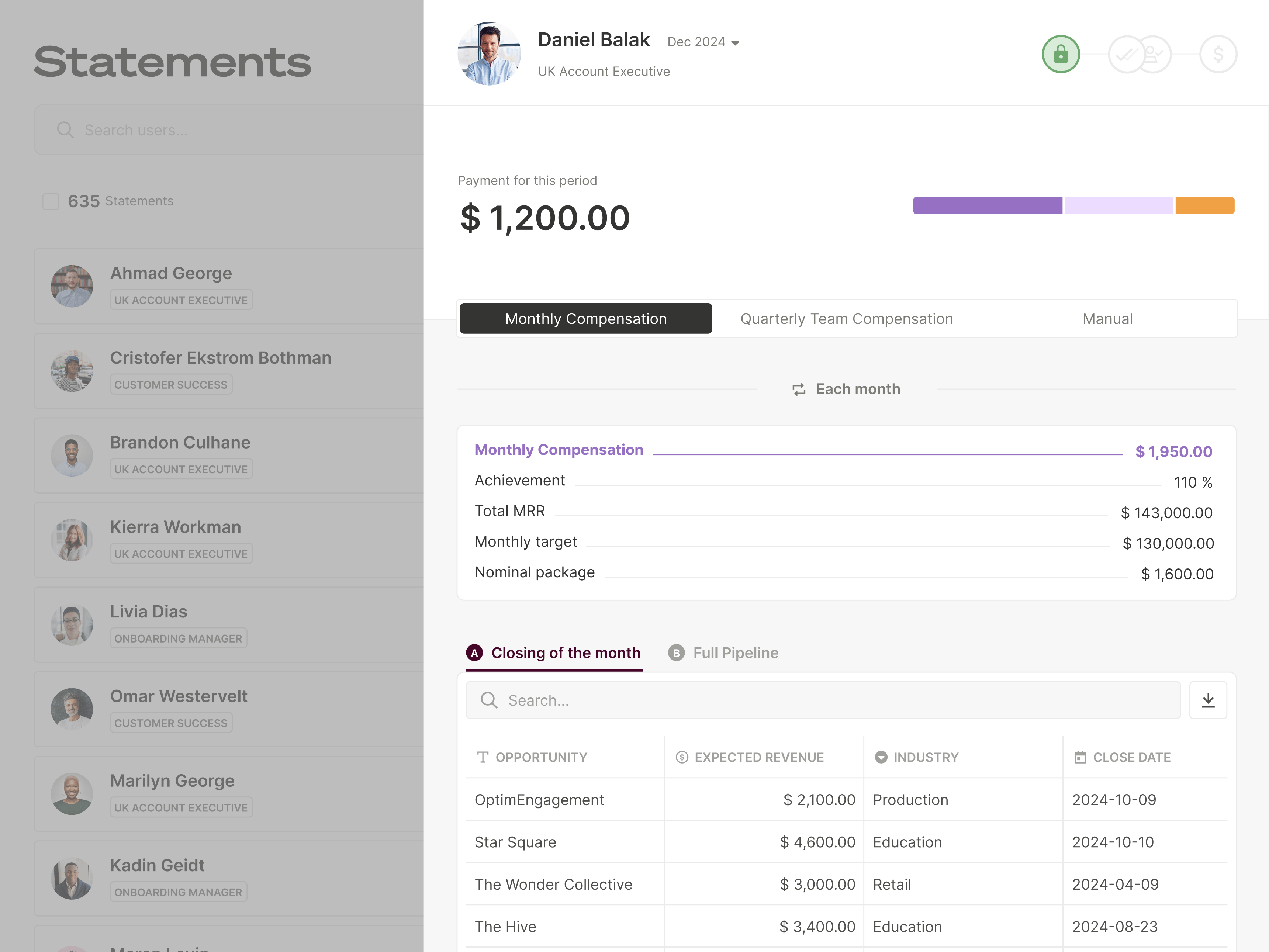
Connecting the sales plan to compensation delivers benefits across the organization:
- For Sales Reps: Clear visibility into commissions and goal attainment keeps motivation high. They can simulate potential earnings on deals in their pipeline, helping them prioritize their efforts effectively.
- For Sales Ops: The end of spreadsheet chaos. Automation saves dozens of hours each month, eliminates calculation errors, and allows teams to focus on strategic tasks instead of manual data crunching.
- For Finance: A complete audit trail and streamlined approval workflows ensure every payment is accurate and compliant. This provides full control over commission payouts and simplifies financial forecasting.
💡 Expert Advice
When evaluating planning software, always ask how it supports the "last mile" of sales execution: motivation. A plan that defines quotas without providing a clear, real-time link to compensation is incomplete. The most effective strategies integrate planning with tools that manage B2B sales commissions to ensure strategic goals translate directly into seller actions.
How to Choose the Right Sales Planning Software for Your Business
Selecting the right sales planning solution is a critical decision that will impact your entire sales organization. To make an informed choice, move beyond flashy demos and focus on how a platform will address your specific needs and integrate into your existing tech stack.
Assess Your Current Processes and Pain Points
Start by auditing your current planning cycle.
- Where are the bottlenecks?
- Are you spending too much time on manual data entry?
- Are commission disputes common at the end of each quarter?
Identifying your primary pain points will help you prioritize features. If your biggest issue is data accuracy, CRM integration is non-negotiable. If agility is the problem, focus on platforms with flexible hierarchy management and scenario modeling.
Evaluate Your Integration Needs
Your sales planning software cannot operate in a silo. Its value is magnified by its ability to connect with the tools you already use.
- CRM: Native, real-time integration with your CRM (like Salesforce or HubSpot) is the most critical requirement. This ensures your plan is always based on the latest data.
- Data Warehouses: If you use data lakes or warehouses like Snowflake, ensure the tool can sync with them to incorporate a wider range of business data.
- HRIS/Payroll: The ability to push finalized commission data to your HRIS or payroll system automates the final step of the process, ensuring timely and accurate payments.
- Compensation Tools: Consider platforms that either include or integrate seamlessly with incentive compensation management. A tool like Qobra, for example, is built to connect with your CRM to automate the entire commission lifecycle, from deal closure to payment.
📌 Note
Look beyond the sticker price. While the per-user, per-month cost is important, consider the total cost of ownership. This includes implementation time, training requirements, and the potential cost of solving your current problems (e.g., hours wasted on manual work, demotivated reps, and costly payout errors). The ROI of a well-implemented platform often far exceeds its subscription cost.
Consider Scalability and User-Friendliness
Your business will evolve, and your software must be able to evolve with it. Can the platform handle complex scenarios like mergers, acquisitions, or new product lines? Look for customizable plan templates and a no-code editor that allows your team to build and modify compensation plans without relying on developers. An intuitive interface is also key for adoption. If the software is too complex for sales managers and reps to use, you'll never realize its full potential.
Beyond Planning: A Look at the Broader Sales Ecosystem
Sales planning is a cornerstone of a successful sales strategy, but it's part of a larger ecosystem of tools designed to enhance performance. Many of the leading platforms are part of a broader suite of IT sales tools that address different stages of the sales cycle. Understanding how these components fit together can help you build a truly comprehensive and powerful sales technology stack.
- Incentive Compensation Management (ICM): As discussed, this is the most direct extension of sales planning. While planning sets the goals, ICM tools like Qobra manage the variable pay that motivates reps to achieve them. They provide the critical link between sales performance and reward.
- Sales Mapping and Location Intelligence: Tools like Salesforce Maps bring geographic data into your CRM. This helps reps visualize their territories, optimize routes for field visits, and uncover location-based opportunities, making the territory plans you create more actionable.
- Revenue Intelligence: These platforms use AI-powered analysis of sales data from calls, emails, and customer interactions to surface insights on deal health and forecast accuracy. Tools like Gong operate in this category. An effective sales forecasting process is a key input for strong planning.
- Sales AI and Guided Selling: Artificial intelligence is increasingly embedded directly into CRMs to guide sellers at every step. This can include recommending the next best action, surfacing relevant content for a specific deal, or identifying at-risk opportunities. These tools help execute the sales plan with greater precision.
Integrating these different solutions creates a synergistic effect. Your sales plan provides the "what" and "why," while the rest of your tech stack provides the "how," giving your team with the intelligence, motivation, and efficiency needed to hit their numbers. The latest sales technology trends point towards an increasingly connected and intelligent sales motion.
The era of static, spreadsheet-driven sales planning is over. To compete in today's fast-paced market, businesses need agile, data-driven, and motivational planning solutions. The best sales planning software provides a foundation of data integration, flexible hierarchy management, and intelligent territory design. But the true strategic advantage comes from connecting that plan to the engine of your sales team: their compensation. By uniting your planning framework with a transparent and automated incentive compensation platform, you create a powerful, self-reinforcing cycle of planning, execution, and motivation that drives predictable and scalable growth.
FAQ - Sales Planning Software
What features should I look for when evaluating sales planning software?
The core features to prioritize are CRM integration (Salesforce, HubSpot), territory and quota planning, pipeline visibility, and AI-powered forecasting. Beyond these, look for sales analytics platform capabilities, scenario modeling for what-if analysis, and the ability to track revenue targets across teams. User adoption is also critical: if sales managers and reps find the interface too complex, the tool will not deliver its expected ROI.
Which sales planning software is best suited for different business sizes?
For enterprise-scale organizations with complex hierarchies, platforms like Anaplan offer deep scenario modeling and cross-functional planning. Mid-market teams often find Salesforce Sales Cloud or HubSpot Sales Hub a better fit, combining CRM with native planning capabilities. Smaller or faster-growing teams tend to prioritize pricing flexibility and ease of use, looking for tools that can scale as users and territories grow. The right choice always depends on your primary pain point: forecasting accuracy, pipeline coverage, or quota planning.
How does sales forecasting improve the sales planning process?
Sales forecasting is a foundational input for effective sales planning. It improves the process by analyzing historical data and market trends to predict future sales revenue. This data-driven insight allows sales leaders to set realistic and achievable goals, which is the first step in any credible plan. Furthermore, accurate forecasts help in resource allocation; by knowing which segments or territories are poised for growth, leaders can assign reps, marketing budgets, and support resources more effectively. Finally, forecasting helps managers and reps prioritize deals that are most likely to close, ensuring their day-to-day activities are aligned with the high-level targets set in the sales plan.