Sales Compensation Software Benchmark | Compare 15+ Platforms (Features, Pricing, User Reviews, etc.)
Download
- Centralize and automate quota setting: a sales quota software replaces error-prone spreadsheets by creating fair, data-driven quotas across types (revenue, volume, activity, profit, or hybrid) and cascading targets from corporate to rep level.
- Key capabilities to expect: top‑down and bottom‑up modeling, territory allocation, CRM/ERP/Data Warehouse/HRIS integrations, scenario what‑if forecasting, real‑time dashboards, and transparent commission calculations.
- Concrete benefits: higher quota attainment and revenue predictability, fewer manual errors and admin hours, improved rep motivation and lower turnover — yielding measurable ROI from increased sales performance and operational savings.
- How to choose: match solution type to your needs (SPM suites for complex enterprises, FP&A platforms for cross‑functional planning, ICM specialists for commission transparency), prioritize native CRM integration, ease of use, and scalability.
- Implementation checklist: audit and clean CRM data, define top‑down/bottom‑up methodology, run a pilot, configure models and integrations, train users, and monitor KPIs (quota attainment rate, performance distribution, deal size, cycle length) to iterate.
Are your sales quotas feeling more like arbitrary targets than strategic drivers of growth? When quotas are misaligned, the consequences are severe: missed revenue goals, frustrated sales reps, and a rise in costly employee turnover. The traditional approach of setting quotas in spreadsheets, often based on last year's numbers plus a hopeful percentage, is no longer sufficient in today's dynamic market. It's time to move from guesswork to a data-driven strategy.
A modern approach, powered by dedicated sales quota software, transforms this critical process from a source of friction into a catalyst for performance. By leveraging real-time data, flexible modeling, and seamless integrations, businesses can set achievable, fair, and motivating quotas that align individual efforts with overarching company objectives. This shift not only ensures you hit your targets but also builds a happier, more productive sales team.
Why Traditional Quota Planning Fails
For many organizations, quota planning is a reactive and time-consuming exercise riddled with inefficiencies. The reliance on static spreadsheets and historical data creates a system that is fundamentally disconnected from current market realities and future potential. This outdated method is a primary cause of frustration for both sales leaders and their teams.
The core issues often stem from a few common pitfalls:
- Heavy reliance on past performance: Simply adding a percentage to last year's results ignores market shifts, new product launches, or changes in territory potential. It punishes consistent over-performers and fails to identify under-tapped markets.
- Lack of data-driven insights: Without integrating data from CRM, ERP, and market intelligence tools, quotas are set in a vacuum. This leads to imbalanced territories where some reps have an unfair advantage, while others are set up for failure.
- Slow and manual adjustments: When market conditions change, manual processes make it incredibly slow to adapt. Adjusting plans and reallocating quotas can take weeks of painful updates, disrupting momentum and causing confusion.
- Misalignment with business goals: Quotas set in isolation often fail to support strategic objectives, such as pushing a new product line or expanding into a new vertical. This disconnect means the sales team's activities may not be driving the most valuable outcomes for the business.
Ultimately, these shortcomings lead to a breakdown in trust and motivation. When reps feel their targets are unfair or unattainable, morale plummets, burnout increases, and top talent begins to look elsewhere. The business suffers from missed targets and the long-term consequences of a disengaged sales force.
What is Sales Quota Software?
A sales quota software is a specialized platform designed to automate and optimize the entire process of setting, managing, and tracking sales targets. Its fundamental purpose is to replace error-prone manual methods with a centralized, data-driven system that ensures quotas are fair, motivating, and strategically aligned with corporate revenue goals. By providing a single source of truth, these tools empower Sales Ops and leadership to make precise, informed decisions.
These platforms are built to handle the complexities of modern sales environments. They can manage various types of quotas, allowing businesses to tailor their incentive structures to specific objectives.
| Quota Type | Description | Best For |
|---|---|---|
Revenue Quota | The most common type, based on the total revenue a rep must generate in a period. | Driving top-line growth and straightforward sales models. |
Volume/Unit Quota | Based on the number of units sold or new accounts acquired. | High-volume sales environments or market penetration goals. |
Activity Quota | Targets specific sales activities, such as demos conducted, calls made, or meetings booked. | Long sales cycles where tracking leading indicators is crucial. |
Profit Quota | Based on the gross margin or profit generated from sales. | Businesses focused on profitability and discouraging heavy discounting. |
Combination Quota | A hybrid model that blends two or more quota types (e.g., revenue and new logos). | Aligning multiple strategic priorities simultaneously. |
At its core, a quota management system connects strategic planning to tactical execution. It ensures that the high-level annual target is intelligently cascaded down through regions, teams, and individual reps, creating a clear and logical path to success for everyone involved.
Key Features of Modern Sales Quota Management Platforms
To effectively address the challenges of manual planning, modern software solutions offer a suite of powerful features. These capabilities work together to create a cohesive, transparent, and agile quota management ecosystem.
Data-Driven Modeling and Allocation
The heart of any robust quota planning tool is its ability to model and distribute targets intelligently. Instead of relying on gut feelings, the software uses data to support different planning methodologies.
- Top-Down Planning: Starts with the overall company revenue target and allocates it down through the hierarchy (e.g., region, team, individual). The software helps ensure this allocation is based on territory potential, not just historical performance.
- Bottom-Up Planning: Begins by assessing the capacity and potential of individual territories or reps and rolls those figures up to create a realistic company forecast. This approach helps identify potential gaps between corporate goals and the sales team's capacity.
Advanced platforms allow you to set quotas by account, product line, or any other custom hierarchy. They provide real-time visibility into allocation, instantly showing if the sum of individual quotas matches the team's target and allowing for on-the-fly adjustments to close any gaps.
Integrations for a Single Source of Truth
Effective quota planning is impossible without clean, accessible data. Modern platforms offer seamless integrations with the critical systems where your business data lives. The most important connection is with your CRM (Customer Relationship Management) system, such as Salesforce or HubSpot. This native integration ensures that deal data, account information, and sales activity flow automatically, providing the foundation for accurate quota setting and performance tracking.
Beyond the CRM, leading solutions connect to:
- ERPs (Enterprise Resource Planning): For financial data and profitability metrics.
- Data Warehouses (Snowflake, BigQuery): For access to large, consolidated datasets.
- HRIS (Human Resource Information Systems): For headcount and team structure information.
This connectivity creates a single source of truth, eliminating data silos and manual data entry, which in turn reduces errors and saves valuable time for Sales Ops teams.
Data Quality is Non-Negotiable
Remember the principle of "garbage in, garbage out." The accuracy of your quota plan is directly dependent on the quality of the data in your source systems. Before implementing any new software, conduct a data audit in your CRM to ensure information is clean, consistent, and reliable. This upfront effort will pay significant dividends later.
Scenario Modeling and Forecasting
One of the most powerful features is the ability to conduct "what-if" analysis. Sales leaders can model various scenarios to understand the potential impact of different decisions. For example, you can simulate:
- The effect of rebalancing territories.
- Changes in the compensation plan structure.
- The impact of hiring new reps.
- Adjustments to product mix targets.
Some platforms use AI-driven forecasting to analyze historical trends and market data, recommending more realistic and achievable quotas. This allows teams to test multiple outcomes and select the optimal plan without disrupting existing workflows or committing to a strategy prematurely.
Transparency and Motivation through Dashboards
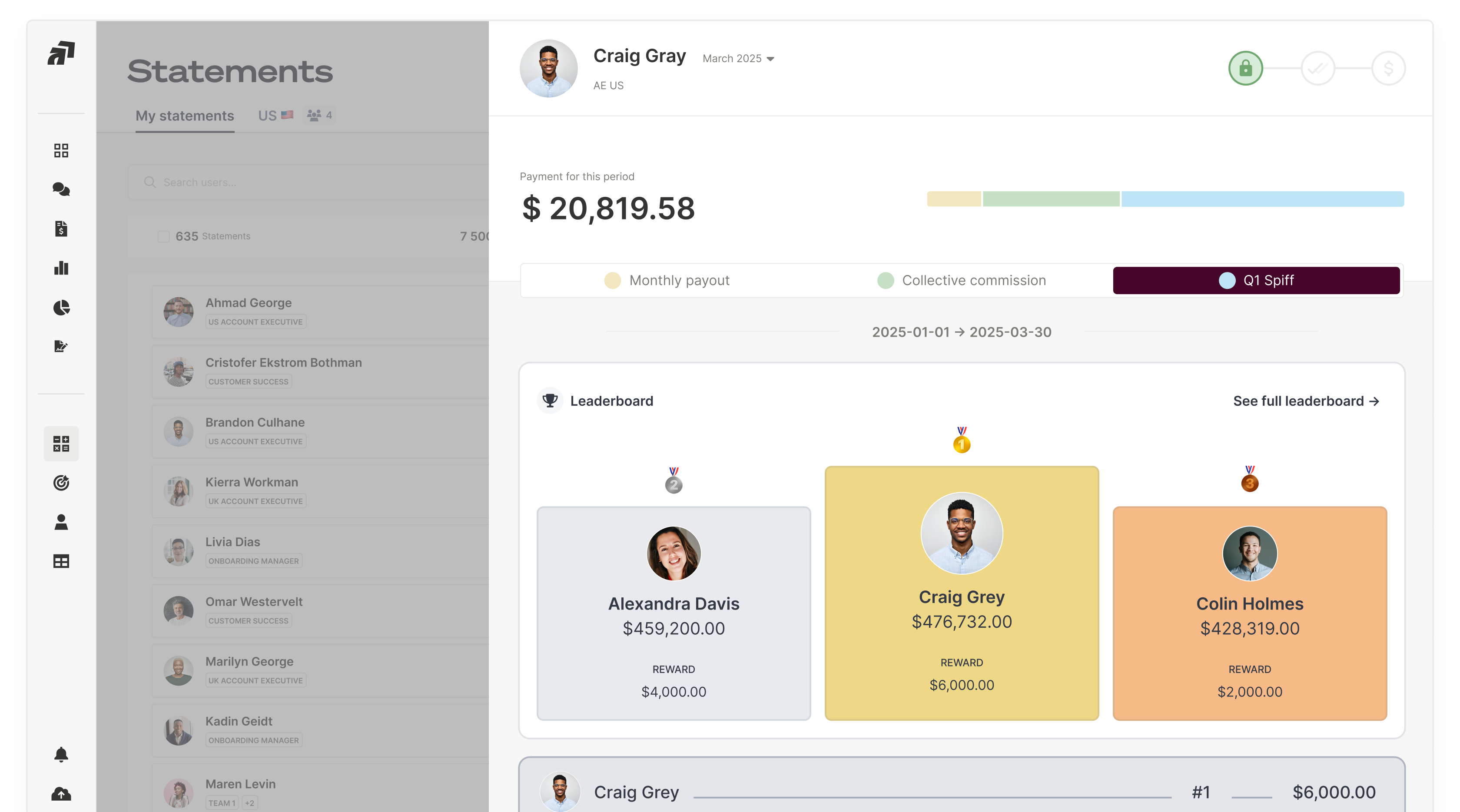
Perhaps the most critical element for the sales team is transparency. When reps don't understand how their quota was set or how their performance translates into earnings, motivation suffers. Modern software provides personalized dashboards for each salesperson, showing real-time progress toward their goals.
This visibility is a powerful motivator. It allows reps to see exactly where they stand, forecast their potential earnings, and understand which deals will have the biggest impact. For managers, aggregated dashboards provide a clear view of team performance, highlighting who is on track and who may need coaching. This transparency is a cornerstone of platforms like Qobra, which connect quota attainment directly to commission calculations, giving reps a live, accurate view of their earnings and eliminating end-of-quarter disputes.
Choosing the Right Sales Quota Solution for Your Business
The market for sales planning tools is diverse, with solutions tailored to different needs and organizational complexities. Understanding the main categories can help you identify the best fit for your company.
Enterprise Sales Performance Management (SPM) Suites
Platforms like Varicent offer comprehensive, end-to-end solutions that cover the entire sales performance lifecycle, from territory carving and quota setting to incentive compensation and reporting.
- Strengths: They provide an all-in-one platform with deep functionality for large, complex enterprise organizations. They are robust and can handle intricate hierarchies and rules.
- Limitations: This power often comes with complexity. Implementations can be long and costly, often requiring specialized consultants. Their rigidity can make it difficult for business users to make quick adjustments without technical support.
Flexible Business Planning Platforms
Tools like Pigment and Jedox are powerful enterprise planning solutions that extend beyond sales. They connect sales planning with finance (FP&A) and operations, offering exceptional flexibility for modeling and scenario analysis.
- Strengths: Highly adaptable, with powerful engines for multi-dimensional modeling and AI-driven forecasting. They excel at integrating sales plans with the overall corporate financial plan.
- Limitations: While powerful, they may be overly complex if your only goal is sales quota and commission management. They are planning tools first, and may lack the specific workflows and rep-centric dashboards found in more specialized solutions.
Incentive Compensation Management (ICM) Specialists
This category focuses on the most critical output of quota attainment: compensation. While some tools in this space are also complex, modern solutions like Qobra prioritize simplicity, transparency, and automation.
- Strengths: These platforms excel at translating quotas and sales performance into accurate, real-time commission calculations. Qobra’s no-code editor allows Sales Ops and Finance teams to build and modify even the most complex commission plans without any technical expertise. The focus is on providing reps with extreme transparency into their earnings, which is a powerful driver of motivation.
- Limitations: These tools are not designed for strategic territory mapping or high-level market potential analysis. Their strength lies in operationalizing the quotas you've already set. They are the engine that connects performance to reward, ensuring the system is fair, fast, and trusted by the sales team.
For many businesses, the ideal approach is to use their CRM for territory management and then integrate a specialized ICM tool like Qobra to handle the crucial final step: calculating and communicating commissions. This creates a best-of-breed stack that is both powerful and user-friendly.
Implementing Your Sales Quota Software: A Practical Guide
Adopting a new tool is more than just a technical project; it's a change management process. Following a structured approach ensures a smooth transition and maximizes your return on investment.
- Prepare Your Data: Before you begin, clean up your CRM data. Ensure account ownership is clear, deal stages are accurate, and historical data is reliable. This foundational step is crucial for success.
- Define Your Methodology: Decide whether a top-down, bottom-up, or hybrid model best suits your business. Document your current process and identify key stakeholders who need to be involved in the design of the new one.
- Configure and Model: Work with your chosen vendor to configure the platform. Use the scenario modeling features to test different allocation strategies and find the most balanced approach.
- Integrate and Automate: Connect the software to your CRM and any other relevant data sources. Setting up these integrations with systems like Salesforce is key to automating data flow and enabling real-time calculations.
- Train and Deploy: Onboard managers and sales reps. Focus on the benefits for them, such as increased transparency, real-time performance tracking, and accurate earnings forecasts. Strong user adoption is essential for realizing the tool's full value.
- Monitor and Adjust: Once live, use the dashboards and reporting features to monitor quota attainment and sales performance. The goal is to create a living plan that can be adjusted dynamically in response to market changes or business priorities.
Start with a Pilot Program
Instead of a company-wide rollout, consider launching your new sales quota software with a single team or region. This pilot program allows you to test your configuration, gather user feedback, and refine your processes in a controlled environment. A successful pilot builds momentum and creates internal champions who can advocate for the broader deployment.
Moving from outdated spreadsheets to a dynamic sales quota software is a strategic imperative for any business serious about growth. These platforms eliminate manual work, reduce errors, and foster a culture of transparency and trust. By setting fair, data-driven quotas, you not only improve alignment with business goals but also create a more motivated and successful sales team. The right tool transforms quota setting from an annual chore into a continuous, strategic process that drives predictable revenue and keeps your top performers engaged.

Frequently Asked Questions (FAQ)
How do you define fair and achievable sales quotas?
Fair quotas are built on a foundation of reliable data rather than simple guesswork. An effective process combines historical performance data with forward-looking indicators like market potential, territory maturity, and account quality. The best practice is to use a hybrid approach: start with a top-down corporate target, then refine it with bottom-up insights from sales managers who understand the nuances of their territories and teams. Using software to model different scenarios ensures the final allocation is balanced and perceived as attainable.
How does sales quota software integrate with CRM systems like Salesforce?
Modern software integrates with CRMs like Salesforce and HubSpot through native connectors or APIs. This creates a two-way, automated flow of information. For example, closed-won deal data from the CRM is used by the software to calculate quota attainment in real-time. Conversely, quota information can be displayed directly within the CRM interface. Solutions like Qobra offer an embedded Salesforce experience, allowing reps to view their commission dashboards without ever leaving their primary workspace.
What key metrics should we track to adjust quotas effectively?
Beyond top-line revenue, several key performance indicators (KPIs) are essential for monitoring the health of your quota plan. The most important metric is the quota attainment rate—the percentage of reps hitting or exceeding their target. Ideally, this should be between 60-80% of the team. Other critical metrics include sales cycle length, average deal size, product mix performance, and the distribution of performance across the team (i.e., avoiding a scenario where only a few top performers succeed).
What is the typical ROI of implementing a quota planning tool?
The return on investment comes from multiple sources. Quantifiable benefits include increased revenue from higher quota attainment rates, improved profitability through better-aligned incentives, and significant operational savings by reducing the hours your Sales Ops team spends on manual calculations. Softer, but equally important, benefits include reduced sales rep turnover—a major cost saver—and improved morale and motivation, which leads to higher productivity.