Webinar: The Biggest Release Sales Comp Has Ever Seen. Come See For Yourself (Wednesday, October 7)
Register
- Differentiate clearly: an incentive is a prospective promise to drive future behavior, a reward is the retrospective recognition once the goal is met.
- Design around SMART objectives and a defined target audience, with transparent eligibility, measurable rules, and an appropriate budget to ensure fairness and focus.
- Offer a balanced mix (monetary, non‑monetary, points/experiences) and personalize options so rewards resonate across roles and motivations.
- Automate and scale with the right tools—company recognition platforms for culture-wide rewards and specialized commission software for accurate, real‑time sales payouts—to reduce errors and boost trust.
- Measure impact with KPIs tied to objectives, calculate ROI ((financial gain − cost)/cost), collect qualitative feedback, and iterate (pilot/A‑B test) to optimize results.
How do you transform a business objective from a line on a spreadsheet into a powerful motivator for your teams? While strong leadership and a positive culture are essential, strategic incentive rewards are the tangible link between individual effort and organizational success. They are the mechanism that aligns everyone towards a common goal, providing a clear reason to go the extra mile.
However, creating a program that genuinely inspires action rather than just adding to costs requires more than just promising a bonus. It demands a thoughtful approach that distinguishes between short-term motivation and long-term recognition, tailored to the people you want to energize. This guide will walk you through the nuances of incentive rewards, from fundamental definitions to designing, implementing, and measuring a program that delivers real returns.
Understanding the Core Concepts: Incentives vs. Rewards
While often used interchangeably, "incentives" and "rewards" serve distinct purposes, and understanding the difference is the first step toward building an effective program. The key distinction lies in their timing and intent.
An incentive is a prospective promise. It's an offer made before an action or achievement to encourage a specific future behavior. It answers the question, "What's in it for me if I achieve this?" Incentives create anticipation and drive focus toward a predefined goal. For example, promising a sales team a £1,000 bonus for exceeding their quarterly target is an incentive.
A reward, on the other hand, is a retrospective acknowledgment. It is given after a desired action has been completed to recognize and celebrate the accomplishment. It serves to validate effort and reinforce positive behavior. When the sales team surpasses its target and receives the £1,000 bonus, that payment is the reward.
In essence, an incentive is the catalyst for performance, while a reward is the recognition of that performance. A comprehensive "incentive rewards" program strategically combines both elements: it uses incentives to set clear expectations and motivate effort, then uses rewards to provide a satisfying and memorable conclusion that encourages repeat performance.
Here’s a simple breakdown of the key differences:
| Feature | Incentive | Reward |
|---|---|---|
| Timing | Offered before the goal is achieved. | Given after the goal is achieved. |
| Purpose | To motivate and influence future behavior. | To recognize and acknowledge past performance. |
| Nature | Prospective (a promise of what could be). | Retrospective (a token for what was done). |
| Employee Mindset | "If I do X, I will get Y." | "Because I did X, I received Y." |
| Example | The chance to win a trip for being the top performer. | The trip awarded to the top performer. |
Why a Strategic Incentive Rewards Program is Crucial
Implementing a well-designed incentive program is more than just a gesture of goodwill; it's a powerful business strategy. When aligned with corporate objectives, these programs can drive tangible results across the organization, boosting everything from revenue to morale.
First and foremost, incentives provide increased motivation and focus. By linking specific actions to desirable outcomes, you give employees a clear and compelling reason to prioritize high-value tasks. This is particularly effective for time-bound objectives, creating a sense of urgency that can significantly boost sales performance. A clear goal, like "complete a major project ahead of schedule for an extra day off," helps teams channel their energy efficiently.
This enhanced focus naturally leads to improved performance and productivity. Goal-oriented incentives encourage employees to not only work harder but also smarter, seeking out efficiencies to reach their targets. This effect is compounded when incentives are tied directly to key business metrics, ensuring that individual efforts contribute directly to the company's bottom line.
Beyond pure output, incentive rewards are fundamental to enhancing employee engagement and retention. Programs that recognize effort and celebrate success make employees feel valued and appreciated. This sense of acknowledgment fosters loyalty and strengthens their connection to the company. In a competitive job market, an effective rewards system can be a key differentiator that helps retain top talent and reduce costly employee turnover.
The Different Types of Incentive Rewards
The most effective programs offer a diverse mix of incentives and rewards, as what motivates one person may not resonate with another. Broadly, these can be categorized into monetary, non-monetary, and points-based systems.
Monetary Incentives
These are the most direct and traditional forms of incentive rewards. They involve cash or cash equivalents and are highly effective for driving short-term, measurable goals, especially in sales environments.
- Commissions: A percentage of revenue generated, directly tying a salesperson's earnings to their results. Mastering the different commission structures is key to aligning sales behavior with company goals.
- Bonuses: One-time payments awarded for achieving specific, pre-defined goals (e.g., performance milestones, project completion, company-wide profit targets).
- Profit-Sharing: A plan that gives employees a share in the company's profits, fostering a sense of ownership and collective responsibility.
While powerful, relying solely on money can sometimes lead to a purely transactional relationship.
Non-Monetary Incentives
Non-monetary rewards tap into intrinsic motivations like the need for recognition, autonomy, and personal growth. They often have a longer-lasting impact on morale and company culture.
- Recognition: Public praise, a "performer of the month" award, or a personal thank-you from leadership can be incredibly powerful.
- Extra Time Off: Additional paid vacation days are a universally appreciated reward for exceptional effort.
- Flexibility: Offering flexible working hours or remote work options as a reward for consistent high performance.
- Professional Development: Sponsoring a certification, course, or attendance at an industry conference shows an investment in the employee's career growth.
Tangible Rewards & Points-Based Systems
These points are collected in a digital account and can be redeemed from a catalog of options, much like an online store. This model transforms the process of earning rewards into an engaging and continuous experience.
Examples include:
- Gift Cards: For retailers, restaurants, or online platforms.
- Merchandise: Electronics, company-branded swag, or luxury goods.
- Experiences: Travel packages, concert tickets, spa days, or unique dining experiences.
The power of this system lies in its personalization. An employee can choose what motivates them most, whether it's a practical item for their home or a once-in-a-lifetime trip.
Designing an Effective Incentive Rewards Program: A Step-by-Step Guide
A successful program is built on a foundation of clear strategy and thoughtful planning. Simply announcing a new bonus is not enough; you must design a system that is fair, understandable, and aligned with your business goals.
Step 1: Define Clear and Measurable Objectives
Before you think about rewards, define what you want to achieve. Your program's goals should be SMART: Specific, Measurable, Achievable, Relevant, and Time-bound. Are you trying to increase overall sales by 15% next quarter? Reduce customer response time by 20%? Improve employee retention by 10% over the next year? A clear objective is the North Star for your entire program.
Step 2: Identify Your Target Audience
Who are you trying to motivate? The incentives that work for a competitive sales team may not be effective for a collaborative engineering department or an external channel partner. Consider the roles, responsibilities, and existing motivations of your target audience to tailor the program effectively.
Step 3: Set Clear Eligibility Criteria and Rules
Transparency is non-negotiable. Everyone involved must understand exactly what they need to do to earn a reward. Define the rules clearly: What are the performance metrics? What is the measurement period? Are there thresholds or tiers? Ambiguity leads to confusion, frustration, and can even have the opposite of the intended effect. This clarity is crucial for designing a motivating sales compensation plan.
Step 4: Choose the Right Incentives and Budget
Based on your audience and objectives, select a mix of monetary and non-monetary rewards. Then, establish a realistic budget. This could be a percentage of the projected revenue increase, a fixed amount per employee, or tied to specific cost savings. Ensure the perceived value of the reward is significant enough to motivate the required effort.
Step 5: Communicate the Program Clearly and Consistently
Launch your program with a clear communication plan. Explain the "why" behind it—how it connects to the company's vision—as well as the "what" and "how." Use multiple channels (email, team meetings, internal platforms) to announce the program and provide regular updates on progress to maintain momentum.
Expert Tip: Start Small and Iterate
You don't need a perfect, company-wide program from day one. Consider piloting your incentive plan with a single team or department. This allows you to test the mechanics, gather feedback, and make adjustments before a broader rollout. This iterative approach minimizes risk and helps ensure the final program is well-received and effective.

Tools and Platforms to Manage Your Program
As incentive programs grow in complexity, managing them on spreadsheets becomes a significant operational bottleneck. Manual tracking is prone to errors, lacks transparency, and consumes valuable administrative time, often leading to disputes and demotivation. Modern software platforms automate the entire process, providing accuracy, visibility, and a better user experience.
General Incentive and Recognition Platforms
For company-wide recognition and rewards, platforms like Edenred or Incentivesmart offer comprehensive solutions. These tools typically provide:
- Points Management: A back-office to allocate points to individuals or teams.
- Reward Catalogs: An online "store" where employees can redeem points for gift cards, merchandise, and experiences.
- Gamification Features: Leaderboards and badges to foster friendly competition.
- Social Recognition Feeds: A place for peer-to-peer and manager-to-employee praise.
These platforms are excellent for managing non-monetary rewards and fostering a culture of appreciation across the entire organization.
Specialized Platforms for Sales Commissions
When it comes to the most critical incentive for sales teams—their commissions—a specialized tool is essential. The complex rules, frequent data changes, and direct impact on payroll demand a level of precision that general platforms cannot provide.
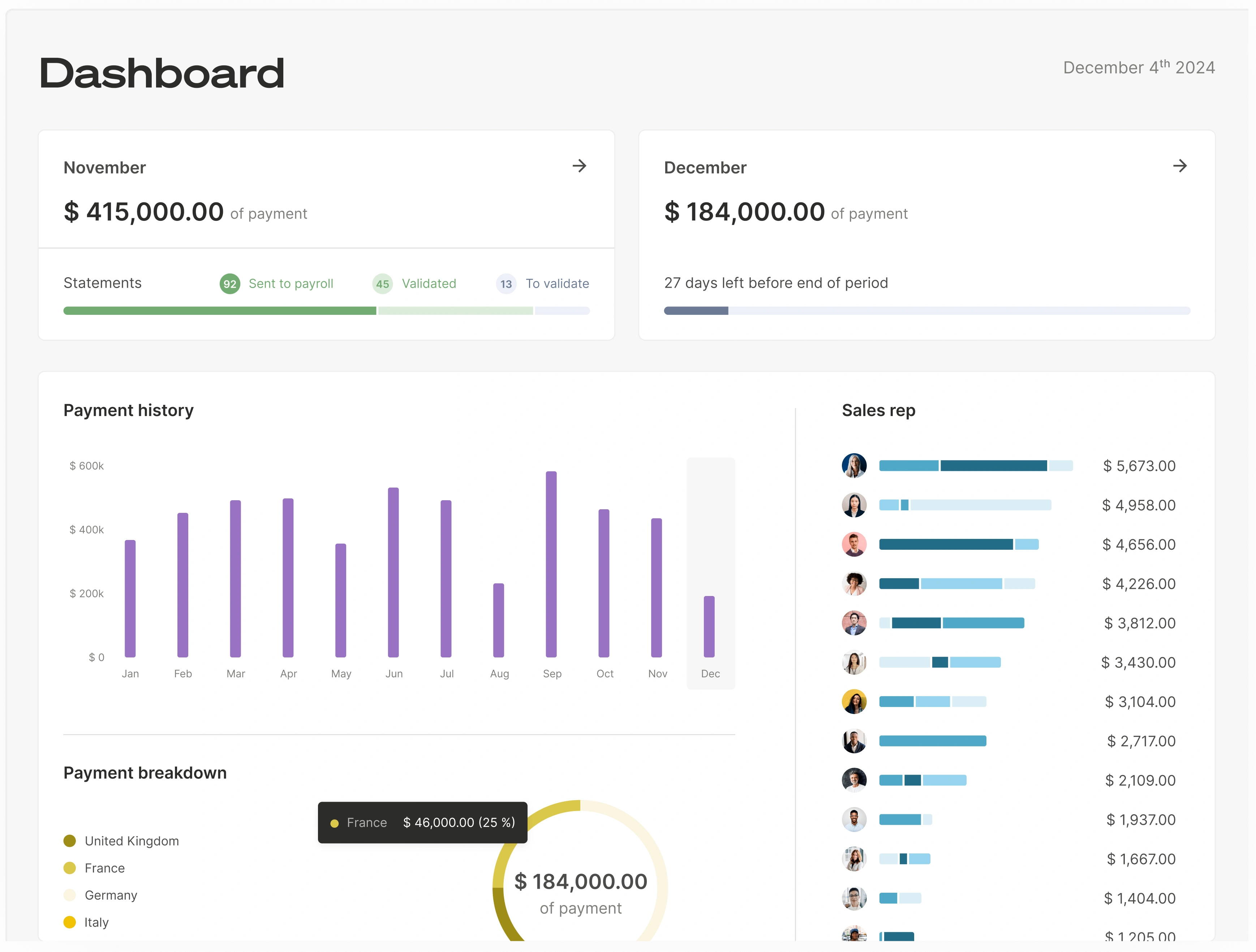
This is where a solution like Qobra excels. Built specifically for automating variable compensation, it replaces error-prone spreadsheets with a powerful and transparent system. Instead of waiting until the end of the month to see a confusing payout summary, sales reps can access real-time dashboards showing exactly how commissions are calculated deal by deal.
Key advantages of a dedicated commission platform include:
- No-Code Plan Builder: Admins can configure and adjust complex commission plans without needing developers.
- Real-Time CRM Integration: Data from Salesforce, HubSpot, or other systems flows automatically, ensuring calculations are always up-to-date.
- Total Transparency for Sales Reps: Dashboards show reps their current earnings, potential earnings from their pipeline, and progress toward quotas, which is a powerful daily motivator.
- Error Reduction: Automation eliminates the manual errors that erode trust and lead to costly commission disputes.
For businesses where sales performance is paramount, investing in a specialized tool like Qobra ensures that your most important incentive program is accurate, motivating, and scalable.
Measuring the Success of Your Incentive Program
An incentive program is an investment, and like any investment, its performance should be measured. Tracking success allows you to demonstrate value, justify the budget, and continuously optimize the program for better results.
Key Performance Indicators (KPIs) to Track
The KPIs you monitor should tie directly back to the program's original objectives. Common metrics include:
- For Sales Programs: Quota attainment rate, sales cycle length, average deal size, revenue growth.
- For Employee Retention: Employee turnover rate, employee satisfaction scores (eNPS).
- For Customer Service: Customer satisfaction (CSAT) scores, first-call resolution rate.
- For Program Engagement: Participation rate, points redemption rate.
Calculating Return on Investment (ROI)
ROI = (Financial Gain from Program - Cost of Program) / Cost of Program
- Financial Gain: This could be the incremental revenue generated, cost savings from improved efficiency, or savings from reduced employee turnover.
- Cost of Program: This includes the total value of rewards paid out, platform subscription fees, and any administrative time spent managing the program.
A positive ROI provides clear evidence that the program is adding value to the business. It's worth calculating the ROI of a dedicated tool to understand its full financial impact.
Note: Beyond the Numbers
While quantitative data like ROI is crucial, don't overlook qualitative feedback. Conduct surveys or interviews with participants to understand their perception of the program. Did they find it motivating? Was it fair and easy to understand? This feedback provides invaluable context and can uncover opportunities for improvement that the numbers alone won't reveal.
Gathering Feedback for Optimization
A great program is never truly "finished." It evolves. Use the data and feedback you collect to refine your approach. Perhaps one type of reward is far more popular than another, or maybe the rules for a specific incentive are causing confusion. A/B testing different rewards or communication styles with small groups can help you identify what works best before making large-scale changes.
Incentive rewards are far more than just a way to say "thank you." When designed and executed thoughtfully, they become a core component of your company’s strategic engine, driving behavior, reinforcing your culture, and directly contributing to your most important goals. By moving beyond simple bonuses and building a comprehensive program based on clear objectives, transparent rules, and the right technology, you can unlock the full potential of your team and create a workplace where achievement is both encouraged and celebrated.
Frequently Asked Questions (FAQ)
What is the main difference between an incentive and a reward?
An incentive is a promise offered before an action to motivate future behavior (e.g., a bonus for hitting a sales target). A reward is a tangible item or recognition given after an action is completed to acknowledge the achievement (e.g., the actual bonus paid out).
Are non-monetary rewards effective?
Absolutely. Non-monetary rewards like public recognition, extra time off, or professional development opportunities tap into deep-seated intrinsic motivations. They can often have a more lasting impact on employee morale, engagement, and loyalty than cash alone, helping to build a stronger company culture.
How do I set a budget for an incentive program?
There are several common approaches. You can budget a percentage of the expected financial gain (e.g., 10% of the incremental revenue). Alternatively, you can allocate a fixed amount per employee or base it on a percentage of payroll. The right method depends on your program's goals and financial model.
How can I ensure my incentive program is fair?
Fairness is built on transparency and objectivity. The rules and eligibility criteria must be crystal clear, measurable, and communicated to all potential participants from the start. Avoid subjective criteria that could lead to perceptions of favoritism. Using an automated platform to track progress and calculate payouts also helps ensure consistency and removes human bias.