Webinar: The Biggest Release Sales Comp Has Ever Seen. Come See For Yourself (Wednesday, October 7)
Register
- A compensation structure is a formal framework that organizes jobs into pay grades and salary bands to ensure fair, consistent, and market-aligned pay across the organisation.
- Core components include base salary, variable pay/incentives, benefits, equity grants, and perks — together forming the total rewards package.
- Common structures are traditional pay grades, broadbanding, market-based, skill-based, and hybrid sales models (e.g., 60/40 or 50/50 pay mixes for sales); choose based on company size, industry and strategy.
- Build it in 7 steps: define compensation philosophy, benchmark market data, group roles into families and levels, set pay grades and bands, model budget impact, document for leadership approval, and communicate transparently.
- Governance matters: review annually for market alignment and pay equity, ensure legal compliance, monitor KPIs, and use technology for complex commissions to improve attraction, retention and transparency.
How can you ensure your compensation is fair, competitive, and genuinely motivating for your employees? In a world where 85% of companies admit they need to improve pay equity, relying on ad-hoc decisions is no longer a viable strategy. The answer lies in building a deliberate and strategic framework: a compensation structure. This is not just an administrative checklist; it is the backbone of your talent strategy, providing the clarity and consistency needed to attract top performers, retain them for the long term, and foster a culture of transparency and trust.
A well-designed pay structure moves compensation from a subjective conversation to an objective, data-driven process. It gives managers and HR teams a clear guide for making pay decisions, while showing employees a transparent path for career and salary growth within the organization.
What is a Compensation Structure?
A compensation structure is a formal framework that a company uses to determine how its employees are paid. It organizes jobs into a logical hierarchy based on their value to the organization and sets clear guidelines for pay levels, ensuring fairness and consistency across all roles. More than just a list of salaries, this framework includes defined pay grades, salary ranges, and the criteria for pay adjustments.
It’s important to distinguish between a pay structure and salary bands, which are related but distinct concepts.
Pay Structure vs. Salary Bands
A pay structure is the overall framework that defines the company's compensation philosophy and methodology. It's the system that groups jobs and assigns value.
Salary bands (or pay ranges) are the specific pay ranges within that structure. Each band corresponds to a pay grade and has a defined minimum, midpoint, and maximum salary. They provide the flexibility to adjust an individual's pay based on experience, skills, and performance while remaining within the established framework.
Essentially, a strategic compensation framework supports equitable pay, helps manage budgets, reduces employee turnover, and ensures your company remains competitive by aligning with market data.
The Core Components of a Compensation Framework
A comprehensive compensation structure is a holistic package that goes far beyond a base salary. It’s the total sum of all cash and non-cash benefits an employee receives. A robust framework typically includes the following key components:
- Base Salary: This is the fixed, guaranteed annual amount paid to an employee, usually distributed in regular paychecks. The base salary is the foundation of the compensation package and is typically determined by the job's level, responsibilities, and market rates.
- Variable Pay (Incentives): These are non-guaranteed payments awarded for achieving specific performance goals. This category is broad and includes everything from annual performance bonuses and profit-sharing to sales commissions. A well-designed incentive compensation plan directly links employee performance to company success.
- Benefits: This covers a wide range of non-cash perks that add significant value to an employee's total rewards. Common benefits include health, dental, and vision insurance, retirement plans (like a 401(k) or pension), paid time off (vacation, sick days, holidays), and disability coverage.
- Equity Compensation: Often used by startups and high-growth companies to attract and retain talent, equity gives employees a stake in the company's success. This can include stock options, restricted stock units (RSUs), or other forms of ownership that vest over time.
- Perks and Other Allowances: These are additional non-monetary benefits that enhance the employee experience and align with the company culture. Examples include professional development budgets, wellness programs, gym memberships, flexible work options, and meal plans.
Common Types of Pay Structures with Examples
Companies can adopt several types of pay structures, each with its own advantages. The best choice depends on the organization's size, industry, culture, and strategic goals.
Traditional Pay Grade Structure
This is a hierarchical model that organizes jobs into numerous, narrowly defined pay grades. Each grade has a specific salary range, and employees progress up the ladder by moving to higher grades. This structure is very organized and provides clear career paths, but can sometimes be rigid.
Example: Pay Grade Structure for an Analytics Team
| Pay Grade | Job Title | Salary Minimum | Salary Midpoint | Salary Maximum |
|---|---|---|---|---|
| PG-1 | Junior Data Analyst | $55,000 | $65,000 | $75,000 |
| PG-2 | Data Analyst | $70,000 | $82,500 | $95,000 |
| PG-3 | Senior Data Analyst | $90,000 | $105,000 | $120,000 |
| PG-4 | Lead Analyst | $115,000 | $130,000 | $145,000 |
Broadbanding Structure
Broadbanding consolidates many traditional pay grades into a few, wider "bands." This approach offers greater flexibility for managers in setting pay and allows for more lateral career movement without a formal promotion. However, it can lead to larger salary disparities within a single band if not managed carefully.
Example: Broadbanding for a Professional Services Firm
| Broadland | Titles Included | Salary Range |
|---|---|---|
| Professional I | Analyst, Associate, Consultant | $60,000 - $100,000 |
| Professional II | Senior Consultant, Project Manager | $95,000 - $150,000 |
| Leadership | Director, Senior Director | $140,000 - $220,000 |
Market-Based Structure
This is the most common approach today. A market-based structure sets compensation levels primarily based on external market data from salary surveys and benchmarking. The goal is to ensure that pay is competitive for similar roles in the same industry and geographic location. For example, a company might decide to pay at the 60th percentile of the market to attract high-quality talent.
Skill-Based Pay Structure
In this model, employees are paid based on the skills, competencies, and certifications they possess, rather than their specific job title. It incentivizes continuous learning and development. For instance, a software developer who becomes certified in a new, high-demand machine learning framework could earn a pay increase, even if their title remains "Software Developer."
Hybrid Structures for Sales Teams
Sales roles almost always use a hybrid structure that combines a base salary with variable pay (commissions). This model provides financial stability while directly motivating performance. The split between base and variable pay is known as the "pay mix."
A common pay mix for an Account Executive might be 60/40, meaning 60% of their on-target earnings (OTE) comes from their base salary and 40% from variable commissions.
Automating Complex Sales Compensation
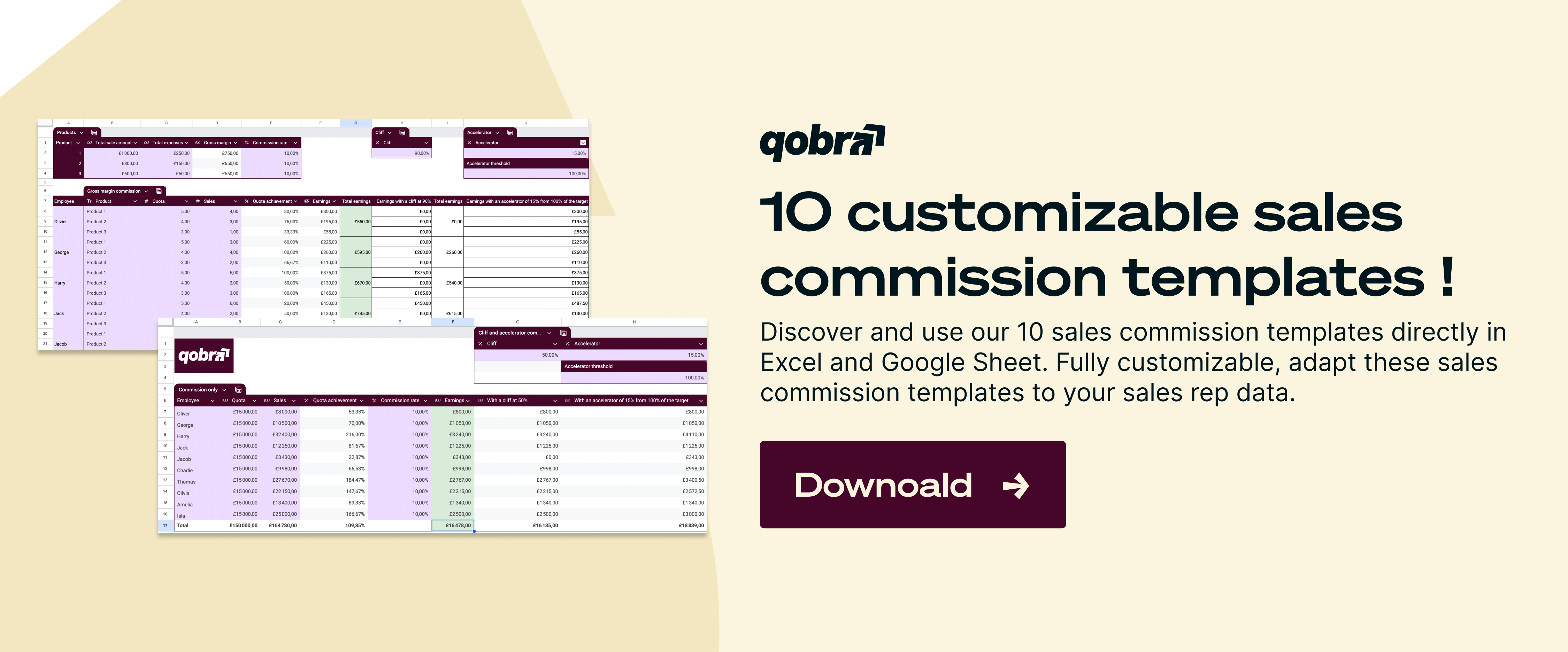
Manually calculating commissions based on different pay mixes, quotas, and accelerators is time-consuming and prone to error. This complexity often leads to disputes and demotivated reps. Automating sales compensation with a dedicated platform eliminates manual work, ensures accuracy, and provides sales teams with real-time visibility into their earnings, turning compensation into a powerful motivational tool.
Sample Compensation Structures for Different Roles
A theoretical understanding is good, but practical examples make it tangible. Here are sample structures for common business functions.
Sample Structure for a Sales Team
Sales compensation is designed to drive revenue. It typically includes a base salary, a clear commission structure, and often accelerators for over-performance.
| Role | On-Target Earnings (OTE) | Pay Mix (Base/Variable) | Base Salary | Variable Target | Commission Structure |
|---|---|---|---|---|---|
| Sales Development Rep (SDR) | $75,000 | 70/30 | $52,500 | $22,500 | Bonus per qualified meeting booked |
| Account Executive (Mid-Market) | $140,000 | 50/50 | $70,000 | $70,000 | 10% commission rate on new annual contract value (ACV) |
| Enterprise Account Executive | $240,000 | 50/50 | $120,000 | $120,000 | Tiered commission rate (e.g., 8% up to quota, 12% after) |
| Sales Manager | $200,000 | 60/40 | $120,000 | $80,000 | % of team's total quota attainment |
Sample Structure for an Engineering Team
Engineering compensation is typically focused on base salary and equity, reflecting the high market demand for technical skills. A level-based, or job-based, structure is common.
| Level | Job Title | Salary Band | Equity Grant (RSUs over 4 years) |
|---|---|---|---|
| ENG 1 | Junior Software Engineer | $85,000 - $110,000 | $40,000 |
| ENG 2 | Software Engineer | $110,000 - $145,000 | $80,000 |
| ENG 3 | Senior Software Engineer | $145,000 - $180,000 | $150,000 |
| ENG 4 | Principal Engineer | $175,000 - $220,000 | $250,000 |
Sample Structure for a Startup
Startups often operate with limited cash but can offer significant upside through equity. Their compensation structures reflect this, with lower base salaries than established corporations but much higher equity grants.
| Role | Base Salary | Equity Grant (% of company, vesting over 4 years) | Key Benefits |
|---|---|---|---|
| Founding Engineer | $110,000 | 1.0% | Premium health insurance, unlimited PTO |
| Head of Marketing | $130,000 | 0.75% | Flexible work schedule, learning stipend |
| Product Manager | $120,000 | 0.5% | Stock options, company-paid meals |
How to Build Your Compensation Structure in 7 Steps
Creating a compensation structure from scratch can seem daunting, but breaking it down into a logical sequence makes it manageable. This process is fundamental to designing an effective incentive plan.
- Define Your Compensation Philosophy: Before you look at any data, decide what you want your pay structure to achieve. Do you want to lead the market (e.g., pay at the 75th percentile), match it (50th percentile), or lag it? This philosophy should align with your business strategy, financial position, and company culture.
- Conduct Market Research & Benchmarking: Gather external salary data from reputable sources. Use industry-specific surveys to understand what other companies are paying for similar roles in your geographic area. This data is the foundation of a competitive and fair structure.
- Group Roles into Job Families & Levels: Create a clear job architecture. Group similar roles into "job families" (e.g., Engineering, Marketing, Sales). Within each family, define distinct levels based on responsibility, complexity, and impact (e.g., Junior, Mid-Level, Senior, Principal).
- Establish Pay Grades & Salary Bands: Assign each job level to a pay grade. For each grade, create a salary band with a minimum, midpoint, and maximum. The midpoint should align with your market benchmark. The range spread (the percentage difference between the minimum and maximum) is typically 40-60%.
- Calibrate and Budget for Impact: Model the financial impact of implementing the new structure. Identify where current employee salaries fall within the new bands. You may need to make adjustments for employees who are underpaid ("green-circled") or overpaid ("red-circled"). Ensure the total cost fits within your company budget.
- Document and Get Leadership Approval: Create a formal document outlining the compensation philosophy, job architecture, pay grades, and salary bands. Present it to leadership for feedback and final approval. This ensures alignment and buy-in from the top.
- Communicate Transparently to Your Team: The rollout is critical. Communicate the new structure to managers first, then to all employees. Explain the philosophy behind it, how it was created, and what it means for their career progression. Transparency builds trust and helps employees see the system as fair and equitable.
The Importance of Regular Reviews
A compensation structure is not a "set it and forget it" project. The market is constantly changing. To remain competitive and ensure continued fair compensation, you should review and update your entire structure at least once a year using the latest market data.
A well-defined compensation structure is a powerful strategic asset. It moves pay decisions from subjective ambiguity to objective clarity, creating a system that is defensible, equitable, and aligned with your business objectives. By investing the time to build a thoughtful framework, you empower your organization to attract the right talent, motivate your teams, and build a foundation for sustainable growth. And for the most dynamic elements of pay, like commissions, leveraging technology can transform a complex administrative burden into a transparent driver of performance.

Salary bands are revised once a year; the variable component attached to them is recalculated every cycle. Qobra's sales compensation platform runs that second half, using the structure you have defined here.
FAQ
What is the difference between a compensation structure and a compensation plan?
A compensation structure is the overall framework, including pay grades and salary bands, that applies to the entire organization or large groups of employees. A compensation plan is the specific package of salary, incentives, and benefits offered to an individual employee or a specific team (e.g., the sales team's commission plan).
How often should we update our pay structure?
Best practice is to review and update your compensation structure annually. This ensures your salary bands remain competitive with the latest market data and continue to align with your company's strategic goals and budget.
What is a typical salary range spread?
For most professional and managerial roles, a salary range spread of 40% to 60% is common. This means the maximum salary in the band is 40% to 60% higher than the minimum. In broadbanding structures, the spread can be much wider, sometimes exceeding 100%.
How do you handle employees who are paid above their salary band?
An employee paid above the maximum for their salary band is often referred to as "red-circled." Common strategies for managing this include freezing their base pay until the salary band catches up through market adjustments, and instead offering lump-sum bonuses for strong performance to avoid increasing their fixed salary further.