Webinar (Wednesday, October 21) — Aligning HR, Finance, and Sales: Mastering Sales Comp Without Breaking Your Plan
Register
- Disputes usually arise from ambiguous or overly complex plans, spreadsheet-driven human errors, and unclear rules on timing, territory, or deal attribution.
- Prevent conflicts by designing simple, well-documented commission plans with clear eligibility, calculation logic, exceptions, concrete examples, and mandatory sign-off.
- Automate payouts using a single-source-of-truth integrated with your CRM and a no-code calculation engine, while enforcing strict data hygiene to avoid GIGO problems.
- Foster radical transparency with real-time rep dashboards, earnings simulators, and proactive communication whenever plan changes occur.
- Have a formal dispute workflow (clear SLAs), require objective evidence (deal link, contract, payment), run regular audits, and use reusable templates (checklist, policy rules, resolution steps).
Are you tired of spending countless hours mediating disagreements over commission payouts? These disputes are more than just an administrative headache; they erode trust, drain motivation, and can lead to the departure of your top sales talent. The financial cost is staggering, but the hidden price paid in morale and team cohesion is even higher.
The good news is that most commission conflicts are not inevitable. They are symptoms of deeper issues in your process—gaps in clarity, manual errors, and a lack of transparency. By shifting from a reactive, fire-fighting approach to a proactive, preventative framework, you can design a system that makes disputes the exception, not the rule. This is not just about fixing errors; it's about building a compensation environment where your sales team feels valued, understood, and motivated to drive revenue.
The Root Causes of Sales Commission Disputes
To eliminate disputes, you must first understand why they happen. These conflicts rarely stem from a single miscalculation. Instead, they are the result of systemic flaws that create an environment of confusion and suspicion.
Vague and Overly Complex Commission Plans
The most common cause of disagreement is a compensation plan that is difficult to understand. When plans are packed with convoluted rules, multi-layered clauses, and ambiguous terms like "net revenue" or "closed deal," sales reps are left guessing. If your team can't model their potential earnings or easily follow the logic behind their payout, they will naturally question the final numbers. Simplicity is the cornerstone of trust; complexity breeds suspicion. According to Gartner, only 24% of sellers fully understand how their incentives are calculated when using manual methods.
The Chaos of Manual Processes and Spreadsheets
Many organizations still rely on spreadsheets to manage commissions. This approach is a recipe for disaster. It invites "shadow accounting," where reps maintain their own ledgers because they don't trust the official one. Spreadsheets are notoriously prone to formula errors, version control problems, and simple data entry mistakes. A single broken VLOOKUP or an outdated file can lead to inaccurate payouts that destroy the credibility of your entire process. These manual errors are the primary source of payout inaccuracies and a major cause of friction between sales and operations.
Unclear Rules on Timing, Territories, and Attribution
Disputes often arise from operational gray areas that were never clearly defined. These include:
- Timing of Payments: Is commission paid upon contract signature, first customer payment, or project implementation? Delayed or inconsistent payment schedules are a frequent complaint.
- Territory Disputes: When territories overlap or a deal crosses geographical or vertical boundaries, conflicts over who "owns" the customer can become destructive to team dynamics.
- Deal Attribution: Who gets credit when multiple people—SDRs, Account Executives, Sales Engineers—contribute to a single deal? Without clear rules of engagement, internal battles are inevitable.
- Mid-Cycle Changes: Altering quotas, territories, or commission rates in the middle of a performance period is particularly toxic. Salespeople feel cheated if the goalposts are moved after they've already put in the work.
A Proactive Framework to Eliminate Commission Disputes
Don't wait for disagreements to flare up. By designing a system that prioritizes clarity, automation, and transparency from the start, you can prevent most disputes before they ever occur. Follow this step-by-step framework to build a trusted, conflict-free compensation environment.
Step 1: Design for Absolute Clarity and Fairness
The foundation of a dispute-free system is a simple, equitable, and thoroughly documented commission plan. The goal is to create a single source of truth that anyone on the sales team can understand without needing a degree in finance.
Your documented plan should be easily accessible and include:
- Eligibility Rules: Clearly define which roles are eligible for which incentives.
- Calculation Logic: Detail the basics of how commissions are calculated. Use concrete examples for different scenarios (e.g., hitting 80%, 100%, and 120% of quota).
- Key Definitions: Define all terms, such as what constitutes a "qualified deal" or how "revenue" is measured (gross vs. net).
- Exceptions and Special Rules: Explicitly outline policies for accelerators, quotas, commission splits, clawbacks, and caps.
- Payment Timing: Specify exactly when commissions are earned, calculated, and paid out.
Once the plan is finalized, have each sales representative formally sign off on it. This simple act ensures they have read and understood the terms, creating a shared sense of accountability. A well-designed sales commission plan is your first line of defense against misunderstandings.
Quick Tip: Use Concrete Examples
Words can be ambiguous, but numbers are not. Including a few detailed calculation examples in your commission plan document can resolve potential confusion before it starts. Show how a typical deal, a deal with a discount, and a split deal would be calculated.
Step 2: Automate Calculations with a Single Source of Truth
The most effective way to eliminate human error is to remove manual processes. Moving your commission calculations from spreadsheets to a dedicated platform creates an undisputed source of truth that is consistent, reliable, and auditable.
Automation is not just about efficiency; it's about building institutional trust. When every calculation uses the same data and the same rules, there is no room for the formula mistakes, incorrect data entry, or version control issues that plague manual systems. At Qobra, our platform is built around a powerful "No-Code" calculation engine, allowing Finance and RevOps teams to model any commission rule—from simple percentages to complex multi-tiered accelerators—without writing a single line of code.
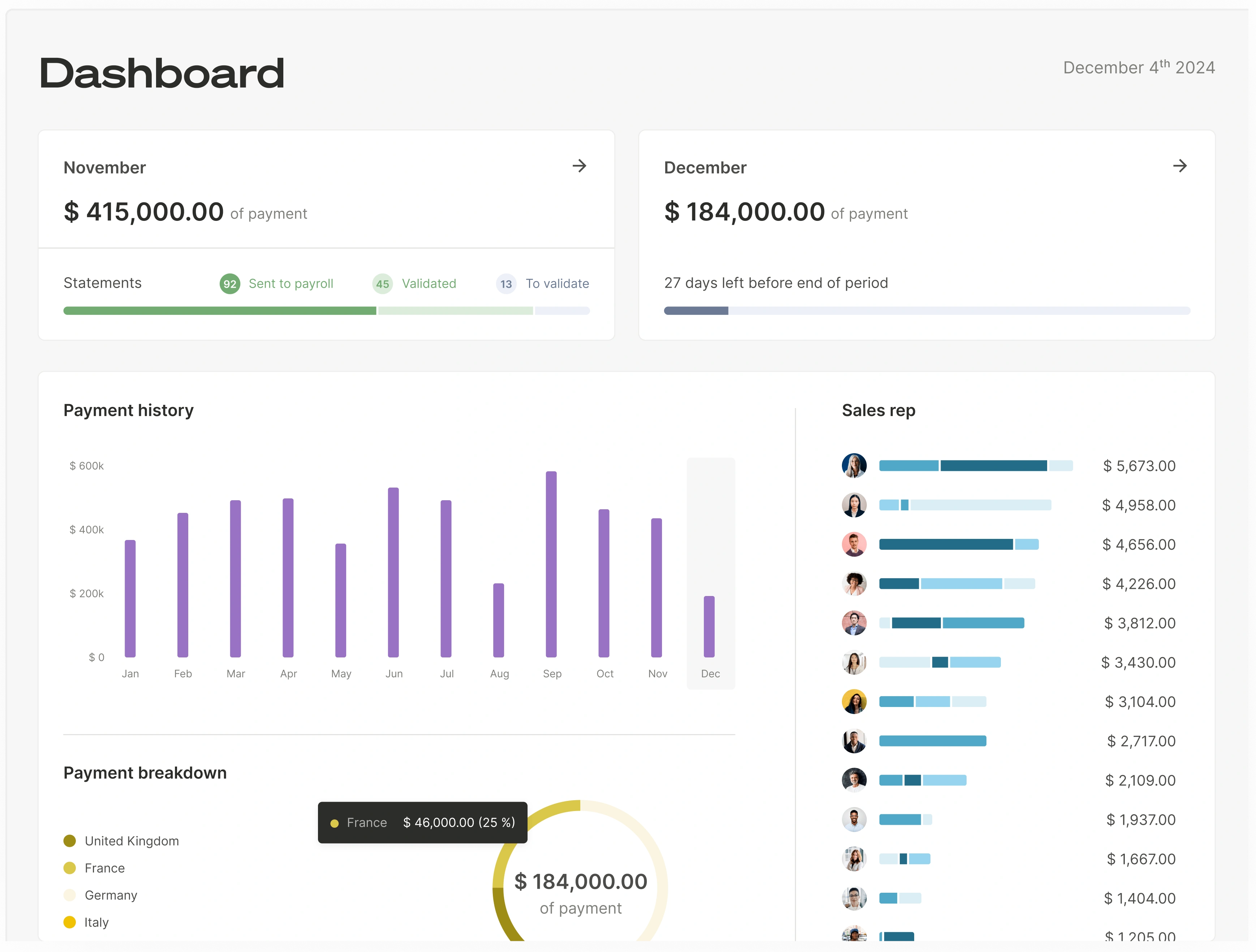
This process starts with clean data. Our software integrates directly with your CRM (like Salesforce or HubSpot) to pull deal information automatically. This ensures that calculations are always based on the most up-to-date and accurate data, eliminating discrepancies between sales records and commission payouts.
Step 3: Foster Radical Transparency and Open Communication
Trust flourishes in an environment of transparency. When salespeople are kept in the dark about their earnings until payday, they naturally become anxious and suspicious. Providing them with real-time visibility into their performance and potential earnings is one of the most powerful ways to prevent disputes.
This is why we provide every sales rep with a personal, real-time dashboard. In their portal, they can:
- Track their commissions as deals are closed.
- See exactly how each payout was calculated.
- Simulate future earnings based on deals in their pipeline.
This level of transparency empowers reps, turns their commission plan into a daily motivational tool, and drastically reduces the number of questions directed at your finance team. When changes to the compensation plan are necessary, it's crucial to communicate them clearly and proactively, explaining the rationale behind the adjustments.
Step 4: Establish a Formal and Fair Resolution Process
Even with the best preventative measures, the occasional disagreement may still arise. Having a clear, documented process for handling these situations ensures they are resolved fairly, efficiently, and with minimal disruption.
The key is to treat every inquiry with respect. When a rep raises a concern, they are often feeling vulnerable or frustrated.
- Listen Without Judgment: Let the sales rep explain the issue in full. Ask clarifying questions to ensure you understand their perspective. This validates their concerns and builds trust.
- Investigate Objectively: Dig into the data with an open mind. Cross-check information from your CRM, billing systems, and payroll records. The rep may have even pinpointed the specific deal or rule in question, giving you a head start.
- Communicate the Outcome Clearly: Whether the original calculation was right or wrong, be transparent about your findings. Walk the rep through the data and the specific clauses in the commission plan that led to the outcome. If an error was made, acknowledge it, thank them for catching it, and immediately outline the steps for correcting the payment.
A dedicated platform can streamline this. Qobra includes built-in workflows that allow reps to flag a potential issue on a specific deal directly within the tool. This automatically notifies their manager and the plan administrator, creating a documented and auditable trail for every inquiry.
Essential Templates for a Dispute-Free System
To put the framework into practice, you need clear and reusable assets. Here are a few models to help you standardize your approach.
Checklist: An Audit-Proof Commission Plan
Use this checklist to ensure your compensation plan document is comprehensive and unambiguous.
- [ ] Version Control: Document version number and effective date.
- [ ] Eligibility: List of all eligible roles and titles.
- [ ] Core Components: Base salary and variable target clearly stated.
- [ ] Calculation Formulas: Precise formulas for all commission types (e.g., % of revenue, per-unit bonus).
- [ ] Performance Metrics: Clear definitions of all KPIs (e.g., "Annual Contract Value," "Net New Bookings").
- [ ] Payment Schedule: Specific dates or conditions for commission payout (e.g., "Paid monthly on the 15th for all cash collected in the previous month").
- [ ] Special Rules: Detailed policies for:
- Accelerators and Tiers
- Commission Splits
- Clawbacks/Chargebacks
- Guaranteed Draws or Ramp-up Periods
- [ ] Calculation Examples: At least three worked-out examples for common scenarios.
- [ ] Dispute Resolution Process: A brief outline of the steps to follow if a rep has a question.
- [ ] Signature Line: A space for the employee and manager to sign and date.
Model: Simple Dispute Resolution Workflow
A structured workflow ensures every issue is handled consistently.
Step | Responsible Party | Action | Service Level Agreement (SLA) |
|---|---|---|---|
1. Inquiry | Sales Representative | Submits a written inquiry (or ticket via platform) detailing the specific deal and perceived error. | - |
2. Acknowledgment | Direct Manager | Acknowledges receipt of the inquiry and confirms they will review it. | 24 hours |
3. Investigation | Direct Manager & Comp Admin | Manager performs initial review. If needed, escalates to Comp Admin/RevOps for data verification in CRM and commission tool. | 3 business days |
4. Resolution | Comp Admin & Manager | A final decision is made based on the data and plan rules. A detailed explanation is prepared. | 2 business days |
5. Communication | Direct Manager | Communicates the outcome to the sales rep, providing all supporting data and explanations. | 24 hours after resolution |
Example of a Clear Policy Rule
Ambiguity is your enemy. Be explicit in your documentation.
Policy on Split Commissions (Multi-Contributor Deals)
For any deal where more than one commission-eligible employee made a material contribution, the commission will be split. The split percentage must be agreed upon in writing (or submitted via the designated field in our CRM) by all contributing parties and their direct managers before the deal is marked as "Closed-Won." If no split is documented, the commission will be assigned 100% to the designated "Deal Owner" in the CRM. No retroactive splits will be processed after the commission calculation date for the period has passed.
Using a dedicated sales commission tool can help enforce such rules automatically.
Warning: The "Garbage In, Garbage Out" Principle
Automation is powerful, but it is not magic. A commission management platform like Qobra is dependent on the quality of the data in your source systems. If a contract is not properly entered into your CRM, the platform won't know it exists. Ensuring data hygiene in your CRM is a critical prerequisite for accurate and trusted commission calculations.
Conclusion: Prevent Commission Disputes Before They Start
Disagreements over sales commissions are a solvable problem. By focusing on prevention through clear plan design, automation, and radical transparency, you can transform your compensation process from a source of conflict into a powerful engine for motivation. A system that is fair, understandable, and reliable gives your sales team the confidence to focus on what they do best: driving growth for your business.
FAQ
Who is responsible for validating commission data?
Responsibility is typically shared. The Sales Representative is responsible for ensuring their deal data is accurate in the CRM. The Sales Manager is often the first line of approval, validating that the deal meets the required criteria. Finally, the Compensation Administrator (in Finance or RevOps) is responsible for the final audit and ensuring the calculations are correct based on the approved data and the commission plan rules.
What evidence is required to formally resolve a dispute?
The best evidence is objective data. This typically includes:
- A link to the deal record in the CRM.
- A copy of the signed customer contract.
- Proof of payment or invoicing, depending on when commission is earned.
- Any written communication (e.g., emails) related to special circumstances like approved commission splits.
A clear commission statement that breaks down each calculation is also essential.
How often should our company audit its commission process?
A comprehensive audit of the entire commission process and plan design should be conducted at least once a year, typically before the start of a new fiscal year. Additionally, smaller, more frequent audits are recommended. A spot-check of a few reps' calculations each pay period can help catch systemic issues early before they become widespread problems.
Which software helps my sales reps quickly submit and resolve commission disputes?
A dedicated commission platform helps sales reps submit and resolve commission disputes quickly. Qobra includes built-in workflows that allow reps to flag a potential issue on a specific deal directly within the tool. The flag automatically notifies the manager and the plan administrator, and creates a documented and auditable trail for every inquiry. A personal dashboard also shows reps exactly how each payout was calculated.
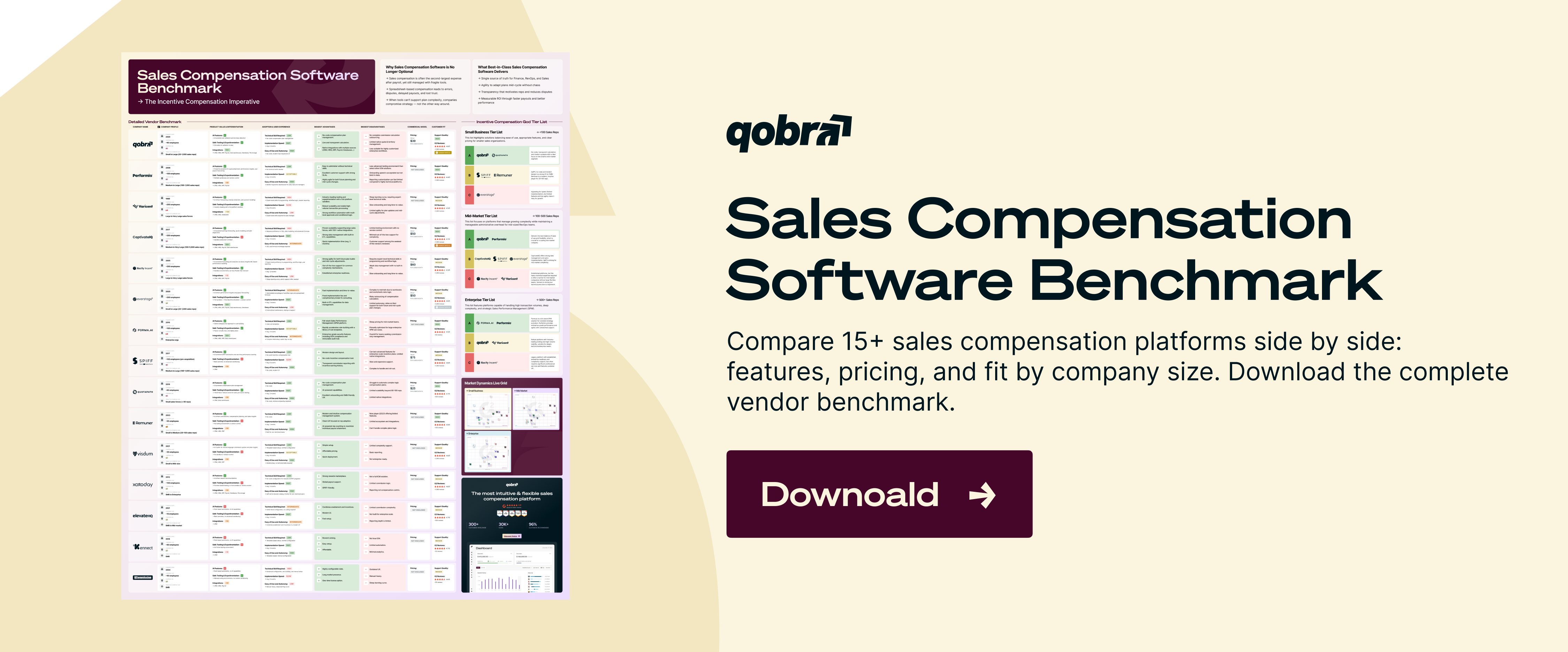
Most disputes disappear with transparent commission management software — compare the leading tools.
Many disputes trace back to clawbacks, so it helps to understand how clawbacks work before finalising a plan.