Webinar: The Biggest Release Sales Comp Has Ever Seen. Come See For Yourself (Wednesday, October 7)
Register
- An employee incentive plan is a structured program that ties rewards (cash or non-monetary) to measurable contributions beyond base pay to align behavior with strategic goals and boost performance.
- Common types include individual (commissions, spot/performance bonuses), team (group bonuses, profit-sharing, team recognition) and hybrid models; mix monetary and non-monetary rewards to match employee preferences.
- Design principles: start from clear business objectives, set fair, measurable KPIs, define budget and payout frequency, and choose individual/team structure that fits your culture and role mix.
- Implement with transparent communication, documented rules, and automated tools for accurate tracking and real‑time visibility to reduce disputes and keep participants engaged.
- Measure success and ROI using productivity, goal attainment rate, engagement scores, turnover (esp. top performers) and financial return; review regularly and iterate based on feedback and results.
How do top-performing organizations keep their teams engaged, driven, and aligned with strategic goals? While a competitive salary is foundational, the answer often lies in a well-structured incentive plan—a system that directly connects individual and team performance with company success. When extra effort leads to tangible rewards, motivation soars, and a high-performance culture takes root.
For business leaders, HR professionals, and operations teams tasked with optimizing compensation, understanding employee incentive programs is key. In a competitive market, they are essential for boosting performance, improving satisfaction, and retaining top talent. Whether monetary or non-monetary, the right incentives help align ambitions and accelerate growth. This guide will walk you through the types of plans available, how to design one that fits your culture, and the metrics to prove its value.
What Are Employee Incentive Plans?
An employee incentive plan is a formal strategy designed to reward employees for specific achievements that contribute to business objectives. Also known as an incentive compensation plan, it directly ties rewards to performance, motivating individuals or teams to reach specific targets. These rewards go beyond an employee's base salary and standard benefits, forming a critical part of a holistic compensation package.
An effective incentive plan serves a dual purpose: it gives recognition real weight and impact by pairing appreciation with tangible rewards, and it strategically reinforces the specific behaviors and outcomes that matter most to the organization.
The goal is to reinforce what’s working, spark motivation, and help employees feel genuinely seen and valued for their contributions. Incentives can take many forms, from immediate cash rewards like spot bonuses to long-term benefits such as stock options. A thoughtfully designed plan can see productivity increase by 25% to 44%, transforming compensation from a simple expense into a strategic investment in growth.
The Strategic Benefits of a Well-Designed Incentive Plan
Implementing a structured rewards program brings measurable advantages that extend across the entire organization. When rewards are meaningful, consistent, and aligned with what employees value, companies see stronger engagement, higher productivity, and lower turnover.
For Employers:
- Increased Productivity and Motivation: With concrete targets and rewards, employees have a sharper focus on the tasks that drive results. This clarity boosts motivation and accelerates goal achievement.
- Improved Employee Retention: High turnover is incredibly costly. A well-designed incentive program strengthens employee loyalty, especially among top performers who feel their contributions are recognized and rewarded. Employees with a positive rewards experience are significantly more likely to recommend their organization as a great place to work.
- Enhanced Alignment with Organizational Goals: A strong incentive program ensures that every employee's efforts are directly channeled toward the company's most important strategic priorities, creating a unified push toward success.
For Employees:
- Tangible Recognition for Hard Work: Employees receive clear and meaningful rewards for meeting or exceeding targets, validating their effort and impact.
- Healthy Sense of Competition and Teamwork: Depending on the structure, incentive plans can inspire healthy individual competition or foster greater collaboration as teams work together to achieve shared goals.
- Greater Investment in the Company’s Success: When employees are rewarded for contributing to specific goals, they develop a bigger stake in the organization’s long-term performance and feel like true partners in its success.
Types of Employee Incentive Plans
Incentive plans come in various forms, tailored to reward either individual achievements, collective team efforts, or a combination of both. Choosing the right structure is essential for aligning with your company’s objectives and culture.
Individual Incentives
Designed to reward personal achievements, individual incentive plans are highly effective in roles where a single person's performance has a direct and measurable impact on business success, such as in sales or business development.
Common examples include:
- Performance-Based Bonuses: Periodic bonuses (quarterly or annual) awarded for meeting or exceeding predefined targets or KPIs.
- Commissions: A percentage of revenue generated from sales, directly tying an employee's earnings to their sales performance. This is the most common incentive for sales teams and requires a transparent, accurate system for tracking and calculating payouts.
- Spot Bonuses: Immediate cash rewards given for exceptional work on a specific project or for demonstrating company values in an impactful way.
- Referral Bonuses: Compensation given to employees who successfully recommend new hires, helping to source high-quality talent.
While excellent for recognizing top performers, individual plans can sometimes foster unhealthy competition if not balanced with a collaborative culture.
Team-Based Incentives
Team incentives are designed to reward collective efforts, encouraging collaboration and alignment toward a shared objective. These plans foster a culture of cooperation and are ideal for projects or departments where success depends on the combined output of multiple people.
Common examples include:
- Group Bonuses: A bonus pool that is split among team members when a collective target, such as a project deadline or a departmental goal, is met.
- Profit-Sharing: A plan where a percentage of the company's profits is distributed among employees, giving everyone a direct stake in the organization's financial success.
- Team Outings & Recognition: Non-monetary rewards like sponsored dinners, retreats, or public recognition awards ("Team of the Quarter") that celebrate collective achievements.
These plans leverage positive peer pressure and collective efficiency but can occasionally mask the contributions of lower-performing individuals.
Hybrid Incentive Plans
Hybrid systems combine individual and team-based elements to leverage the strengths of both models. This approach allows employees to be recognized for their personal contributions while also rewarding them for driving group success. It works especially well in environments where individual achievement is valued but collaboration is critical.
For example, a marketing team might have an individual bonus tied to the performance of specific campaigns, plus a team bonus for hitting the overall department lead generation goal. This structure strikes a balance between personal accountability and shared success.
Monetary vs. Non-Monetary Rewards
While cash is a powerful motivator, don't underestimate the impact of non-monetary incentives. Rewards like extra paid time off, professional development opportunities, or flexible work arrangements can be highly valued and often more memorable than a cash bonus. The best incentive compensation plans offer a mix of both, catering to the diverse preferences of your workforce.
How to Design an Effective Incentive Plan: A Step-by-Step Guide
Creating a successful incentive program requires careful planning and strategic thinking. It’s not just about offering rewards; it’s about building a system that is fair, motivating, and sustainable.
- Define Clear Business Objectives: Before designing any plan, identify the specific business goal you want to achieve. Are you trying to increase sales revenue, improve customer retention, boost production efficiency, or reduce operational errors? Your objective must be specific, measurable, and time-bound.
- Establish a Budget: Determine how much the company can realistically invest in the program. This includes the cost of the rewards themselves as well as any administrative or technology costs. A well-designed plan should fund itself through the value it generates (e.g., increased profit or cost savings).
- Choose the Right Incentives: Select rewards that are meaningful to your employees. While some may prefer cash bonuses, others might value extra vacation days, stock options, or public recognition. Surveying your team can provide valuable insights into what truly motivates them. Explore different components of compensation to find the right mix.
- Set Fair and Measurable Metrics (KPIs): The criteria for earning an incentive must be crystal clear, objective, and attainable. Ambiguous or subjective goals can lead to frustration and demotivation. For sales teams, this could be closing a certain number of deals; for support teams, it might be achieving a specific customer satisfaction score.
- Decide on the Structure (Individual, Team, or Hybrid): Based on your objectives and company culture, choose the structure that makes the most sense. For roles that are highly autonomous, individual incentives work well. For collaborative functions, team-based or hybrid models are often more effective.
- Communicate the Plan Transparently: This is one of the most critical steps. Ensure every employee understands the plan's mechanics: the goals, the rewards, the timeline, and how performance is measured. A lack of transparency can breed mistrust and undermine the entire program. A clear policy on pay transparency builds trust.
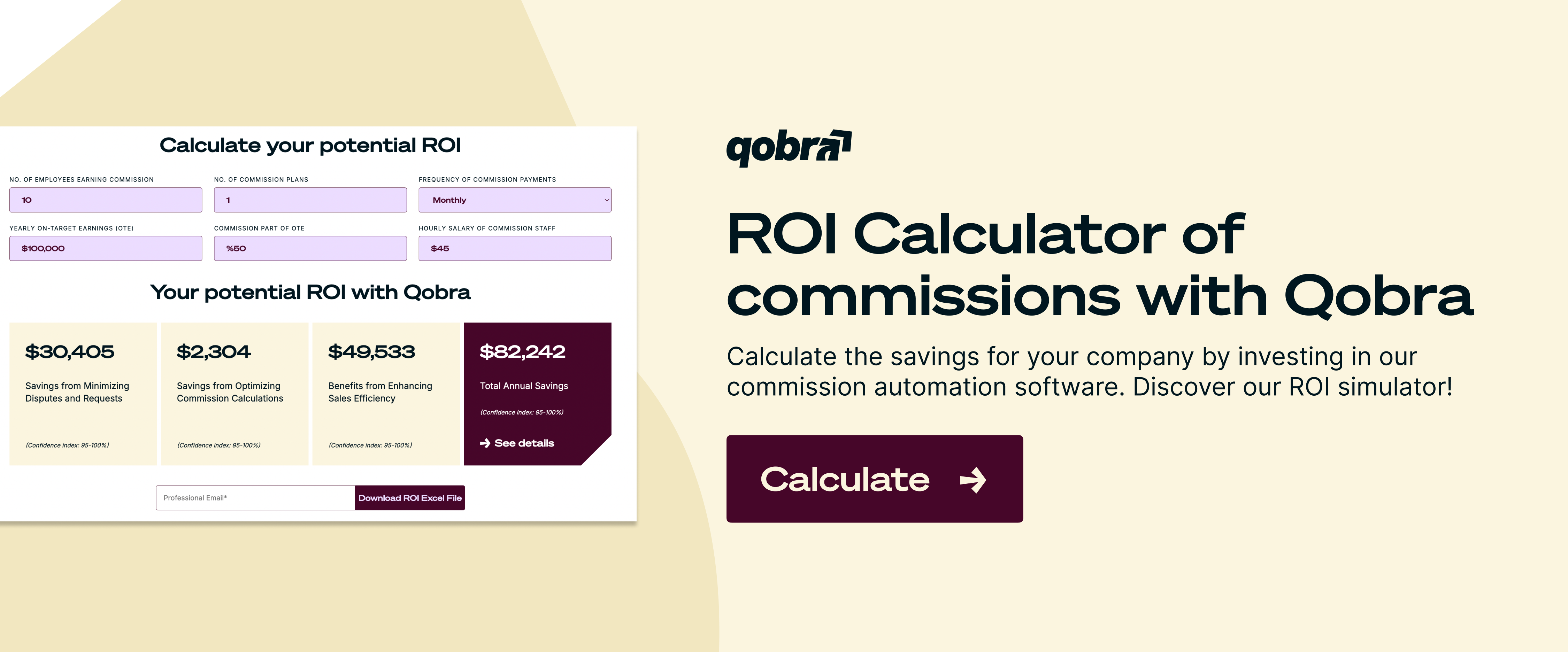
- Implement and Track Performance: Use the right tools to administer the plan and track progress. For simple recognition programs, manual tracking might suffice. However, for complex variable pay like sales commissions, manual processes using spreadsheets are prone to errors and lack real-time visibility. Platforms like Qobra automate commission calculations, providing sales reps with transparent, real-time dashboards of their earnings and progress toward goals. This automation eliminates disputes, saves countless hours for Ops and Finance teams, and keeps sellers motivated.
- Review and Iterate: An incentive plan is not a "set it and forget it" initiative. Regularly review its performance to see if it’s driving the desired behaviors and achieving its objectives. Solicit feedback from employees and managers, and be prepared to make adjustments to keep the program relevant and effective.
The Power of Communication
A brilliant incentive plan can fail if it's poorly communicated. Hold a kickoff meeting to explain the "why" behind the plan and how it works. Provide written documentation that employees can refer to. For ongoing motivation, especially with sales commissions, use a platform that offers real-time visibility so reps can see how their actions immediately impact their earnings.

Examples of Incentive Plans by Department
Different roles contribute to business success in different ways, so your incentive plans should be tailored accordingly. Here are some examples of how to structure rewards across various departments:
| Department | Incentive Type | Key Performance Indicator (KPI) | Example |
|---|---|---|---|
| Sales | Commission & Bonuses | Revenue generated, deals closed, quota attainment | 5% commission on all new sales, with an additional $1,000 bonus for reaching 120% of the quarterly quota. |
| Customer Success | Performance Bonus | Customer retention rate, Net Promoter Score (NPS), upsells | Quarterly bonus based on maintaining a 95% client retention rate and achieving an NPS of 50 or higher. |
| Marketing | Performance Bonus | Marketing Qualified Leads (MQLs), conversion rate, pipeline influenced | Team bonus tied to generating a target number of MQLs that convert to sales opportunities. |
| Operations | Gainsharing / Spot Bonus | Production efficiency, cost savings, error rate reduction | A portion of documented cost savings is shared with the team responsible for the efficiency improvement. |
| Engineering | Project Bonus / Stock Options | Meeting project deadlines, successful product launch, bug fixes | A cash bonus for the development team upon the successful on-time launch of a major product feature. |
| Company-Wide | Profit-Sharing | Company profitability | 5% of the company's annual pre-tax profits are distributed among all eligible employees. |
Measuring the Success and ROI of Your Incentive Program
To justify the investment in an incentive plan, you must track its impact. The return on investment (ROI) isn't just financial; it also includes improvements in culture and performance.
Key metrics to monitor include:
- Productivity Levels: Measure output per employee or team. For a sales team, this could be the number of calls made or demos booked. For a production team, it might be units produced per hour.
- Goal Attainment Rate: Track the percentage of employees or teams who are meeting the goals set out in the incentive plan. A low rate might indicate the targets are unrealistic.
- Employee Engagement Scores: Use pulse surveys or annual engagement surveys to measure morale, satisfaction, and motivation before and after implementing the plan.
- Employee Turnover Rate: A successful program should help retain top talent. Monitor voluntary turnover rates, particularly among high-performers, to see if the plan is improving loyalty.
- Financial ROI: Compare the cost of the program (total rewards paid out) to the financial gains it generated (e.g., increased revenue, cost savings). For example, if a $50,000 bonus program led to $250,000 in additional profit, the ROI is significant.
A thoughtfully designed incentive plan is more than just a tool for motivation—it's a strategic framework for aligning your entire workforce with your most critical business goals. By tying performance directly to rewards, you create a culture of accountability, recognition, and shared success. Whether you're using monetary bonuses to drive sales or non-monetary perks to boost morale, the key is to be intentional, transparent, and consistent.
Frequently Asked Questions
What is an employee incentive plan?
An employee incentive plan is a structured compensation strategy used to reward employees for achieving specific individual or team-based goals. These rewards are provided in addition to an employee's base salary and are designed to motivate performance and align employee actions with company objectives.
Are non-monetary incentives as effective as cash?
Yes, they can be. While monetary rewards are powerful, non-monetary incentives like extra paid time off, flexible work schedules, professional development opportunities, or public recognition can be highly motivating. The effectiveness depends on your company culture and what your employees value most. A mix of both is often the most effective approach.
How often should incentives be paid out?
The frequency depends on the goal and the nature of the work. For sales roles with short cycles, monthly or quarterly payouts keep motivation high. For long-term strategic projects, annual bonuses may be more appropriate. Short-term incentives like spot bonuses for immediate recognition can be given at any time to reinforce positive behaviors as they happen.
How do you ensure an incentive plan is fair?
Fairness is achieved through transparency and objectivity. The goals and metrics for earning an incentive must be clearly defined, measurable, and communicated to all participants. The criteria should be applied consistently to everyone, and the targets should be challenging but realistically attainable. Regular communication and a clear process for handling disputes are also essential.
To run employee incentive plans reliably, teams rely on incentive compensation management software.