Webinar (Wednesday, October 21) — Aligning HR, Finance, and Sales: Mastering Sales Comp Without Breaking Your Plan
Register
- A sales commission structure should align individual behavior with your primary business objective (growth, profitability, retention or new-logo acquisition) so pay drives the right priorities.
- Know the main models and fit them to your context: straight commission for short transactional sales; base + commission for long or complex cycles; tiered/accelerators to reward over-performance; gross-margin-based to protect profitability; residuals for subscription/recurring revenue.
- Define the right pay mix (base vs variable) based on sales cycle and role—higher base for long sales/relationship roles, higher variable for short transactional roles—and model On-Target Earnings (OTE) to ensure competitiveness and affordability.
- Keep plans simple, transparent and easy to calculate; involve sales managers and top reps in design, communicate the “why,” provide clear documentation and training, and use a modern SPM/commission platform to automate calculations and provide real-time visibility.
- Measure and iterate: track quota attainment, sales cost ratio, turnover, CAC/ACV and time to calculate commissions; use these KPIs to detect gaming (sandbagging, unprofitable deals) and adjust rules, caps/un-capping, or accelerators accordingly.
Is your sales compensation plan truly driving the behaviors you need to win, or is it just a complex spreadsheet that creates more questions than motivation? A well-designed commission structure is far more than a way to pay your team; it's the engine of your sales strategy. It aligns individual ambition with company goals, attracts top-tier talent, and directly fuels revenue growth.
Getting it right transforms your sales force into a strategic asset. Getting it wrong, however, can lead to confusion, demotivation, high turnover, and a focus on the wrong priorities. The challenge lies in balancing motivation for reps with the financial health of your business. Let's break down the most effective models to help you find the perfect fit for your team.
What is a Sales Commission Structure?
A sales commission structure is a performance-based incentive system that rewards sales representatives financially for achieving specific targets, most commonly for closing deals. This compensation model is designed to directly tie a salesperson's earnings to their results, motivating them to sell more effectively and drive revenue for the company.
Key features of these structures include:
- Performance-Based Pay: Earnings are linked directly to sales achievements, such as revenue generated, profit margins, or units sold.
- Motivational Tool: It encourages reps to exceed quotas and push for higher performance.
- Talent Attraction: A competitive commission plan is a powerful tool for recruiting and retaining skilled sales professionals.
- Strategic Alignment: It guides the sales team to focus on high-priority activities, whether that's acquiring new logos, upselling existing customers, or selling high-margin products.
While there are many variations, most structures involve a mix of a fixed base salary and variable commissions. The key is to create a plan that is simple, transparent, and perfectly aligned with your overarching business strategy.
The Most Common Sales Commission Models Explored
Choosing a model isn't a one-size-fits-all decision. The right structure depends on your industry, sales cycle length, company maturity, and strategic goals. Here are five of the most common models, with their pros, cons, and ideal use cases.
1. Straight Commission
This is the purest pay-for-performance model. Sales reps earn 100% of their income from commissions, with no base salary. Their earnings are a direct percentage of the sales they generate.
- Pros: Maximum motivation for high performers, high accountability, and lower fixed costs for the business, as you only pay when revenue comes in.
- Cons: High risk for employees, leading to potential income instability and higher turnover. It can discourage teamwork and create a high-pressure environment that isn't suitable for long sales cycles or new reps.
- Best for: Industries with short, transactional sales cycles (like real estate or some retail sectors) and highly experienced, self-motivated salespeople.
Example: A rep earns a 15% commission on all sales. If they close a $50,000 deal, their commission is $7,500. If they have a slow month and sell nothing, they earn nothing.
2. Base Salary + Commission
The most popular and balanced approach, this model provides reps with the stability of a fixed salary plus the motivational incentive of a commission on sales. The ratio between base and variable pay (the "pay mix") can be adjusted based on the role and industry norms (e.g., 60/40, 50/50).
- Pros: Offers financial security, which helps attract a wider range of talent. It balances the drive to sell with the ability to perform other important tasks like prospecting and customer relationship management. It's highly adaptable across most industries.
- Cons: If the base salary is too high, it can dampen the motivational effect of the commission. If it's too low, it may not be enough to attract top talent. Finding the right balance is critical.
- Best for: Most B2B sales organizations, especially those in SaaS, technology, and manufacturing, where sales cycles can be longer and relationship-building is key.
Example: A sales rep has a $60,000 base salary and earns a 5% commission on all contract value closed. If they close $400,000 in a year, their total compensation is $60,000 + ($400,000 * 0.05) = $80,000.
3. Tiered Commission
This model is designed to reward over-performance. The commission rate increases as a salesperson meets and exceeds certain sales thresholds or quotas. It incentivizes reps to not just hit their target, but to blow past it.
- Pros: Excellent for motivating top performers to keep selling even after they've hit their initial quota. It can drive significant revenue growth during peak periods.
- Cons: Can be more complex to calculate and forecast. It may encourage reps to "sandbag" deals—holding them until the next period to get a head start—or focus on short-term wins at the expense of long-term strategy.
- Best for: High-growth companies with competitive sales teams looking to aggressively scale revenue and capture market share.
Tiered Commission Example Table
| Sales Volume (per quarter) | Commission Rate |
|---|---|
| $0 - $100,000 | 5% |
| $100,001 - $200,000 | 7.5% |
| $200,001+ | 10% |
If a rep closes $250,000 in a quarter, their commission would be calculated on each tier, or a single higher rate could apply to the total, depending on the plan's rules.
4. Gross Margin Commission
Instead of paying commissions on total revenue, this model bases them on the profit margin of each sale. This aligns the sales team's interests directly with the company's profitability.
- Pros: Encourages reps to sell on value rather than discounting to close a deal. It guides them to focus on higher-margin products and services, boosting the company's bottom line.
- Cons: Calculating profit margin per deal can be complex and requires transparent data. It may lead reps to ignore lower-margin but strategically important deals. This model can be more difficult for reps to track on their own.
- Best for: Businesses with flexible pricing structures or a wide range of products with varying profitability. A commission plan based on gross profit is ideal for companies focused on sustainable, profitable growth.
Example: A product sells for $10,000 with a cost of goods sold (COGS) of $6,000, leaving a gross margin of $4,000. The rep earns a 20% commission on the margin, which is $800. If they had sold it with a discount for $9,000, the margin would be $3,000 and their commission only $600.
5. Residual Commission
Perfect for subscription-based business models (like SaaS) or industries focused on long-term client relationships. Reps earn a commission not just on the initial sale but on an ongoing basis as long as the client continues to pay for the service.
- Pros: Strongly incentivizes customer retention and satisfaction. It encourages reps to build lasting relationships and reduces churn. It provides a stable, predictable income stream for long-tenured reps.
- Cons: Payouts can become complex to track over time. It may lead to complacency, with reps focusing on managing their existing book of business rather than acquiring new customers. The initial motivation for new reps can be lower as commissions take time to build.
- Best for: SaaS companies, insurance agencies, and any business model that relies on recurring revenue and long-term customer value (LTV).
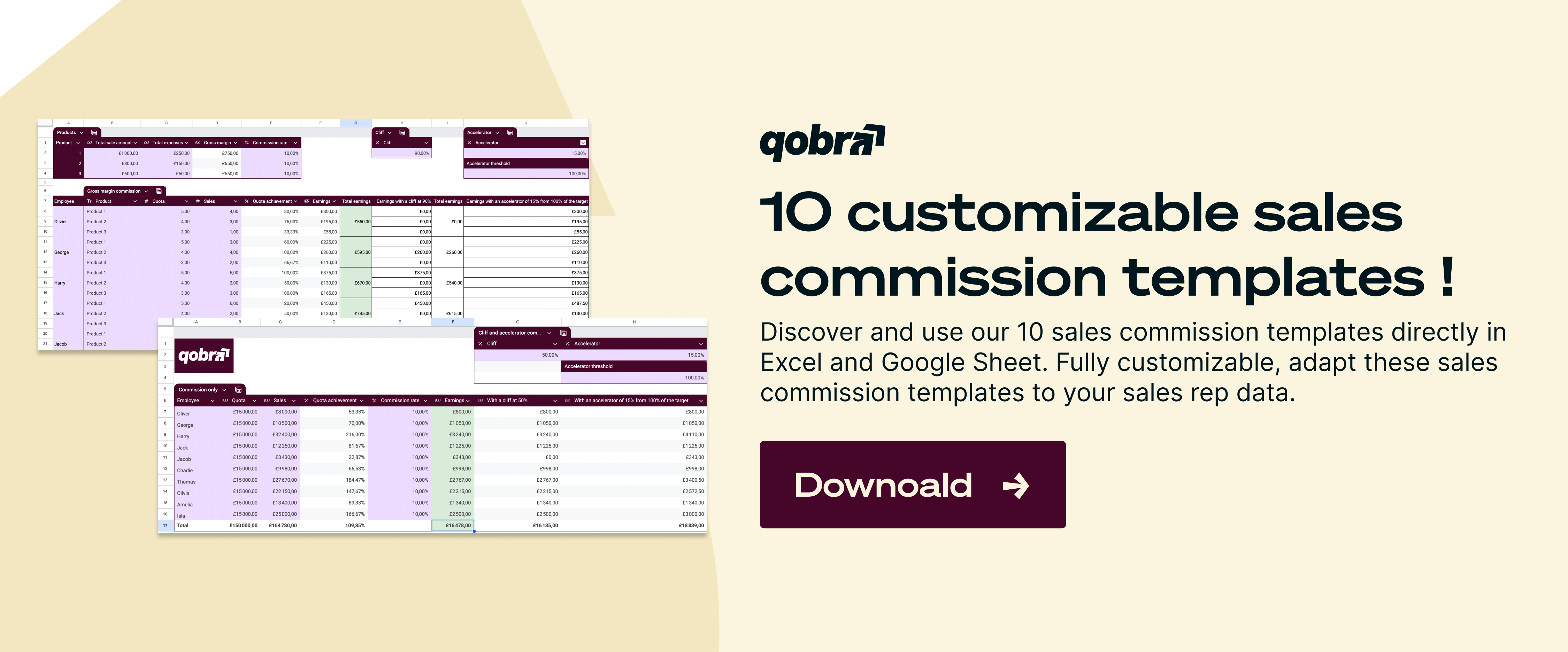
How to Choose the Right Commission Structure for Your Business
Now that you understand the options, how do you select the one that will drive your company forward? The decision should be a strategic one, based on a clear understanding of your goals, team, and market.
Align with Your Primary Business Objective
Your commission plan is a powerful tool for signaling what matters most. Before you design the plan, define your number one priority.
- Aggressive Growth/Market Share: A tiered commission structure with accelerators for over-performance can be highly effective. It pushes the team to maximize volume.
- Profitability: A gross margin commission model is the clear winner. It ensures that sales are not just happening, but that they are profitable.
- Customer Retention: For subscription models, a residual commission plan directly rewards reps for keeping customers happy and active, reducing churn.
- New Customer Acquisition: You could implement a flat-rate bonus (a "kicker") for every new logo brought in, on top of a standard base + commission model. This clearly directs focus toward expanding your customer base.
Involve Your Team in the Process
While the final decision rests with leadership, consider involving your sales manager and a top-performing representative in the design process. Their feedback from the field is invaluable for creating a plan that is both fair and motivating. This also helps with buy-in when you roll out the new structure.
Consider Your Sales Cycle and Product Complexity
The nature of what you sell should heavily influence your compensation structure.
- Long or Complex Sales Cycles (6-12+ months): A stable base salary is non-negotiable. A base salary + commission model (e.g., 60% base, 40% variable) provides the security reps need to nurture long-term deals without starving.
- Short, Transactional Sales Cycles: You can afford to have a higher variable component (e.g., 40% base, 60% variable or even straight commission) because reps can see the results of their efforts quickly.
Ensure Simplicity and Transparency
If your sales team can't understand the plan in five minutes, it's too complicated. Complexity breeds mistrust and confusion. Sales reps should be able to easily calculate their potential earnings and track their progress toward goals.
This is where traditional tools like Excel often fail. Spreadsheets are prone to manual errors, version control issues, and lack the real-time visibility that builds trust.
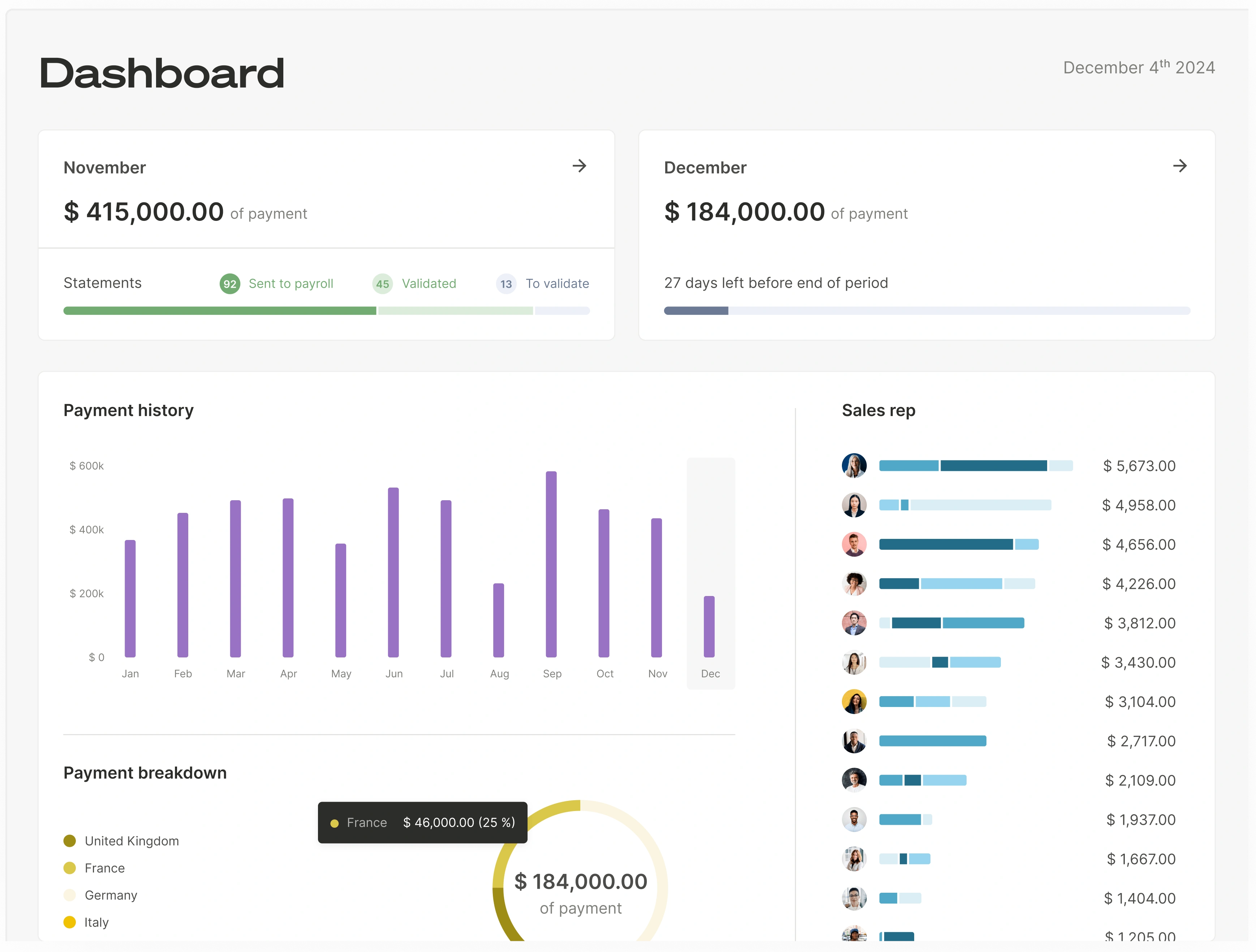
A modern compensation platform transforms this process. At Qobra, we provide sales reps with a real-time dashboard where they can see every deal, track their commissions as they are earned, and even simulate future earnings. This transparency eliminates disputes and turns the commission plan into a true, day-to-day motivational tool rather than a mystery solved at the end of the quarter.
Implementing and Managing Your Commission Plan Effectively
Designing the plan is only half the battle. Successful execution depends on clear communication, the right tools, and consistent monitoring.
Communication is Key
When you introduce or change a sales compensation plan, over-communication is crucial.
- Explain the "Why": Clearly articulate the business goals behind the new structure. Help the team understand how it aligns with the company's direction.
- Provide Clear Documentation: Every rep should receive a detailed document outlining the plan, including calculation examples and payout schedules.
- Hold a Training Session: Walk the team through the plan, answer questions, and show them how to use any new tools for tracking their performance.
A well-managed rollout can build excitement and momentum. Explore our guide on how to effectively communicate a new commission plan for more tips.
The Right Tools for the Job
As your team and commission plans grow in complexity, managing them on spreadsheets becomes unsustainable. The administrative burden, risk of errors, and lack of visibility can undermine the very plan you worked so hard to create.
The Hidden Costs of Spreadsheets
Manual commission tracking on Excel can cost dozens of hours per month for finance and sales ops teams. Worse, a single formula error can lead to over or underpayments, eroding trust and potentially costing thousands of dollars. These hidden costs often far exceed the investment in a dedicated software solution.
Sales Performance Management (SPM) software like Qobra automates the entire process. By integrating directly with your CRM (like Salesforce or HubSpot), our platform automatically pulls in deal data, applies your specific commission rules, and calculates payouts with 100% accuracy. This frees up your operations team to focus on strategy and provides the entire sales organization with a single source of truth. If you're considering making the switch, discover how to choose the right commission software for your needs.
Key Metrics to Track Success
How do you know if your plan is working? Track these KPIs:
- Quota Attainment: What percentage of your team is hitting their target? If it's 100%, your quotas may be too easy. If it's less than 50%, they might be too high and demotivating.
- Employee Turnover: A high turnover rate in the sales team can be a red flag that the compensation plan is uncompetitive or perceived as unfair.
- Sales Cost Ratio: How much are you paying in commissions and salaries relative to the revenue being generated? This helps measure the plan's financial efficiency.
- Time to Calculate Commissions: How many hours or days does it take your team to calculate and process payouts each month? A reduction in this time is a direct ROI of automation.
A sales commission structure is one of the most critical documents in your business. It's a living blueprint for your growth strategy. By choosing a model that aligns with your goals, ensuring it is transparent and easy to understand, and supporting it with modern tools, you can unleash the full potential of your sales team and create a powerful, sustainable engine for revenue.
Frequently Asked Questions
What is a typical commission percentage for sales?
This varies widely by industry, product margin, and the rep's role. In B2B SaaS, for example, a common commission rate is around 10% of the Annual Contract Value (ACV). However, this can range from 2% to over 20% depending on the pay mix and the complexity of the sale. The key is to model your target compensation and work backward to set a fair rate.
What's the difference between a bonus and a commission?
A commission is a direct percentage or fixed amount paid for a specific sale (e.g., 10% of every deal closed). A bonus is typically a lump-sum payment for achieving a broader, often non-financial or team-based, objective over a set period (e.g., a $5,000 bonus for hitting the quarterly team quota).
How often should commissions be paid out?
The most common frequencies are monthly and quarterly. Monthly payouts provide more immediate reinforcement for performance and help with reps' personal cash flow. Quarterly payouts can encourage a more strategic, longer-term view but may feel too delayed for some reps. The best cadence depends on your sales cycle length and administrative capacity.
Should sales commission be capped?
This is a subject of much debate. Capping commissions can help with financial forecasting but can severely demotivate top performers who might stop selling once they hit their commission cap. In most high-growth sales environments, uncapped commissions are the standard, as they encourage superstars to perform at their absolute peak, which ultimately benefits the company.
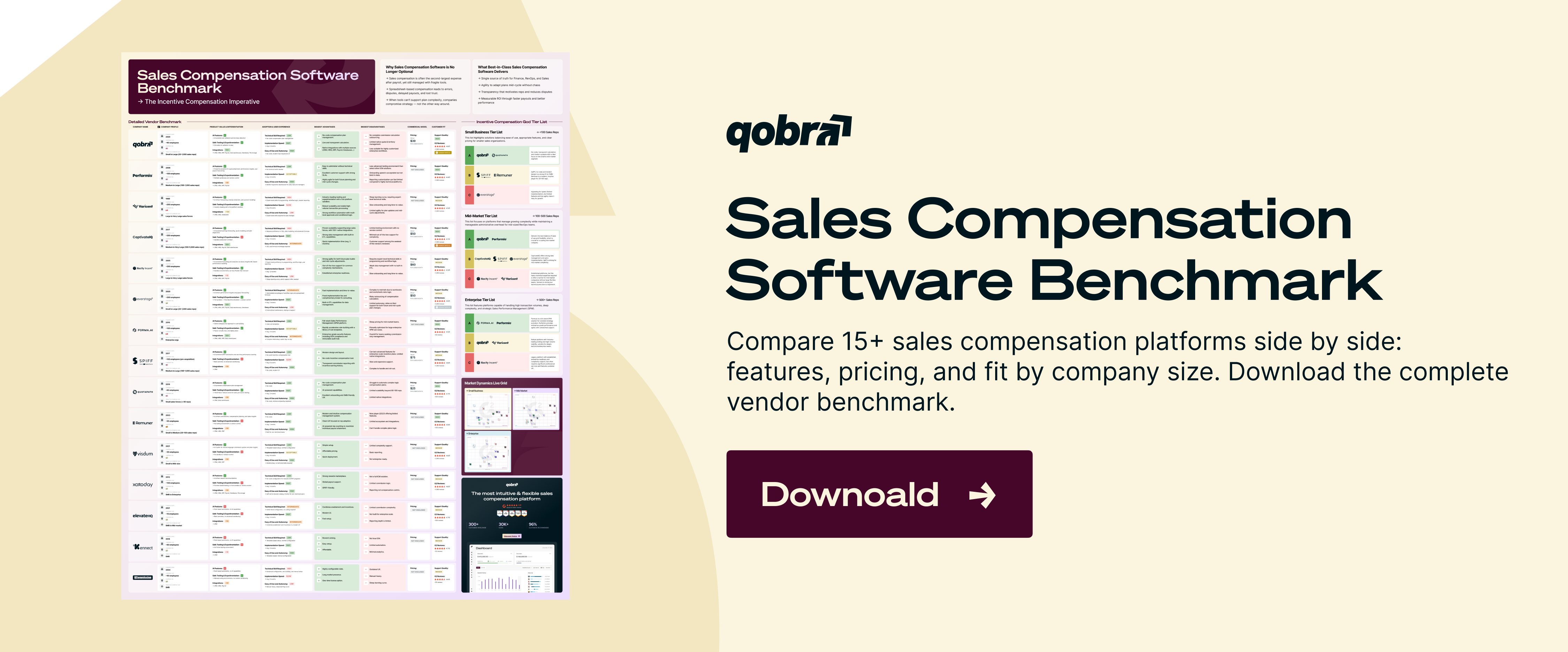
Whatever structure you choose, the best commission software can model it — see our comparison.