Webinar: The Biggest Release Sales Comp Has Ever Seen. Come See For Yourself (Wednesday, October 7)
Register
- Commission-only roles are independent-contractor arrangements where reps earn all compensation as a percentage of revenue or margin, operating as entrepreneurs who often represent multiple non‑competing lines and leverage existing networks.
- For companies this model converts fixed payroll into variable, performance‑driven costs and enables rapid market expansion, but poses challenges in attracting top talent, maintaining control, and ensuring brand alignment and retention.
- For sales reps it offers uncapped earnings and autonomy but requires a financial cushion, exceptional self‑discipline, a strong network, and confidence in the product to manage income volatility and ramp time.
- A fair agreement must define commission structure (fixed %, tiered, recurring), when commissions are earned and paid, territory and exclusivity, termination handling, and clauses on status, confidentiality and non‑compete—ideally reviewed by a lawyer.
- Recruit and retain talent via specialized marketplaces, referrals and targeted vetting; provide structured onboarding, clear rules of engagement and transparent commission management (automated platforms like Qobra) to build trust and reduce disputes.
Are you an ambitious sales professional seeking uncapped earning potential, or a business leader looking to scale your sales force without the burden of fixed payroll costs? The commission-only model represents a powerful, performance-driven partnership, but it demands a clear understanding from both sides to be successful. This guide explores the structure, benefits, and challenges of a 100% commission-based sales role for both companies and representatives.
What Exactly is a Commission-Only Sales Representative?
A commission-only sales role is fundamentally different from a traditional salaried position. It's best described as a mutually beneficial partnership between a company (the Principal) and a self-employed sales agent or agency. In this arrangement, the sales representative is not an employee but an independent contractor. Their entire compensation is derived directly from the sales they generate, paid as a percentage of the revenue or profit.
Don't let the word 'job' be misleading. These freelance sales agents are entrepreneurs running their own businesses. They typically:
- Work independently: They set their own hours and work from their own office, managing their schedule to maximize results. A wage is paid for a person's time, whereas commission is paid for performance.
- Represent multiple lines: It's common for an independent rep to carry a portfolio of non-competing products or services that complement each other. This allows them to offer a broader solution to their existing network of contacts.
- Leverage existing networks: Companies often seek commission-only reps to enter new markets or verticals where the agent already has established relationships, accelerating market penetration.
This model is a pure meritocracy. The agent is betting on their ability to sell a valuable product, and the company is betting on the agent's network and sales acumen. The relationship is governed by a formal contract rather than an employment agreement, outlining commissions, territories, and expectations.
For Companies: The Pros and Cons of a Commission-Only Sales Force
For a principal company, building a team of outsourced sales reps can be a strategic move to drive growth while managing financial risk. However, this model comes with its own unique set of advantages and challenges.
The Advantages: Why Businesses Choose This Model
- Reduced Financial Risk: The most significant benefit is the elimination of fixed salary costs. You only pay for results, which protects your cash flow, especially during early-stage growth or market expansion. This transforms a fixed staffing cost into a variable one directly tied to revenue.
- Performance-Driven Motivation: The incentive structure is crystal clear: the more a rep sells, the more they earn. This direct link between performance and reward attracts highly motivated, results-oriented individuals who are confident in their ability to close deals.
- Rapid Scalability: Hiring independent agents allows you to expand your sales coverage into new territories or industries quickly. You can tap into reps who have pre-existing contacts and deep market knowledge, bypassing the lengthy ramp-up time required for a traditional employee.
- Access to Entrepreneurial Talent: The commission-only model attracts seasoned sales professionals with an entrepreneurial spirit. These individuals are often self-starters who require minimal supervision and are adept at managing their own sales pipeline.
The Potential Pitfalls to Consider
While attractive, the 100% commission model isn't without its drawbacks. It's crucial to be aware of the potential challenges:
- Difficulty Attracting Talent: High-performing sales professionals are in demand and may be hesitant to forgo the security of a base salary. A purely commission-based offer needs to be exceptionally compelling, with a high-quality product, a short sales cycle, and a generous commission rate.
- Less Control: Since these reps are independent contractors, you have less control over their daily activities and sales processes compared to an employee. Building a strong partnership based on trust and clear communication is essential.
- Higher Turnover: If agents don't see results and earn income within a reasonable timeframe, they are likely to move on. High churn can be disruptive and costly, even without a salary.
- Brand and Culture Alignment: Independent reps operate outside your direct company culture. You must provide excellent training and clear brand guidelines to ensure they represent your company professionally and accurately.
For Sales Representatives: Is a 100% Commission Role Right for You?
For the right individual, a role compensated purely on performance offers unparalleled freedom and financial opportunity. But this path is not for everyone and requires a careful assessment of your skills, risk tolerance, and financial stability.
The Allure: Uncapped Earning Potential and Autonomy
The primary draw for a commission-only representative is the direct control over their income. There is no ceiling on earnings; your success is limited only by your ability to sell. This model is perfectly suited for top performers who feel constrained by traditional salary-plus-bonus structures.
Furthermore, the autonomy is a significant perk. You are your own boss. You decide when and how you work, which strategies to pursue, and how to manage your client relationships. This freedom fosters an entrepreneurial environment where you can build your own business under the umbrella of established product lines.
The Reality Check: Risks and Required Traits
Before pursuing this path, a dose of realism is essential. The most obvious risk is income volatility. There will be lean months, especially during the initial ramp-up period as you build your pipeline.
What to Expect: A commission-only sales role is not a safety net. It's a high-wire act that rewards skill, discipline, and persistence. You are an investor, and the primary capital you invest is your time and effort. Success depends on your ability to generate returns on that investment.
Key traits and preparations for success include:
- Financial Cushion: You must have enough savings to cover your living expenses for at least 3-6 months, as it can take time to close your first deals and receive payment.
- Exceptional Self-Discipline: Without a manager dictating your schedule, you must be a master of time management and self-motivation.
- A Strong Existing Network: Success is much faster if you have a pre-existing list of contacts who trust you and are potential buyers for the new product or service.
- Confidence in the Product: You must genuinely believe in what you're selling. If you have doubts about the product's value or the company's integrity, it will be nearly impossible to sell with conviction.
Structuring an Attractive and Fair Commission-Only Agreement
The foundation of any successful partnership is a clear, fair, and legally sound agreement. For commission-only roles, the compensation plan and contract are everything. They must be structured to motivate the agent while protecting the interests of the company.
Key Components of a Compensation Plan
A one-size-fits-all approach rarely works. The best commission plans are tailored to the sales cycle, product type, and business goals. Common structures include:
- Fixed Percentage: The simplest model. The agent earns a flat percentage of every sale's revenue or, preferably, its gross margin. This is easy to calculate and understand.
- Tiered Commissions: This structure rewards high performance by increasing the commission rate as the agent reaches certain sales targets. It's a powerful motivator to exceed quotas.
- Recurring Commissions: Essential for SaaS and other subscription-based businesses. The agent earns a commission not just on the initial sale but for as long as the client remains a customer, encouraging a focus on retention and long-term relationships.
- Bonuses and Spiffs: Additional, short-term incentives can be used to drive sales for a specific product, reward key milestones, or encourage certain behaviors.
Here is an example of a simple tiered structure based on monthly revenue:
| Monthly Revenue Generated | Commission Rate |
|---|---|
| $0 - $10,000 | 15% |
| $10,001 - $25,000 | 20% |
| $25,001+ | 25% |
The Legal Framework: Contract Essentials
The independent contractor agreement is the most critical document in the relationship. It should be drafted or reviewed by a legal professional and must clearly define:
- Status: Explicitly state that the sales representative is an independent contractor, not an employee, and is responsible for their own taxes and benefits.
- Territory: Define the geographical area, industry vertical, or list of accounts the agent is responsible for. Specify whether this territory is exclusive or shared with other reps.
- Commission Structure: Detail exactly how commissions are calculated, including when a commission is officially "earned" (e.g., on a signed contract, on payment from the customer) and the schedule for payouts.
- Termination Clause: Outline the conditions under which either party can end the agreement and how commissions on pending deals will be handled post-termination.
- Confidentiality and Non-Compete: Include clauses to protect the company's intellectual property and customer lists.
Expert Tip: Clarity is Non-Negotiable
Ambiguity in a commission agreement is a recipe for disaster. Both parties must have a crystal-clear understanding of every term. A well-defined contract prevents future disputes and builds a foundation of trust, which is essential for retaining top independent talent.
Managing Commissions Effectively
For a commission-only relationship to thrive, trust is paramount. Sales representatives must have full confidence that their efforts will be tracked accurately and compensated fairly and on time. Manual tracking on spreadsheets is prone to errors, creates delays, and fosters a sense of opacity that can quickly demotivate even the best reps.
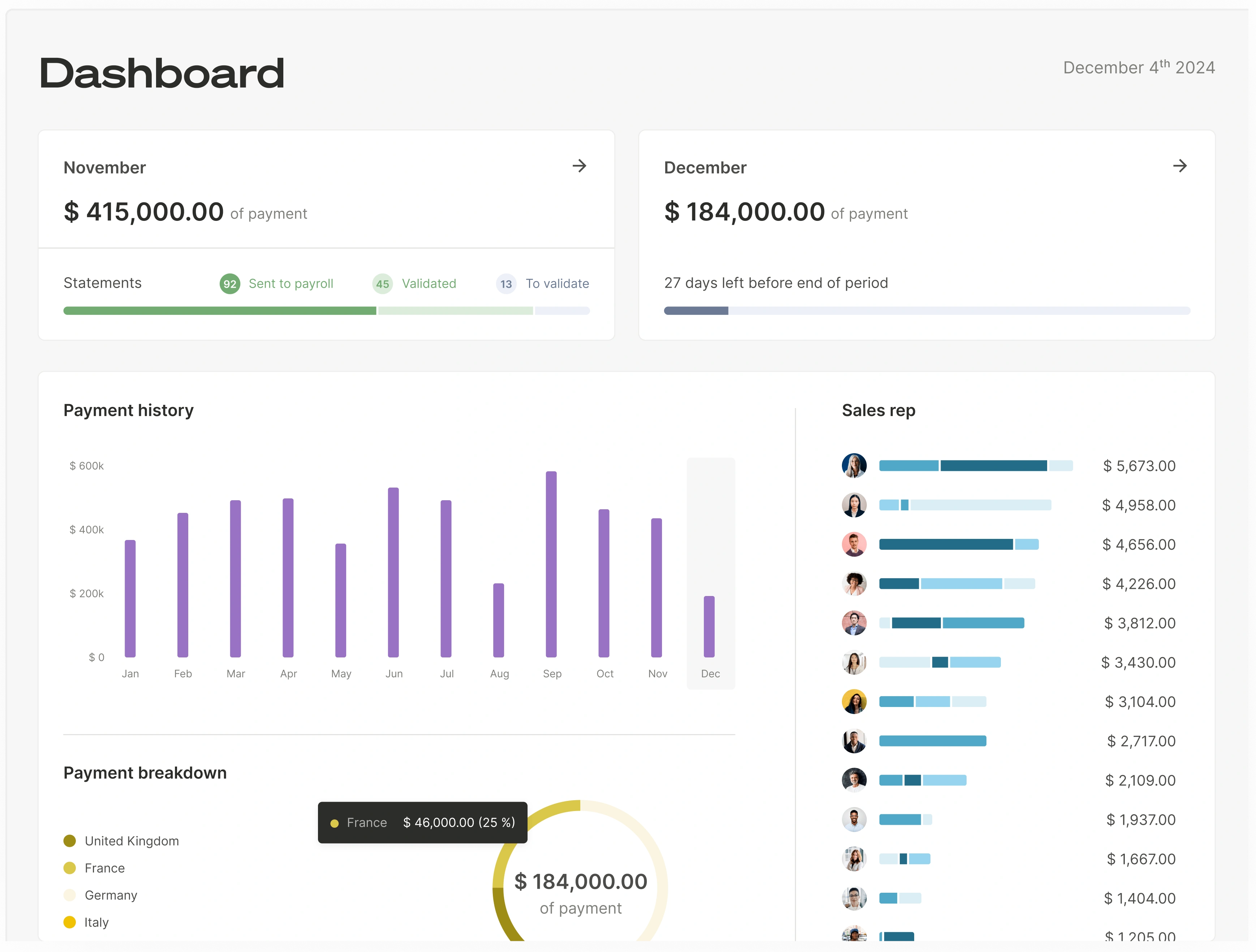
This is where automation becomes a strategic advantage. Using a dedicated platform for managing sales commissions can solve these challenges. For instance, a solution like Qobra automates the entire process by connecting directly to your CRM.
- Real-time Transparency: Reps can access a personal dashboard to see their commissions calculated in real-time as deals are updated. This visibility acts as a powerful, continuous motivator.
- Accuracy and Trust: Automation eliminates the human error inherent in manual calculations, ensuring reps are paid correctly every time. This is critical for retaining top sales talent.
- Handling Complexity: Sophisticated software can effortlessly manage complex structures like tiered rates, recurring revenue splits, and bonuses, which are cumbersome and error-prone in Excel. By investing in a transparent system, you signal to your independent reps that you value their contribution and are committed to a fair partnership.
How to Find and Recruit Top Commission-Only Sales Talent
Finding the right independent reps requires a different approach than traditional employee recruitment. You are not just hiring a salesperson; you are seeking a business partner.
Sourcing Channels and Platforms
While general job boards can be used, specialized platforms are often more effective as they attract professionals specifically looking for commission-based opportunities.
- Specialized Marketplaces: Websites like CommissionCrowd and CommissionOnly.com act as hubs connecting companies with a large network of B2B and B2C sales agents across various countries.
- Niche Platforms: Services like Closify focus on "closers" and often have a more rigorous vetting process, verifying the past performance of the sales reps on their platform. Some, like Closify, offer a flat-fee hiring model instead of charging a percentage.
- Professional Networks: LinkedIn remains a powerful tool for identifying experienced sales professionals in your industry. Joining relevant groups and actively networking can uncover hidden talent.
- Referrals: Your best source may be referrals from your existing network. Ask industry contacts, partners, or even customers if they know of reputable independent agents.
Warning: Vet Companies and Opportunities Thoroughly
For sales agents, it's crucial to vet any company offering a commission-only role. Ask for case studies, speak with existing reps, and ensure the product has a clear market fit and a reasonable sales cycle. A great commission plan is worthless if the product doesn't sell.
The Vetting and Interview Process
When evaluating candidates, focus on their entrepreneurial attributes and track record.
- Proven Experience: Look for a history of success in a similar sales environment. Ask for concrete examples of their sales achievements.
- Industry Network: Probe the depth and relevance of their existing network. Who do they know? How would they approach their first 90 days?
- Business Acumen: Assess their understanding of the market, their sales methodology, and how they plan to run their business.
- Closing Skills: Use role-playing exercises or practical tests to see their sales skills in action.
Onboarding for Success
Even though they are independent, a structured onboarding process is vital. This is a key step in a successful commission plan implementation. Provide them with:
- Deep Product Knowledge: Ensure they understand the product, its value proposition, and the ideal customer profile.
- Sales Enablement Tools: Equip them with marketing collateral, case studies, presentation decks, and access to a demo environment.
- Clear Rules of Engagement: Define the process for lead registration, communication protocols with internal teams, and points of contact for support.
The commission-only model is a high-stakes, high-reward strategy that can fuel explosive growth for companies and provide unparalleled income potential for sales professionals. Its success hinges on a transparent, fair, and mutually respectful partnership. For businesses, this means offering a genuinely valuable product with a compelling commission structure. For sales reps, it requires discipline, financial foresight, and an unwavering belief in their own abilities. When these elements align, it creates a powerful synergy where everyone wins.
Frequently Asked Questions (FAQ)
What is a typical commission rate for a 100% commission sales rep?
There is no single "typical" rate, as it varies widely based on industry, product margin, sales cycle length, and the level of support provided. Rates can range from as low as 5-10% for high-volume, easy-to-sell products to as high as 50% or more for high-margin software, complex services, or products with a long sales cycle. The key is that the rate must be high enough to make the opportunity attractive and financially viable for an experienced professional.
Is a commission-only sales role considered employment?
In most jurisdictions, a properly structured commission-only role classifies the sales representative as an independent contractor, not an employee. This means the company does not withhold taxes, pay social security contributions, or provide benefits like health insurance or paid time off. The agent is responsible for their own taxes and business expenses. It is crucial that the governing contract clearly reflects this status to avoid legal complications.
How long does it take for a commission-only rep to start earning?
This depends heavily on the average sales cycle of the product or service. For products with a short cycle (e.g., a few weeks), a rep might see their first commission check within a month or two. For complex B2B solutions with a sales cycle of 6-12 months, it could take a year or more to build a steady income stream. Both parties must have realistic expectations about this ramp-up period.
Can a company legally change a commission plan for an independent rep?
The terms of the relationship are governed by the signed contract. A company generally cannot unilaterally change the commission plan without the agent's consent, unless the contract itself includes a clause allowing for such modifications with a specific notice period. Any changes should be discussed, agreed upon, and documented in a revised contract or addendum. For more detail, you can explore the legal obligations around modifying sales commission plans.