Webinar: The Biggest Release Sales Comp Has Ever Seen. Come See For Yourself (Wednesday, October 7)
Register
- Commissionly is accessible but limited — teams outgrow it quickly due to its lack of native CRM integrations, absence of multi-currency support, and a dated user interface that slows adoption.
- Qobra offers a significant upgrade with native Salesforce and HubSpot integrations, built-in multi-currency handling, and real-time dashboards that give Operations, Finance, and Sales a single source of truth for commissions.
- Evaluate alternatives on three core criteria: depth of CRM integrations, multi-currency and global-readiness, and the day-to-day experience your reps actually get.
- The market has matured rapidly — the ten platforms in this guide range from enterprise-grade suites to lean, mid-market tools, so matching your choice to your team's size, tech stack, and growth trajectory is essential.
If you have been running commissions through Commissionly, you already know the basics: it covers simple plan structures, offers a straightforward setup, and keeps costs relatively low for small teams. But as your sales organization scales — adding territories, currencies, or more complex plan logic — the gaps start to show.
Limited native integrations mean manual data transfers from your CRM. No multi-currency engine means finance teams are reconciling exchange rates in spreadsheets. And an interface that has not kept pace with modern SaaS standards means reps check their commissions less often, which erodes the motivational power commissions are supposed to deliver.
Those friction points are why revenue operations, finance, and sales leaders increasingly search for Commissionly alternatives that can handle the demands of a growing, global go-to-market organization.
This guide walks through the ten best Commissionly alternatives in 2026, starting with the platform that addresses those gaps most directly. For each tool, you will find an overview of what it does, its standout features, where it fits best, and its limitations — so you can shortlist the right replacement with confidence.
Why Teams Look for Commissionly Alternatives
Commissionly works well as a starting point. It is affordable, relatively quick to set up, and handles straightforward commission structures without much overhead. However, three recurring pain points push teams to explore other options:
Limited Native Integrations
Commissionly relies heavily on CSV imports and manual data handling. For teams running Salesforce, HubSpot, or other major CRMs, the absence of deep, bidirectional integrations creates extra work and introduces data-accuracy risks. Every manual touchpoint is a potential error — and errors in commission data erode trust fast.
No Multi-Currency Support
Organizations selling across multiple geographies need a commission tool that handles currency conversion natively. Commissionly does not offer this, which forces finance teams into workaround spreadsheets and increases the risk of calculation discrepancies during close cycles.
Dated User Interface and Rep Experience
A commission tool only drives motivation when reps actually use it. Commissionly's interface has not evolved at the same pace as modern sales tools, which means lower adoption rates. When reps do not check their commissions in real time, the behavioral impact of variable compensation diminishes significantly.
Beyond these three core issues, growing teams also cite limited reporting depth, lack of advanced approval workflows, and difficulty modeling complex plan structures (tiered accelerators, SPIFs, clawbacks) as reasons for switching.
Key Evaluation Criteria for Commissionly Alternatives
Before diving into individual platforms, here are the dimensions that matter most when evaluating a Commissionly replacement:
CRM and Data Integrations
Why it matters: Commission accuracy starts with clean, real-time deal data. The best tools offer native, bidirectional integrations with Salesforce, HubSpot, and other revenue systems — eliminating CSV imports and reducing reconciliation time.
Multi-Currency and Global Readiness
Why it matters: If your team sells in more than one currency, your commission tool needs to handle conversion rates, reporting in local and base currencies, and compliance with regional payout norms. Bolting this on after the fact rarely works well.
Rep Experience and Real-Time Visibility
Why it matters: Commissions drive behavior only when reps can see the impact of each deal in real time. Look for tools with intuitive dashboards, mobile access, and proactive notifications that keep reps engaged.
Plan Flexibility and Modeling
Why it matters: As organizations mature, commission plans get more complex — tiered accelerators, multi-component quotas, SPIFs, and clawback rules. Your tool should model these without requiring engineering support.
Finance and Compliance Controls
Why it matters: ASC 606 compliance, approval workflows, audit trails, and granular reporting are non-negotiable for finance teams. The right platform should give finance leaders visibility into commissions at the team, individual, and deal level — accessible at any time.
The 10 Best Commissionly Alternatives in 2026
1. Qobra

Best for: Mid-market and enterprise teams that need Operations, Finance, and Sales aligned on a single commission tool with real-time visibility.
Qobra is built for organizations that want commissions to be clear and trusted in day-to-day work. It provides a real-time overview of commissions so reps can see what they will receive when they close a deal, plus email notifications that help reps understand the impact of each deal. For finance teams, Qobra delivers visibility into commissions at multiple levels — by team, by individual, and down to commission amounts — accessible at any time.
Key features:
- Native Salesforce and HubSpot integrations — bidirectional sync eliminates CSV imports and keeps deal data accurate in real time
- Multi-currency support — handle global sales teams without spreadsheet workarounds
- Real-time dashboards for reps, managers, and finance — everyone works from the same numbers
- Plan builder that supports tiered accelerators, SPIFs, clawbacks, and multi-component quotas without engineering involvement
- ASC 606 compliance tools and audit trails for finance teams
- Proactive email notifications that show reps the commission impact of each closed deal
- AI-powered agents — Qobra is building the future of sales compensation with three purpose-built AI agents. The Architect replaces hours of plan implementation with minutes of conversation — editing or building compensation plans autonomously. The Sales Coach helps reps understand their commission statements and answers their queries instantly, reducing admin workload and building rep trust. The Analyst turns compensation data into proactive business intelligence, creating reports and dashboards in plain language and surfacing insights that would take hours to find manually.
Notable customers: JCDecaux, ElevenLabs, AstraZeneca, DataSnipper, GoCardless, Factorial, Go1, SAP, Quantcast, Make.
Ratings: G2: 4.8/5 | Capterra: 4.9/5
Pricing: Custom pricing based on team size and plan complexity. Book a demo to get a tailored walkthrough using your own compensation plans.
Limitations: Qobra is designed for organizations that need a robust, scalable commission platform — very small teams with a single, flat-rate plan may find it more than they need initially.
2. CaptivateIQ
Best for: Organizations with highly complex, multi-layered incentive plans that require deep customization.
CaptivateIQ positions itself as a flexible incentive management platform that can model virtually any compensation structure. Its spreadsheet-like plan designer gives operations teams granular control over commission logic.
Key features:
- Flexible plan designer with formula-based logic
- Integrations with Salesforce, HubSpot, and data warehouses
- Workflow approvals and audit logging
- Customizable dashboards and reporting
Limitations: CaptivateIQ's implementation model relies heavily on professional services — plan changes frequently require paid consulting engagements, and teams report difficulty managing the platform independently if their primary admin leaves. Despite positioning SmartGrid as "Excel-like," many users find the learning curve steeper than expected, particularly when explaining plan logic to stakeholders. Calculations require manual triggers rather than updating in real time, and page load performance is a recurring concern in user reviews. The platform lacks a mobile app and is primarily US-focused — European teams will find limited HRIS coverage (Workday only, with no native support for Personio, Payfit, Deel, Factorial, or HiBob). Several organizations have migrated away from CaptivateIQ citing the need for greater autonomy and simpler day-to-day administration.
3. Spiff
Best for: Revenue operations teams that need tight Salesforce integration and automated commission workflows.
Spiff (now part of Salesforce's ecosystem following its acquisition) offers deep Salesforce-native functionality. For teams already invested in the Salesforce stack, this tight coupling reduces integration overhead.
Key features:
- Deep Salesforce integration as a native app
- Automated commission calculations with real-time sync
- Visual plan designer
- Built-in dispute and approval workflows
Limitations: Since the Salesforce acquisition, Spiff has undergone a platform migration that introduced calculation stability concerns — multiple user reviews document payment errors during the transition period. Support moved to Salesforce's standard ticketing model, which means longer response times compared to the dedicated support that was previously available. Non-Salesforce data connectors carry an additional monthly cost per connector, and the bundled pricing strategy at Salesforce renewals can result in significant license price increases at the second contract term. The platform's technical back-end requires dedicated resources to maintain and configure. Teams using HubSpot or other non-Salesforce CRMs will find the integration story less compelling. Former Spiff users who have migrated to other platforms frequently cite simpler plan management and faster time-to-value as primary drivers.
4. Xactly
Best for: Large enterprises with complex, global incentive compensation programs and a need for strategic planning tools.
Xactly is one of the longest-standing players in the incentive compensation management (ICM) space. It offers a broad suite that extends beyond commission calculation into territory planning, quota setting, and benchmarking.
Key features:
- Enterprise-grade ICM with territory and quota planning
- AI-powered benchmarking and plan optimization
- Multi-currency and multi-entity support
- Extensive compliance and audit capabilities
Limitations: Xactly's breadth comes with enterprise-level pricing and implementation complexity. Smaller organizations often find the platform over-engineered for their needs, and time-to-value can stretch significantly.
5. Performio
Best for: Mid-market to enterprise teams that need strong reporting and the ability to handle complex, hierarchical plan structures.
Performio focuses on delivering accurate commission calculations with detailed reporting that satisfies both operations and finance stakeholders.
Key features:
- Hierarchical plan structures with unlimited tiers
- Strong reporting and analytics suite
- CRM and ERP integrations
- Configurable approval workflows
Limitations: The user interface, while functional, is less modern than newer entrants. Rep-facing experience is not as polished, which can affect adoption rates among sales teams.
6. Varicent
Best for: Enterprise organizations that need a unified platform for sales performance management — including territory planning, quota management, and incentive compensation.
Varicent (formerly IBM's SPM solution) offers a comprehensive sales performance management suite. It is particularly strong in data-driven territory and quota optimization.
Key features:
- Full sales performance management suite (ICM, territory, quota)
- AI-driven insights for plan optimization
- Multi-currency and global payout support
- Advanced modeling and scenario analysis
Limitations: Enterprise-only positioning means pricing and implementation are out of reach for most mid-market teams. The platform's breadth can feel overwhelming for organizations that only need core commission management.
7. QuotaPath
Best for: Fast-growing startups and SMBs that want a simple, self-serve commission tracking tool with transparent pricing.
QuotaPath has carved out a strong position in the startup and SMB market with an approachable interface, straightforward pricing, and quick implementation.
Key features:
- Intuitive, self-serve plan builder
- CRM integrations (Salesforce, HubSpot, Close)
- Rep-facing dashboards with deal-level visibility
- Transparent, published pricing
Limitations: QuotaPath's template-based approach works well for simple plan structures but reaches a ceiling as compensation plans grow in complexity — teams with multi-source data requirements, complex crediting rules, or multi-currency needs may find the templates insufficient. The platform is US-focused and English-only, with Rippling as its sole HRIS integration (no support for European HRIS platforms like Personio, Payfit, Deel, HiBob, or Factorial). Gamification capabilities are limited to basic leaderboards and contests, which may not drive the engagement uplift that larger teams require. Premium tier pricing ($70/user/month + $7,200 annual platform fee) can erode the cost advantage that initially attracts smaller buyers. Teams evaluating QuotaPath should assess whether their current plan complexity — and their 12-month roadmap for compensation design — fits within the template-based framework.
8. Visdum
Best for: SaaS companies that need commission management tightly aligned with recurring revenue metrics (ARR, MRR, expansion, churn).
Visdum is designed specifically for SaaS go-to-market models. It understands recurring revenue concepts natively, which reduces the configuration overhead for SaaS-specific plan structures.
Key features:
- SaaS-native metric handling (ARR, MRR, net revenue retention)
- Pre-built plan templates for common SaaS roles
- CRM and billing system integrations
- Real-time earnings visibility for reps
Limitations: The SaaS-specific focus means organizations outside the recurring revenue model may find the platform's assumptions misaligned. Ecosystem maturity and customer base are smaller than more established competitors.
9. Sales Cookie
Best for: Small teams and startups that need basic, affordable commission automation with minimal setup.
Sales Cookie offers a lightweight commission management tool that prioritizes ease of use and quick deployment. It is a step up from spreadsheets without the complexity of enterprise platforms.
Key features:
- Quick setup with a wizard-based plan builder
- Integrations with popular CRMs and accounting tools
- Self-serve dashboards for reps
- Affordable pricing tiers
Limitations: Limited scalability for complex plan structures, minimal multi-currency capabilities, and basic reporting make Sales Cookie a fit primarily for teams with straightforward commission needs.
10. Everstage
Best for: Sales-led organizations that prioritize rep engagement and gamification alongside accurate commission tracking.
Everstage combines commission management with motivational features — leaderboards, earnings projections, and deal-level commission visibility designed to keep reps checking their numbers.
Key features:
- Real-time commission estimates tied to pipeline deals
- Gamification elements (leaderboards, contests)
- Native CRM integrations (Salesforce, HubSpot)
- No-code plan builder
Limitations: Everstage's full-service approach means clients rely on the vendor for most plan modifications — published plans and historical quotas cannot be edited independently. The platform's data architecture involves a multi-layered pipeline (Connectors → Objects → Databooks → Datasheets → Plans) that adds complexity for teams accustomed to simpler workflows. Calculations run in batch mode rather than real time — admins trigger a recalculation and wait for completion rather than seeing instant results. European buyers should note the absence of a local team and French-language support, along with HRIS coverage gaps for Payfit, Deel, and Factorial. Features like Time Machine (plan modeling) and Crystal (rep forecasting) demonstrate well in demos, but Time Machine cannot compare global budget impact across scenarios, and Crystal requires manual data entry that limits rep adoption. Organizations that prioritize post-onboarding autonomy and real-time visibility should evaluate carefully whether the full-service model fits their operating style.
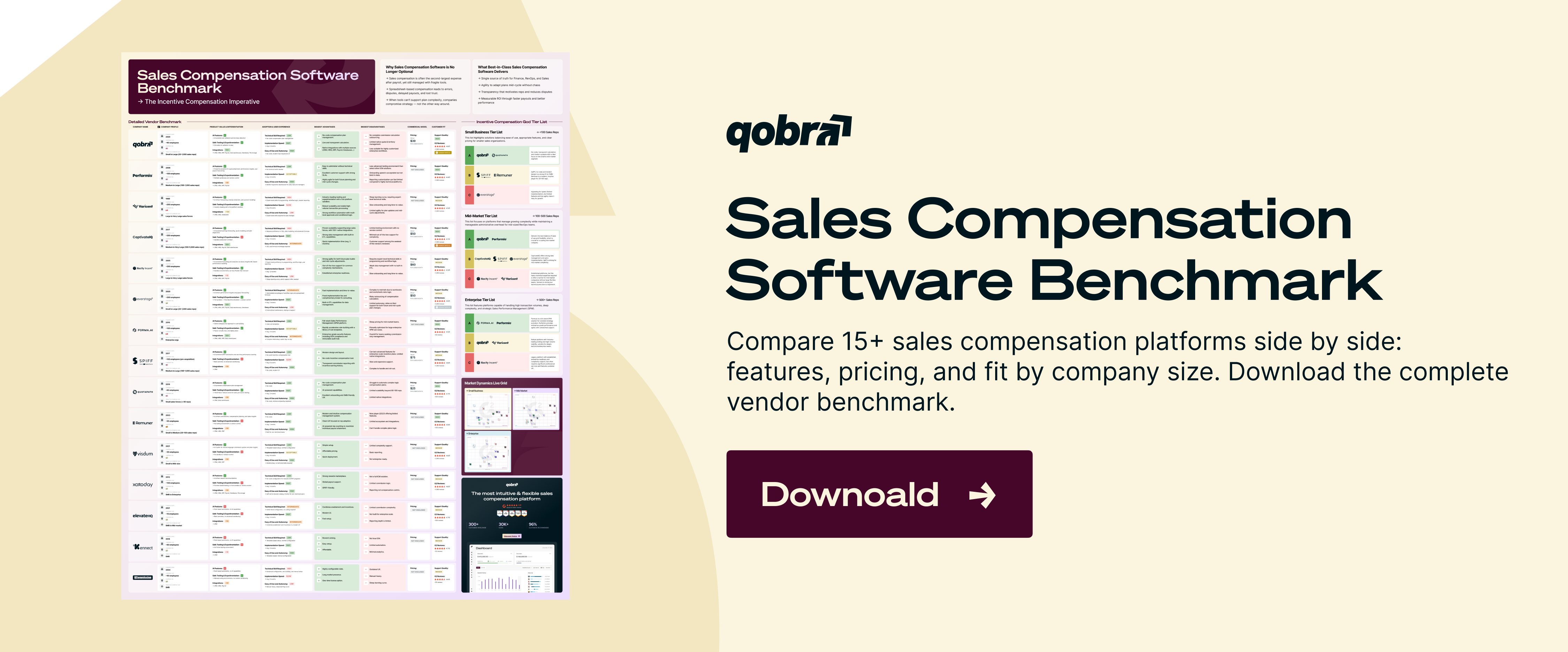
Feature Comparison Table
Frequently Asked Questions
What Is the Main Reason Teams Switch Away From Commissionly?
The most common trigger is outgrowing Commissionly's integration capabilities. As teams scale, the reliance on CSV imports and manual data handling creates accuracy risks and operational overhead that more mature platforms eliminate with native CRM integrations. Multi-currency limitations and a dated interface compound the issue for growing organizations.
How Long Does It Typically Take To Migrate From Commissionly To a New Platform?
Migration timelines vary by platform and plan complexity. Lightweight tools like QuotaPath or Sales Cookie can be live in days. Mid-market platforms like Qobra typically complete implementation in a few weeks, including plan configuration and integration setup. Enterprise platforms like Xactly or Varicent may require months of implementation work.
Do I Need Multi-Currency Support If I Only Sell in One Market Today?
If there is any possibility your organization will expand internationally in the next 12 to 24 months, choosing a platform with native multi-currency support now avoids a painful re-platforming later. Retrofitting currency handling into a tool that was not built for it rarely works well.
Can These Tools Handle Complex Plan Structures Like Tiered Accelerators and Clawbacks?
Most of the platforms in this guide support tiered accelerators, SPIFs, and clawbacks — but the ease of configuration varies significantly. Tools like Qobra and CaptivateIQ allow operations teams to model these structures without engineering involvement, while simpler platforms may require workarounds or custom development.
How Important Is the Rep-Facing Experience When Choosing a Commission Tool?
Critically important. A commission tool only drives the intended behavioral impact when reps actively engage with it and respond positively to using it. Real-time dashboards, deal-level commission visibility, and proactive notifications are the features that separate tools reps actually use from tools that collect dust.
What Should Finance Teams Prioritize When Evaluating Commission Platforms?
Finance teams should focus on ASC 606 compliance capabilities, audit trails, approval workflows, and the ability to view commissions at multiple levels — by team, by individual, and down to specific commission amounts. The right platform should make this data accessible at any time, without requiring ad hoc report requests.