Webinar: The Biggest Release Sales Comp Has Ever Seen. Come See For Yourself (Wednesday, October 7)
Register
- Financial services firms face strict regulatory requirements for commission management — including full audit trails, ASC 606 compliance, and payment traceability — that generic compensation tools cannot handle out of the box.
- Plan complexity in financial services is unmatched: multi-tier advisor splits, regulatory clawbacks, multi-product commission structures, and deferred revenue recognition demand purpose-built software.
- Qobra delivers full audit trails, native ASC 606 support, and deal-level traceability — capabilities already trusted by organizations like AstraZeneca and GoCardless.
- When evaluating platforms, prioritize four criteria: regulatory compliance automation, audit trail depth, clawback management, and finance-ready reporting.
If your finance or operations team is still reconciling advisor commissions in spreadsheets — cross-referencing regulatory clawback schedules against payout files, rebuilding audit trails from email threads — you already know the risk. In financial services, a single compliance gap in commission management can trigger regulatory penalties, restatement of revenue, and eroded trust across sales, finance, and compliance teams.
The challenge is that most sales commission platforms were designed for SaaS or general B2B motions. They handle quotas and accelerators well, but they were never built for the layered complexity financial services demands: multi-tier advisor splits, product-specific commission schedules, regulatory clawback windows that stretch months or years, and ASC 606 deferred revenue recognition tied to individual deals.
In 2026, a growing number of platforms have started addressing these gaps — but the depth of coverage varies dramatically. This guide evaluates the eight best sales commission software platforms for financial services, ranked by their ability to handle the compliance, audit, and plan complexity requirements that define the industry. You will learn what to look for, how each platform performs against financial services criteria, and which solution fits your organization's needs.
Why Financial Services Needs Specialized Commission Software
The Regulatory Landscape Is Non-Negotiable
Financial services operates under a web of regulatory requirements that directly affect how commissions are calculated, reported, and paid. Whether your firm falls under SEC oversight, state insurance commission rules, or global financial conduct regulations, the commission process must produce auditable, traceable, and defensible outputs at every step.
Consider the typical commission lifecycle in a wealth management firm. An advisor closes a product sale. The commission calculation must account for the product type, the advisor's tier, any split arrangements with other advisors or the firm, applicable regulatory holds, and deferred recognition schedules under ASC 606. If the client cancels within a regulatory clawback window, the commission must be reversed — partially or fully — and that reversal must be documented with the same rigor as the original payout.
Generic commission software treats clawbacks as exceptions. In financial services, they are a core workflow.
Plan Complexity That Breaks Standard Tools
Financial services commission plans are among the most complex in any industry. A single plan might include:
- Multi-tier structures where commission rates change based on cumulative production, product category, or advisor certification level
- Advisor splits across multiple parties — producing advisor, supervising advisor, branch, and firm — each with different percentage allocations
- Product-specific schedules where annuities, mutual funds, insurance policies, and advisory fees each carry distinct commission rules
- Regulatory clawbacks triggered by client cancellations, compliance violations, or product-specific chargeback windows
- Deferred revenue recognition under ASC 606, requiring commissions to be capitalized and amortized over the expected benefit period
Standard commission tools can model basic tiered plans. But when you layer advisor splits on top of product-specific schedules, then add clawback logic that references the original deal terms, most platforms require workarounds — or break entirely.
Compliance and Audit Requirements for Financial Services Commissions
ASC 606 and Revenue Recognition
ASC 606 requires that incremental costs of obtaining a contract — including sales commissions — be capitalized as assets and amortized over the period during which the entity expects to benefit from the contract. For financial services firms, this means every commission payment must be linked to a specific deal, with a defined amortization schedule that finance can report on and auditors can verify.
What your commission software must do:
- Track commissions at the deal level, not just the aggregate payout level
- Support amortization schedules that map to product-specific benefit periods
- Generate journal-entry-ready reports that feed directly into your ERP or accounting system
- Maintain a complete audit trail from deal close through commission calculation, approval, payout, and amortization
Full Audit Trails and Payment Traceability
Regulators and internal audit teams expect to trace any commission payment back to its source: the deal, the plan rules that applied, the calculation logic, any overrides or adjustments, and the approval chain. This is not optional — it is a baseline requirement.
Audit trail depth matters. A platform that logs "Commission paid: $5,000" is not sufficient. The audit trail must show:
- The deal that triggered the commission
- The plan version and rules in effect at the time of calculation
- The step-by-step calculation, including tier determination, split allocation, and any clawback adjustments
- Who approved the payout, and when
- Any subsequent modifications, with timestamps and user attribution
Clawback Management
In financial services, clawbacks are not edge cases — they are a routine part of the commission lifecycle. Insurance policy lapses, advisory contract cancellations, and regulatory-driven reversals all trigger clawback events that must be processed accurately and documented completely.
Effective clawback management requires the software to:
- Define clawback rules per product or plan, including the clawback window duration and the recovery percentage schedule
- Automatically trigger clawback calculations when a qualifying event occurs
- Apply clawbacks to future payouts or generate recovery invoices, depending on firm policy
- Document every clawback with the same audit trail depth as the original commission
The 8 Best Sales Commission Software Platforms for Financial Services in 2026
1. Qobra

Best for: Organizations that need full audit trails, native ASC 606 compliance, and real-time commission visibility across operations, finance, and sales.
Qobra is built for organizations that want commissions to be clear and trusted in day-to-day work — across Operations, Finance, and Sales. For financial services firms, three capabilities stand out.
Full audit trails. Every commission calculation in Qobra is traceable from the deal level through plan rules, tier determination, split allocation, and payout. Finance teams can pull a complete calculation history for any commission at any time — supporting both internal audit requirements and regulatory examinations.
Native ASC 606 support. Qobra handles deferred revenue recognition natively, linking commission capitalization and amortization to individual deals. This eliminates the manual reconciliation that finance teams typically perform between the commission platform and the ERP.
Deal-level traceability. Each commission ties back to the specific deal, the plan version in effect, and every adjustment or clawback applied. This level of granularity is what organizations like AstraZeneca and GoCardless rely on for commission management at scale.
For Revenue and Operations leaders, Qobra supports a commission process that is easier to run and easier to adopt. For Finance teams, it provides visibility into commissions at multiple levels — by team, by individual, and down to commission amounts — accessible at any time. For Sales teams, it provides a real-time overview of commissions so reps can see what they will receive when they close a deal.
Qobra holds a 4.8/5 on G2 and a 4.9/5 on Capterra, reflecting strong adoption across all three stakeholder groups.
AI-Powered Agents — A Unique Differentiator
Qobra includes three purpose-built AI agents that handle real work — not just analytics overlays. The Architect replaces hours of plan implementation with minutes of conversation, building or editing compensation plans autonomously on the platform. The Sales Coach answers rep questions about their commissions instantly, reducing admin ticket volume and building trust between sales teams and operations. The Analyst creates reports and dashboards from plain-language requests and surfaces proactive business intelligence — flagging anomalies, identifying trends, and delivering insights that would take hours of manual analysis.
2. Xactly
Best for: Large enterprises with complex, multi-division financial services operations that need deep analytics and benchmarking.
Xactly Incent is one of the longest-standing enterprise commission platforms. Its strength lies in plan modeling, benchmarking data from its large customer base, and robust analytics. For financial services, Xactly offers audit trail capabilities and compliance reporting, though ASC 606 workflows may require configuration with their professional services team. Best suited for organizations with dedicated compensation administration teams.
3. Varicent
Best for: Financial services firms that need advanced territory and quota management alongside commission calculations.
Varicent (formerly IBM SPM) combines incentive compensation management with territory and quota planning. Its rules engine can handle multi-tier advisor structures and product-specific schedules. Varicent is strong on analytics and "what-if" modeling for plan design. Integration with financial reporting systems is available but typically requires implementation support. A solid choice for firms where territory alignment and quota setting are as critical as commission accuracy.
4. CaptivateIQ
Best for: Mid-market financial services firms that want flexibility in plan design without heavy IT involvement.
CaptivateIQ offers a spreadsheet-like interface that compensation administrators find intuitive for building and modifying plans. It supports complex commission structures and has been expanding its compliance and audit capabilities. For financial services, evaluate the depth of its audit trail and ASC 606 support relative to your specific regulatory requirements — these features are evolving. Strong option for teams that need to iterate on plan designs frequently.
5. Performio
Best for: Financial services organizations with complex, multi-product commission structures that need deep plan flexibility.
Performio is designed for handling high plan complexity — a common requirement in financial services. It supports multi-tier structures, product-specific rules, and split commissions across multiple parties. Performio's reporting capabilities cater to both operations and finance stakeholders. Evaluate its clawback automation and ASC 606 depth against your firm's specific needs, as capabilities vary by deployment.
6. Anaplan
Best for: Enterprise financial services firms that need commission management tightly integrated with broader financial planning.
Anaplan is a connected planning platform that includes incentive compensation as part of its broader FP&A and operational planning suite. For financial services firms that already use Anaplan for financial modeling, adding commission management creates a unified planning environment. The platform is highly flexible but requires significant configuration expertise. Best suited for organizations with dedicated planning teams and existing Anaplan investments.
7. Beqom
Best for: Global financial services enterprises with complex total compensation requirements spanning commissions, bonuses, and long-term incentives.
Beqom takes a total compensation structure approach, managing commissions alongside bonuses, equity, and other pay components. For financial services firms with global operations, Beqom's multi-currency, multi-regulatory-framework support is a differentiator. Its commission module can handle complex structures, but the platform's breadth means implementation timelines tend to be longer. Best for large enterprises managing the full spectrum of compensation.
8. Everstage
Best for: Growth-stage financial services firms that prioritize rep engagement and real-time commission visibility.
Everstage emphasizes the sales rep experience — real-time earnings visibility, deal-level commission breakdowns, and gamification features. For financial services, it offers solid plan flexibility and is building out compliance-focused features. Evaluate audit trail depth and regulatory reporting capabilities carefully if your firm faces heavy regulatory scrutiny. A good fit for firms that want to improve rep engagement with commissions while building toward more mature compliance processes.
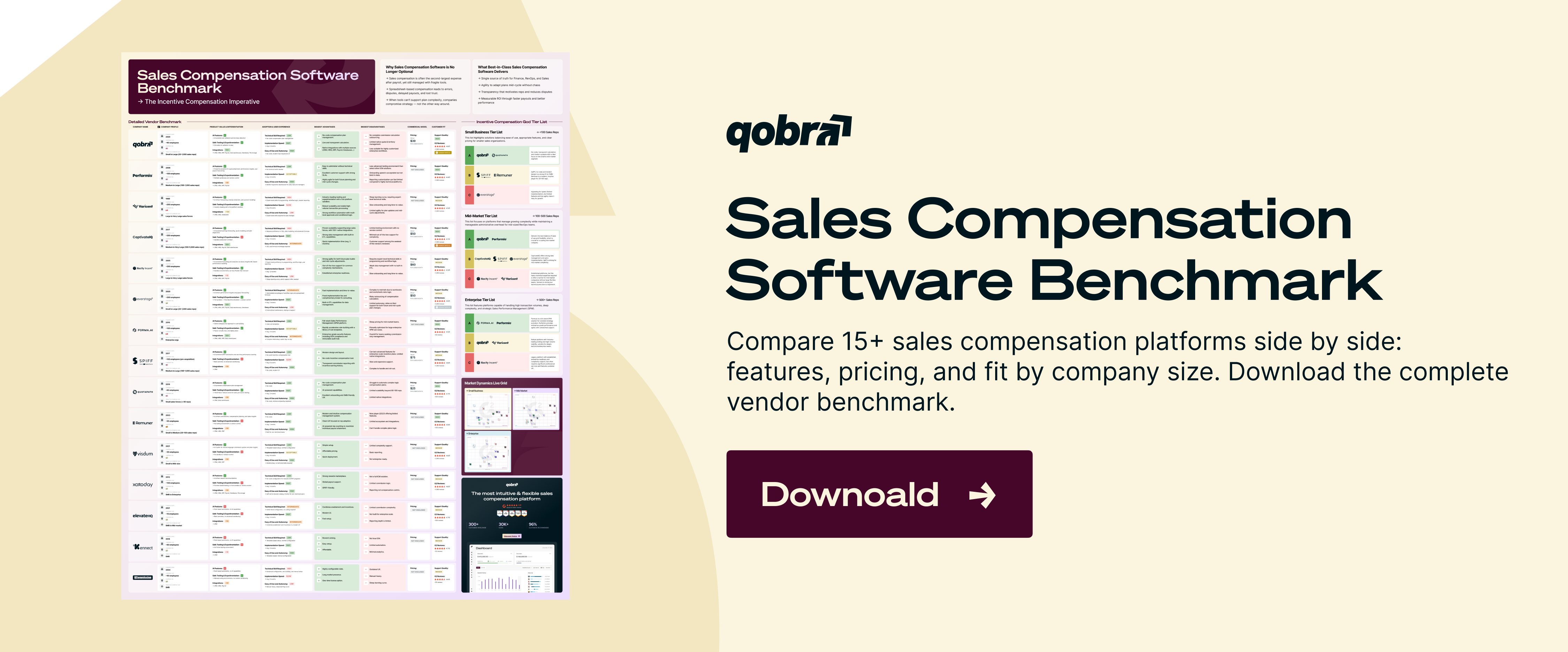
Feature Comparison: Sales Commission Software for Financial Services
Best Practices for Managing Sales Commissions in Financial Services
Getting the right software is the foundation. But how you implement and operate your commission process determines whether you actually achieve compliance, accuracy, and trust. Follow these practices:
- Map every plan to its regulatory requirements before building it in software. Document which regulations apply to each product, advisor type, and jurisdiction. Use this map as the configuration checklist for your commission platform.
- Define clawback rules at the product level, not the plan level. Financial services products carry different clawback windows and recovery schedules. Configure these at the product level so they apply automatically regardless of which plan a deal falls under.
- Require deal-level traceability from day one. Every commission payment should trace back to a specific deal, with the full calculation chain documented. Retroactively adding traceability is exponentially harder than building it in from the start.
- Automate ASC 606 journal entries. Manual reconciliation between commission payouts and deferred revenue schedules is one of the largest sources of commission payment errors in financial services compensation. Choose a platform that generates journal-entry-ready outputs natively.
- Run parallel calculations during plan transitions. When changing commission plans — whether due to regulatory updates, product changes, or business strategy — run the old and new plans simultaneously for at least one full cycle. Compare outputs before cutting over.
- Give finance direct access to the commission platform. Finance teams should not depend on operations to pull reports. Platforms like Qobra provide visibility into commissions at multiple levels — by team, by individual, and down to commission amounts — accessible at any time, which reduces reporting bottlenecks and audit preparation time.
- Review audit trails quarterly, not just during audits. Proactive audit trail reviews catch configuration drift, unauthorized overrides, and calculation anomalies before they become compliance issues.
Frequently Asked Questions
What Makes Sales Commission Software "Financial Services Ready"?
A platform is financial services ready when it can handle the industry's core requirements natively — not through workarounds. That means full audit trails at the deal level, ASC 606 deferred revenue recognition, automated clawback processing with complete documentation, multi-tier advisor split calculations, and finance-ready reporting that feeds directly into accounting systems. If any of these capabilities require significant custom development or manual processes, the platform is not purpose-fit for financial services.
How Do I Ensure ASC 606 Compliance in My Commission Software?
Start by confirming that the platform tracks commissions at the individual deal level — not just aggregate payouts. It must support amortization schedules tied to product-specific benefit periods and generate outputs that map to your ERP's journal entry format. Qobra handles this natively, linking commission capitalization and amortization to individual deals so finance teams can report accurately without manual reconciliation.
Can General-Purpose Commission Software Handle Financial Services Clawbacks?
Most general-purpose platforms support basic clawback logic — reversing a commission when a deal is cancelled. But financial services clawbacks are more nuanced: they involve product-specific clawback windows, graduated recovery percentages, multi-party split reversals, and regulatory documentation requirements. Evaluate whether the platform can define clawback rules at the product level, trigger calculations automatically, and maintain a full audit trail for every clawback event.
How Long Does Implementation Typically Take for Financial Services Firms?
Implementation timelines vary significantly by platform and firm complexity. Platforms designed for ease of adoption — like Qobra — can be operational in weeks for standard configurations. Enterprise platforms like Xactly, Varicent, Anaplan, and Beqom typically require months of implementation, especially when configuring complex advisor structures and regulatory workflows. The key factor is whether the platform handles financial services requirements natively or requires custom configuration.
What Should I Look for in Audit Trail Capabilities?
An adequate audit trail logs every step of the commission lifecycle: deal creation, plan rule application, tier determination, split allocation, approval, payout, and any subsequent adjustments or clawbacks. Each entry should include a timestamp, user attribution, and the specific values and rules involved. The audit trail should be searchable, exportable, and accessible to both operations and finance teams without requiring IT support.
Compliance matters in finance; a secure sales commission platform keeps every payout auditable — compare the leading options.