Webinar: The Biggest Release Sales Comp Has Ever Seen. Come See For Yourself (Wednesday, October 7)
Register
- A sales commission is a performance‑based payment—usually a percentage or fixed fee—paid to salespeople for generating revenue or meeting defined sales targets.
- Common structures include base salary + commission, straight commission, tiered (increasing rates by volume), flat‑rate per sale, and residual commissions for renewals; choose by sales cycle, margin and strategic priorities.
- Calculation is typically: Commission = Sale Amount × Commission Rate (e.g., $50,000 × 10% = $5,000); base the sale amount on ACV, TCV or gross margin and apply tiered math where relevant.
- Design best practices: align rates to business objectives, keep the plan simple and transparent, set realistic quotas (aim for ~60–70% team attainment), document splits/clawbacks and automate calculations for real‑time visibility.
- Benchmarks and admin tips: SaaS AEs often earn ~8–12% of ACV, real estate agents ~2.5–3%; pay monthly or quarterly, commissions are taxable, and use templates, calculators or commission software to reduce disputes and errors.
Are you looking for the most powerful tool to drive your sales strategy and energize your team? As many CEOs and Sales Directors have discovered, the answer often lies in a well-designed sales compensation plan. Constructing this plan is a strategic exercise with a direct impact on team performance and overall company revenue.
A sales commission is a performance-based financial incentive paid to sales representatives for closing deals or achieving specific sales targets. This variable pay model is designed to motivate sales teams, align their efforts with business objectives, and ultimately drive revenue growth. A strong commission structure is more than just a way to pay your team; it's a way to improve business strategy, attract top talent, and supercharge sales performance.
The key to success lies in crafting a compensation plan that is simple, transparent, and aligned with your overarching business strategy. Let's break down how this powerful remuneration model works and how you can design a winning plan for 2026.
What is the Purpose of a Sales Commission Structure?
At its core, a sales commission structure is designed to solve the principal-agent problem by aligning the interests of the salesperson (the agent) with those of the company (the principal). When a salesperson's earnings are directly tied to the revenue or profit they generate, they are intrinsically motivated to perform at their best.
This performance-based model offers significant benefits for both the organization and its employees.
Key Benefits for the Company:
- Boosts Motivation and Performance: Tying earnings directly to results encourages sales reps to exceed their quotas and push for every possible deal. This creates a high-performance culture driven by tangible rewards.
- Attracts and Retains Top Talent: A competitive and lucrative commission plan is a major draw for skilled sales professionals. It signals that the company values and rewards high achievement, helping to reduce costly turnover.
- Aligns Sales with Business Goals: Commission structures can be designed to encourage specific behaviors. For example, you can offer higher rates for selling new products, securing multi-year contracts, or increasing profit margins, thereby steering the team toward strategic priorities.
- Provides Cost Control: Since commissions are a variable expense, costs are only incurred when revenue is generated. This makes it a highly efficient and predictable compensation strategy, particularly for growing businesses.
Key Benefits for the Salesperson:
- Unlimited Earning Potential: Unlike a fixed salary, a commission-based plan allows high-performing reps to significantly increase their income based on their hard work and success.
- Direct Reward for Effort: Salespeople can see a clear and immediate connection between their performance and their paycheck, which is a powerful psychological motivator.
- Autonomy and Ownership: Commission-based roles often come with a greater sense of ownership over one's results, fostering an entrepreneurial mindset.
How Are Sales Commissions Calculated?
The calculation method for sales commissions can range from simple to complex, but it almost always starts with a basic formula. The commission rate can vary depending on the salesperson's role, the industry, the type of product or service sold, and the overall compensation plan.
The most common formula is:
Commission Payment = Total Sale Amount x Commission Rate
For example, if a sales rep works with a 10% commission rate and closes a deal worth $50,000, their commission would be:
$50,000 (Sale Amount) x 0.10 (Commission Rate) = $5,000 (Commission Payment)
While this formula is straightforward, the components can vary. The "Total Sale Amount" could be based on the total contract value, the annual recurring revenue (ARR), or even the gross profit margin of the sale. The "Commission Rate" can be a flat percentage or it can change based on performance tiers or other factors.
The Most Common Types of Sales Commission Structures
There is no one-size-fits-all solution for sales commissions. The ideal structure depends on your industry, sales cycle, business maturity, and strategic goals. Most companies use a combination of a base salary and a commission plan to provide both security and motivation. Here are the most common structures you'll encounter.
Base Salary + Commission
This is the most prevalent structure in sales. It provides sales reps with a fixed annual salary for stability, supplemented by variable commissions earned on their sales. This hybrid model balances security—ensuring reps can cover living expenses—with the incentive to perform.
Best for: Most B2B sales roles, especially those with longer sales cycles or where significant non-selling activities (like prospecting and relationship management) are required.
Example: A SaaS Account Executive has a base salary of $70,000 and earns a 10% commission on all new business revenue. If they close $500,000 in a year, their total compensation is $70,000 + ($500,000 x 10%) = $120,000.
Straight Commission
A straight commission plan means the salesperson's entire compensation is based on their sales. There is no base salary. This 100% variable model offers the highest risk but also the highest potential reward.
Best for: Industries with very short sales cycles and high transaction volumes, or for roles with independent contractors rather than full-time employees.
Example: A real estate agent earns a 3% commission on the sale price of a home. If they sell a $600,000 property, their entire earning from that deal is $18,000.
Tiered Commissions
With a tiered commission structure, the commission rate increases as a salesperson achieves higher levels of sales volume or revenue. This powerfully motivates reps to not just meet their quota, but to significantly exceed it.
Best for: Driving aggressive growth and motivating top performers to keep pushing their limits.
Example: A sales rep might have the following commission tiers based on quarterly revenue:
| Quarterly Revenue | Commission Rate |
|---|---|
| $0 - $100,000 | 8% |
| $100,001 - $200,000 | 10% |
| $200,001+ | 12% |
If the rep closes $250,000 in a quarter, their commission isn't just 12% on the total. It would be calculated tier by tier: ($100,000 x 8%) + ($100,000 x 10%) + ($50,000 x 12%) = $8,000 + $10,000 + $6,000 = $24,000.
Expert Tip: To Cap or Not to Cap?
Tiered structures work best when commissions are uncapped. Capping commissions—setting a maximum amount a rep can earn—can lead top performers to stop selling once they've hit their limit, which is detrimental to the business. To explore this topic further, read about the pros and cons of decapping your commissions.
Flat-Rate Commissions
This is the simplest structure. A salesperson earns a fixed dollar amount for every sale made, regardless of its size. This is easy to understand and calculate.
Best for: Companies that sell products or services with a standard, uniform price point.
Example: A telecommunications company pays its sales reps a flat $300 for every new business internet package they sell.
Residual Commissions
In a residual commission model, a salesperson continues to earn commissions for as long as the accounts they signed continue to generate revenue. This is common in industries where customer retention is a primary goal.
Best for: Subscription-based businesses (SaaS), insurance agencies, and financial services, where long-term client relationships are crucial.
Example: An insurance agent earns 15% of the premium for the first year of a policy and then a 5% residual commission for every year the client renews.
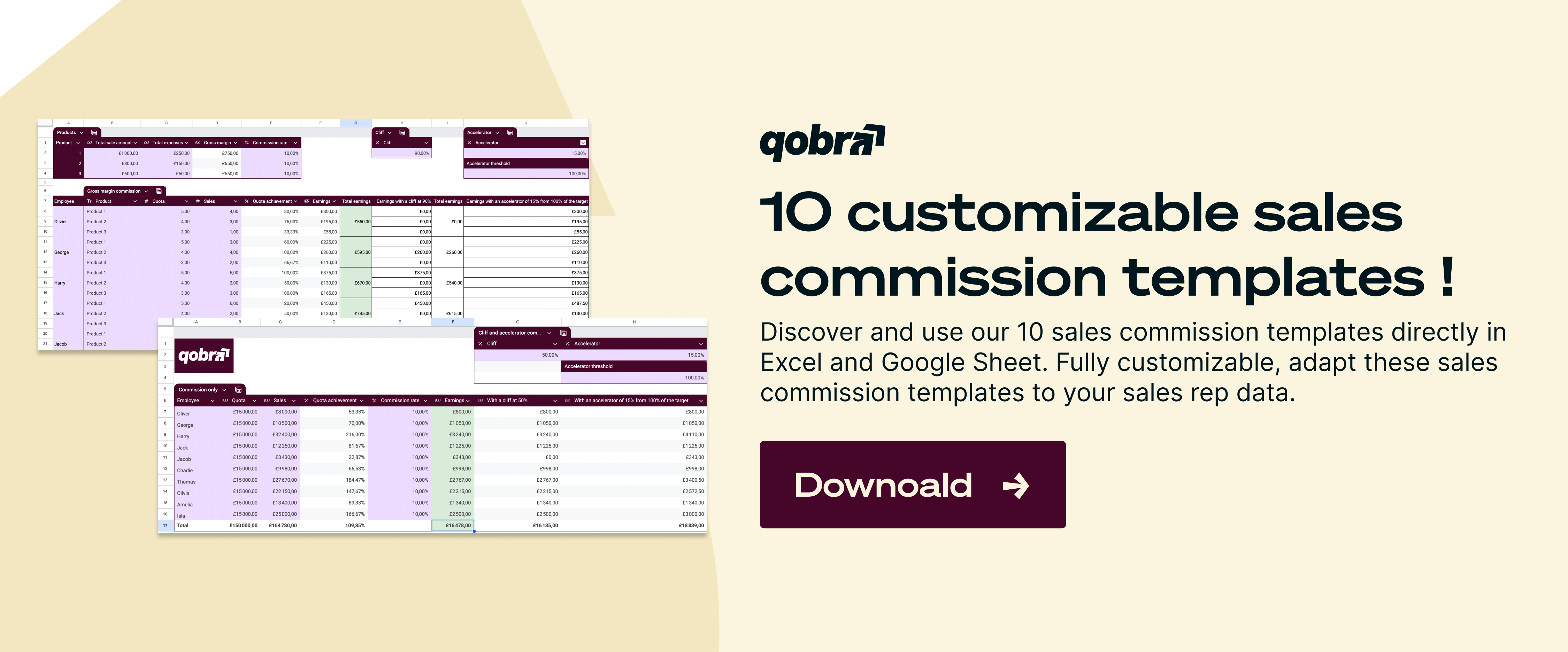
How to Design a High-Performing Sales Commission Plan
A commission plan is not just a payment schedule; it's a strategic document that directs your sales team's focus. A poorly designed plan can lead to confusion, demotivation, and even unethical behavior. Here are the essential steps to build a successful sales commission plan.
1. Align with Your Core Business Objectives
Before you think about percentages, ask yourself what you want your sales team to achieve.
- Market Penetration? Reward new logo acquisition with higher commissions.
- Profitability? Base commissions on gross margin instead of total revenue.
- Product Launch? Offer a temporary bonus or "spiff" for sales of a new product.
- Customer Retention? Implement a residual commission structure.
The KPIs you choose to reward will directly influence your team's daily activities. Make sure they align with your company's most important goals.
2. Keep It Simple and Transparent
If your sales reps need a spreadsheet and an hour to figure out their paycheck, your plan is too complicated. Complexity breeds mistrust and confusion. The best plans are simple enough that a rep can quickly calculate their expected earnings from a potential deal. This is where modern software can make a huge difference.
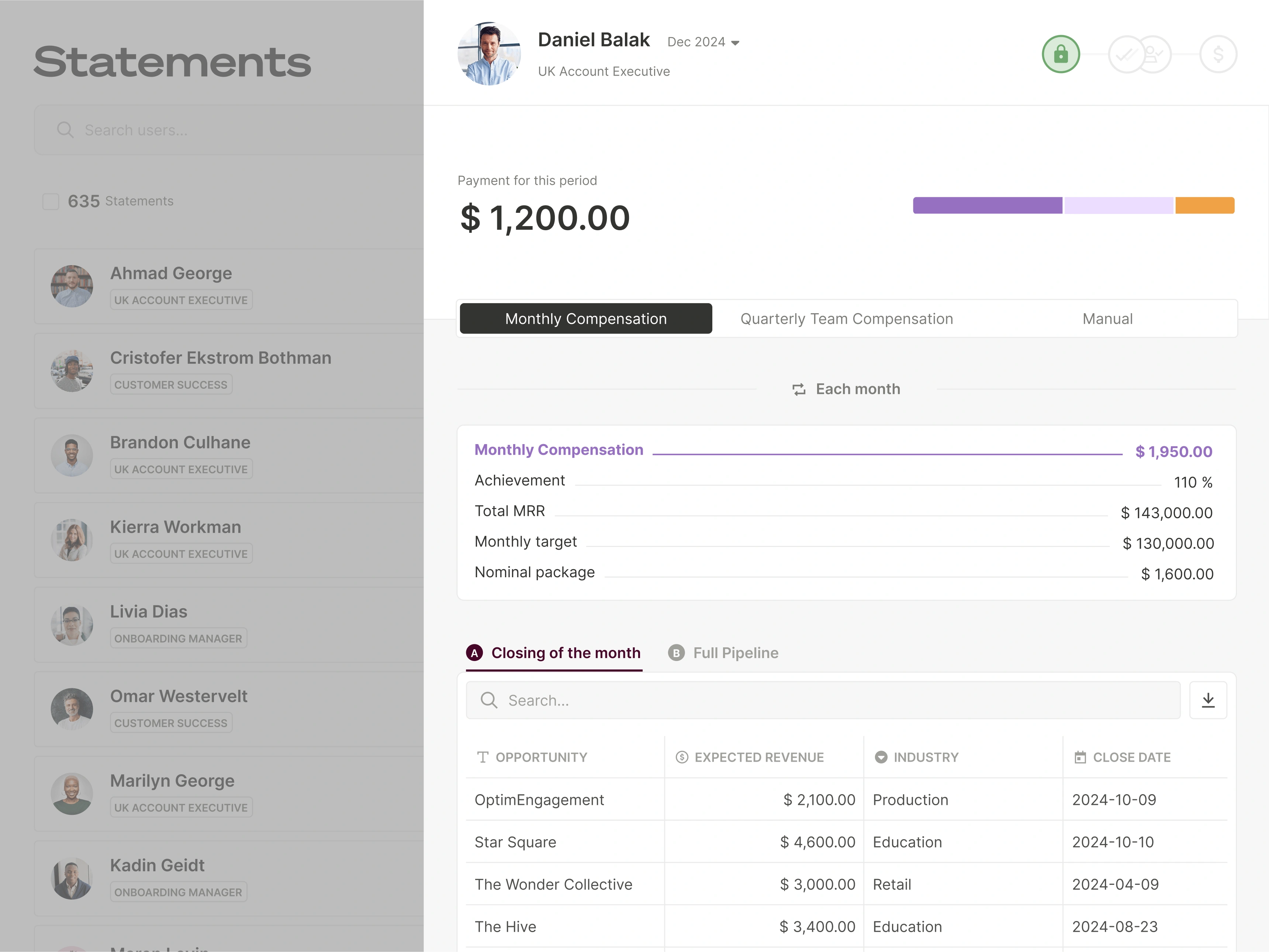
Manual tracking on spreadsheets is prone to errors, creates delays, and offers zero visibility. A commission automation platform like Qobra provides sales reps with real-time dashboards, showing exactly what they've earned and what their potential earnings are. This transparency eliminates disputes and keeps motivation high by providing instant gratification for their efforts.
3. Set Realistic and Attainable Quotas
A quota should be a challenging but achievable goal. If quotas are set so high that only 10% of the team can reach them, the other 90% will become demotivated. A good rule of thumb is that 60-70% of your sales team should be able to achieve their quota in a given period. This creates a healthy sense of competition and a belief that success is possible.
4. Establish Clear Rules of Engagement
Ambiguity is the enemy of a good commission plan. Your plan documentation should clearly define all key terms and processes:
- When is a commission earned? Is it upon contract signature, customer payment, or project kickoff?
- How are splits handled? What happens when multiple reps work on a single deal?
- What about cancellations or clawbacks? What is the policy if a customer churns or fails to pay shortly after a deal is closed?
Putting these rules in writing and including them in a commission proposal template prevents future conflicts and ensures fairness.
The Power of Automation
Manually managing commission plans, especially complex ones with tiers and bonuses, is incredibly time-consuming and prone to errors. Choosing the right commission management software automates these calculations, integrates directly with your CRM, and provides the real-time visibility needed to keep your team motivated and your finance department efficient.
Typical Sales Commission Rates by Industry
Commission rates can vary widely, but here are some general benchmarks to give you an idea of what's common in different sectors:
- SaaS (Software as a Service): Typically, Account Executives earn around 10% of the Annual Contract Value (ACV). This can be higher for new business (e.g., 12-15%) and lower for renewals or upsells (e.g., 5-8%).
- Real Estate: Agents commonly work on a straight commission basis, often earning between 2.5% and 3% of a property's sale price (this is their share of the total commission, which is usually 5-6% split between the buyer's and seller's agents).
- Insurance: Agents often receive a high upfront commission on new policies (e.g., 40-100% of the first year's premium) followed by smaller residual commissions (e.g., 2-10%) for each year the policy is renewed.
- Manufacturing and Wholesale: Sales reps in this sector often have a lower base salary and earn a commission of 2-5% of total sales revenue, as they deal with high volumes but lower profit margins per unit.
A well-structured sales commission plan is one of the most effective levers a company can pull to accelerate growth. It aligns individual motivations with corporate objectives, rewards high performance, and helps attract the best talent in the market. By ensuring your plan is clear, fair, and strategically aligned, you can transform your sales team into a more powerful and driven revenue engine.
Frequently Asked Questions
What is a typical sales commission rate?
There is no single "typical" rate, as it depends heavily on the industry, product margin, and sales cycle. However, a common range for many B2B industries, like SaaS, is 8-12% of revenue or annual contract value. For high-volume, lower-margin products, rates might be as low as 1-3%, while for high-margin or difficult sales, they could exceed 20%.
How often are sales commissions paid?
The payment frequency usually aligns with the sales cycle and accounting practices. The most common cadences are monthly or quarterly. Monthly payments provide more immediate reinforcement for sales reps, while quarterly payments can smooth out income fluctuations and simplify administration for the finance team.
Are sales commissions considered taxable income?
Yes, absolutely. Sales commissions are treated as supplemental wages and are subject to federal, state, and local income taxes, as well as Social Security and Medicare taxes. The way they are taxed can depend on how they are paid out (either with a regular paycheck or as a separate payment).
What is the difference between a commission and a bonus?
A commission is a payment directly tied to a specific sales transaction, usually calculated as a percentage of the deal size. It's an expected part of a salesperson's variable pay. A bonus, on the other hand, is typically a lump-sum payment awarded for achieving a specific, often non-transactional, goal. This could be for hitting a quarterly team target, signing a strategic new client, or achieving a high customer satisfaction score. You can learn more about the differences between bonuses and commissions here.