Sales Compensation Software Benchmark | Compare 15+ Platforms (Features, Pricing, User Reviews, etc.)
Download
- Distinguish clearly: commissions = transactional pay (percentage of a sale; “do more”); bonuses = conditional pay for predefined outcomes or milestones (fixed or salary‑based; “do it well” or “do this”), and choose based on sales cycle and measurability.
- When to use each: prefer commissions for high‑velocity, individually measurable sales roles; use bonuses for long/complex deals, strategic wins, teamwork, quality metrics or short‑term SPIFs to redirect focus.
- Prefer a hybrid for most B2B teams: base salary + commission on ACV for individual performance + quarterly/annual MBO bonuses for team goals, strategic account wins, and quality (e.g., CSAT >95%) to balance output and impact.
- Design & implement rigorously: start from business objectives and desired behaviors, model pay mixes and total cost (OTE, margins, CAC), define clear triggers and formulas, automate calculations (ensure clean CRM data), and communicate with documentation and kickoff sessions.
- Measure and iterate: track KPIs (revenue, margin, retention, CSAT, cost of compensation), monitor risks (sandbagging, churn, gaming), gather rep feedback, and review the plan at least annually to adjust rates, thresholds and budget.
Is your sales compensation plan truly driving the results you want, or is it just a math problem you solve once a year? This question lies at the heart of a critical business strategy. The structure of your variable pay sends a powerful message to your sales team—it tells them what matters, where to focus their energy, and ultimately, whether your company is the right place for them to build a career.
Yet, too often, the crucial distinction between a bonus and a commission is blurred. Companies treat them as interchangeable tools, leading to misaligned incentives, frustrated reps, and missed targets. When the structure is wrong, the consequences are swift and severe: high employee churn, sandbagged deals, and a sales culture that prioritizes the wrong activities.
More than a simple difference in terminology, the choice between bonuses and commissions is a strategic one. It forces you to answer a fundamental question: are you rewarding pure activity, or are you rewarding strategic impact? Understanding this difference is the first step toward building a compensation plan that doesn't just pay your reps, but actively fuels your company's growth.
What is the Difference Between Bonus and Commission Pay?
At their core, both bonuses and commissions are forms of variable pay designed to incentivize performance. However, they operate on different principles and motivate different behaviors.
A commission is fundamentally transactional. A sales representative closes a deal, and they earn a percentage of that sale. The logic is direct and linear: the more they sell, the more they earn. It is a direct reward for an individual's sales activity, measured in clear, quantifiable terms like revenue or profit.
A bonus, on the other hand, is conditional. It is a payment awarded for achieving a specific milestone or goal that may not be tied to a single transaction. This could be hitting a quarterly team target, landing a strategic new logo, achieving a high customer satisfaction score, or contributing to a larger company objective. Bonuses are often a fixed amount or a percentage of salary, paid out upon meeting predefined criteria.
The simplest way to think about it is that commissions say, “Do more,” while bonuses say, “Do it well” or “Do this specific thing.” Where a commission is a direct result of a sale, a bonus is a reward for achieving a broader outcome.
They are not mutually exclusive. In fact, many of the most effective compensation plans combine both. But treating them as one and the same is where strategies fail. What you pay for is what your team will optimize for. If you aren't clear on the difference, they won't be either.
Key Differences at a Glance
| Feature | Commission | Bonus |
|---|---|---|
| Basis | Directly tied to individual sales (e.g., % of revenue). | Tied to achieving specific goals or milestones (individual, team, or company). |
| Nature | Transactional and ongoing. | Conditional and often periodic (quarterly, annually). |
| Calculation | Typically a variable percentage or tiered rate. | Often a fixed monetary amount or a percentage of base salary. |
| Behavior Incentivized | High sales volume, individual activity, and speed. | Strategic achievements, teamwork, quality, and specific outcomes. |
| Predictability | Directly correlated with sales performance. | Dependent on meeting predefined (and sometimes discretionary) goals. |
When Should You Use Commission Pay?
A commission-based structure is the traditional backbone of sales compensation for a good reason. It creates an unambiguous link between a rep's effort and their earnings. This direct correlation is a powerful motivator, fostering a culture of high activity and individual ownership.
Commission plans are most effective in environments where the sales cycle is relatively short and transactional. Think of high-velocity SaaS sales, real estate, or insurance, where a rep manages the entire sales process from prospecting to closing. In these roles, commission is more than just pay; it's the engine that governs how reps prioritize their time and how aggressively they pursue deals.
A commission structure works best when:
- You want to drive high activity and individual accountability. Reps on commission are incentivized to maximize their output. This structure rewards the "hunter" mentality and is ideal for roles focused on new business acquisition.
- Your sales outcomes are easily and individually measurable. The model relies on clear metrics like revenue generated or units sold. If a rep's contribution is clear, commission is a fair and transparent way to reward it.
- You have predictable margins and a clear budget. You need to know what a rep can earn without negatively impacting your customer acquisition cost (CAC) or overall financial planning. This allows you to set sustainable commission rates that align with profitability.
- You are hiring experienced reps who thrive on variable pay. Seasoned salespeople accustomed to a commission-heavy structure understand how to manage their pipeline and are motivated by the high earning potential.
However, the simplicity of commission can also be its weakness. If not balanced correctly, it can lead to undesirable behaviors. Reps might push for deals at the expense of long-term customer success, ignore upselling opportunities that require more effort, or neglect collaborative tasks that don't contribute directly to their paycheck. It's a system optimized for output, and that's precisely what it will deliver—sometimes at the cost of quality or strategy.
When Should You Use Bonus Pay?
While commission rewards output, bonuses reward impact. They are the tool you use when you want to steer your team's focus toward goals that go beyond closing the next deal. Bonuses are not tied to every transaction; instead, they recognize the achievement of outcomes that are strategically vital to the business.
This makes bonuses incredibly versatile. They can be used to foster teamwork by rewarding the entire sales team for hitting a collective revenue target. They can encourage a focus on quality over quantity by rewarding high customer retention rates or landing flagship accounts in a new market. They can even be used for non-sales roles to align the entire company around key performance indicators.
A bonus structure is the right choice when:
- You need to incentivize teamwork and collaboration. A team-based bonus for hitting a regional or company-wide goal encourages reps to support each other rather than competing internally.
- You want to reward strategic achievements. Landing a key logo, successfully launching a new product, or achieving a specific product mix are perfect candidates for a bonus. These are high-impact events that a simple commission percentage might not adequately recognize.
- The sales cycle is long or complex. In enterprise sales, where multiple people contribute over many months, a bonus for closing the deal or hitting project milestones can be more appropriate than a commission split between several team members.
- You want to drive specific behaviors. A Sales Performance Incentive Fund (SPIF) is a type of short-term bonus used to drive focus on a particular product, clear out inventory, or generate leads during a slow period.
Note: Bonuses Are Not a Substitute for Good Management
While bonuses are a powerful tool, they should never be the sole driver of motivation or retention. Adi Dehejia, Chief Financial Officer at The Muse, notes that compensation is just one lever. It “doesn’t substitute for management, praise, learning and development, training, and opportunities.” A great bonus plan in a poor work environment will not fix underlying cultural issues.
The main challenge with bonuses is that they can sometimes feel discretionary or disconnected from daily activities if not designed and communicated properly. For a bonus to be effective, the goals must be clear, achievable, and perceived as fair by the entire team.
Building a Hybrid Model: The Best of Both Worlds
For most modern B2B companies, the most effective approach is not an "either/or" choice but a hybrid model that intelligently combines commissions and bonuses. This structure allows you to reward both individual hustle and strategic, collaborative impact.
A well-designed hybrid plan aligns every layer of your go-to-market strategy. It provides the immediate, transactional motivation of a commission while using bonuses to steer the team toward larger, shared objectives.
Here’s what a typical hybrid plan might look like for a SaaS Account Executive:
- Base Salary: Provides stability and covers living expenses.
- Commission: Paid as a percentage of Annual Contract Value (ACV) for every new deal closed. This directly rewards individual sales performance.
- Quarterly Bonus (MBO): A fixed amount paid for achieving specific objectives, such as:
- Team Goal: The entire AE team hits its collective revenue target.
- Strategic Goal: Sourcing a certain number of deals in a new, target industry.
- Quality Goal: Achieving a >95% customer satisfaction score on post-sale surveys.
This structure motivates the AE to close deals (commission) while also encouraging them to be a team player, focus on strategic markets, and ensure their customers are successful (bonus). This balanced approach helps mitigate the risks of a commission-only plan, like rushed deals or a lack of focus on long-term value. Building a comprehensive sales commission plan requires this kind of strategic thinking.
Designing Your Compensation Plan: From Theory to Practice
Before you can decide on the right mix of bonus and commission, you must step back and define what you want your sales organization to achieve. An effective compensation plan starts with strategy, not spreadsheets.
Step 1: Ask the Right Questions
Begin by clarifying your core business objectives. Your compensation plan is a tool to help you reach them.
- What are our primary business goals? Are you focused on aggressive revenue growth, maximizing profitability, gaining market share, or improving customer retention? Each goal calls for a different incentive structure. A plan that rewards revenue at all costs will look very different from one designed to protect gross profit margins.
- What specific behaviors do we want to encourage? Do you need reps to hunt for new logos, expand existing accounts, sell a specific product, or collaborate with the customer success team? Be explicit about the actions that lead to success.
- Will reps receive a base salary? The pay mix (the ratio of base salary to variable pay) signals how much risk you expect the rep to take on. A higher variable component attracts reps who are confident in their ability to perform.
- How can we motivate the entire team within our budget? Your plan must be financially sustainable. Model out different performance scenarios—from underperformance to overperformance—to understand the total cost and ensure it aligns with your financial forecasts.
Step 2: Automate for Transparency and Trust
Once you have a strategy, the biggest hurdle to success is execution. Managing compensation plans manually on spreadsheets is a recipe for disaster. It’s slow, prone to errors, and creates a "black box" that erodes trust between sales reps and management. When reps don't understand how they are paid or have to wait weeks for corrections, their motivation plummets.
This is where a dedicated commission automation platform becomes essential. Solutions like Qobra are built to handle the complexity of modern compensation plans, from calculation to communication. By connecting directly to your CRM (like Salesforce or HubSpot) and other data sources, Qobra automates the entire process in real time.
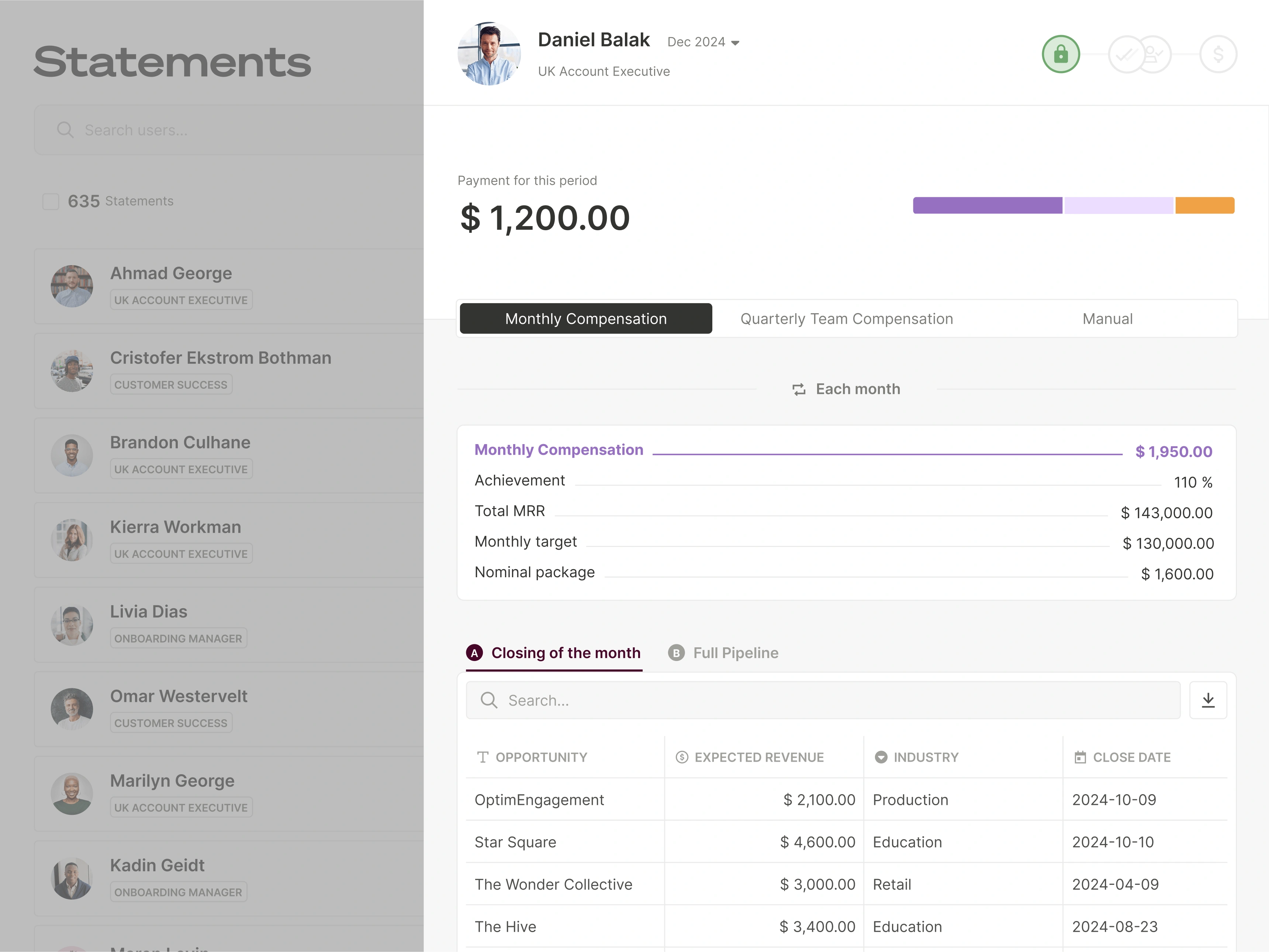
With a no-code rule editor, sales ops and finance teams can build and adjust any plan—no matter how complex—without writing a single line of code. This agility allows you to adapt your strategy as the market changes. Most importantly, it provides every sales rep with a real-time dashboard showing their performance, current earnings, and future potential. This level of transparency transforms compensation from a source of friction into a powerful, daily motivator. Automating this process can reduce errors by over 95% and save finance teams days of manual work each month.
Warning: Garbage In, Garbage Out
An automated commission platform is only as good as the data it receives. If your CRM data is messy or incomplete, your commission calculations will be inaccurate. Before implementing any new system, ensure your source data is clean and your processes for updating it (e.g., marking a deal as "Closed Won") are rigorously followed.
Step 3: Communicate, Implement, and Iterate
A brilliant plan that no one understands is a failed plan. The rollout is just as important as the design. When you implement a new sales commission plan, you must be prepared to communicate it clearly and repeatedly.
- Hold a kickoff meeting to explain the "why" behind the plan. Connect the structure to the company's strategic goals.
- Provide detailed documentation with clear examples of how earnings are calculated in different scenarios.
- Use a platform like Qobra where reps can see their plan and model potential earnings from deals in their pipeline.
Finally, no plan is perfect forever. Review its effectiveness at least annually. Are you seeing the behaviors you intended? Are you hitting your goals? Are your top performers being rewarded appropriately? Be prepared to gather feedback and make adjustments to ensure your plan remains a strategic asset.
The choice between a bonus and a commission is far more than an administrative detail. It's a reflection of your company's strategy and a powerful driver of your sales culture. A commission-only plan rewards individual effort and volume, making it ideal for fast-paced, transactional sales. A bonus-centric plan rewards strategic impact and teamwork, aligning reps with broader company goals.
For most businesses, the optimal solution lies in a hybrid approach that leverages the strengths of both. By carefully designing a plan that balances individual incentives with collective objectives and supporting it with transparent, automated tools, you can transform your compensation strategy from a simple expense into your most valuable growth engine.
Frequently Asked Questions
What is the main practical difference between a bonus and a commission?
The main difference is the trigger for payment. A commission is triggered by a specific transaction, typically a sale, and is calculated as a percentage of that transaction's value. A bonus is triggered by the achievement of a predefined goal or milestone, such as hitting a quarterly team quota or a specific MBO, and is usually a fixed amount.
Can an employee receive both a bonus and a commission?
Absolutely. This is known as a hybrid compensation plan and is very common in B2B sales. A rep might earn a commission on every deal they close, plus a quarterly bonus if their team achieves its overall revenue target. This structure motivates both individual performance and teamwork.
Are bonuses always discretionary?
Not necessarily. While some bonuses, like a year-end performance bonus, can be discretionary, many are contractual. A bonus tied to specific, measurable objectives (MBOs) that are written into a compensation plan is not discretionary. If the employee meets the stated criteria, the company is obligated to pay it.
How do you determine the right commission rate?
Calculating the right rate involves balancing several factors: your product's gross margin, the total target compensation for the role, the length of the sales cycle, and industry benchmarks. A common approach is to work backward from the On-Target Earnings (OTE) you want to offer. You can find a more detailed breakdown in our complete guide to sales commissions.
Whichever mix you choose, a variable compensation software lets you model and run both bonuses and commissions from one source of truth.