Sales Compensation Software Benchmark | Compare 15+ Platforms (Features, Pricing, User Reviews, etc.)
Download
A management incentive plan (MIP) is a structured compensation program designed to align managers’ performance with a company’s strategic, financial, and growth objectives. Unlike discretionary bonuses or transactional commissions, a management incentive plan relies on predefined performance targets, incentive structures, and governance rules to ensure consistency, transparency, and predictability across the organization.
As companies grow, management incentive plans often evolve from simple annual bonus programs into complex incentive structures combining short-term performance goals with long-term value creation. At that stage, many organizations adopt a formal incentive compensation management approach to ensure that plans remain accurate, auditable, and scalable. You can explore the foundations of this discipline in Qobra’s overview of incentive compensation management.
Execution quickly becomes as important as plan design. Modern platforms such as Qobra’s incentive compensation management solution help companies centralize incentive logic, manage complex performance metrics, and operate management incentive programs with stronger governance and financial control
What Is a Management Incentive Plan?
Management Incentive Plan: Definition
A management incentive plan is a formal, rules-based compensation structure that rewards managers—typically executives, directors, and senior or middle managers—for achieving predefined performance objectives. These objectives are closely tied to business outcomes such as revenue growth, financial performance, operational efficiency, or long-term enterprise value.
Management incentive plans may be structured as short-term or long-term programs, or as a combination of both. What distinguishes them from informal rewards is their reliance on objective metrics, clearly defined targets, and documented governance processes that apply consistently across participants.
Management Incentive Plan vs Bonus vs Commission
While bonuses are usually discretionary and awarded after results are known, and commissions are tied to individual transactions or sales, management incentive plans are designed upfront. They link leadership performance to broader organizational objectives and ensure that incentives reinforce strategic priorities rather than isolated outcomes.
This distinction is especially important for management roles, where decisions influence long-term growth, financial stability, and organizational success.
When Companies Use a Management Incentive Plan
Organizations typically introduce management incentive plans when leadership accountability becomes critical to execution. This often occurs during periods of scale, rapid growth, private equity sponsorship, or organizational transformation. As management layers increase, informal incentive practices no longer provide the structure or predictability required by finance teams, boards, and investors.
Types of Management Incentive Plans
Short-Term Incentive Plans (STIP)
Short-term incentive plans reward performance over a defined period, usually quarterly or annually. These plans are commonly cash-based and focus on short-term operational and financial objectives such as revenue targets, margin improvement, or service-level performance. They are frequently used for managers whose impact can be measured within a single fiscal year.
Long-Term Incentive Plans (LTIP)
Long-term incentive plans operate over multi-year periods and are designed to encourage sustained performance and retention. These plans often rely on equity or equity-like incentives and are commonly used for executive and senior management roles. Performance is measured against long-term objectives such as cumulative growth, profitability, or enterprise value creation.
Cash-Based and Equity-Based Incentives
Cash-based incentives offer simplicity and immediate financial rewards but tend to have limited retention impact. Equity-based incentives, by contrast, align managers with shareholders and long-term growth but introduce additional complexity, including vesting schedules, valuation, tax treatment, and governance requirements. Many organizations combine both approaches to balance motivation, retention, and risk.
Phantom Equity and Equity-Like Incentives
Phantom equity plans replicate the economic value of shares without issuing actual equity. They are widely used in private companies and sponsor-backed organizations where dilution is a concern. These plans typically include vesting conditions and deliver value at specific events, such as a company exit, making them powerful tools for aligning executives, sponsors, and long-term growth objectives.
Why Management Incentive Plans Matter
Aligning Leadership Behavior With Business Strategy
A well-designed management incentive plan translates strategic priorities into measurable performance expectations. By linking incentives to outcomes such as financial performance, revenue growth, and operational excellence, companies ensure that management decisions support sustainable value creation rather than short-term optimization.
Driving Accountability and Performance
Clear performance metrics, targets, and incentive structures reduce ambiguity. Managers understand how success is measured and how performance translates into rewards, strengthening accountability across leadership teams.
Retention and Engagement of Key Leaders
Transparency and predictability are critical to executive motivation. When managers trust the incentive program and clearly see how their efforts contribute to long-term success, management incentive plans become a powerful engagement and retention mechanism.
How to Design an Effective Management Incentive Plan
Step 1: Define Strategic Objectives
The foundation of any management incentive plan is clarity around strategic and financial objectives. Incentives should reward outcomes such as growth, profitability, efficiency, or resilience, rather than isolated activities.
Step 2: Define Eligibility and Scope
Eligibility should reflect a manager’s influence on business outcomes. Not all management roles require the same incentive structure, and effective plans differentiate between executive, senior management, and functional leadership responsibilities.
Step 3: Select the Right Performance Metrics
Performance metrics should balance financial and operational indicators, remain within the manager’s control, and rely on reliable data sources. Poor metric selection is one of the most common reasons management incentive programs fail.
Step 4: Design Payout Mechanics
Most management incentive plans rely on defined performance thresholds, targets, and maximum payout levels. This structure encourages ambition while controlling financial exposure through caps and clear payout rules.
Step 5: Set Governance and Validation Rules
Governance defines how results are validated, who approves outcomes, and how adjustments are handled. Strong governance ensures that incentive programs remain credible, auditable, and aligned with organizational objectives.
Step 6: Communicate and Operationalize the Plan
Clear documentation and communication are essential. Managers should receive transparent explanations of performance objectives, incentive structures, and review timelines, along with ongoing visibility into progress against targets.

Metrics and KPIs Used in Management Incentive Plans
Financial Metrics
Financial metrics such as revenue, ARR, EBITDA, margin, and cash flow directly link management performance to financial outcomes. While powerful, they should be balanced to avoid excessive short-term focus.
Operational and Strategic Metrics
Operational metrics such as retention, net revenue retention, productivity, and quality indicators capture execution quality and long-term organizational health beyond pure financial results.
Role-Based Metric Alignment
Effective management incentive plans tailor metrics to leadership roles. Sales managers may focus on revenue and pipeline quality, while operations leaders prioritize efficiency, cost control, and service reliability.
Payout Governance, Controls, and Risk Management
Avoiding Incentive Plan Risk
Management incentive programs are exposed to risks such as metric gaming, over-complex incentive structures, and manual calculation errors. Clear design and disciplined execution reduce these risks significantly.
Clawbacks, Adjustments, and Exceptions
Clawback provisions and adjustment mechanisms protect organizations from overpayment and misalignment. These controls require strong documentation and traceability to maintain trust and fairness.
Auditability and Documentation
As incentive programs evolve, spreadsheet-based processes struggle to maintain version control and audit trails. Auditability becomes increasingly important for finance teams, sponsors, and external stakeholders.
US Legal and Tax Considerations (High-Level)
Deferred Compensation and 409A
Certain management incentive plans, particularly deferred cash and phantom equity programs, may fall under Section 409A. Improper structuring or timing can result in unfavorable tax consequences. This information is provided for general guidance only and does not constitute legal or tax advice.
Equity and Equity-Like Incentives
Equity-based incentives such as stock options, restricted stock units, and phantom shares involve different tax treatments, vesting rules, and reporting obligations. Early coordination between HR, finance, and legal teams is essential, especially in private companies preparing for growth or exit scenarios.
Importance of Cross-Functional Alignment
Because management incentive plans intersect compensation, finance, tax, and governance, ongoing alignment across functions is critical to ensure compliance, financial accuracy, and long-term effectiveness.
Operationalizing Management Incentive Plans With Technology
Why Spreadsheets Fail at Scale
As incentive programs grow more complex, spreadsheets introduce calculation errors, limit transparency, and make it difficult to manage changes over time. They also fail to provide real-time visibility for managers and executives.
What Incentive Compensation Management Software Enables
Dedicated incentive compensation management platforms centralize incentive programs, automate calculations, and ensure that plans follow their intended structure over time. They also support scenario modeling, controlled updates, and reliable financial reporting.
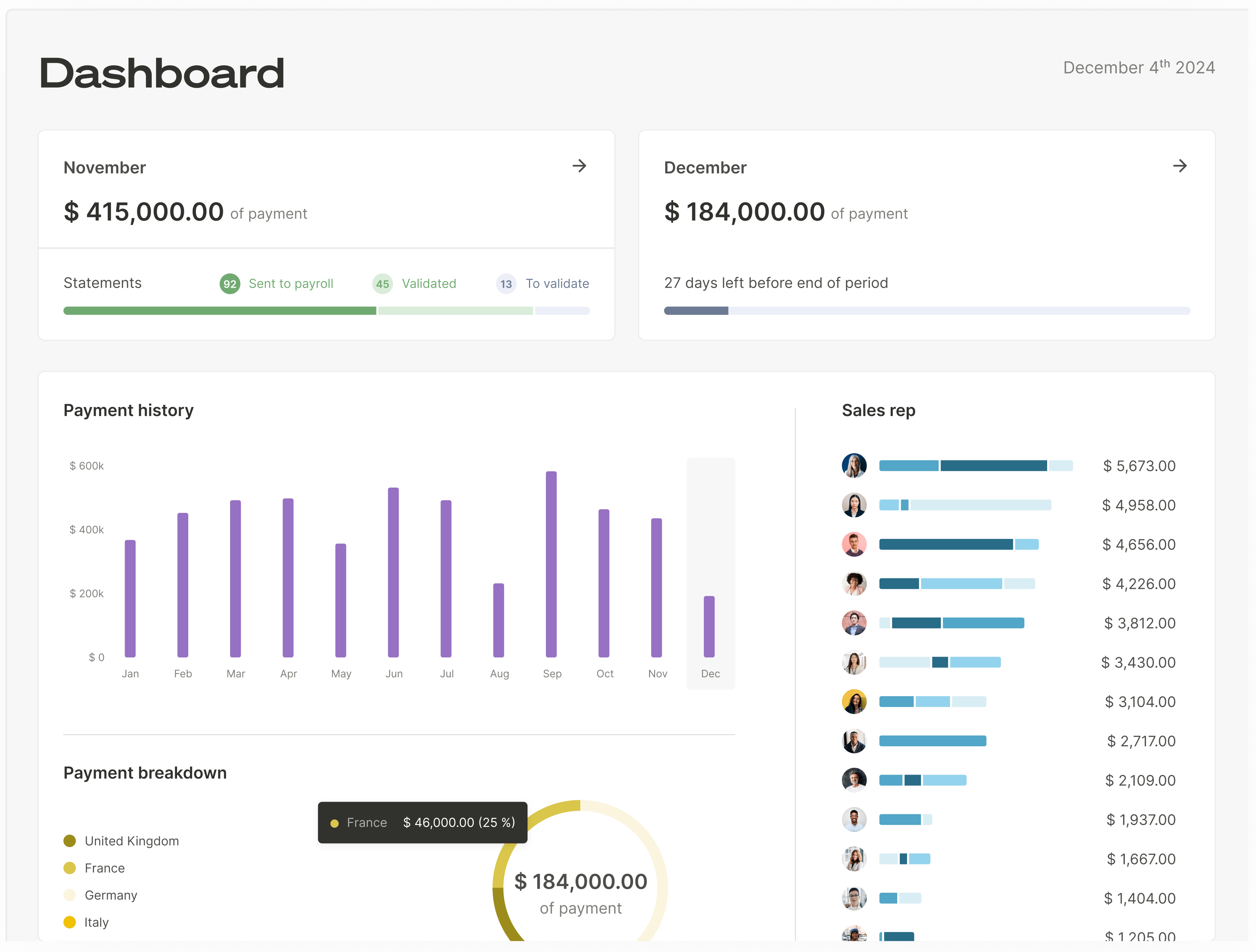
Qobra illustrates how such platforms help organizations manage complex management incentive plans with greater accuracy and governance. Its ability to integrate seamlessly with existing systems further strengthens execution and control.
Management Incentive Plan Examples
Example: Annual Management Incentive Plan
An annual management incentive plan may combine financial performance and operational objectives. Payouts increase once minimum performance levels are reached and are capped to control financial exposure.
Example: Long-Term Incentive Plan
A long-term incentive plan typically spans several years and rewards cumulative performance against strategic objectives. Value is often realized through deferred cash or equity-like instruments, particularly in private or sponsor-backed organizations.
What to Include in a Management Incentive Plan Document
A robust management incentive plan document clearly defines objectives, eligibility, performance metrics, incentive structure, governance rules, and communication processes. Strong documentation supports transparency, adoption, and long-term success.
Common Mistakes to Avoid
Common pitfalls include using too many metrics, changing incentive rules mid-cycle without transparency, underestimating administrative complexity, and failing to align HR, finance, and legal stakeholders early in the process.
Frequently Asked Questions
What is a management incentive plan?
A structured compensation program that rewards managers based on predefined performance metrics and objectives.
How is it different from a bonus?
Bonuses are discretionary, while management incentive plans are formula-based and governed.
Who should be included in a management incentive plan?
Managers whose decisions materially influence business performance and long-term outcomes.
Are management incentive plans taxable?
Yes. Tax treatment depends on plan structure, timing, and incentive type.
How often should management incentive plans be reviewed?
At least annually, and whenever strategic or organizational priorities change.
Final Thoughts: Turning Management Incentive Plans Into a Strategic Lever
Management incentive plans are not merely compensation tools—they are a core component of a company’s performance and governance framework. When designed with strategic intent and executed with discipline, they align leadership behavior, reinforce accountability, and support sustainable growth.
As organizations scale, success increasingly depends on execution quality. Companies that move beyond manual processes and adopt structured incentive compensation management approaches are better positioned to operate management incentive plans with confidence, financial control, and long-term impact.
Rolling out a management incentive plan at scale takes an incentive compensation management platform — real-time, no-code, one source of truth.