Webinar: The Biggest Release Sales Comp Has Ever Seen. Come See For Yourself (Wednesday, October 7)
Register
- An online sales commission is variable pay linked to sales generated across digital channels (marketplaces, independent agents, affiliates), used to align individual incentives with business goals.
- Common models include fixed-percentage, tiered/escalating, recurring (residual) and hybrid structures; consider basing commissions on gross profit rather than top-line revenue to protect margins.
- Calculation basics: Commission = Sale Amount × Rate — but first define Sale Amount (gross vs net after returns, shipping, payment fees) and include rules for processing fees, refunds and clawbacks.
- Operational best practices: document clear contract terms (when commissions are earned, payout schedule, dispute/clawback rules), provide real-time transparent dashboards, and automate calculations via CRM/commission software to avoid errors.
- Optimize continuously by benchmarking rates by industry, segmenting commissions by product margin or strategic priority, piloting changes with small cohorts, communicating rationale clearly, and checking legal obligations before modifying plans.
How do you structure a compensation plan that not only rewards performance but also drives sustainable growth in the competitive digital landscape? An effective online sales commission strategy is more than just a payment model; it's a powerful lever for motivating sales teams, attracting top talent, and aligning individual efforts with overarching business goals. From multi-vendor marketplaces to independent sales networks, the right commission structure can be the key to unlocking your company's full potential.
An online sales commission is a form of variable compensation paid to an individual or entity based on the sales they generate through digital channels. This can apply to an in-house salesperson closing deals via a CRM, an independent agent finding opportunities through a platform, a vendor selling on a marketplace, or an affiliate driving traffic to an e-commerce site. The core principle remains the same: pay is directly linked to performance, creating a powerful incentive to sell.
Understanding the Different Forms of Online Sales Commission
The term "online sales commission" is an umbrella that covers several distinct models, each suited to different business contexts. The structure you choose depends heavily on your sales channels, business model (B2B, B2C, C2C), and the nature of your relationship with the seller.
Marketplace Commissions
Multi-vendor marketplaces act as intermediaries, connecting sellers with a large base of potential buyers. In exchange for providing the platform, marketing, and payment processing infrastructure, they charge a commission on each transaction.
- B2C (Business-to-Consumer): In this model, companies sell directly to consumers. Platforms like Amazon use a category-based commission structure. For instance, Amazon might charge around 8% for electronic accessories but as much as 15% for beauty products, reflecting the different margins and market dynamics of each category. This simplicity makes costs predictable for sellers.
- B2B (Business-to-Business): Characterised by high-volume transactions, B2B marketplaces often employ more complex commission models. A platform like Alibaba uses a hybrid approach, combining subscription fees for sellers with commissions that decrease as sales volume increases, encouraging long-term loyalty and large-scale partnerships.
- C2C (Consumer-to-Consumer): Platforms like eBay facilitate sales between individuals. Their commissions are typically a straightforward percentage of the final sale price, often around 10% for most product categories, making it easy for casual sellers to understand their costs.
Independent Sales Agent Commissions
Many companies, particularly in the B2B sector, rely on a network of self-employed, commission-only sales representatives. These agents leverage their industry contacts and expertise to find and close deals. Platforms exist specifically to connect these experienced reps with companies seeking to expand their reach without the overhead of a full-time sales team. For these professionals, their entire income is derived from the commissions on the sales they secure, making the commission structure a critical element of the partnership.
Affiliate Marketing Commissions
This model is prevalent in e-commerce and digital services. An affiliate (often a blogger, influencer, or content creator) promotes a company's product or service using a unique tracking link. When a customer clicks that link and makes a purchase, the affiliate earns a pre-determined commission. This is a performance-based marketing strategy where the company only pays for successful conversions, making it a low-risk way to acquire new customers.
Common Commission Structures and Models
Once you've identified the appropriate context, you need to select a specific structure for calculating payments. The goal is to find a model that is both motivating for the seller and profitable for the business.
Fixed-Rate Commission
This is the simplest model. A flat percentage is paid on every sale, regardless of the deal size or total volume. For example, a salesperson earns a 10% commission on every transaction. This structure is easy to understand and calculate, but it may not incentivize over-performance or the sale of higher-margin products.
Tiered Commission Structures
To encourage higher performance, many businesses use a tiered or escalating commission model. The commission rate increases as the salesperson meets certain revenue or unit sales targets.
For example, a salesperson might earn 8% on sales up to $50,000, 10% on sales between $50,001 and $100,000, and 12% on all sales above $100,000 within a quarter. This structure directly rewards top performers and can be a powerful motivator for exceeding quotas.
Recurring (Residual) Commissions
In subscription-based businesses (like SaaS), a recurring commission model is often used. The salesperson earns a commission not just on the initial sale but for as long as the customer remains subscribed. This incentivises the sales team to acquire high-quality customers who are likely to have a high lifetime value (LTV), promoting long-term business health over short-term gains.
Note: Base Commission on Gross Profit, Not Revenue
To protect your company's profitability, consider calculating commissions on gross profit rather than total revenue. A $10,000 sale with a 20% margin is far less valuable than a $10,000 sale with a 60% margin. By basing commissions on gross profit, you align the sales team's incentives directly with the company's financial health and encourage them to focus on more profitable deals.
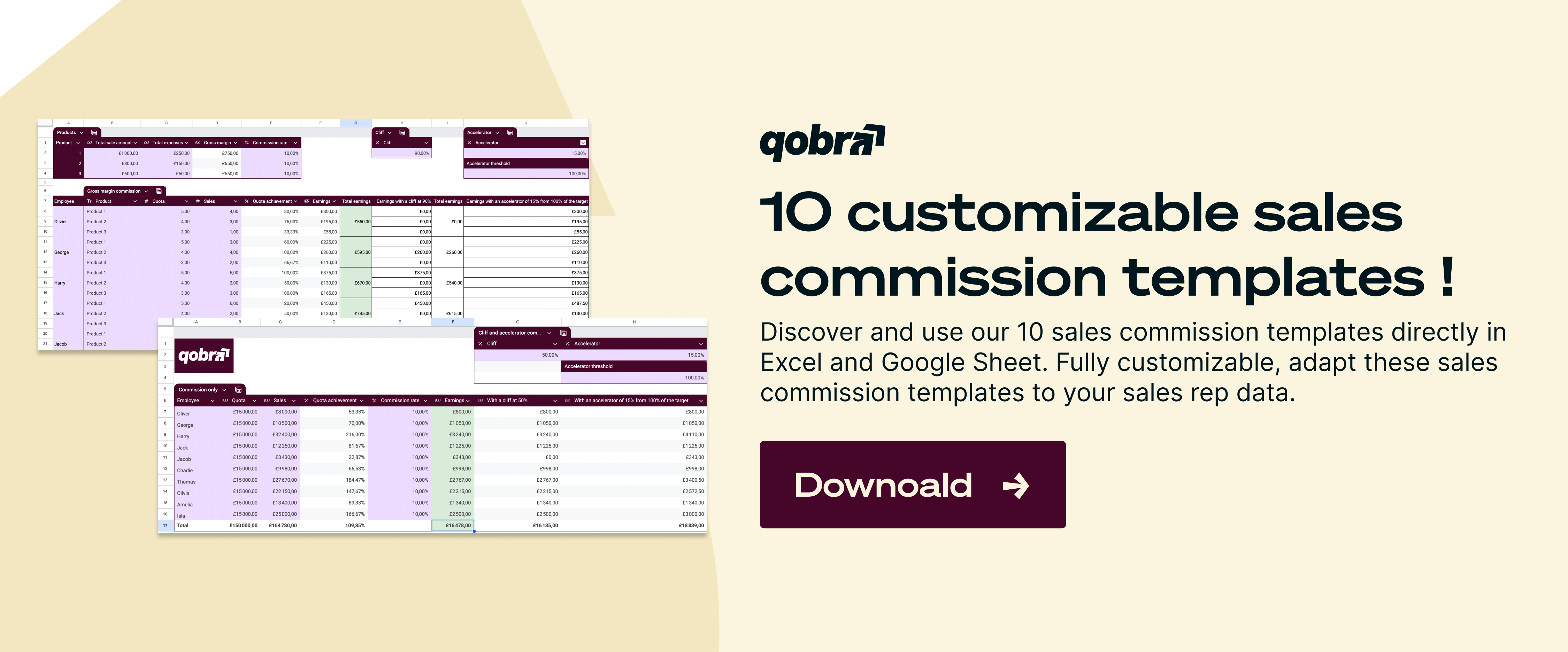
How to Calculate Online Sales Commission
Accurate calculation is the bedrock of any successful commission plan. Errors lead to disputes, demotivation, and a loss of trust. While the formulas can be simple, the process can become complex when dealing with multiple reps, different structures, and various data sources.
The Basic Formula and Key Variables
The most basic formula is:
Commission = Sale Amount x Commission Rate
However, this rarely tells the whole story. You must first define the "Sale Amount." Is it the gross revenue, or is it the net revenue after deducting costs like returns, shipping, or transaction fees? The commission rate itself should be determined by several factors:
- Product Margins: High-margin products can support higher commission rates than low-margin products.
- Competition: Your commission rates must be competitive enough to attract and retain talented sellers or vendors.
- Sales Cycle Length: A long, complex sales cycle may warrant a higher commission rate to compensate for the effort involved.
Practical Calculation Examples
Let's see how different structures play out with a few examples.
Scenario: A SaaS company salesperson.
- Monthly Subscription Price: $200
- Commission Structure: 25% on the first month's payment, plus 5% recurring commission for 11 months.
| Month | Commission Calculation | Payout |
|---|---|---|
Month 1 | $200 * 25% | $50.00 |
Month 2-12 | $200 * 5% | $10.00/month |
Total Year 1 | $50 + (11 * £10) | $160.00 |
Scenario: A marketplace vendor.
- Product Price: $150
- Marketplace Commission: 12% of the sale price
- Payment Processing Fee: 2.5%
Commission Paid to Marketplace = $150 * 12% = $18.00
Payment Processing Fee = $150 * 2.5% = $3.75
Vendor's Net Revenue = $150 - $18.00 - $3.75 = $128.25
Knowing how to properly calculate commission rates is fundamental to designing a fair and effective plan.
Best Practices for Managing Commission Plans
A well-designed plan is only effective if it's managed properly. Implementation and ongoing administration require clarity, transparency, and robust tools.
Define Clear Terms and Contracts
ambiguity is the enemy of motivation. Your commission plan should be documented in a formal agreement or contract that clearly outlines:
- The commission structure and rates.
- When a commission is officially "earned" (e.g., at contract signing, upon payment receipt).
- The payout schedule (e.g., monthly, quarterly).
- How disputes, returns, or cancellations are handled.
- Conditions for clawbacks or adjustments.
Providing a clear and detailed commission statement with each payout is crucial for transparency and helps prevent misunderstandings.
The Importance of Transparency and Real-Time Tracking
Salespeople perform best when they can see the direct impact of their efforts on their earnings. Opaque, slow, and error-prone calculation processes (like complex spreadsheets managed manually) create frustration and distrust. Studies have shown that marketplaces with transparent and well-designed commission structures see a 20% increase in seller retention and a 15% boost in annual revenue.
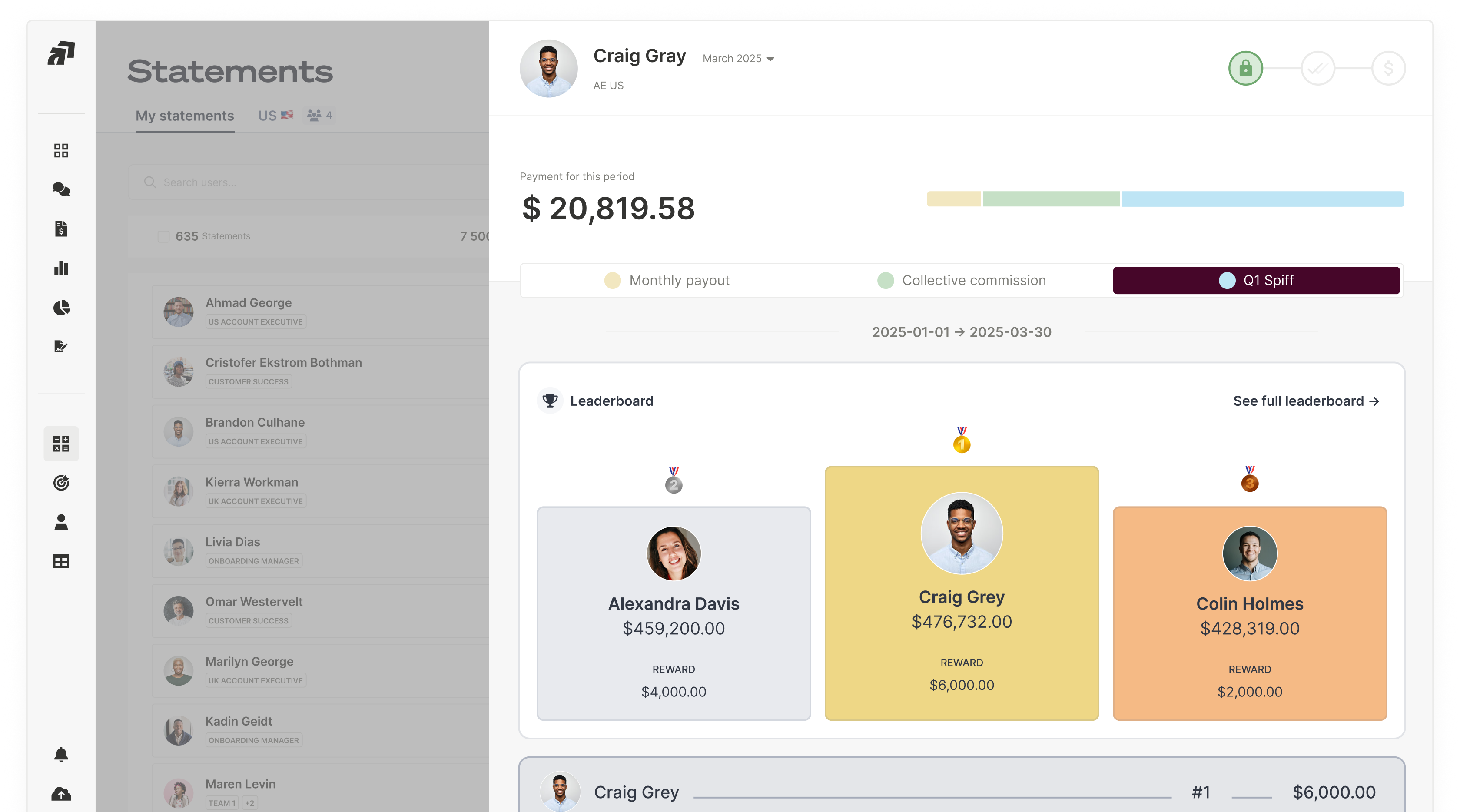
The goal should be to provide reps with a dashboard where they can see their performance and potential earnings update as deals progress through the pipeline. This is where providing real-time visibility into their commissions becomes a significant competitive advantage.
Leveraging Technology for Automation
Manually calculating commissions on spreadsheets is time-consuming and prone to errors. As a company scales, this process becomes unsustainable. Automated commission management software revolutionises this process by connecting directly to your data sources (like a CRM or ERP) and calculating payouts automatically.
Platforms like Qobra are designed to handle this complexity with ease. By integrating with CRMs like Salesforce and HubSpot, our no-code platform automates calculations in real-time. This eliminates manual errors, saves finance and sales ops teams days of work each month, and provides sales reps with the transparent, real-time dashboards they need to stay motivated. When you start building a motivational sales commission plan, considering the right tool for the job is essential.
Warning: Legal Obligations When Modifying a Plan
Never change a commission plan without clear communication and proper legal consideration. Modifying compensation structures, especially mid-cycle, can lead to serious disputes and legal challenges. Ensure you understand your contractual and legal obligations before making any adjustments and always provide ample notice to your team.
Optimizing Your Commission Strategy
- Analyze Your Market: Regularly benchmark your commission structure against competitors to ensure it remains attractive. Understand your sellers' expectations and what motivates them.
- Segment Your Products: Adapt commission rates to product margins and strategic importance. You might offer a higher commission or a "spiff" (a short-term bonus) for selling a new product or a particularly high-margin item.
- Test and Iterate: Don't be afraid to experiment with different models. You can pilot a new structure with a small team to measure its impact before a company-wide rollout.
- Communicate Clearly: When you make changes, over-communicate the "why" behind them. A successful rollout depends on your team understanding how the new plan benefits them and aligns with company goals. Learning how to clearly communicate the new commission plan is a critical management skill.
Ultimately, a well-calibrated online sales commission structure is one of the most powerful investments you can make in your go-to-market strategy. It transforms compensation from a mere operational cost into a strategic driver of growth, motivation, and success. By choosing the right model, ensuring transparent calculations, and leveraging modern tools, you can build a sales engine that is perfectly aligned with your business objectives.

FAQ
What is a typical online sales commission rate?
There is no single "typical" rate. It varies widely by industry, business model, and product margin. Rates can range from 1-2% for high-volume, low-margin affiliate products to 20-50% for high-value B2B software or specialized services with long sales cycles. For marketplaces, rates between 8% and 15% are common.
How do commissions impact product pricing and profitability?
Commissions are a direct cost of sale and must be factored into your pricing strategy. If your commission rate is too high relative to your product margin, you risk selling at a loss. A well-designed plan balances motivating sellers with maintaining healthy profitability on each sale. This is why many businesses choose to base commissions on gross profit instead of revenue.
What's the difference between a commission and a bonus?
A commission is a percentage of a sale and is paid out transactionally as sales are made. A bonus is typically a lump-sum payment awarded for achieving a specific, often larger, goal that may not be tied to a single sale (e.g., exceeding a quarterly quota, winning a team contest). You can learn more about the key differences between a bonus and a commission in our detailed guide.
How can I avoid disputes over commission payments?
The best way to avoid disputes is through absolute clarity and transparency. This includes having a signed contractual agreement, providing detailed and accurate commission statements, and using an automated system to eliminate calculation errors. An accessible, real-time dashboard where reps can track their earnings is the gold standard for building trust and preventing conflicts.