Webinar: The Biggest Release Sales Comp Has Ever Seen. Come See For Yourself (Wednesday, October 7)
Register
- A straight commission plan pays salespeople exclusively on performance (Total Earnings = Sales × Commission Rate): no base salary—no sales means no income.
- Benefits include unlimited earning potential, lower fixed costs, attraction of self‑motivated talent, and simple math—best when supported by automation to avoid errors.
- Risks include income volatility and high turnover, potential for aggressive/unethical selling, neglect of non‑selling activities, and legal/minimum‑wage compliance concerns.
- Best suited to short sales cycles, high‑ticket items, highly autonomous or contractor roles, and early‑stage startups; ill‑fitted to long enterprise cycles or team‑based selling.
- Implement carefully: set sustainable rates using margin and market benchmarks, provide recoverable/non‑recoverable draws for ramp, automate tracking and dashboards for transparency, and monitor KPIs and legal compliance.
How can a compensation structure simultaneously offer unlimited earning potential and zero financial security? This is the central paradox of the straight commission plan, a model that directly links a salesperson's income to their performance. For business leaders and sales managers, understanding this high-risk, high-reward system is crucial. It can be a powerful engine for growth, attracting top-tier talent and minimizing fixed costs. However, without the right framework, it can also lead to high turnover and misaligned sales practices.
A well-designed sales compensation plan is one of the most strategic tools for driving revenue and shaping team behaviour. Let's explore the mechanics of the commission-only model, its distinct advantages and disadvantages, and how to implement it effectively to motivate your team and achieve your business goals.
What is a Straight Commission Plan?
A straight commission plan is a sales compensation structure where a representative's earnings are based exclusively on their sales performance. In this model, there is no fixed base salary. Income is calculated as a percentage of the revenue, profit, or a flat rate per unit sold. Simply put: no sales mean no income, but high sales can result in exceptionally high earnings.
This pay-for-performance model is one of the purest forms of incentive-driven compensation. The calculation is typically straightforward:
Total Earnings = Total Sales Value x Commission Rate (%)
For example, if a salesperson on a 10% straight commission plan closes deals worth $80,000 in a month, their gross earnings for that month would be $8,000. This direct link between effort and reward makes it a compelling, albeit challenging, compensation structure.
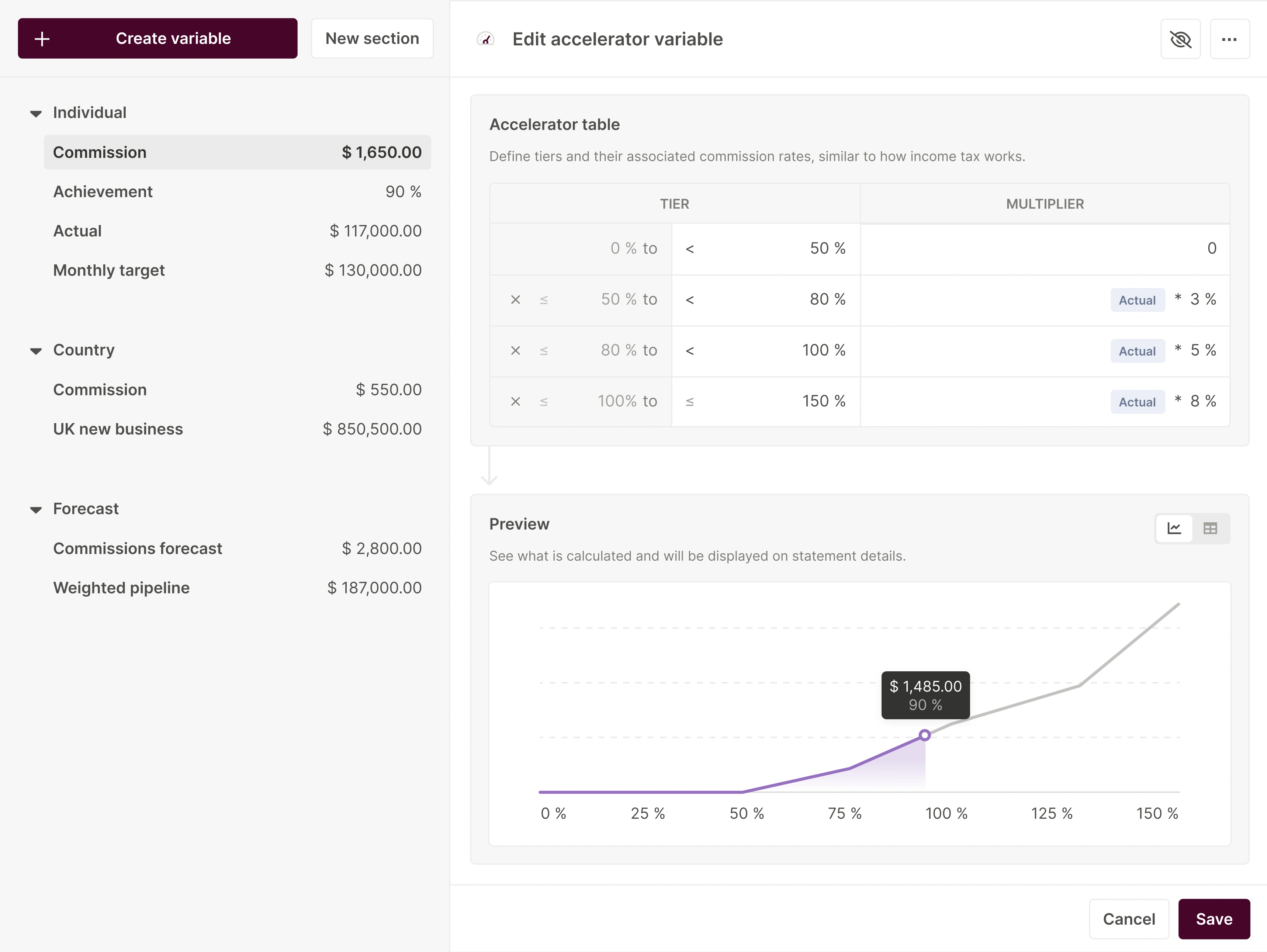
While simple on the surface, the success of this model hinges on transparent tracking and accurate calculations. Manual processes using spreadsheets are prone to errors, which can erode trust and motivation. This is why many companies use dedicated platforms to automate the entire process. A solution like Qobra, with its no-code rule editor and real-time CRM integration, eliminates calculation errors and provides sales reps with a clear, live view of their potential earnings, turning compensation into a true motivational tool rather than a source of conflict.
The Pros and Cons of a Straight Commission Model
Adopting a 100% commission structure has significant implications for both the company and the sales team. It's essential to weigh the benefits against the potential drawbacks before implementation.
Advantages for Businesses and Sales Reps
A well-implemented commission-only plan can create a powerful, performance-oriented sales culture.
- Unlimited Earning Potential and Motivation: For high-performing reps, the sky is the limit. The absence of a salary cap is a powerful motivator for ambitious, competitive individuals. Knowing that every sale directly increases their income encourages relentless prospecting and a strong closing mindset.
- Reduced Fixed Costs for the Company: This model is highly economical for businesses, especially startups or companies with fluctuating cash flow. Compensation is a variable cost tied directly to revenue. The company only pays when a sale is made, ensuring that the expense is always justified by incoming cash.
- Attraction of Top-Tier Talent: Confident, skilled, and experienced sales professionals are often drawn to straight commission roles. They back their ability to sell and see the structure as an opportunity to earn significantly more than they would in a salaried position. It naturally filters for self-starters who are comfortable with risk.
- Simplicity in Calculation and Management: Compared to complex multi-tiered plans with various bonuses and kickers, the basic formula for a straight commission plan is easy to understand and calculate. This simplicity can reduce administrative overhead, especially when managed through an automated platform that handles the tracking and reporting.
Disadvantages and Potential Risks
Despite its benefits, this model is not without its challenges and is unsuitable for many business contexts.
- Financial Instability for Sales Reps: The lack of a guaranteed income can be a major source of stress. During slow months, market downturns, or long sales cycles, a rep might earn little to nothing. This financial uncertainty can negatively impact morale and personal well-being.
- High Employee Turnover: The pressure to perform can lead to burnout. If new hires struggle to ramp up and generate income quickly, they are likely to leave. This can result in a "revolving door" of sales staff, increasing recruitment and training costs. Retaining top sales reps is easier with a motivating commission tool, but the underlying structure must be viable.
- Potential for Aggressive or Unethical Sales Tactics: When survival depends on closing the next deal, some reps may prioritize the sale at any cost. This can lead to over-promising, pressuring customers, or neglecting post-sale relationship building, which can damage the company's long-term reputation.
- Less Control Over Non-Selling Activities: Reps may focus exclusively on closing deals and neglect other important activities like CRM hygiene, team meetings, or mentoring junior colleagues, as these tasks do not generate immediate income.
Mitigating Risk with a "Draw Against Commission"
To ease the financial instability for new hires, some companies offer a "draw against commission." This is a recurring advance payment that acts like a safety net. The rep repays the draw from their future commission earnings. A recoverable draw must be paid back, while a non-recoverable draw is forgiven if the rep leaves before earning enough to cover it. This can make a commission-only role more attractive, especially during the initial ramp-up period.
How to Calculate Earnings: Straight Commission Examples
The application of a straight commission plan varies by industry. Understanding how it works in practice helps clarify its impact.
Example 1: Real Estate Agent
Real estate is a classic industry for this model. Agents are typically independent contractors paid a percentage of the property's sale price.
| Metric | Value |
|---|---|
| Property Sale Price | $450,000 |
| Total Commission (6%) | $27,000 |
| Agent's Split (50% of total) | $13,500 |
| Agent's Gross Earning | $13,500 |
In this scenario, the agent’s earnings are substantial but depend entirely on closing high-value deals. Several months could pass without a sale, creating significant income volatility.
Example 2: B2B SaaS Sales (Annual Contract)
While less common in SaaS due to longer sales cycles, some roles, particularly those focused on high-velocity sales or partnerships, might use it.
| Metric | Value |
|---|---|
| Annual Contract Value (ACV) | $24,000 |
| Commission Rate | 15% |
| Sales Rep's Gross Earning | $3,600 |
If the rep closes three such deals in a month, their earnings would be $10,800. The key is a short sales cycle and a steady stream of qualified leads.
Example 3: Automotive Sales
Car salespeople often work on a commission based on the vehicle's profit margin, not its total price.
| Metric | Value |
|---|---|
| Vehicle Sale Price | $35,000 |
| Dealer Invoice Price | $32,000 |
| Gross Profit | $3,000 |
| Commission Rate on Profit | 25% |
| Salesperson's Gross Earning | $750 |
This structure incentivizes the salesperson to negotiate a higher price to maximize their own earnings.
When is a Straight Commission Plan the Right Choice?
A commission-only structure is a specialized tool, not a one-size-fits-all solution. It is most effective in specific environments and for certain types of sales roles.
- Industries with Short Sales Cycles: The model works best when the time between initial contact and closing a deal is relatively short, such as in automotive sales, some retail environments, and high-velocity transactional sales. This allows reps to see the fruits of their labor quickly.
- High-Ticket Items: For products or services with a very high price point, like real estate or luxury goods, a small commission percentage can still result in a substantial payout, making the risk worthwhile for the salesperson.
- Roles with High Autonomy: It is well-suited for independent contractors, freelancers, or sales roles where the individual functions like their own business. They have the freedom to set their own schedule and strategy, with their success directly tied to their entrepreneurial efforts.
- Early-Stage Startups: Companies with limited initial capital may use a straight commission plan to build a sales team without taking on the burden of fixed salaries. It allows them to scale their sales force in direct proportion to their revenue.
However, it is generally a poor fit for roles involving long sales cycles (e.g., enterprise software), significant team-based selling, or where substantial non-selling activities like account management and customer success are required. In these cases, a structure like a salary plus commission plan is often more appropriate.
Designing and Implementing an Effective Commission-Only Plan
If you determine that a straight commission plan is right for your business, careful design and implementation are critical to its success. Rushing the process can lead to the very issues you want to avoid, such as high turnover and a toxic culture.
Setting Clear and Fair Commission Rates
The commission rate is the heart of the plan. It must be high enough to motivate reps and be competitive in the market, but also sustainable for the business's profitability. To determine the right commission rate, consider:
- Product/Service Margin: The higher the profit margin, the higher the commission rate you can afford to offer.
- Industry Benchmarks: Research what competitors are offering for similar roles to ensure your plan is attractive.
- Sales Cycle Length: A longer sales cycle generally requires a higher commission rate to compensate for the delayed payout.
- Total Target Compensation: Work backward from the desired annual income for a high-performing rep to see if the rate is realistic.
Ensuring Transparency and Trust
Trust is the currency of any sales compensation plan. Reps need to have complete faith that their efforts will be accurately tracked and rewarded.
"There's no mystery about it, a good commission pay plan drastically impacts retention, motivation and performance." - Vladimir Ionesco, Director of Global Sales Performance at Doctolib
This is where manual tracking fails. A forgotten deal in a spreadsheet or a calculation error can instantly destroy a rep's trust. Automating commission calculations with a platform like Qobra provides a single source of truth. With real-time dashboards, reps can see exactly where they stand against their goals and how much they've earned from each deal, moment by moment. This transparency fosters motivation and eliminates disputes over payouts.
Legal and Compliance Considerations
In some regions and countries, straight commission plans for employees (as opposed to independent contractors) may be subject to minimum wage and overtime laws. It's crucial to consult with legal counsel to ensure your compensation structure is compliant with local labor laws. Failure to do so can result in significant legal and financial penalties.
Straight Commission vs. Other Compensation Models
The commission-only model is just one of many options. Understanding how it compares to other structures helps in choosing the right compensation plan for your team.
| Compensation Plan | How It Works | Best For |
|---|---|---|
| Straight Commission | 100% of earnings are from commission. No base salary. | Roles with high autonomy, short sales cycles, and high-ticket items (e.g., real estate). |
| Salary + Commission | A fixed base salary supplemented by a commission on sales. | Most B2B and B2C sales roles, providing a balance of security and incentive. |
| Tiered Commission | Commission rate increases as the salesperson achieves higher sales volumes. | Motivating over-performance and rewarding top sellers. Can be combined with a base salary. |
| Base Salary + Bonus | A fixed salary with bonuses paid for achieving specific, often non-revenue, targets (MBOs). | Roles focused on long-term relationships, strategic accounts, or complex team selling. |
Ultimately, the best structure aligns with your company's sales process, culture, and strategic objectives. There is no universally "correct" plan; the key is to find the one that best motivates the specific behaviors you want to encourage.
A straight commission plan offers a direct and powerful way to link pay to performance. It can attract highly driven individuals and keep fixed costs low, making it a viable option for certain industries and business models. However, its inherent risks—financial instability for reps and the potential for high turnover—mean it must be implemented thoughtfully.
Success with this model requires more than just an attractive commission rate. It demands a supportive environment with strong lead generation, a product that is genuinely valuable, and, above all, a system of absolute transparency. By leveraging technology to automate calculations and provide real-time visibility, companies can mitigate the risks and unlock the immense motivational power of a well-run commission-only plan.
Frequently Asked Questions
Is a straight commission plan legal?
Yes, in most places, a straight commission plan is legal, particularly for independent contractors. However, for employees, it can be more complex. Many jurisdictions have minimum wage laws that require total compensation (including commissions) to meet a certain hourly threshold over a pay period. It's essential to consult with a legal expert to ensure your plan complies with all applicable federal, state, and local labor laws.
What is a typical commission rate for a straight commission plan?
There is no single "typical" rate, as it varies dramatically by industry, product margin, and sales cycle length. For real estate, a 2.5-3% commission per agent is common. In some high-volume, low-margin businesses, it might be 5-10%. For high-margin products or software, rates can be 20% or higher. The key is to set a rate that allows a successful rep to achieve a competitive target income while remaining profitable for the company.
How does a "draw against commission" work with this plan?
A draw against commission is an advance payment made to a salesperson. This amount is then deducted from their future earned commissions. For example, a company might provide a $2,000 monthly draw. If the rep earns $5,000 in commission the next month, they would receive $3,000, having "repaid" the $2,000 draw. It provides a financial cushion, especially for new hires, making the commission-only model more manageable.