Sales Compensation Software Benchmark | Compare 15+ Sales Compensation Platforms
Download
- An Annual Incentive Plan (AIP) is a structured, 12‑month, performance‑based cash reward that links employee pay to predefined company, team, or individual goals to drive business outcomes.
- Design essentials: define eligibility, select measurable KPIs (financial and non‑financial), set threshold/target/maximum levels, assign weights, and use a clear formula (e.g., base salary × target % × performance factor) with defined payout timing.
- Strategic benefits include boosting motivation and accountability, aligning individual efforts with corporate priorities, attracting/retaining talent, and keeping compensation variable and cost‑effective (pay‑for‑performance).
- How AIPs differ: they are non‑discretionary and metric‑driven (short‑term STIP), versus discretionary annual bonuses, multi‑year LTIPs (equity) for retention, and commission plans focused on individual sales performance.
- Practical tips and risks: choose KPIs that drive the right behavior and are within employees’ control, communicate transparently, review alignment periodically, and automate calculations to avoid errors and mistrust.
How do you move your team from simply meeting expectations to actively driving business growth? While a competitive salary is essential for attracting talent, it is often not sufficient to inspire the discretionary effort that separates good companies from great ones. This is where a well-structured annual incentive becomes relevant, serving as a powerful tool to align employee performance with strategic company objectives.
An annual incentive plan is more than an end-of-year bonus; it is a formal compensation program designed to reward employees for achieving specific, predetermined goals over a 12-month period. Unlike standard salary raises, these rewards are variable and directly contingent on performance, making them a potent motivator for individuals, teams, and the entire organization.
What is an Annual Incentive Plan?
An Annual Incentive Plan (AIP) is a structured reward program that offers employees additional monetary compensation based on performance achieved over one year. These incentives are tied to predefined goals that can be individual, team-based, or company-wide. The payout, typically in the form of a cash bonus, is distributed after the performance period concludes.
The core purpose of an AIP is to create a clear link between an employee's contributions and the company's success. It answers the question, "What's in it for me if the company does well?" By defining measurable outcomes—such as hitting revenue targets, improving customer satisfaction, or increasing operational efficiency—an AIP helps focus collective effort on what matters most to the business. These plans are a critical component of a total rewards strategy, especially in roles where performance can be clearly tracked and measured.
An effective incentive plan doesn't just pay for results; it communicates priorities. It tells every employee exactly which outcomes are most valued by the organization and rewards them for contributing to those specific successes.
This strategic alignment is what elevates an AIP from a simple bonus to a key driver of organizational performance. It transforms compensation from a fixed cost into a dynamic investment in achieving key business objectives.
Annual Incentive Plan vs. Traditional Bonus: Understanding the Key Differences
While the terms "annual incentive" and "bonus" are often used interchangeably, they represent two different approaches to rewarding employees. Understanding this distinction is crucial for designing an effective compensation strategy. An annual incentive is a structured, performance-driven reward, whereas a bonus is often discretionary.
Here is a breakdown of the main differences:
| Criteria | Annual Incentive Plan (AIP) | Traditional Bonus |
|---|---|---|
| Purpose | To motivate and reward the achievement of specific, pre-defined performance goals. | To appreciate hard work, celebrate a good year, or as a discretionary gift. |
| Link to Performance | Directly tied to measurable metrics (financial, operational, individual). | May have no clear or direct link to specific performance metrics. |
| Nature | Non-discretionary; if goals are met, the payout is earned according to the plan's formula. | Discretionary; management decides if, when, and how much to pay. |
| Timing | Paid out after the end of a defined performance period (usually annually). | Can be paid anytime, often at the end of the calendar year or on a company anniversary. |
| Communication | Goals, metrics, and potential payouts are communicated in advance. | Often a surprise; employees may not know the criteria or amount beforehand. |
In essence, an annual incentive plan is a proactive tool for driving future performance, while a traditional bonus is often a reactive gesture to acknowledge past contributions.
The Strategic Benefits of Implementing an Annual Incentive Plan
A thoughtfully designed AIP offers significant advantages that extend beyond simply rewarding employees. It becomes a cornerstone of a high-performance culture and a strategic asset for the business.
- Drives Performance and Motivation: When employees see a direct connection between their efforts and tangible rewards, their motivation naturally increases. It fosters an outcome-oriented culture where everyone is encouraged to exceed their goals.
- Aligns Individual and Company Goals: AIPs are instrumental in aligning personal ambitions with broader corporate objectives. When everyone is working towards the same measurable outcomes, it enhances collaboration, improves productivity, and ensures the entire organization is moving in the same direction.
- Attracts and Retains Top Talent: High-performing individuals expect to be recognized and rewarded for their contributions. A competitive incentive plan is a powerful tool for attracting top-tier candidates and reducing attrition among your most valuable employees.
- Fosters Accountability and Ownership: Clearly defined targets and transparent performance metrics make employees more accountable for their results. This clarity promotes a sense of ownership and empowers individuals to take charge of their contributions to the company's success.
- Provides Flexibility and Scalability: Annual incentive plans can be customized for different roles, departments, or business units. This adaptability makes them suitable for organizations of all sizes, from startups to large enterprises, allowing you to tailor incentives to specific strategic priorities.
- Ensures Cost-Effective Compensation: Unlike fixed salary increases, incentives are a variable cost paid only when performance goals are met. This pay-for-performance model ensures that your compensation budget is directly tied to value creation.
Designing an Effective Annual Incentive Plan: A Step-by-Step Guide
The success of an AIP hinges on its design. A well-structured plan is clear, fair, and aligned with your business strategy. While the specifics will vary, most plans follow a standard framework.
Step 1: Define Eligibility
The first step is to determine which employees are eligible to participate. There are several common approaches:
- Executive-Only: Focused on senior leadership whose decisions have the greatest impact on company performance.
- Management/Key Contributors: Includes managers, team leads, and other critical roles that significantly influence business results.
- Company-Wide: Extends eligibility to all employees to foster a sense of shared purpose and collective ownership.
Your decision should align with your company culture and the goals of the plan.
Step 2: Set Clear Performance Metrics (KPIs)
Performance metrics are the foundation of your plan. They must be measurable, relevant, and within the employees' sphere of influence. These metrics typically fall into two categories:
- Financial Metrics: These measure the monetary success of the company. Examples include Revenue Growth, EBITDA (Earnings Before Interest, Taxes, Depreciation, and Amortization), Net Income, or Earnings Per Share (EPS).
- Non-Financial Metrics: These capture other critical aspects of business success. Examples include Customer Satisfaction (CSAT or NPS), Employee Engagement Scores, Workplace Safety Records, or the completion of key strategic initiatives.
It is often effective to use a balanced scorecard approach, combining financial, operational, and individual goals.
Expert Tip: Choose Metrics That Drive Behavior
When selecting KPIs, ask yourself: "If my team focuses exclusively on this metric, will it lead to the right business outcomes?" Avoid metrics that can be easily manipulated or that encourage short-sighted behavior. The best metrics reflect both short-term success and long-term health.
Step 3: Establish Targets and Payout Structures
For each metric, you need to set clear performance levels:
- Threshold: The minimum level of performance required to earn any incentive.
- Target: The expected level of performance, which corresponds to a 100% payout of the target incentive amount.
- Maximum (or Cap): The level of exceptional performance that earns the maximum possible payout.
Target bonuses are typically defined as a percentage of an employee's base salary (e.g., 10% for a junior employee, 30% for a manager, 50%+ for an executive).
Here is an example of a payout curve for a single metric:
| Performance vs. Goal | Payout (% of Target Incentive) |
|---|---|
| < 80% | 0% |
| 80% (Threshold) | 50% |
| 100% (Target) | 100% |
| 120% (Maximum) | 150% |
Step 4: Determine Weighting and Calculation Formula
If you use multiple metrics, you must assign a weight to each one based on its strategic importance. The final payout is then calculated based on the weighted achievement across all metrics.
Example Calculation:
An employee has a target incentive of €10,000. Their performance is based on two metrics:
- Company Revenue Growth (70% weight)
- Customer Satisfaction Score (30% weight)
At year-end, the results are:
- Revenue achievement is 110% of the target, which corresponds to a 125% payout factor for that metric.
- Customer Satisfaction achievement is 95% of the target, corresponding to a 90% payout factor.
Calculation:
Overall Performance Factor = (125% Payout Factor × 70% Weight) + (90% Payout Factor × 30% Weight)
Overall Performance Factor = (0.875) + (0.27) = 1.145 or 114.5%
Final Payout:
Final Payout = Target Incentive × Overall Performance Factor
Final Payout = €10,000 × 114.5% = €11,450
Step 5: Finalize Payout Timing and Communication
Finally, establish the rules for payment. Bonuses are typically paid in the first quarter of the following year, after financial results have been audited and finalized.
Clear documentation and communication are paramount. Every eligible employee should receive a formal plan document outlining all terms, conditions, metrics, and calculation methodologies to ensure transparency and prevent misunderstandings.

Annual Incentives in Practice: Common Types and Comparisons
The Annual Incentive Plan is part of a broader ecosystem of variable compensation. It is important to understand how it differs from other common incentive structures.
Short-Term vs. Long-Term Incentive Plans
AIPs are a type of Short-Term Incentive Plan (STIP), as they focus on performance within a one-year period. This contrasts with Long-Term Incentive Plans (LTIPs), which are designed to reward sustained performance over multiple years (typically 3–5).
| Feature | Annual Incentive Plan (AIP) | Long-Term Incentive Plan (LTIP) |
|---|---|---|
| Time Horizon | Short-term (1 year) | Long-term (3–5 years) |
| Primary Goal | Drive annual operational and financial results. | Promote long-term value creation and retain key talent. |
| Typical Payout | Cash bonus. | Equity (stock options, RSUs), phantom stock. |
| Target Audience | Can be broad, from executives to all employees. | Usually restricted to senior leadership and critical roles. |
Sales Commission Plans
Sales commission plans are another distinct form of short-term incentive, but they differ significantly from typical AIPs. While an AIP is often based on company or department-level results, a sales commission plan is directly tied to an individual's sales performance—such as deals closed or revenue generated.
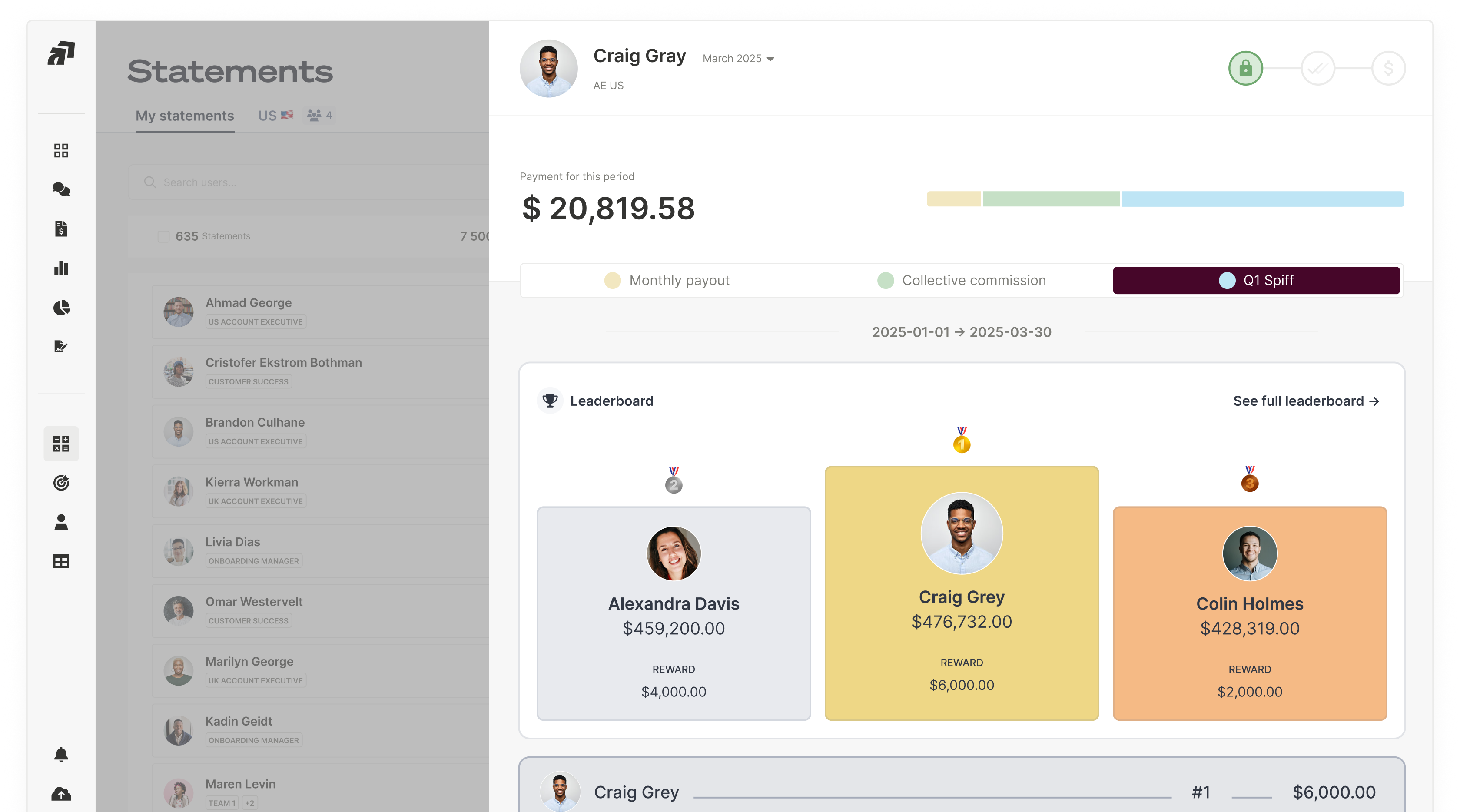
These plans are often more complex and require real-time tracking. The calculations can involve various rules, tiers, and accelerators that are difficult to manage with spreadsheets. This is where specialized software becomes invaluable. Platforms like Qobra are designed to automate the entire commission process, from integrating with your CRM to providing sales representatives with real-time dashboards of their earnings. This level of automation and transparency is crucial for keeping sales teams motivated and focused.
Avoiding Pitfalls: Common Challenges and How to Overcome Them
While powerful, AIPs can fail if not implemented carefully. Here are common challenges to watch for:
- Unrealistic or Unclear Goals: If targets are perceived as unattainable, they will demotivate rather than inspire. Ensure goals are challenging but realistic (SMART goals).
- Lack of Transparency: Opaque calculations breed mistrust. Employees need to understand exactly how their payout is determined. A lack of clarity can quickly erode the plan's motivational power.
- "Set It and Forget It" Mentality: Business priorities can shift. A plan designed in January may no longer be relevant in July. Regularly review the plan's alignment with current business strategy.
- Poor Communication: The plan's purpose, mechanics, and progress must be communicated clearly and consistently throughout the year, not just at the beginning and end.
Warning: The Danger of Manual Calculations
Managing incentive plans on spreadsheets is a recipe for disaster. Manual data entry is prone to errors, which can lead to incorrect payouts and demotivated employees. A single formula error can undermine the entire program's credibility. Automating these calculations with a dedicated platform eliminates errors, saves countless hours for your Operations and Finance teams, and builds the trust necessary for the plan to succeed.
A well-designed annual incentive plan is a strategic lever for growth, not merely a line item in the compensation budget. By clearly defining success, aligning individual efforts with company goals, and rewarding performance transparently, one can create a powerful engine for motivation and achievement that benefits both employees and the company's bottom line.
An annual incentive plan judged once a year gives beneficiaries no visibility for eleven months. Incentive tracking software closes that gap by showing projected payout as results come in, which is where most of the motivational effect sits.
Frequently Asked Questions
What is the primary purpose of an annual incentive plan?
The primary purpose is to motivate employees to achieve specific, short-term business goals by offering a variable reward tied directly to their performance over a one-year period. It serves to align individual actions with the company's strategic objectives.
How is an annual incentive typically calculated?
It is typically calculated as a percentage of an employee's base salary, adjusted by a performance factor. This factor is determined by measuring achievement against predefined metrics (for example, company revenue or team goals). The formula is often: (Base Salary × Target Incentive %) × Performance Factor = Final Payout.
Who is eligible for an annual incentive plan?
Eligibility varies by company. It can be limited to executives and senior management, extended to all managers and key contributors, or offered to all employees. The scope depends on the company's culture and the strategic goals of the plan.
Can an annual incentive be paid in something other than cash?
Yes. While cash is the most common form of payment for annual incentives, some plans may offer payouts in the form of deferred share units or other equity-based awards, especially for senior executives, to encourage longer-term alignment and retention.