Sales Compensation Software Benchmark | Compare 15+ Sales Compensation Platforms
Download
Have you ever wondered what it takes to be on the front lines of business growth? How do innovative companies find their next big customer, and what role kicks off that crucial first conversation? If you're driven, an excellent communicator, and intrigued by the art of turning a "no" into a "yes," you might be ready to explore one of the most vital roles in modern sales.
This is the world of the Associate Sales Development Representative (SDR). It's a position that serves as the engine for revenue, connecting sales teams with the right leads and opportunities. But what does the job truly entail? What skills do you need to succeed, what can you expect to earn, and where can this career path lead?
What is a Sales Development Representative?
A Sales Development Representative, often called an SDR, Business Development Representative (BDR), or lead development specialist, is a specialized sales professional focused on the very first stages of the sales process: prospecting and lead qualification. They are the bridge between the marketing team, which generates broad interest, and the sales closers (like Account Executives), who manage negotiations and finalize deals. The primary goal of an SDR is not to close sales but to generate a steady pipeline of high-quality, qualified meetings for the rest of the sales team.
In essence, an SDR is a master of first impressions. They are responsible for researching potential clients, initiating contact, and determining if there's a genuine need for the company's products or services. This role is crucial for growth because it allows Account Executives to focus their time and energy on prospects who are already vetted and interested, dramatically increasing sales efficiency. Without a high-performing SDR team, even the best products can struggle to find their audience.
This role is more than just making calls; it's about strategic research, relationship-building, and understanding customer pain points. SDRs must be quick learners, able to articulate a company's value proposition in a compelling way while actively listening to a prospect's needs. They are problem-solvers who identify how their company's solutions can address specific challenges, setting the stage for a successful sales cycle.
The Core Responsibilities: A Day in the Life of an SDR
The daily life of an SDR is dynamic, structured, and goal-oriented. While the exact tasks can vary by company and industry, the core mission remains the same: to find, connect with, and qualify potential customers. A typical day is a blend of research, outreach, and internal collaboration. Based on common industry practices, a day might be broken down like this:
- Outbound Prospecting (50%): This is the heart of the role. It involves proactive outreach to potential clients through cold calls, personalized emails, and LinkedIn messages. The goal is to generate new business opportunities from scratch.
- Lead Nurturing (20%): Not every prospect is ready to buy immediately. SDRs nurture these "warm" leads over time, providing value through relevant content and consistent follow-ups until the prospect is ready for a sales conversation.
- Pipeline & CRM Management (10%): Diligent record-keeping is essential. SDRs spend time tracking all prospect activities, updating contact information, and managing their lead pipeline in a Customer Relationship Management (CRM) system like Salesforce or HubSpot.
- Research & Strategy (10%): Before any outreach, SDRs research companies, identify key decision-makers, and look for "trigger events" (like a new funding round or company expansion) that signal a good time to connect. They also develop territory plans to focus their efforts.
- Internal Collaboration (10%): SDRs work closely with Marketing to align on campaigns and with Account Executives to ensure smooth handoffs of qualified leads. They regularly report progress and strategize with their sales manager.
The SDR role is the ultimate training ground for a career in sales. It teaches resilience, discipline, and the foundational skills of prospecting and qualification that are essential for any future role, whether as an Account Executive, a Sales Manager, or even a company founder.
Key Objectives and Daily Tasks
To achieve their goals, SDRs focus on a clear set of objectives. A successful representative is expected to:
- Generate and qualify new leads: Utilize various channels to build a pipeline of interested prospects.
- Represent the company effectively: Act as the first point of contact, embodying the company's values and clearly explaining how its solutions meet customer needs.
- Build trusting relationships: Move beyond transactional conversations to understand a prospect's business and challenges, qualifying them as a genuine sales opportunity.
- Set up meetings: The primary deliverable for an SDR is scheduling meetings or calls between prospective customers and the sales executives who will take the relationship to the next level.
- Refine the lead generation process: Identify best practices, test new outreach strategies, and contribute to the company’s sales playbook.
- Report on results: Provide weekly, monthly, and quarterly updates to the sales manager on key performance indicators (KPIs).
🚨 Attention: Recruitment Fraud Alert
It has come to our attention that scammers may pose as recruiters or employees. They often use fake websites or emails to request personal information or payments. Reputable companies will never ask for a financial commitment as a pre-employment requirement. Always apply for positions through official company career pages and be cautious of unsolicited requests for sensitive data.
The Essential Skills and Qualifications for Success
Becoming a successful SDR requires a unique blend of hard and soft skills. While some companies require a bachelor's degree or previous sales experience, many prioritize coachability, drive, and strong interpersonal abilities. This makes the role an excellent entry point for recent graduates or career changers.
Hard Skills & Technical Proficiencies
Hard skills are the teachable, technical competencies that allow an SDR to execute their daily tasks efficiently.
- CRM Software Proficiency: Experience with tools like Salesforce, HubSpot, or other CRMs is often required. This is where all lead data is managed, so fluency is key.
- Sales Engagement Platforms: Knowledge of tools like SalesLoft, Outreach, or Apollo helps automate and track outreach sequences.
- Research Tools: The ability to use platforms like LinkedIn Sales Navigator, ZoomInfo, or similar tools to find and research prospects is critical.
- Communication Technologies: Mastery of professional communication via phone, email, and social media platforms is non-negotiable.
Soft Skills & Personal Attributes
Soft skills determine how an SDR interacts with prospects and colleagues. They are often more important than technical skills for long-term success.
- Exceptional Communication: This includes not just speaking clearly and writing professionally, but also active listening—the ability to hear and understand a prospect's true needs.
- Resilience and Tenacity: SDRs face rejection daily. The ability to handle a "no," learn from it, and stay motivated is perhaps the most important trait.
- Creative Problem-Solving: Every prospect is different. SDRs must think on their feet to handle objections and tailor their pitch to unique situations.
- Strong Analytical Skills: This involves researching a prospect's business, identifying pain points, and connecting them to your solution.
- Coachability and a Love of Learning: The sales landscape is always changing. A great SDR is eager to learn, implement feedback, and continuously refine their approach.
- Team-First Mentality: SDRs must collaborate effectively with their team to achieve collective goals. Their success directly impacts the success of others.
💡 Expert Tip
To stand out as a candidate, focus on demonstrating your soft skills. Instead of just listing "resilience" on your resume, describe a time you faced a significant challenge and overcame it. Instead of saying you're a "quick learner," mention a specific instance where you had to master a new software or process under a tight deadline. Concrete examples are far more powerful than adjectives.
Measuring Success: SDR KPIs and Compensation
The performance of an SDR is highly measurable and is tracked using a set of Key Performance Indicators (KPIs). These metrics ensure that an SDR's activities are aligned with the company's revenue goals.
| KPI Category | Common Metrics | Description |
|---|---|---|
| Activity Metrics | Number of Calls, Number of Emails, Social Media Touches | These track the raw effort and output of an SDR. They are leading indicators of future success. |
| Effectiveness Metrics | Open Rates, Reply Rates, Conversation Rates | These measure the quality and effectiveness of the SDR's outreach. |
| Objective Metrics | Meetings Booked, Demos Scheduled | This is a primary success metric, representing the number of qualified appointments set for Account Executives. |
| Outcome Metrics | Sales Qualified Leads (SQLs), Pipeline Influenced, Conversion Rate | These are lagging indicators that measure the ultimate business impact of the SDR's work. |
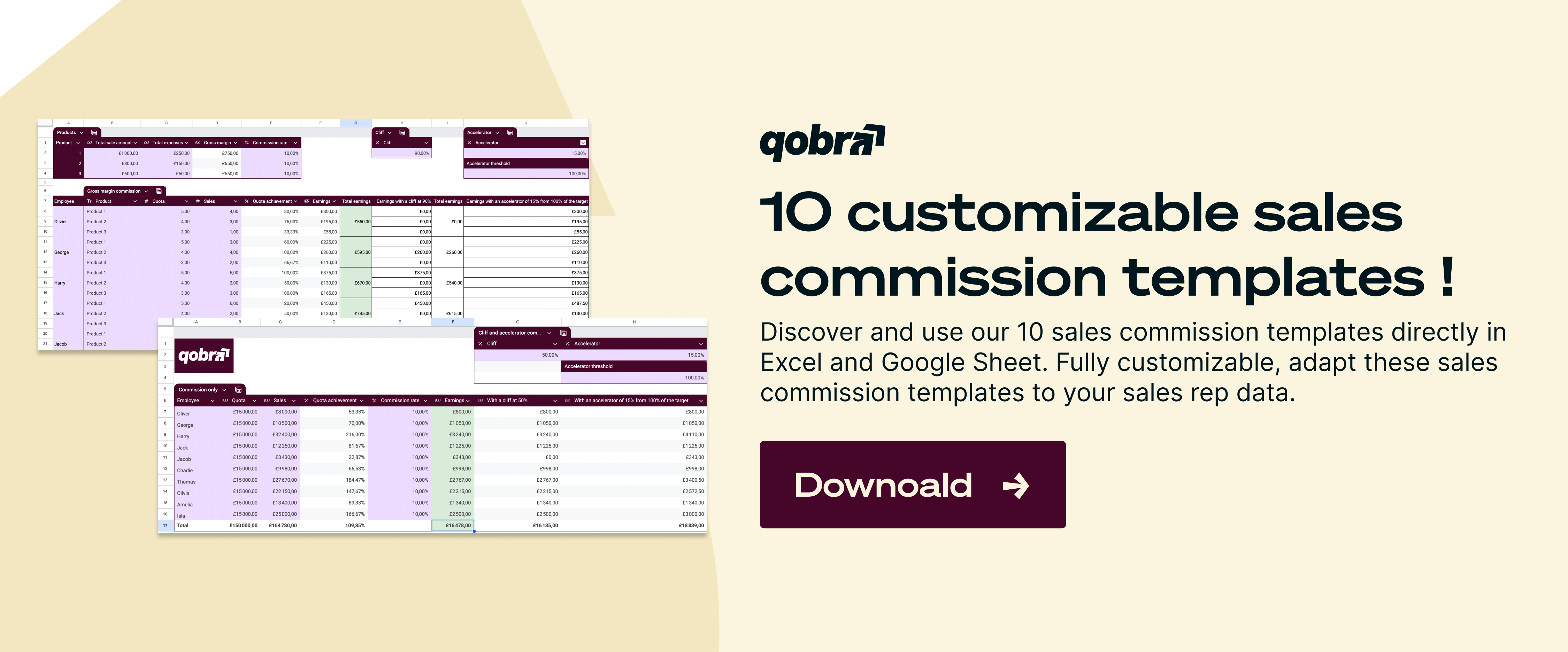
This data-driven approach directly ties into how SDRs are compensated. The structure is typically a mix of a fixed base salary and a variable commission, known as On-Target Earnings (OTE). For example, a common salary structure might be $60,000 base + $25,000 in variable commission, for an OTE of $85,000.
The variable portion is tied directly to hitting the KPIs mentioned above. This model is designed to motivate performance and reward top achievers. However, managing these complex commission plans can be a major challenge, especially when relying on spreadsheets. This is where modern tools become indispensable.
For instance, a platform like Qobra automates the entire sales commission process. Qobra syncs CRM data automatically throughout the day, and on demand in one click. The platform calculates commissions based on predefined plans and gives SDRs a live dashboard to track their earnings. This transparency is a massive motivator; when a representative can see exactly how much they’ve earned the moment they book a meeting, it powerfully reinforces the behaviors that drive success. This is a crucial element for any company looking to build a high-performing sales culture and ensure its incentive eligibility requirements are clear and effective.
Career Path and Growth Opportunities
The Associate SDR role is widely considered one of the best starting points for a career in technology sales. It provides a comprehensive education in the fundamentals of the sales process, customer interaction, and business acumen. The skills learned are highly transferable, opening up numerous avenues for advancement.
A typical career progression looks like this:
- Associate Sales Development Representative (0-1 year): Focuses on learning the product, mastering outreach techniques, and consistently hitting activity and meeting-booked targets.
- Senior Sales Development Representative (1-2 years): A top-performing SDR may be promoted to a senior role, where they take on more responsibility, such as mentoring new hires, helping with strategy, or tackling more strategic accounts.
- Account Executive (AE) (2+ years): This is the most common next step. Having mastered prospecting and qualification, the former SDR moves into a closing role, managing the full sales cycle from the initial meeting to the final signature. Their deep understanding of the front-end of the funnel gives them a significant advantage.
However, the path isn't limited to becoming an AE. The skills acquired as an SDR are valuable across the organization, leading to opportunities in other departments:
- Sales Management: Leading and coaching a team of SDRs.
- Sales Enablement: Training the sales team on new tools, processes, and strategies for converting traffic to sales.
- Customer Success: Using deep product and customer knowledge to help existing clients achieve their goals.
- Marketing: Moving into a role focused on demand generation or product marketing.
📌 A Note on Salary
SDR salaries can vary significantly based on industry, location, and company size. In major tech hubs like San Francisco or New York, OTE can be well over $100,000. In other regions or industries, it may be closer to the $70,000-$80,000 range. Always research the average compensation for your specific market.
The SDR role is a challenging, fast-paced, and incredibly rewarding career path for those who are ambitious and eager to learn. It is the definitive launchpad for a successful career in sales and beyond, offering invaluable experience and a clear ladder for professional growth. By mastering the art of the first conversation, you position yourself at the very heart of business success.
Frequently Asked Questions
What's the difference between an SDR and a BDR?
The terms Sales Development Representative (SDR) and Business Development Representative (BDR) are often used interchangeably. However, some organizations make a distinction: SDRs typically focus on qualifying inbound leads that come from marketing efforts (e.g., someone who downloaded a whitepaper), while BDRs focus on generating new leads through outbound prospecting (e.g., cold calling and emailing). In many companies, the role is blended, and one person handles both functions.
Is being an SDR a stressful job?
Yes, it can be. The role involves daily rejection, high-pressure targets, and a repetitive workflow. Success requires a high degree of resilience, self-discipline, and a positive mindset. However, it's also incredibly rewarding. The thrill of booking a meeting with a major target account and seeing your efforts directly contribute to revenue is a powerful motivator. The structured nature of the work also provides a clear path to success and tangible rewards, such as a strong profit sharing bonus or commission.
How do I write an SDR resume with no experience?
If you have no direct sales experience, focus on highlighting transferable skills and achievements. Emphasize experiences from previous jobs, university projects, or even volunteer work that demonstrate:
- Communication Skills: Did you work in customer service, retail, or a call center?
- Goal Achievement: Have you ever worked towards a specific target or quota? Mention it.
- Resilience: Describe a time you successfully navigated a difficult project or challenging situation.
- Coachability: Mention any experience where you received and implemented feedback to improve your performance.
A strong, concise cover letter explaining your passion for sales and your drive to succeed can also make a huge difference.
What tools do successful SDRs use?
Beyond a CRM like Salesforce, top SDRs build a "tech stack" to maximize their efficiency. Common tools include:
- Sales Engagement: Outreach, SalesLoft, Apollo.io (for automating email/call sequences).
- Data & Prospecting: LinkedIn Sales Navigator, ZoomInfo, Lusha (for finding contact information and company data).
- Communication: Dialers like Aircall, video messaging tools like Loom, and calendar scheduling tools like Calendly.
- Compensation Tracking: Platforms like Qobra provide real-time visibility into commission earnings, which is a massive productivity and motivation tool.