Webinar: The Biggest Release Sales Comp Has Ever Seen. Come See For Yourself (Wednesday, October 7)
Register
- A performance bonus is a conditional, variable pay awarded for meeting specific, measurable objectives (individual, team, or company) rather than part of fixed salary.
- Strategically, bonuses align employee efforts with company goals, boost motivation and productivity, support attraction and retention, and keep pay costs performance-driven.
- Common types include individual, team/collective, company-wide and spot bonuses, with calculation models such as percentage of salary, fixed amounts or tiered payouts (often combined).
- Design best practices: set SMART KPIs, define transparent calculation formulas, document terms in contracts or policies, communicate clearly, monitor results and automate calculations where possible.
- Legal and fiscal notes (France): bonuses are treated as salary (subject to social contributions and income tax) and must be clearly documented to be enforceable; discretionary versus contractual status affects employer flexibility.
How can you transform your company's compensation strategy from a simple expense into a powerful driver of growth and motivation? In today's competitive landscape, businesses are constantly seeking ways to enhance productivity and retain top talent. Among the most effective tools in the HR arsenal is the performance bonus, a form of variable pay designed to reward employees for their contributions to the company's success.
Far from being just an extra line on a payslip, a well-structured bonus system aligns individual and team objectives with the broader strategic goals of the organization. It serves as a direct link between effort and reward, fostering a culture of high performance and recognition. However, designing and implementing a bonus plan that is fair, motivating, and effective requires careful thought and planning. This guide explores the definition, types, and strategic implementation of performance bonuses to help you build a system that truly boosts your company's overall performance.
Understanding Performance Bonuses: Definition and Terminology
A performance bonus is a financial reward paid to an employee in addition to their fixed salary, based on the achievement of specific, pre-defined goals. It is a key component of a company's variable remuneration strategy, which connects a portion of an employee's earnings directly to their performance, their team's results, or the company's overall success.
While the terms "bonus" and "prime" are often used interchangeably, a performance bonus is distinct from other forms of variable pay like commissions or profit-sharing (known as intéressement in France).
A Quick Clarification:
- Performance Bonus: Typically tied to achieving qualitative or quantitative objectives over a set period (e.g., quarter, year).
- Commission: Directly linked to sales volume or revenue generated, common for sales roles.
- Profit-Sharing / Intéressement: A collective scheme that shares a portion of the company's profits with all employees, based on overall business results rather than individual performance.
The key feature of a performance-based incentive is its conditionality. Unlike a fixed salary, it is not guaranteed and must be earned by meeting or exceeding established targets. This makes it a flexible and powerful tool for directing employee focus toward key business priorities.
The Strategic Role of Performance Bonuses in an Organization
When implemented thoughtfully, performance bonuses offer significant advantages for both the employer and the employee, creating a virtuous cycle of motivation and success. For the company, it's a strategic lever to drive specific business outcomes. For employees, it's a clear recognition of their impact.
The primary benefits for an organization include:
- Enhanced Performance and Productivity: By directly linking rewards to results, bonuses motivate employees to exceed their targets. This focus on high-value activities drives overall business productivity.
- Improved Talent Attraction and Retention: A competitive compensation package, including a robust bonus structure, is a major draw for top talent. It also helps retain high-performing employees who feel their contributions are properly valued.
- Strategic Alignment: Bonuses are an excellent way to align employee efforts with the company’s strategic objectives. Whether the goal is to increase Annual Recurring Revenue (ARR), improve customer satisfaction, or launch a new product, the bonus criteria can be tailored to focus the team on what matters most.
- Cost Management: As a variable cost, bonuses are only paid out when performance targets are met, making payroll more flexible and performance-driven compared to relying solely on fixed salary increases.
For employees, the advantages are equally compelling. They benefit from increased motivation, tangible recognition for their hard work, and a clearer understanding of how their role contributes to the company's success. This fosters a sense of ownership and engagement, leading to higher job satisfaction.
Types of Performance Bonuses
Performance bonuses are not a one-size-fits-all solution. They can be structured in various ways to suit different roles, teams, and business objectives. The most common types are individual, team, and company-wide bonuses.
| Type of Bonus | Basis of Award | Best For | Example |
|---|---|---|---|
| Individual | Employee's personal achievements and contribution. | Roles with clear, measurable individual outputs, like sales or software development. | A marketing manager receives a $2,000 bonus for successfully reducing customer acquisition cost by 15% in a quarter. |
| Team/Collective | The shared success of a department or project team. | Fostering collaboration and shared accountability on group projects. | A product development team receives a shared bonus for launching a new feature ahead of schedule and under budget. |
| Company-Wide | Overall performance of the entire company (e.g., profit, revenue). | Aligning all employees towards common strategic goals and building a unified culture. | All employees receive a bonus equivalent to 3% of their annual salary after the company exceeds its annual profit target by 10%. |
| Spot Bonus | Spontaneous reward for exceptional, one-off contributions. | Recognizing outstanding effort that falls outside standard performance metrics. | An employee who works over a weekend to fix a critical server issue receives an immediate $500 spot bonus. |
These types can also be combined. For example, an employee might have a bonus plan composed of 70% individual objectives and 30% team objectives to encourage both personal accountability and collaboration.
Designing an Effective Performance Bonus Plan: A Step-by-Step Guide
A successful bonus program is built on a foundation of clarity, fairness, and transparency. Rushing the process or using ambiguous criteria can lead to confusion and demotivation. Follow these steps to create a plan that works.
Step 1: Define Clear and Measurable Objectives
The cornerstone of any performance bonus is the set of objectives an employee must achieve. Vague goals like "improve customer satisfaction" are ineffective. Instead, use the SMART framework to ensure goals are:
- Specific: Clearly state what needs to be accomplished.
- Measurable: Define the Key Performance Indicators (KPIs) that will be used to track success.
- Achievable: Set challenging but realistic targets. Unattainable goals are demotivating.
- Relevant: Ensure the objectives are aligned with the employee's role and the company's strategic priorities.
- Time-bound: Set a clear deadline for achieving the goals (e.g., by the end of Q3).
The process of effective goal-setting is critical. For a sales team, relevant KPIs might include new business revenue, conversion rate, or customer lifetime value. For a customer support team, it could be customer satisfaction (CSAT) scores or first-response time.
Step 2: Determine the Calculation Method
Once the objectives are set, you need to define how the bonus will be calculated. Transparency here is crucial. Employees must be able to understand—and ideally forecast—their potential earnings.
Common calculation models include:
- Percentage of Salary: The bonus is a percentage of the employee's base salary (e.g., 10% of annual salary for meeting 100% of targets).
- Fixed Amount: A flat monetary amount is paid for achieving a specific goal.
- Tiered Payouts: The bonus amount increases as performance exceeds the target. This model strongly incentivizes over-performance.
Here is an example of a tiered structure for a sales development representative (SDR):
| % of SQL Quota Achieved | Bonus Payout |
|---|---|
| Below 90% | $0 |
| 90% - 100% | $1,500 |
| 101% - 110% | $2,000 |
| Above 110% | $2,500 + $50 per additional SQL |
Expert Tip: Automate for Accuracy and Motivation
Manual calculations using spreadsheets are not only time-consuming but also prone to errors that can erode trust and create disputes. Automating commission and bonus calculations with a dedicated platform like Qobra eliminates these risks. With a no-code rule engine and direct CRM integration, Qobra provides sales teams with real-time, transparent dashboards of their performance and earnings. This constant visibility keeps motivation high and allows finance and operations teams to save days of work each month.
Step 3: Establish the Legal and Contractual Framework
To be legally enforceable, especially in jurisdictions like France, a bonus plan must be clearly documented. The terms and conditions should be outlined in the employment contract, a formal addendum, or a company-wide policy document.
This documentation should specify:
- The performance period (e.g., calendar year, quarter).
- The exact objectives and KPIs.
- The calculation formula.
- Conditions for payment (e.g., employee must be actively employed on the payout date).
In France, bonuses are subject to social security contributions and income tax. It's essential to account for these costs when budgeting for your bonus program.
Step 4: Communicate Transparently
A bonus plan is only motivating if employees understand it. Launch the plan with a clear communication campaign. Explain the "why" behind the objectives—how they connect to the company's mission. Provide training and resources so everyone knows how their performance is being tracked and how their bonus is calculated.
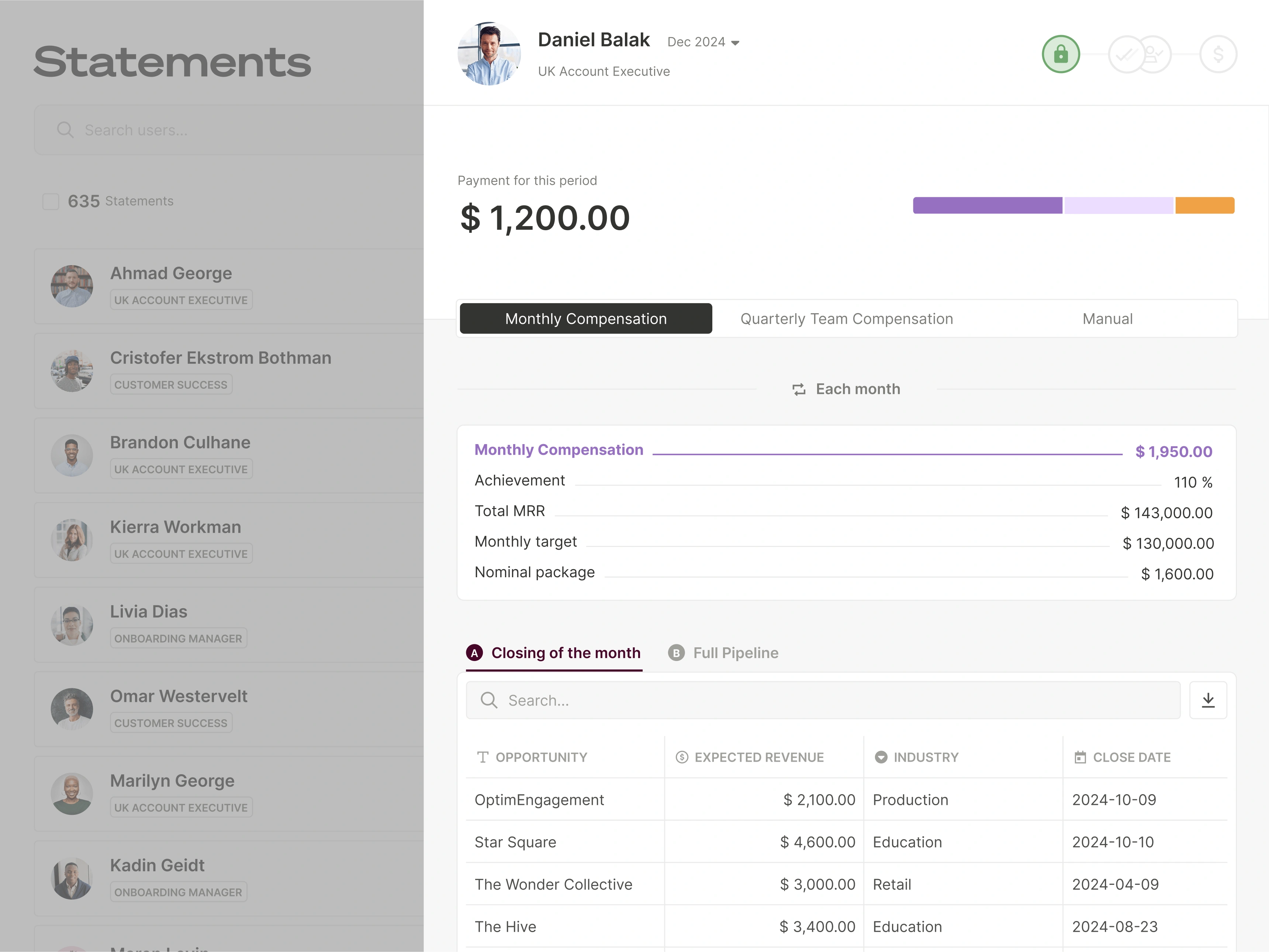
Ongoing communication is just as important. Regular check-ins and performance reviews are key moments to discuss progress toward goals. Providing real-time visibility into performance data, as Qobra does for sales teams, empowers employees to take ownership of their results and stay motivated throughout the performance period.
Step 5: Implement, Monitor, and Review
Once the plan is launched, the work isn't over. Continuous tracking of performance is essential to ensure the program is fair and effective. At the end of each performance period, conduct a formal review to assess results, calculate payouts, and gather feedback.
Be prepared to adapt. The market changes, and so do business priorities. Review your bonus plan annually to ensure it remains aligned with your strategic goals and continues to motivate your team. Don't be afraid of revising your commission structure or bonus plan if it's no longer driving the desired behaviors.
Common Pitfalls to Avoid
Even the best-intentioned bonus plans can fail if they fall into common traps. Being aware of these pitfalls is the first step toward avoiding them.
Warning: Traps that Demotivate
- Unclear or Unattainable Goals: If employees don't understand their targets or feel they are impossible to reach, they will disengage. Ensure performance goals are set collaboratively and are challenging yet achievable.
- "One-Size-Fits-All" Approach: Applying the same bonus structure to vastly different roles (e.g., sales vs. engineering) is rarely effective. Tailor your plans to the specific contributions and metrics of each function.
- Lack of Transparency: A "black box" calculation process breeds suspicion and demotivates staff. Employees should be able to see how their bonus is calculated.
- Delayed Payouts: The motivational impact of a reward diminishes over time. Pay bonuses as soon as possible after the performance period ends to reinforce the link between action and reward.
A performance bonus is a powerful instrument for shaping company culture and driving results. When designed with clarity, fairness, and strategic alignment in mind, it moves beyond a simple financial transaction to become a cornerstone of your talent management and business growth strategy. By avoiding common pitfalls and embracing transparency—ideally powered by modern tools—you can create a system that recognizes contributions, motivates your teams, and propels your entire organization forward.

Frequently Asked Questions
What is the difference between a bonus and a commission?
A commission is a form of variable pay tied directly to a specific transaction, usually a percentage of a sale's value. It is most common in sales roles. A performance bonus, on the other hand, is typically linked to achieving broader objectives over a set period (like a quarter or year). These objectives can be quantitative (e.g., hitting a revenue target) or qualitative (e.g., successfully launching a project).
Is a performance bonus considered part of the salary?
No, a performance bonus is part of the variable compensation package, not the fixed base salary. Your total compensation is often described as On-Target Earnings (OTE), which is the sum of your base salary and your potential variable pay (bonus and/or commission) if you achieve 100% of your targets.
How is a performance bonus taxed in France?
In France, performance bonuses are treated as salary income. They are subject to the same social security contributions (for both the employee and employer) and are included in the employee's taxable income for the year they are received.
Can an employer unilaterally cancel a performance bonus?
It depends on how the bonus is structured. If the bonus and its specific, objective criteria are defined in the employment contract, an employer cannot unilaterally cancel it if the employee has met the conditions. However, if the bonus is described as purely discretionary and not linked to objective criteria, the employer generally has more flexibility. To avoid legal disputes, it is always best practice to have clear, written rules for any bonus plan.
To make performance bonuses a real motivation lever, pair the plan with a variable compensation platform that gives reps real-time visibility on what they earn.