Sales Compensation Software Benchmark | Compare 15+ Platforms (Features, Pricing, User Reviews, etc.)
Download
- Commission-based pay means your earnings are tied to performance — common models include commission-only, base salary + commission, tiered rates, residuals, and bonuses.
- High-opportunity industries include real estate, SaaS/B2B software, insurance, recruitment, financial services, and medical/manufacturing sales.
- Evaluate offers by modeling earnings (base, quota, commission rate, tiers, bonuses), asking about average quota attainment, payment timing, clawbacks, and using a calculator or commission platform to simulate income.
- Find roles on reputable sites (LinkedIn, specialized job boards) and watch for red flags: pay-to-work requirements, vague product descriptions, or promises of huge earnings with little effort.
- Clarify legal and contractual terms before signing: employee vs contractor status, written commission plan with rates and payout schedule, pipeline/leave policies, non-compete clauses, and dispute resolution procedures.
Have you reached a ceiling in your current job, where your income feels fixed regardless of how hard you work? This is a common reality for many in fixed-wage positions, where significant pay increases are often reserved for management or C-level roles. Fortunately, there's an alternative path where your effort directly translates into earnings: commission-based jobs. These roles allow you to take control of your income by earning a percentage of the value you generate.
While some may be hesitant about the income variability that can come with a slow month, many professionals thrive on the motivation of unlimited earning potential. If you are a resilient, driven individual with strong sales or persuasive skills, a performance-based role could be the perfect vehicle for your financial and professional growth. This guide will demystify commission structures, explore the most profitable opportunities, and equip you to succeed in this dynamic field.
What Are Commission-Based Jobs?
Commission pay is a form of performance-based compensation where your earnings are directly tied to the goals you achieve. Because of this results-oriented nature, it's most commonly found in sales positions. A commission represents a percentage or a flat fee earned from a specific transaction, such as closing a deal, placing a candidate, or selling a property.
While some roles are "commission-only," most companies offer a hybrid compensation package to attract and retain talent. These packages typically include a combination of the following:
- Base Salary: A fixed, guaranteed income you receive regardless of performance. It provides financial stability and covers your basic living expenses.
- Commission: The variable portion of your pay that fluctuates based on your monthly or quarterly performance. This is where your high-earning potential lies.
- Bonuses: Additional fixed amounts paid for achieving specific milestones, such as hitting an annual quota or winning a sales contest (often called "spiffs"). Unlike commissions, which are tied to individual transactions, bonuses are often linked to broader, time-based objectives. You can explore the differences between bonuses and commissions for a deeper understanding.
The way commissions are structured can vary significantly. The two most common approaches are a flat rate, where you earn a specific dollar amount per sale, and a percentage rate, where you earn a fraction of the deal's value. This structure is a core component of any successful sales commission plan.
The Most Common Commission Structures Explained
To succeed in a commission-based role, you must first understand how your pay will be calculated. Companies use various models to motivate salespeople and align their efforts with business goals. Familiarizing yourself with these structures will help you evaluate job offers and negotiate a package that suits your risk tolerance and ambitions.
Base Salary + Commission
This is the most prevalent and balanced model. It provides the security of a guaranteed base salary while motivating performance through variable commissions. This structure is ideal for roles with longer sales cycles or for professionals who prefer a degree of income stability. It shows that the employer is invested in your long-term success.
Tiered Commission
A tiered structure is designed to reward top performers exponentially. Under this model, your commission rate increases as you hit progressively higher sales targets. For example, you might earn 5% on sales up to $50,000, 7.5% on sales between $50,001 and $100,000, and 10% on anything above that. This creates a powerful incentive to exceed quotas.
Here is a simple example of a tiered commission plan:
| Monthly Sales Revenue | Commission Rate |
|---|---|
| $0 - $25,000 | 5% |
| $25,001 - $75,000 | 8% |
| $75,001+ | 12% |
Commission-Only (Straight Commission)
This is the highest-risk, highest-reward model. Your entire income is derived from the commissions you generate. There is no base salary or safety net. While this offers unlimited earning potential, it also means you could have months with little to no income. This structure is common for independent contractors, real estate agents, and some high-ticket sales roles.
Residual Commission
Common in industries like insurance or SaaS, a residual commission model allows salespeople to earn ongoing income from a single sale. You continue to receive a commission for as long as the client maintains their subscription or policy. This model is highly attractive because it allows you to build a cumulative and predictable stream of income over time.
What is a "Draw Against Commission"?
Some companies offer a "draw," which is an advance payment against future commissions. It acts as a temporary salary to help new hires during their ramp-up period. If your earned commissions are less than the draw amount, you typically owe the difference back to the company. Be sure to understand if a draw is "forgivable" (a true salary) or "non-forgivable" (a loan).
Top Industries and Jobs for Commission-Based Pay
While often associated with sales, commission-based compensation is found across a diverse range of industries. If you have the drive and the right skills, these roles offer significant opportunities to increase your income.
1. Real Estate Agent
Arguably the most classic commission job, real estate agents are typically independent contractors whose income is derived entirely from the sales of the properties they help buy or sell. They act as mediators, advising clients on market value, listing homes, negotiating offers, and coordinating appraisals and inspections. Success requires building a strong network and deep market knowledge.
2. Software Sales (SaaS)
The tech industry is a hotspot for high-paying sales roles. As a software sales representative, you work with business clients to understand their needs and sell them software solutions. Given the high value of B2B software contracts, the commissions can be substantial. A deep understanding of the product and the client's industry is essential. This field often uses a base salary plus commission model, making it a stable yet lucrative option.
Succeeding in B2B Sales
In business-to-business sales, the sales cycle is often longer and more complex than in B2C. Success depends on building strong relationships, demonstrating clear ROI, and understanding the client's internal purchasing process. The rewards are significant, with many B2B sales commission structures designed to generously compensate for closing large, strategic deals.
3. Insurance Sales Agent
From life and health to property and casualty, insurance agents help clients find the right coverage for their assets and budgets. Many roles in this field are commission-based, often with residual commissions that provide a steady income stream from policy renewals. It's a role that rewards persistence and the ability to build long-term trust with clients.
4. Recruiter
Recruiters connect talented professionals with companies looking to hire. Their commission is typically a percentage of the placed candidate's first-year salary. This can be a very profitable career for those who excel at networking, vetting candidates, and understanding the needs of both the client company and the job seeker.
5. Financial Advisor
Financial advisors and stockbrokers earn commissions on the financial products they sell or the transactions they execute for their clients. Success is built on providing sound financial advice and managing client portfolios effectively. This field is heavily regulated, requiring specific licenses and certifications.
6. Manufacturing & Medical Sales
For those proficient in B2B sales, roles as a sales representative for manufacturing or medical device companies offer excellent opportunities. These jobs involve selling physical products—from industrial machinery to surgical tools—to other businesses or healthcare facilities. A technical aptitude and the ability to explain complex products are key.
How to Calculate Your Potential Earnings and Evaluate an Offer
Understanding a commission plan is one thing; projecting your actual income is another. Before accepting an offer, you must do the math to ensure it aligns with your financial goals.
Let's use a hypothetical example. Imagine you're offered a software sales job with the following structure:
- Base Salary: $60,000 per year ($5,000 per month)
- Quota: $40,000 in new monthly recurring revenue (MRR)
- Commission Rate: 10% of all MRR sold
If in your first month you sell $50,000 in new MRR, your calculation would be:
- Commission Earned: $50,000 (MRR) * 10% (Rate) = $5,000
- Monthly Base Salary: $5,000
- Total Monthly Earnings: $5,000 (Commission) + $5,000 (Base) = $10,000
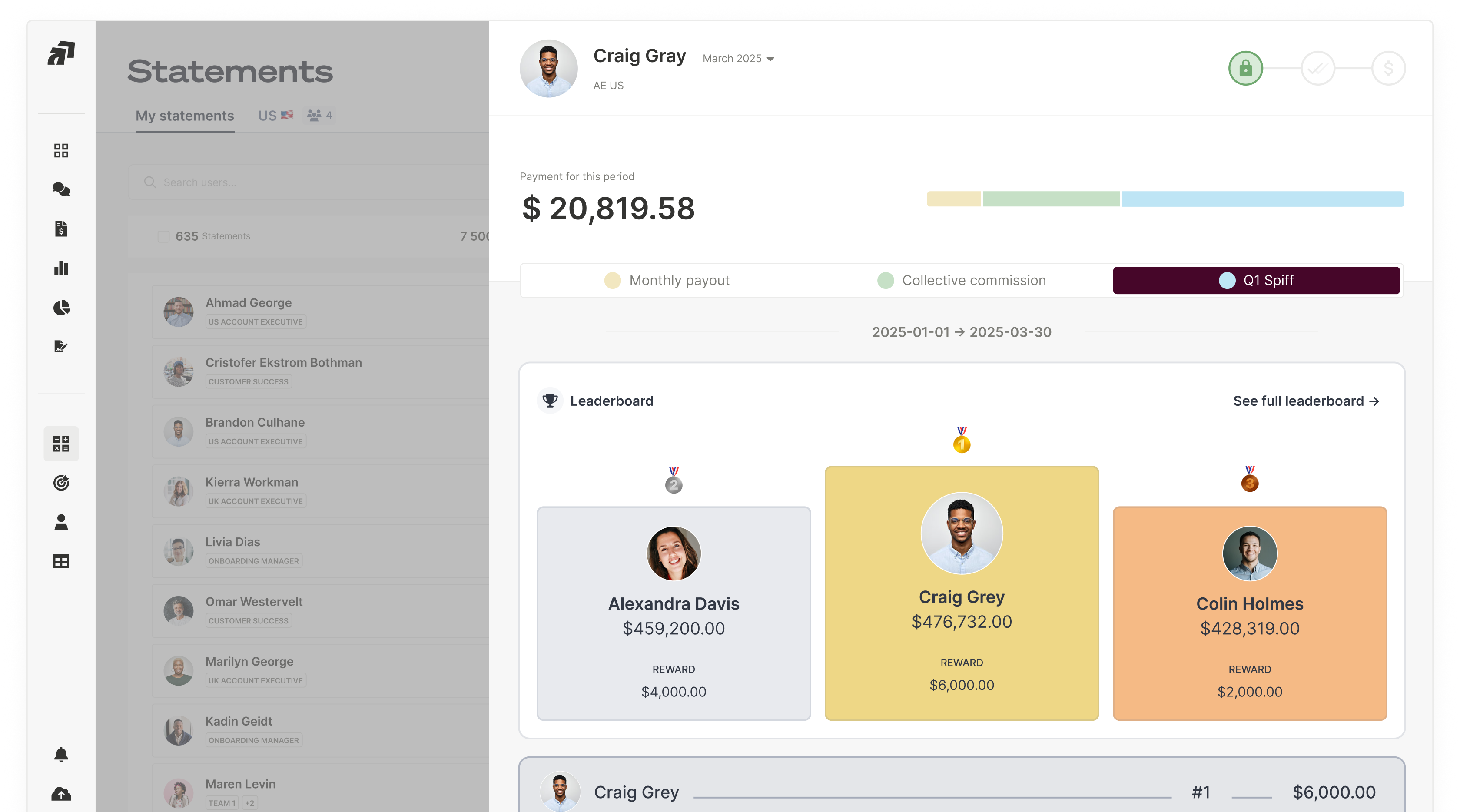
This seems straightforward, but the complexity grows with tiered rates, bonuses, and different KPIs. Managing these calculations manually on spreadsheets is time-consuming and prone to error, which can lead to disputes and demotivation. This is precisely why modern sales teams use platforms like Qobra. Our no-code solution automates commission calculations in real time by connecting directly to your CRM. Sales reps get a transparent dashboard showing exactly what they've earned and what they can expect to earn, eliminating guesswork and fostering trust.
When evaluating an offer, ask detailed questions:
- What is the average quota attainment for a first-year representative?
- When is commission officially "earned" and paid out (e.g., upon contract signature or client payment)?
- Are there any "clawback" clauses where commission can be revoked?
- Can I see a sample commission statement template?
Finding Reliable Opportunities and Avoiding Scams
With thousands of commission-based jobs available, it's crucial to distinguish legitimate opportunities from fraudulent schemes. Reputable platforms like LinkedIn are excellent starting points, with extensive listings from established companies. Specialized job boards like CommissionOnly.com also connect experienced sales reps with businesses seeking performance-based talent.
Red Flags to Watch For
Be cautious of job postings that promise enormous earnings with little effort, lack a clear description of the product or service, or require you to pay for training or starter kits. A legitimate employer invests in its sales team; they don't charge them to work. Always research the company's reputation, products, and online reviews before proceeding.
Once you've found a promising role, prepare to discuss the compensation plan in detail during the interview. A company that is transparent and confident in its sales model will have no problem providing clear answers and documentation.
Legal & Contractual Aspects to Consider
Before you sign any contract, it's vital to understand the legal framework of your employment. The most significant distinction is whether you are classified as an employee (W-2) or an independent contractor (1099 in the US).
- Employees are entitled to a base salary (in most jurisdictions), benefits, and legal protections. The employer withholds taxes from their paycheck.
- Independent Contractors operate as their own business. They have more autonomy but are responsible for their own taxes (including self-employment tax), insurance, and business expenses. Commission-only roles often fall into this category.
Regardless of your status, your commission plan should be detailed in a formal, written agreement. Never rely on verbal promises. Your contract should explicitly define:
- The commission structure, including all rates, tiers, and bonus criteria.
- The exact timing of commission payouts.
- The policy for commissions on deals in the pipeline if you leave the company.
- Any non-compete or non-solicitation clauses.
- The process for resolving disputes over commission calculations.
Reviewing your employment agreement carefully is one of the most important steps. You need to be aware of your legal rights and the company's obligations regarding commission modifications to protect your earnings.
A commission-based career path offers a powerful opportunity to break free from traditional salary caps and take direct control of your financial destiny. The potential for high earnings is immense, but it comes with the responsibility of managing income fluctuations and the pressure to perform consistently. Success requires resilience, self-discipline, and a deep belief in the product or service you are selling.
For companies, motivating sales teams with fair, transparent, and accurate compensation is paramount. By leveraging tools like Qobra to automate complex calculations and provide real-time visibility, businesses can empower their reps, reduce disputes, and align everyone toward common growth objectives. Whether you're a salesperson looking for your next challenge or a leader building a high-performance team, a well-designed commission structure is the foundation of success.

Frequently Asked Questions
What exactly does "commission-based" mean in a job offer?
"Commission-based" means that a significant portion, or all, of your compensation is tied to your performance on specific metrics, usually sales volume or revenue generated. It's essential to clarify the exact structure: is it commission-only, or is there a base salary included?
Is a commission-only job a good idea?
A commission-only job can be a great idea for experienced professionals with a strong network, a proven track record, and the financial stability to handle variable income. It offers the highest earning potential but also carries the most risk. For those new to sales or an industry, a role with a base salary is often a safer and more sustainable starting point.
How are commissions typically paid out?
Payout schedules vary by company and industry. Commissions may be paid weekly, bi-weekly, monthly, or quarterly. The timing often depends on when the revenue is recognized by the company—for instance, after a customer pays their first invoice. This should be clearly stated in your employment agreement.
What is the most important thing to look for in a commission agreement?
The most critical element is clarity. The agreement should leave no room for ambiguity. It must clearly define the commission rate(s), the exact event that triggers a commission payout, the schedule of payments, and the policies for termination and disputes. A vague contract is a major red flag.