Sales Compensation Software Benchmark | Compare 15+ Platforms (Features, Pricing, User Reviews, etc.)
Download
- Incentive Compensation Management (ICM) is the end-to-end system and process that designs, tracks, automates, and audits variable pay—turning commission rules into accurate, transparent payouts.
- Design plans by aligning incentives to top business objectives, select 2–3 KPIs directly linked to those goals, and keep mechanics simple (rates, accelerators, cliffs) so reps can roughly calculate earnings themselves.
- Adopt a hybrid structure that balances individual accountability with team/company incentives to drive collaboration and long-term customer value.
- Deploy a no-code ICM platform with real-time CRM/ERP integration, an auditable calculation engine, and transparent dashboards to eliminate errors, accelerate finance ops, and remain agile.
- Establish governance and continuous improvement: enforce data hygiene and dispute workflows, communicate clearly, review plans regularly, and measure ROI via error reduction, quota attainment, and commission cost ratios.
Are your commission spreadsheets becoming a source of frustration rather than motivation? As your business grows, managing variable pay manually often leads to costly errors, disputes with your sales team, and a significant drain on your finance and operations resources. A well-designed incentive management strategy, however, can transform compensation from a complex administrative burden into your most powerful lever for driving predictable revenue growth.
This guide provides a comprehensive overview of Incentive Compensation Management (ICM), from designing effective plans to leveraging automation for transparency and performance.
What is Incentive Compensation Management (ICM)?
Incentive Compensation Management (ICM) is the strategic process and the set of tools used to design, manage, calculate, and distribute variable pay to employees, particularly sales teams. It goes far beyond simply having a commission policy; it encompasses the entire lifecycle of your incentive program, from setting goals to analyzing performance.
A simple incentive policy defines the rules ("You earn 5% on every new deal"), whereas a robust ICM system operationalizes those rules. It ensures that every deal is tracked correctly, every calculation is accurate, and every salesperson has full visibility into their current and potential earnings.
The primary goal of ICM is to align individual and team behaviors with the company's strategic objectives. When executed correctly, it directly influences sales activities to boost revenue, protect margins, and increase market share. It’s not just about paying people; it’s about paying for performance that matters.
Historically, this process was managed with a patchwork of spreadsheets and manual data entry. But as companies scale, these outdated methods quickly become unsustainable. They are prone to errors, lack transparency, and cannot adapt to evolving business priorities. Modern ICM relies on specialized software to automate these complexities, providing a single source of truth for all compensation-related data.
The Challenges of Traditional Incentive Management
Before the adoption of dedicated ICM tools, managers relied on a combination of spreadsheets and manual processes to determine compensation. While some organizations still use these methods, they present significant challenges that can undermine the very purpose of an incentive program.
- Error-Prone Calculations: Manual data entry is a recipe for human error. A single misplaced decimal or incorrect formula in a spreadsheet can lead to thousands of dollars in overpayments or underpayments, eroding trust and creating compliance risks. Companies report that automated solutions can reduce calculation errors by up to 95%.
- Lack of Transparency: When salespeople don't understand how their commissions are calculated, they lose trust in the process. This "black box" approach leads to constant queries, disputes, and what's known as a "shadow accounting" culture, where reps spend valuable selling time maintaining their own spreadsheets to double-check their pay.
- Administrative Burden: Finance and Sales Ops teams can spend days, or even weeks, at the end of each payment period manually consolidating data from various systems, calculating payouts, and managing disputes. This is time that could be spent on strategic analysis and planning. Automation can make this process 5 to 10 times faster.
- Inability to Scale or Adapt: What works for a team of 10 salespeople breaks down for a team of 100. Furthermore, market conditions and business strategies change. With manual systems, adjusting a commission plan—even slightly—can be a monumental task, preventing the business from remaining agile.
- Misaligned Behaviors: Without clear, real-time feedback, salespeople may focus on activities that are easy to measure (like closing any deal) rather than those that are most valuable (like closing profitable deals or cross-selling strategic products).
Designing an Effective Incentive Compensation Plan
A powerful ICM system is only as good as the plan it executes. Designing a plan that truly motivates the right behaviors requires a structured approach that starts with your company's highest-level goals.
Step 1: Align with Strategic Business Objectives
The classic mistake is to view variable pay only as a motivational tool. Its true power lies in its ability to direct your team's focus toward what matters most. Before defining any KPIs or commission rates, ask yourself: what is our number one business priority right now?
Common objectives include:
- Aggressive Revenue Growth: Prioritizing new logos and top-line revenue.
- Improving Profitability: Focusing on deal margin or discouraging heavy discounts.
- Market Expansion: Incentivizing sales in new territories or verticals.
- Customer Retention: Rewarding upsells, cross-sells, and metrics related to customer health (e.g., Net Revenue Retention).
- Promoting a New Product: Creating special bonuses or "spiffs" for sales of a strategic product line.
Your incentive plan should be a direct reflection of these goals.
Step 2: Choose the Right Key Performance Indicators (KPIs)
Once your objectives are clear, select KPIs that directly measure progress toward them. The more direct the link between a rep's actions and their compensation, the more effective the plan will be.
Here are some examples of objectives mapped to relevant KPIs:
Strategic Objective | Primary KPI(s) |
|---|---|
Maximize New Business Revenue | Annual Contract Value (ACV) or Total Contract Value (TCV) from new logos |
Increase Profitability | Gross Margin per deal; Percentage of deals sold without discounts |
Drive Product Adoption | Number of units sold of a specific product; Revenue from a new product line |
Improve Customer Retention | Net Revenue Retention (NRR); Upsell/Cross-sell revenue |
Shorten the Sales Cycle | Average time from opportunity creation to closed-won |
Keep it Simple
A compensation plan should be easy to understand and calculate. A good rule of thumb: if a salesperson can't roughly calculate their commission on the back of a napkin, your plan is too complex. Limit the number of core KPIs to 2-3 to maintain focus.
Step 3: Define the Compensation Structure
With your KPIs selected, you can build the mechanics of the plan. This includes:
- Commission Rates: Can be a flat percentage, or tiered rates that increase as a rep achieves higher levels of their quota (e.g., 8% up to 100% of quota, 12% on everything above).
- Bonuses & Spiffs: One-time payments for achieving specific, short-term goals. For example, a €500 bonus for the first person to sell the new product package this month.
- Accelerators: Increased commission rates for over-performance. These are powerful motivators for top performers.
- Cliffs and Caps: A "cliff" requires a minimum level of performance before any variable compensation is paid out. A "cap" limits the total amount a rep can earn, which is generally discouraged as it can demotivate top performers once they hit it.
Step 4: Balance Individual vs. Team-Based Incentives
As a salesperson, it's impossible to succeed alone. Success depends on the entire ecosystem, from Sales Development Representatives (SDRs) to Customer Success Managers (CSMs) and product teams. For this reason, incorporating team-based goals is crucial for fostering collaboration.
- Individual Incentives: Drive personal accountability and are essential for rewarding high-achievers.
- Team/Company Incentives: Encourage knowledge sharing, mutual support, and a focus on the overall success of the business. This helps ensure customers are well-supported during a CSM's absence and aligns everyone toward a common goal.
A hybrid model is often the most effective approach, blending individual quota attainment with a smaller bonus tied to the team or company hitting its overall target.
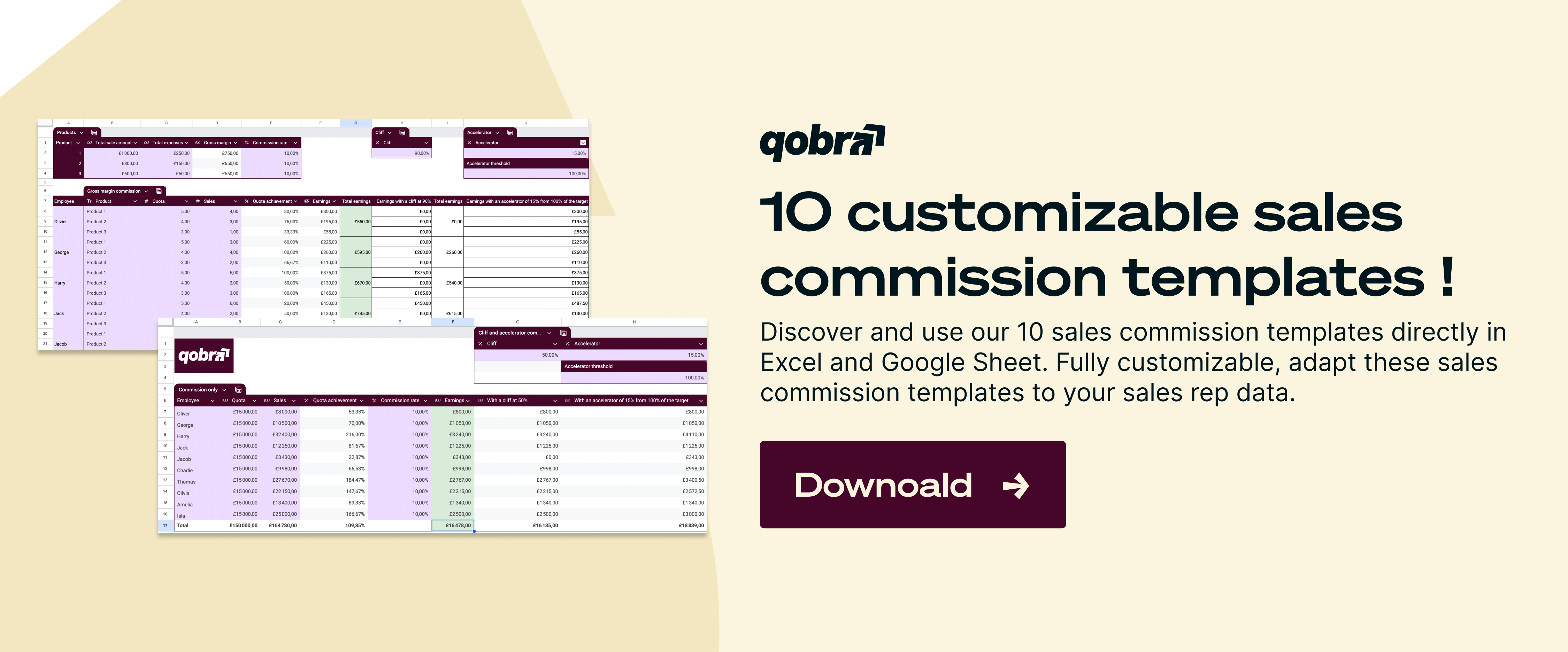
The Role of Automation and ICM Software
To escape the limitations of spreadsheets, modern businesses are turning to dedicated Incentive Compensation Management (ICM) software. These platforms automate the entire commission process, from data integration to payment calculation, providing a reliable and transparent system for everyone.
A robust ICM platform transforms compensation management from a reactive, administrative chore into a proactive, strategic function.
Key Features of a Modern ICM Platform
When evaluating solutions, look for platforms that offer flexibility, power, and ease of use.
- No-Code Plan Builder: Business needs change fast. You shouldn't have to hire expensive consultants or wait for IT to make adjustments to your commission plans. Modern platforms like Qobra are built on a no-code foundation, allowing Sales Ops or Finance admins to configure and modify even the most complex rules (tiered rates, multi-currency, accelerators) with an intuitive, visual editor.
- Real-Time Data Integration: Accuracy starts with data. A top-tier ICM solution must connect natively with your core business systems. This includes direct, real-time integration with your CRM (like Salesforce or HubSpot), ERP, and data warehouses. When a deal is marked "Closed-Won" in the CRM, the commission calculation should update automatically.
- Automated & Auditable Calculations: The core of any ICM software is its calculation engine. It eliminates manual errors and provides a complete audit trail for every single calculation. This ensures compliance and gives finance teams the traceability they need for financial reporting and audits.
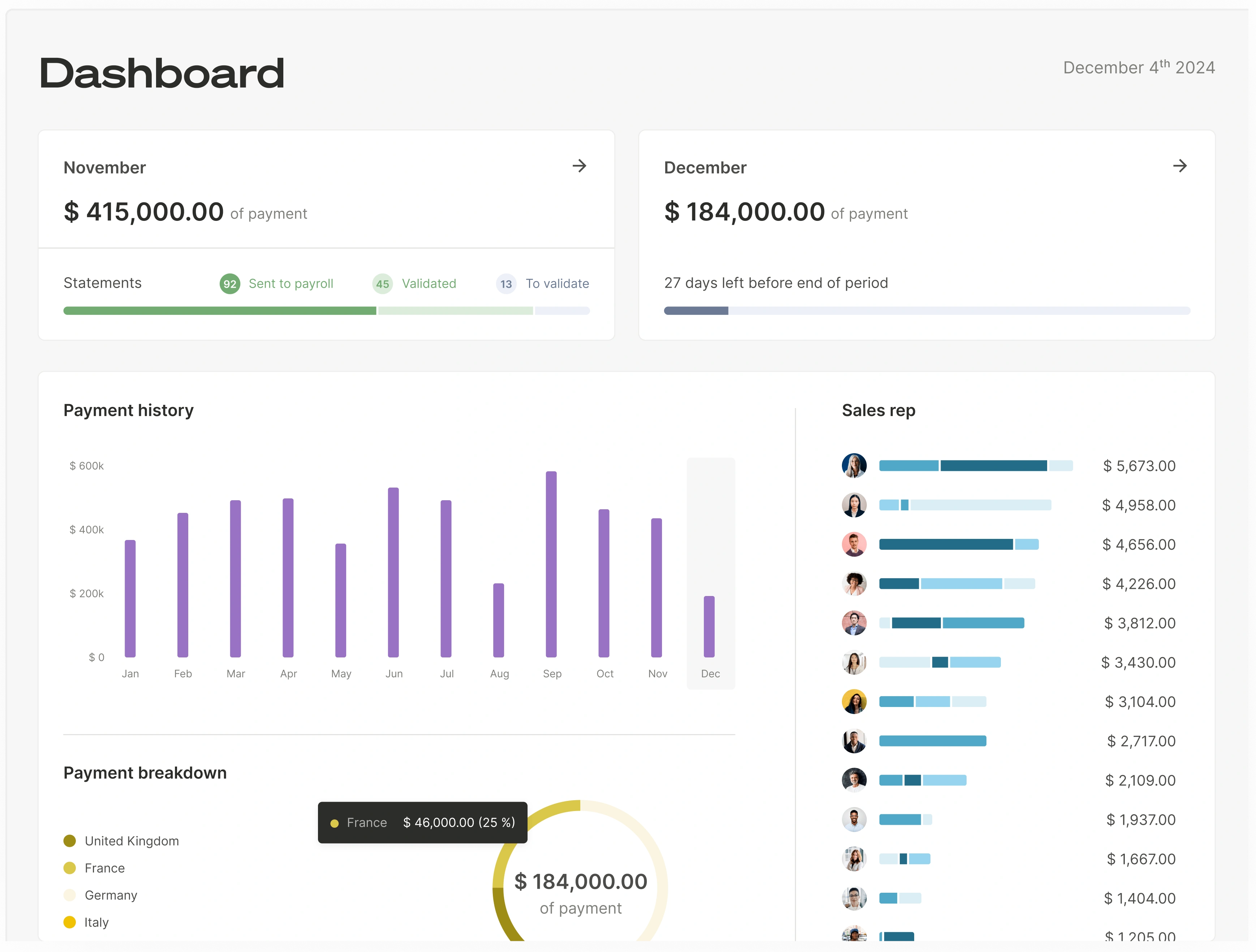
- Transparent Dashboards: This is where an ICM platform truly shines. It provides personalized, real-time dashboards for every stakeholder. Salespeople can see their quota attainment, current earnings, and even forecast potential commission from their pipeline deals. Managers get an overview of team performance, and finance leaders can track total commission costs and accruals. This visibility builds trust and turns the compensation plan into a daily motivational tool.
Beware of Hidden Complexity
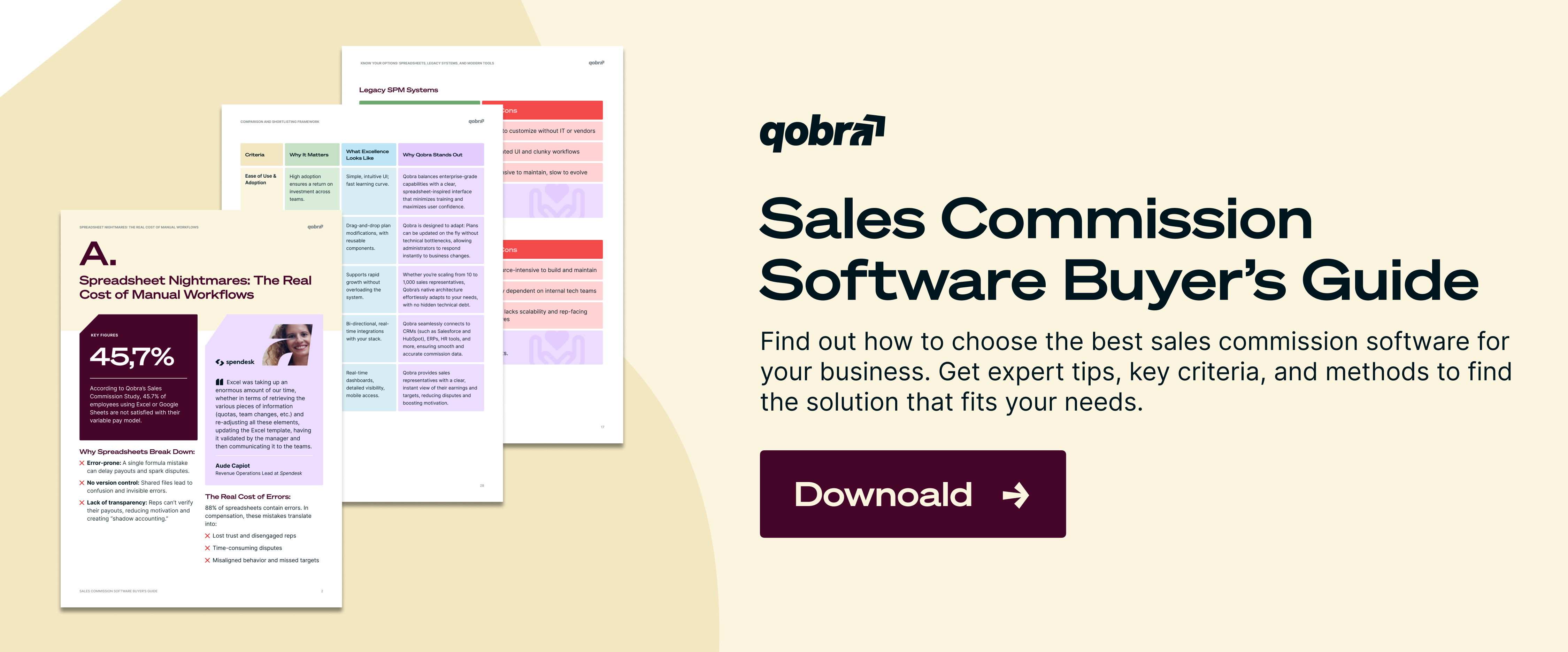
Some legacy ICM tools are powerful but require certified developers to implement or change plans, leading to high costs and long delays. When choosing a solution, prioritize one that empowers your internal teams. A no-code platform ensures you remain agile and in control of your compensation strategy without being dependent on external help.
Best Practices for a Successful ICM Program
Implementing software is only part of the equation. Long-term success depends on how you manage and communicate your incentive program.
- Communicate Clearly and Often: Launch your plan with clear documentation, training sessions, and examples. Make sure every team member understands their goals, how they are measured, and how they get paid.
- Establish Clear Governance: Define a formal process for handling disputes, exceptions, and plan adjustments. A good ICM tool will have built-in workflows for managing these requests, ensuring they are tracked and approved correctly.
- Review and Iterate: Incentive plans are not "set it and forget it." Review their performance at least annually, if not quarterly. Are they driving the right behaviors? Are they still aligned with company goals? Be prepared to iterate based on performance data and feedback from the sales team.
- Ensure Data Hygiene: An automated system is dependent on the quality of its input data. If the data in your CRM is inaccurate or incomplete, your commission calculations will be too. Implement processes to ensure good data hygiene is maintained in your source systems.
Measuring the ROI of Your Incentive Management Strategy
Investing in an ICM platform delivers both hard and soft returns. To justify the investment and demonstrate its value, track metrics across three key areas:
1. Financial Impact:
- Reduction in Calculation Errors: Compare the cost of overpayments or time spent correcting underpayments before and after implementation.
- Sales Cost Ratio: Track commissions as a percentage of revenue. An effective plan should align costs with profitable growth.
- Time Savings: Quantify the hours saved by Finance and Ops teams each month. Multiply these hours by their average salary to get a clear cost-saving figure.
2. Sales Performance Impact:
- Quota Attainment: Is the percentage of reps hitting their quota increasing?
- Sales Cycle Length: Are incentives for faster closes working?
- Average Deal Size & Margin: Is the plan encouraging larger, more profitable deals?
3. Team & Motivation Impact:
- Sales Team Turnover: Happy, fairly compensated reps are more likely to stay. A reduction in turnover is a significant cost saving.
- Dispute Reduction: Track the number of commission-related queries and disputes over time.
- Time to First Commission: How quickly can a new hire understand the plan and start earning? This is a key indicator of plan simplicity and onboarding effectiveness.
Moving from spreadsheets to a strategic, automated ICM system is a critical step for any scaling business. It reduces administrative overhead, minimizes costly errors, and, most importantly, transforms your compensation plan into a powerful engine for growth. By aligning incentives with corporate goals and providing real-time visibility, you empower your sales team with the clarity and motivation they need to perform at their best.
Frequently Asked Questions (FAQ)
What is the difference between ICM and a commission calculator?
A commission calculator is a simple tool, often a spreadsheet, that applies predefined rules to a set of data to calculate a payout. Incentive Compensation Management (ICM) is a comprehensive system that includes the calculator but also handles data integration from sources like a CRM, plan design and modeling, workflow approvals, dispute resolution, and transparent reporting dashboards for the entire organization.
How often should we review our incentive plans?
It's best practice to conduct a thorough review of your incentive plans at least once a year to ensure they align with the upcoming year's business objectives. However, you should also monitor their performance quarterly. If you see that the plan is driving unintended behaviors or has become misaligned due to a market shift, you may need to make mid-year adjustments.
Can incentive management work for non-sales teams like Customer Success?
Absolutely. While ICM is most commonly associated with sales, its principles can be applied to any role where performance can be measured. For Customer Success Managers (CSMs), incentives can be tied to KPIs like Net Revenue Retention (NRR), customer health scores, product adoption rates, or upsell revenue, effectively aligning their goals with long-term customer value.
How long does it take to implement an ICM software?
Implementation time varies depending on the complexity of your plans and the quality of your data. Legacy systems could take 6-12 months. However, modern, no-code platforms like Qobra have drastically reduced this timeline. With clean data and clear plan designs, many companies can go live in a matter of weeks, not months.
What data is needed to automate commission calculations?
The primary data source is typically your CRM (e.g., Salesforce, HubSpot). Key data points needed include who closed the deal, the deal amount (e.g., ACV), the close date, the product or service sold, and any other fields relevant to your commission rules, such as deal margin or contract length. This data is then fed into the ICM platform to trigger the automated calculations.