Sales Compensation Software Benchmark | Compare 15+ Platforms (Features, Pricing, User Reviews, etc.)
Download
In today’s performance‑driven business environment, understanding the incentive payment definition is essential for Chief Revenue Officers (CROs) and Sales Operations teams looking to accelerate growth and align individual performance with organizational goals. Incentive payments are more than just rewards — they are core components of an incentive pay system that helps shape behavior, drive results, and enhance competitive advantage. To see how this works in practice, explore our Qobra’s incentive compensation management solution here.
What Is an Incentive Payment?
At its core, an incentive payment refers to additional compensation awarded to employees for achieving specific performance outcomes. Unlike fixed salary or base compensation, incentive payments are variable and contingent upon predefined targets being met — such as sales quotas, revenue milestones, or customer acquisition goals.
In practice, incentive payments can take multiple forms:
- Monetary rewards, such as commissions, quarterly bonuses, or profit sharing
- Non‑monetary benefits, such as recognition awards or professional development opportunities
The purpose is simple: to create a direct link between performance and reward, ensuring employees are meaningfully motivated to achieve key business objectives.
💡 Good to know
For a deeper look at the types of incentive compensation and structures, check out Qobra’s blog post on types of incentive compensation.
Why Incentive Payments Matter
An effective incentive payment program underpins a high‑performance culture by:
- Aligning individual goals with company strategy
- Boosting motivation and productivity
- Clarifying expectations and performance drivers
- Supporting talent attraction and retention in competitive markets
Incentive payments are especially critical in sales organizations where motivation, speed, and outcomes directly impact revenue growth. For actionable guidance on building performance‑aligned compensation plans, see Qobra’s incentive plan guide.
Components of an Incentive Pay System
A robust incentive pay system blends structure with flexibility to deliver consistent performance outcomes. Key components include:
- Clear Performance Metrics: Establish measurable KPIs tied to revenue, customer acquisition, or product targets.
- Transparent Payout Rules: Teams must understand how incentive payments are calculated and when they qualify.
- Integrated Technology Support: Leveraging incentive pay software ensures accuracy, automation, and scalability of plans across teams.
- Continuous Review & Optimization: Regularly evaluate plan effectiveness against evolving business priorities.
⚒️ The practical tool
Automate and scale incentive plans with our built‑in analytics and automation solution.
Incentive Pay Plans: Structures That Drive Results
An incentive pay plan is the framework that defines when and how incentive payments are delivered. These plans articulate:
- Goal thresholds and performance requirements
- Payment formulas and timelines
- Eligibility criteria for participants
Depending on business strategy and sales cycles, plans can be designed to prioritize short‑term wins or longer‑term outcomes.
Types of Incentive Pay Plans
- Commission‑based Plans: Reward sales reps with a percentage of revenue generated.
- Bonus‑linked Plans: Provide lump‑sum incentives for hitting predefined milestones.
- Tiered Structures: Increase payout rates as performance scales, rewarding over‑achievement.

Individual Incentive Pay Plans: Tailored Motivation
While many incentive pay plans consider team or company‑wide performance, individual incentive pay plans focus exclusively on personal results. These plans are designed to:
- Reward top performers based on measurable, individual achievements
- Drive personal accountability
- Improve clarity in performance expectations
Examples include straight commissions, bonuses for surpassing monthly targets, or payouts tied to personal KPIs.
💡 Good to know
To better understand how metrics and individual performance tie to compensation outcomes, explore Qobra’s key metrics for incentive compensation.
The Role of Incentive Pay Software
Managing complex incentive plans at scale can be challenging without the right tools. That’s where incentive pay software becomes indispensable.
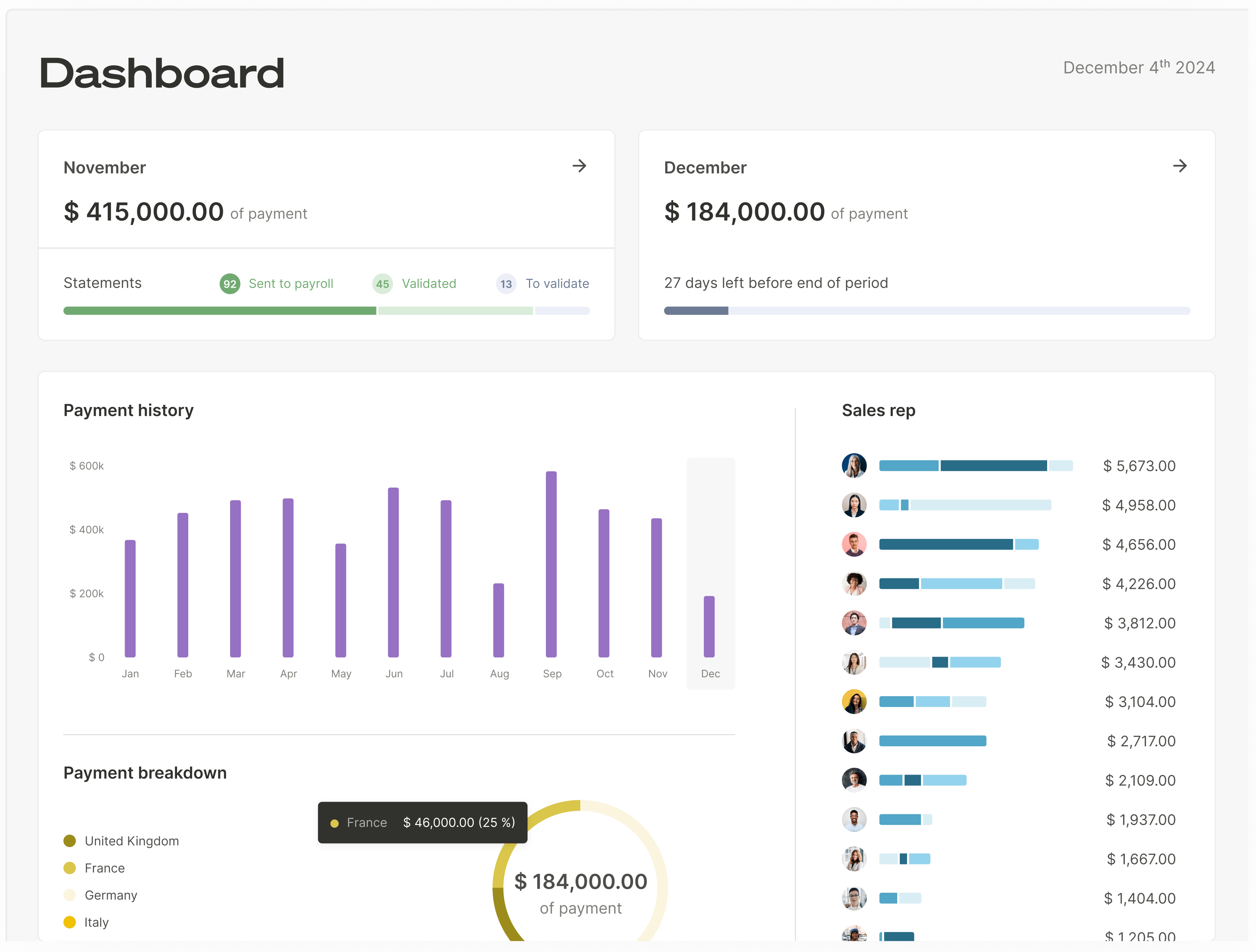
These platforms automate commission calculations, enforce plan rules, and provide real‑time visibility into performance and payouts. For Sales Ops teams, this means:
- Reduced manual errors
- Faster plan deployment
- Enhanced visibility across territories and roles
- Better analytics to inform plan refinements
Best Practices for Incentive Pay Structures
To maximize the effectiveness of your incentive pay structure, consider the following best practices:
- Alignment with Business Goals: Metrics must reflect your growth priorities.
- Regular Evaluations: Incentive plans should evolve with market conditions.
- Clear Communication: Teams must understand how to earn and measure success.
- Balanced Complexity: Keep plans strategic yet simple to drive adoption.
To conclude
Incentive payments are a strategic tool that empowers organizations to reward performance, align employee behavior with strategic outcomes, and fuel growth. From defining incentive pay systems and crafting effective incentive pay plans to implementing individual incentive pay structures and deploying advanced software, each element contributes to a culture of performance.
For CROs and Sales Ops leaders, understanding the incentive payment definition is the foundation for building scalable, motivating, and high‑impact compensation strategies.
⚒️The practical tool
To see how Qobra can help you transform your incentive programs.
In practice, incentive payments are calculated and paid through incentive compensation management software.