Sales Compensation Software Benchmark | Compare 15+ Sales Compensation Platforms
Download
- An overriding commission is an additional pay earned by sales leaders based on their team's sales performance, aligning manager incentives with coaching and team success.
- Common calculation methods include a percentage of total team revenue, a percentage of team commissions, or a tiered/progressive structure (each with simple formulas to apply).
- Strategic benefits: it encourages mentorship, boosts overall team productivity, creates scalable sales leadership, and helps attract/retain top talent.
- Main challenges—complex calculations, rising costs, and potential “coasting” or favoritism—are mitigated by automation, transparent real-time reporting, and hybrid plans that keep managers selling and coaching.
- Best practices: document clear rules, provide real-time visibility, automate with no-code commission tools, communicate the plan’s rationale, and review/adapt regularly.
How do you motivate your sales managers to be more than just top performers, but true leaders who build and elevate their entire team? While standard commissions reward individual effort, a more strategic lever exists to incentivize mentorship, drive collective success, and scale your revenue engine: the overriding commission.
This powerful compensation model rewards managers for the performance of their direct reports, shifting their focus from personal wins to team triumphs. It's a structure that, when designed and managed correctly, creates a win-win scenario: managers earn more, teams perform better, and the business grows sustainably. This guide covers everything you need to know, from calculation methods to best practices for implementation.
What is an Overriding Commission?
An overriding commission, also known as an override, is an additional payment earned by sales managers, brokers, or senior team leaders based on the sales generated by their subordinates. Unlike a direct commission paid on personal sales, an override is a percentage of the team's total revenue or commissions.
The core purpose is to reward leadership. It financially incentivizes managers to invest time and energy in recruiting, training, coaching, and supporting their sales representatives. The better the team performs, the higher the manager's override earnings. This model is prevalent in industries with multi-level sales structures, including:
- Software as a Service (SaaS)
- Real estate
- Insurance agencies
- Financial services
- Direct sales and network marketing
Essentially, it aligns the manager's financial interests directly with the success and development of their team, fostering a culture of mentorship rather than pure individual competition.
How Overriding Commissions are Calculated
The structure of an override can vary significantly based on company goals and industry standards. While the concept is simple, the calculation method needs to be chosen carefully to drive the right behaviors. The most common models are based on revenue, total commissions, or a tiered structure.
Percentage of Total Sales Revenue
This is the most straightforward model. The manager earns a fixed percentage of the total sales revenue generated by their entire team over a specific period (e.g., monthly or quarterly).
Formula: Override Commission = Total Team Sales Revenue x Override Percentage
Example: A SaaS Sales Manager
Account Executive New MRR Generated Rep 1 $15,000 Rep 2 $22,000 Rep 3 $18,000 Rep 4 $12,000 Rep 5 $25,000 Total Team MRR $92,000 The manager's overriding commission is calculated as:
$92,000 (Total MRR) x 3% = $2,760
This model is simple to understand and directly ties the manager's earnings to the team's top-line performance.
Percentage of Total Commission Paid
In this model, the manager earns a percentage of the total direct commissions earned by their team members. This approach links the manager's reward to the earnings of their reps, which can be a powerful motivator for helping them close profitable deals.
Formula: Override Commission = Total Team Commissions Earned x Override Percentage
Example: An Insurance Agency
Agent Total Premiums Sold Commission Rate Commission Earned Agent A $50,000 15% $7,500 Agent B $35,000 15% $5,250 Agent C $42,000 15% $6,300 Total $19,050 The manager's overriding commission is:
$19,050 (Total Commissions) x 10% = $1,905
Tiered System
A tiered or progressive override structure incentivizes managers to push their teams beyond the standard quota. The override percentage increases as the team achieves higher levels of sales. This is highly effective for motivating over-performance.
Formula: Based on tiers, the percentage changes with volume.
Example: A Real Estate Brokerage
Monthly Team Sales Volume Override Percentage Up to $500,000 1% $500,001 to $1,000,000 1.5% Over $1,000,000 2% If the team's total sales for the month are $1,200,000, the calculation would be:
$1,200,000 x 2% = $24,000
This structure strongly encourages the broker to help agents close high-value properties and exceed their targets. Building a comprehensive and motivating sales commission plan is fundamental to leveraging such structures effectively.
The Strategic Benefits of an Override System
Beyond simply adding another layer of compensation, a well-designed override system is a strategic tool that can profoundly impact a sales organization's culture, performance, and long-term stability.
Fostering Leadership and Team Performance
The primary benefit of an override is that it transforms managers from "super-sellers" into true coaches. When a manager's income is tied to their team's success, their priorities naturally shift toward development activities. This leads to:
- Proactive Mentorship: Managers are incentivized to provide hands-on training, conduct regular performance reviews, and help reps overcome obstacles.
- Improved Team Collaboration: The manager becomes a central hub for sharing best practices and strategies, reducing the "lone wolf" mentality that can be detrimental in some commission-only environments. Everyone wins when the team wins.
- Increased Sales Volume: With dedicated leadership focused on improving skills and removing blockers, the entire team's productivity tends to rise, leading to higher overall revenue for the company.
Expert Tip: Align Overrides with Company Goals
Your override structure should reflect your business priorities. If the goal is to penetrate a new market, you might offer a higher override percentage on sales from that territory. If profitability is key, consider basing the override on gross margin instead of just revenue. This ensures your sales leaders are steering their teams toward the most critical business objectives.
Driving Business Growth and Scalability
Overrides are not just good for managers; they are a cornerstone of a scalable and resilient sales organization. Companies that implement structured sales incentive programs report significantly higher success rates in achieving their targets.
- Attracts and Retains Top Talent: A lucrative override makes leadership positions highly attractive, providing a clear and compelling career path for ambitious sales reps. This reduces turnover among your most experienced and valuable employees, as the cost of replacing a top salesperson can be up to 200% of their annual salary.
- Creates a Scalable Sales Model: The business is no longer dependent on a handful of star performers. By distributing earnings and responsibilities across multiple tiers of leadership, companies can expand their sales teams without disproportionately increasing operational complexity.
- Builds Sustainable Revenue Streams: Managers are motivated to build strong, consistent teams for the long term rather than chasing short-term wins. They will invest in new hires, knowing their future earnings depend on the team's sustained performance.
Common Challenges and How to Overcome Them
Despite their benefits, overriding commission structures come with potential challenges. Anticipating these issues and implementing solutions from the start is crucial for success.
Complexity and Calculation Errors
As teams grow and sales plans become more complex with tiers, spiffs, and exceptions, manual calculations in spreadsheets become a significant liability. They are not only time-consuming but also highly susceptible to human error, which can lead to disputes and demotivation.
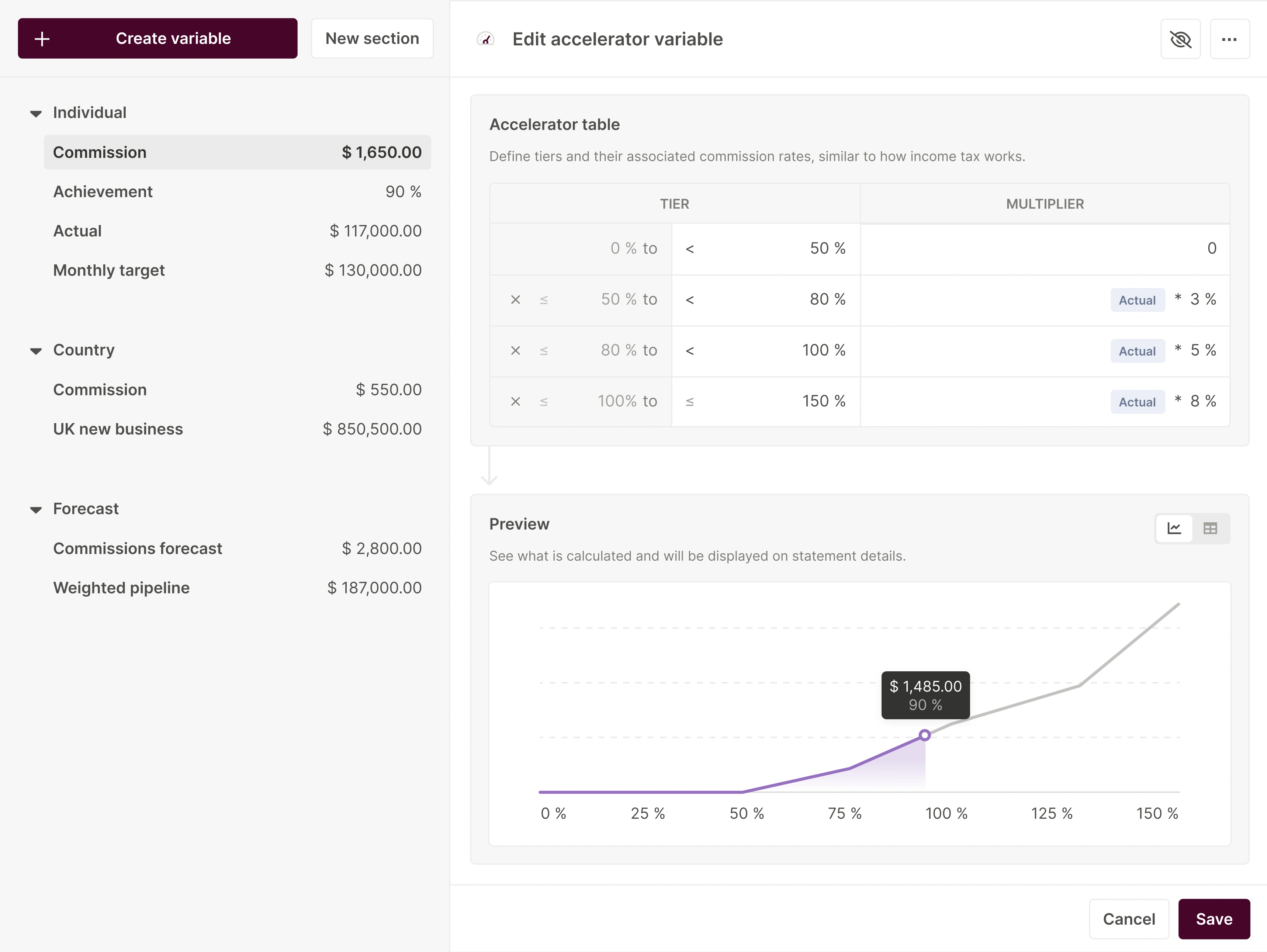
Solution: The most effective way to mitigate this risk is to automate the process. A dedicated commission management platform like Qobra eliminates manual data entry and complex formula building. By connecting directly to your CRM (like Salesforce or HubSpot), it pulls sales data automatically and applies the pre-defined override rules in real-time. This reduces calculation errors by over 95% and frees up hours of administrative work for your Finance and Sales Ops teams.
High Costs and Lack of Visibility
Adding overrides on top of standard commissions increases payroll expenses. Without proper tracking, these costs can become difficult to forecast and manage, potentially impacting profitability. Managers and reps may also lack clarity on how their earnings are calculated, leading to frustration.
Solution: Transparency is key. A platform that provides real-time commission tracking gives everyone visibility. Managers can see their projected override based on the team's current performance, while reps can see their own earnings. For finance teams, these tools offer powerful forecasting capabilities, allowing them to accurately budget for commission expenses and model the financial impact of different plan adjustments.
Warning: Avoid Vague Commission Rules
Ambiguity is the enemy of a successful commission plan. Vague terms like "manager's discretion" or unclear rules for split deals can cause conflict and distrust. Ensure your commission plan is documented in a clear commission statement or agreement. Every rule, percentage, and condition should be defined explicitly to prevent disputes and ensure fairness.
Potential for Conflict or "Coasting"
In some cases, managers might focus all their attention on a few top performers who generate the bulk of their override, neglecting the rest of the team. Conversely, a manager might become too reliant on their team's performance and reduce their personal sales contributions.
Solution: A well-balanced compensation plan is the answer. Consider a hybrid model where managers still have a small personal sales quota or earn a bonus for hitting certain team development KPIs, such as getting a certain percentage of their reps to quota. This ensures they remain engaged in both selling and coaching. The structure should encourage holistic team improvement, not just reliance on a few stars. Avoiding common sales commission mistakes during the design phase is critical.
Best Practices for Implementing Overriding Commissions
To maximize the benefits and minimize the challenges, follow these best practices when introducing or refining your override program:
- Define Clear and Simple Rules: The plan should be easy for everyone to understand. Document the override percentages, the basis for calculation (revenue, profit, etc.), payment schedules, and rules for handling special cases like returns or split commissions.
- Ensure Full Transparency: Use tools that give managers and their teams real-time visibility into performance and earnings. When reps see how their efforts contribute to the team's success (and their manager's earnings), it strengthens alignment and motivation.
- Automate with the Right Tools: Move away from spreadsheets. Adopting a no-code commission automation platform like Qobra allows you to build, manage, and adapt complex override structures without relying on developers or external consultants. It ensures accuracy, provides a complete audit trail, and scales as your business grows.
- Communicate Effectively: When rolling out a new plan, explain the "why" behind it. Show managers how it benefits them and the team, and provide clear examples. Open communication builds trust and ensures buy-in.
- Review and Adapt Regularly: Business goals change, and your commission plan should evolve with them. Review the effectiveness of your override structure at least annually to ensure it's still driving the desired behaviors and delivering a positive ROI.
An override system is more than just a payment; it's a strategic framework for building a high-performing, collaborative, and scalable sales organization. When implemented thoughtfully and supported by modern tools, it empowers your managers to become true force multipliers, driving sustainable growth for the entire business.
Overrides stack a second calculation on top of the rep's own, on the same deals — the reason manual override tracking drifts within a quarter. A sales commission software applies both layers to the same deal record, so manager and rep read the same number.
Frequently Asked Questions (FAQ)
Who is eligible for an overriding commission?
Typically, anyone in a sales leadership role who is responsible for the performance of a team is eligible. This includes Sales Managers, Regional Directors, VPs of Sales, and in some industries like real estate or insurance, Managing Brokers or Agency Heads. The key criterion is direct responsibility for a team's sales results.
What is the difference between an override commission and a bonus?
The primary difference lies in how they are calculated and their purpose. An overriding commission is an ongoing payment calculated as a direct percentage of a team's sales, paid out regularly (e.g., monthly). A bonus is typically a lump-sum payment awarded for achieving a specific, often one-time, milestone (e.g., exceeding the annual team quota, winning a contest). Overrides are designed to reward consistent team management, while bonuses reward the achievement of specific, pre-defined goals. You can explore the distinction between bonuses and commissions in more detail.
How can a tool like Qobra simplify the management of overriding commissions?
Managing overrides manually is fraught with challenges. Qobra simplifies this entire process by:
- Automating Calculations: It connects directly to your CRM to pull accurate sales data and automatically calculates complex overrides, including tiered structures, in real-time.
- Providing Full Transparency: It gives managers and their teams dedicated dashboards to track performance and see current and projected earnings, eliminating disputes and building trust.
- Offering Flexibility: With its no-code editor, Sales Ops or Finance teams can easily build and modify any override rule without needing technical skills, allowing the plan to adapt quickly to changing business needs.
- Saving Time and Reducing Errors: By automating the process, Qobra saves dozens of hours per month in administrative work and virtually eliminates costly calculation errors.