Webinar (Wednesday, October 21) — Aligning HR, Finance, and Sales: Mastering Sales Comp Without Breaking Your Plan
Register
- A performance incentive plan links measurable rewards to outcomes—motivating behavior, aligning employee efforts with company strategy, and encouraging continuous improvement.
- Differentiate Short‑Term Incentives (STI) for immediate goals (commissions, annual bonuses, SPIFs) from Long‑Term Incentives (LTI) for multi‑year value creation (stock options, RSUs, performance shares) and use both complementarily.
- Design methodically: set SMART strategic objectives, select role‑influencable KPIs, and define payout rules (thresholds, tiers/accelerators, caps, prorata, and clawbacks) so expectations are unambiguous.
- Operationalize with automation and transparency—integrate with CRM, automate calculations, provide real‑time dashboards, and communicate clearly to build trust and reduce disputes.
- Mitigate risks and maintain relevance: balance individual vs team rewards, incentivize quality not just volume, account for tax/legal constraints, and review/adapt the plan regularly.
How do top-performing organizations consistently keep their teams engaged and driven? The answer often lies in a well-structured performance incentive plan—a system that creates a direct, tangible link between individual efforts and company success. When extra effort translates into clear rewards rather than just simple recognition, motivation soars.
For business leaders, sales operations, finance, and HR teams looking to optimize their compensation strategies, understanding these plans is non-negotiable. In a competitive market, they are a critical tool for boosting performance, satisfaction, and retention. Whether monetary or non-monetary, the right incentives align ambitions, reward achievement, and accelerate growth. Ready to explore the mechanics of performance incentive plans and design one that perfectly fits your company's culture and goals?
What Exactly is a Performance Incentive Plan?
A performance incentive plan is a structured compensation strategy designed to reward employees beyond their base salary. Also known as an incentive compensation plan, it directly links rewards to performance, motivating individuals or teams to achieve specific, measurable objectives. Unlike a fixed salary, these plans offer tangible benefits based on clear outcomes.
A successful plan is built on several key principles:
- Stimulating Motivation: It forges a clear connection between tangible achievements and rewards.
- Strategic Alignment: It aligns employee efforts with the company's overarching strategic goals, ensuring individual contributions have a greater impact.
- Fostering Improvement: Through regular evaluation and performance-based rewards, it encourages continuous growth and innovation.
These plans can take many forms, from cash bonuses and profit-sharing to stock options or even innovative perks like extra paid time off (PTO) and company-sponsored trips. This flexibility allows organizations to tailor rewards to specific roles, company culture, and industry dynamics, moving beyond a one-size-fits-all approach.
Types of Performance Incentive Plans: Short-Term vs. Long-Term
Incentive plans vary based on their timeframe, target audience (individual or team), and reward structure. Choosing the right mix is essential for aligning with your business objectives.
Short-Term Incentives (STI)
STIs are designed to reward performance over a shorter period, typically a year or less. They provide immediate motivation and are tied to operational goals.
- Individual Incentives: These reward personal achievements and are highly effective in roles where individual performance directly impacts business success.
- Performance Bonuses: Periodic cash rewards based on pre-defined targets or Key Performance Indicators (KPIs).
- Commissions: Common in sales, where earnings are a percentage of the revenue generated from deals closed.
- Spot Bonuses: Immediate, one-off rewards for exceptional work on a specific task or project.
- Referral Bonuses: Compensation for employees who successfully recommend new hires.
- Team-Based Incentives: These are designed to reward collective effort, encouraging collaboration and alignment toward a common goal.
- Group Bonuses: A bonus pool distributed among team members when a collective target is met.
- Profit Sharing: A system where employees receive a portion of the company's profits.
- Gainsharing: Rewards are based on improvements in operational efficiency or cost savings generated by the team.
- Team Recognition: Non-monetary rewards like team outings, dinners, or awards that celebrate collective success.
What is a SPIF?
A Sales Performance Incentive Fund (SPIF) is a specific type of short-term, tactical incentive. It is often used to motivate sales teams to hit a specific, immediate goal, such as pushing a new product or clearing out inventory. Rewards are typically cash, gift cards, or prizes offered outside the regular commission structure.
Long-Term Incentives (LTI)
Long-Term Incentive (LTI) plans reward employees over a multi-year horizon, usually between three and five years. Once reserved for senior executives, they are now increasingly offered to key managers and strategic talent to foster loyalty and a focus on sustainable growth.
Unlike annual bonuses, LTIs are designed to:
- Align long-term interests: They connect the beneficiaries' financial success with the company's long-term value creation.
- Drive sustainable performance: They encourage decisions that benefit the company over the medium and long term, discouraging a short-sighted focus on quarterly results.
- Act as a powerful retention tool: By conditioning the vesting of rewards on continued employment, LTIs help secure critical talent.
Common forms of LTIs include:
- Stock Options: The right to purchase company stock at a predetermined price in the future.
- Restricted Stock Units (RSUs): A promise to grant company shares at a future date, contingent on meeting certain conditions (e.g., length of service).
- Performance Shares: Shares awarded only if specific long-term company performance goals, such as targets for Annual Recurring Revenue (ARR) or profit margin, are met.
In a balanced compensation strategy, STIs and LTIs are complementary. STIs drive immediate results and operational excellence, while LTIs ensure those results contribute to durable, long-term value.
How to Design an Effective Performance Incentive Plan
A successful incentive program is more than just a list of rewards; it is a carefully designed system. Here is a step-by-step guide to building one that works.
1. Define Clear Strategic Objectives
Before choosing metrics, define what you want to achieve. What specific behaviors or outcomes do you want to encourage? Your goals should be SMART: Specific, Measurable, Achievable, Relevant, and Time-bound.
Examples of strategic objectives:
- Increase new business acquisition by 20% in the next fiscal year.
- Improve customer retention by boosting the Net Revenue Retention (NRR) rate to 110%.
- Enhance profitability by increasing the average deal margin by 5%.
- Reduce the customer churn rate to under 8% annually.
2. Select the Right Performance Metrics (KPIs)
Your KPIs are the bridge between daily activities and your strategic objectives. They must be directly influenced by the employee or team and easy to track.
| Role | Strategic Objective | Example KPIs |
|---|---|---|
| Sales Development Rep (SDR) | Generate more qualified pipeline | Number of meetings booked, SQLs generated |
| Account Executive (AE) | Increase new business revenue | New ARR closed, contract value, product mix |
| Account Manager (AM) | Drive expansion and retention | Upsell/cross-sell ARR, NRR, renewal rate |
| Marketing Team | Improve lead quality | Marketing Qualified Leads (MQLs), MQL-to-SQL conversion rate |
3. Structure the Payout Mechanism
This is the "how" of your plan. You need to define the rules for earning rewards clearly.
- Threshold: The minimum level of performance required to earn any incentive. For example, a salesperson might need to hit 80% of their quota to qualify for a commission.
- Tiers & Accelerators: Payout rates that increase as performance improves. This motivates top performers to exceed their goals. For instance, the commission rate could be 5% up to 100% of quota, and 8% on every dollar earned above the quota.
- Cap: A maximum limit on incentive earnings. Caps can help with financial forecasting, but may demotivate top performers once they are reached.
- Clawbacks: Provisions that allow the company to reclaim incentive payouts under certain circumstances, such as in cases of misconduct or financial restatements. It is important to understand the regulations surrounding clawback clauses.
Keep it Simple and Transparent
If your employees cannot explain their incentive plan to a colleague in under two minutes, it is too complicated. Complexity breeds confusion and distrust, undermining the plan's motivational power. The goal is to inspire action, not create an administrative puzzle.
4. Automate and Communicate for Maximum Impact
The most brilliant plan will fail if it is managed poorly. Manual tracking in spreadsheets is prone to errors, creates disputes, and consumes countless hours for your Ops and Finance teams. This is where automation becomes a game-changer.
Platforms like Qobra eliminate these challenges by:
- Integrating directly with your CRM (like Salesforce or HubSpot) to pull accurate, real-time data.
- Automating complex calculations instantly, removing the risk of human error.
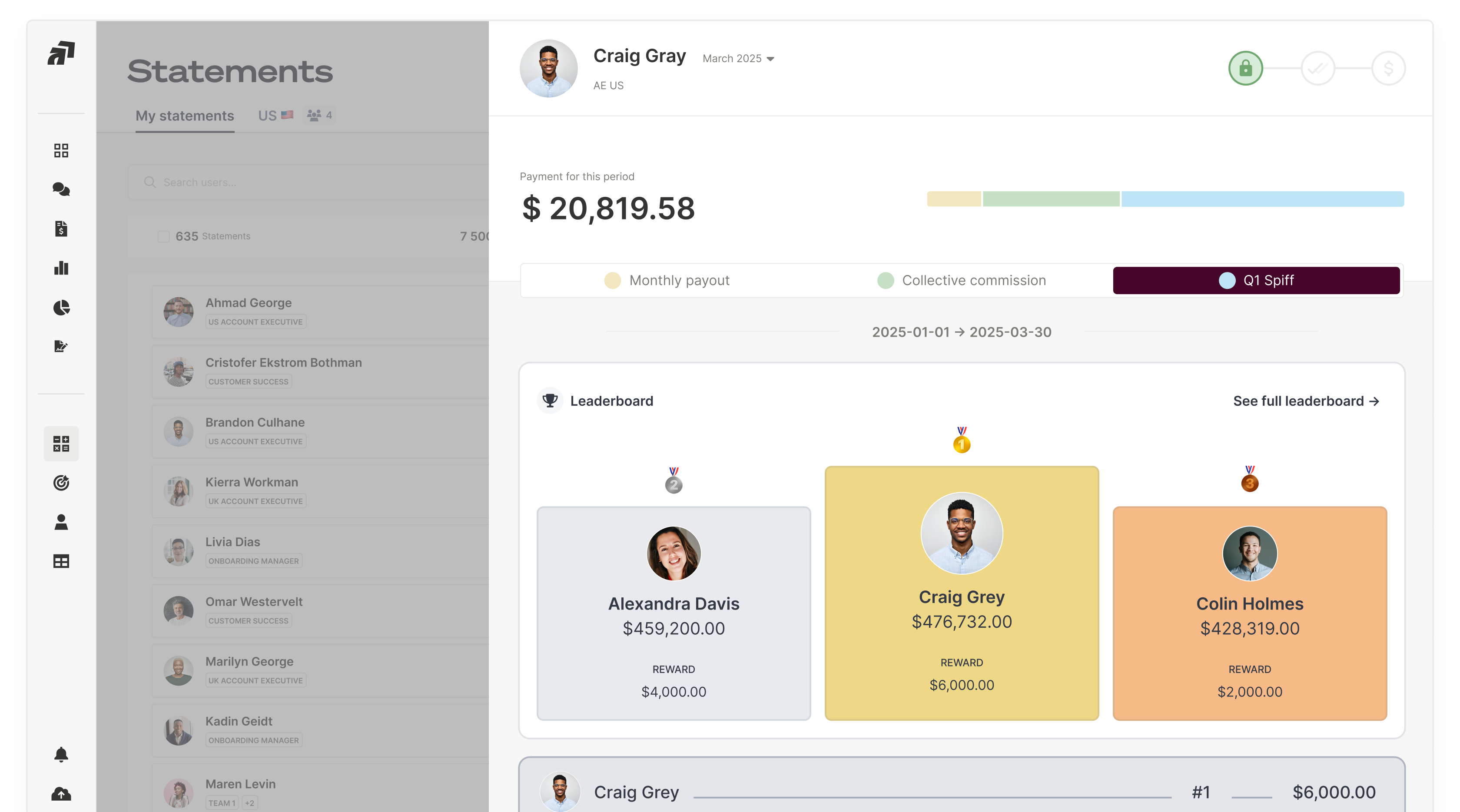
- Providing transparent dashboards where employees can see their current performance, track progress toward goals, and forecast potential earnings.
This level of transparency builds trust and turns the incentive plan into a real-time motivational tool. Instead of waiting weeks for a confusing spreadsheet, your team sees the direct impact of their work every day.
Avoiding Common Pitfalls
Even with the best intentions, incentive plans can have unintended consequences. Be mindful of these common traps.
- Fostering Unhealthy Competition: Overly individualistic plans can discourage collaboration. Balance individual incentives with team-based rewards to promote a cooperative culture.
- Rewarding the Wrong Behaviors: If you only incentivize deal volume, you might see a drop in deal quality or profitability. Ensure your KPIs reflect both quantity and quality.
- Setting Unrealistic Goals: Goals that are perceived as unattainable will demotivate employees from the start. Use historical data and market benchmarks to set challenging yet achievable performance goals.
- Ignoring Tax and Legal Implications: In most jurisdictions, performance incentives are considered taxable income. Consult with legal and finance experts to ensure your plan is compliant and that employees understand the tax implications.
The Danger of a "Set It and Forget It" Mindset
The market changes, your strategy evolves, and your team grows. Your incentive plan must adapt as well. Review your plan at least annually—or even quarterly—to ensure it remains aligned with your business objectives and continues to motivate the right behaviors. Do not be afraid to adjust KPIs, thresholds, or rewards based on performance data and team feedback.
A well-crafted performance incentive plan is one of the most powerful strategic levers a company can pull. It aligns individual ambition with corporate strategy, transforms compensation from a cost into an investment, and creates a culture where high performance is consistently recognized and rewarded. By defining clear objectives, choosing the right metrics, and leveraging technology to ensure transparency and accuracy, you can build a program that not only boosts results but also attracts and retains the talent you need to win.

Short-term and long-term incentives rarely live in the same system, which is how a rep ends up with three partial views of their own pay. Incentive compensation management software consolidates them into one statement.
Frequently Asked Questions
What is the difference between a bonus and an incentive?
While often used interchangeably, a bonus is typically discretionary and often backward-looking, awarded for past performance (for example, an annual holiday bonus). An incentive is part of a formal, forward-looking plan where rewards are tied to achieving specific, pre-defined future goals.
Are performance incentives taxable?
Yes, in most countries, performance incentives—whether cash, stock, or gift cards—are considered supplemental wages and are subject to income and payroll taxes, just like a regular salary. The exact tax treatment can vary, so it is best to consult with a tax professional.
How often should we review our performance incentive plan?
It is a best practice to review your incentive plan at least annually. However, if your company is in a fast-changing industry or undergoing significant strategic shifts, a quarterly or semi-annual review may be necessary to ensure the plan remains relevant and effective.
What is the difference between a Short-Term Incentive (STI) and a Long-Term Incentive (LTI)?
The primary difference is the performance period. STIs, like annual bonuses or commissions, reward performance over a short period (typically one year or less). LTIs, such as stock options or performance shares, are designed to reward performance over multiple years (usually 3-5 years) to encourage long-term value creation and retain key employees.