Webinar: The Biggest Release Sales Comp Has Ever Seen. Come See For Yourself (Wednesday, October 7)
Register
- A pay plan is the formal compensation framework that defines how employees are paid—covering rules, salary and variable pay—and varies by context (public classification vs. private incentive system).
- In the public sector (e.g., OPM), pay plans are administrative codes and grade/step systems used for classification, equity, compliance and workforce data reporting.
- In the private sector a pay plan is a strategic lever that combines base salary, variable pay (commissions/bonuses), KPIs and payout rules to align employee behavior with business goals.
- Common types include salary-only, commission-only, salary-plus-commission (pay mix / OTE), tiered/accelerator structures and bonus-based (MBO) plans—each suited to different roles and sales cycles.
- Design best practices: start from business objectives, choose 1–3 KPIs, set pay mix and realistic quotas, define clear mechanics and payout cadence, communicate transparently, automate calculations and review the plan at least annually.
Ever wondered what truly dictates your paycheck beyond a simple hourly rate or annual salary? The answer often lies within a "pay plan," a term that carries different meanings but always points to the foundational structure of compensation. Whether you are a federal employee, a sales executive, or an HR manager, understanding the mechanics of a pay plan is crucial for navigating your career or steering your company toward its goals.
What is a Pay Plan? A Comprehensive Definition
A pay plan, also known as a compensation structure or system, is the formal framework an organization uses to determine how its employees are paid. It goes beyond a single salary figure to encompass a set of rules, policies, and components that dictate total cash compensation. Its primary purpose is to create a clear, equitable, and strategic approach to remuneration.
However, the specific meaning of "pay plan" can vary significantly depending on the context:
- In the public sector, particularly within government agencies, a pay plan is often an administrative code that classifies jobs into a rigid system of grades and steps. This ensures standardization and compliance with legal pay authorities.
- In the private sector, especially in performance-driven roles like sales, a pay plan is a dynamic tool designed to motivate employees and align their actions with business objectives. It typically combines a fixed salary with variable elements like commissions and bonuses.
These two interpretations, while different, both center on creating a structured and predictable system for employee payment.
The Role of Pay Plans in the Public Sector: The OPM Example
For large governmental bodies like the U.S. Federal Government, pay plans are essential for managing a vast and diverse workforce in a standardized way. The U.S. Office of Personnel Management (OPM) defines a pay plan as a two-digit alphabetical code used to identify a specific Federal civilian pay system.
This system is not primarily about motivation but about classification, equity, and data management. Pay plan codes are used to identify crucial information about an employee's position and the authority governing their pay. For example, a code can indicate whether an employee is:
- A white-collar or blue-collar worker.
- In an executive or staff-level position.
- Part of a government-wide pay system or one unique to a specific agency.
- A member of a specific occupational group, such as a law enforcement officer or a judge.
These codes are vital for statistical reporting and are used in major federal HR systems.
Examples of OPM Pay Plan Codes
The most well-known pay system is the General Schedule (GS), which covers the majority of civilian white-collar Federal employees. However, many other codes exist for different roles and agencies.
| Pay Plan Code | Description |
|---|---|
| GS | General Schedule: The main pay system for most white-collar federal employees. |
| GM | General Schedule (Supervisory): For managers and supervisors previously under the PMRS system. |
| GL | General Schedule (Law Enforcement): Covers law enforcement officers who receive special base rates. |
| WG | Wage Grade: Part of the Federal Wage System for blue-collar, trade, and craft employees. |
| ES | Senior Executive Service: Covers high-level executives who manage programs at the top of agencies. |
| AL | Administrative Law Judge: For judges who preside over administrative hearings. |
| EX | Executive Schedule: For top presidential appointees, including cabinet secretaries. |
| SV | Transportation Security Administration: A unique pay band system for TSA employees. |
This structured approach ensures consistency and transparency across hundreds of thousands of federal jobs.
Pay Plans in the Private Sector: Driving Business Performance
In the private sector, the conversation around pay plans shifts from administrative classification to strategic motivation. Here, a pay plan is a critical tool for driving behavior, achieving sales targets, and aligning individual performance with overarching company goals. This is especially true for sales teams, where compensation is directly tied to results.
A well-designed private sector pay plan acts as a powerful incentive. It clearly communicates which activities are most valued by the company and rewards employees for focusing on them. For instance, a plan might be structured to encourage closing larger deals, acquiring new logos, or improving customer retention.
The core components of a modern compensation plan include:
- Base Salary: A fixed, guaranteed portion of pay, providing financial stability.
- Variable Pay: The performance-based element, such as commissions or bonuses, that fluctuates based on achievement.
- Performance Metrics (KPIs): The specific, measurable criteria used to calculate variable pay (e.g., revenue generated, units sold, profit margin).
- Payout Rules: The detailed mechanics governing how and when variable pay is earned and distributed, including thresholds, accelerators, and payment frequency.
In a contact center, for example, an agent's pay plan might be based on metrics like sales conversions, first-contact resolution rates, or customer satisfaction scores (CSAT). This ensures that agents are not just handling calls quickly, but are also focused on quality and business outcomes.
Common Types of Pay Plans
Private sector pay plans come in various forms, each suited to different roles, industries, and company strategies. Choosing the right structure is essential for success.
Salary-Only Plan
This is the most straightforward model, offering employees a fixed, predetermined salary with no variable component.
- Best for: Roles where individual performance is difficult to measure or not directly tied to revenue, such as administrative staff, technical support, or product development.
- Pros: Predictable for both the employee and employer. Simple to administer.
- Cons: Provides little direct incentive for exceeding expectations.
Commission-Only Plan
At the opposite end of the spectrum, this plan offers no base salary. Compensation is 100% tied to performance.
- Best for: Highly autonomous roles like independent contractors or industries with very short sales cycles and high earning potential.
- Pros: Maximizes motivation for high-performers and minimizes fixed costs for the company.
- Cons: High-risk for employees, leading to high turnover. Can encourage aggressive, short-sighted sales tactics.
Salary Plus Commission Plan
This hybrid model is the most common structure for sales roles. It combines the stability of a base salary with the motivation of performance-based commissions. The balance between the two—known as the pay mix—can be adjusted to suit the company's goals. For example, a 60/40 mix (60% base, 40% variable) is common for roles with longer, more complex sales cycles.
Tiered Commission Plan
This is a variation of the salary-plus-commission model designed to reward over-performance. The commission rate increases as the salesperson reaches higher levels of attainment against their quota.
| Quota Attainment | Commission Rate |
|---|---|
| 0% - 79% | 8% |
| 80% - 99% | 10% |
| 100% - 119% | 12% (Accelerator) |
| 120%+ | 15% (Super Accelerator) |
This structure strongly incentivizes representatives to not just meet their goals, but to significantly exceed them. You can explore a variety of sales commission structures to find the best fit for your team.
Bonus-Based Plan
Instead of a percentage-based commission on every sale, this plan rewards employees with lump-sum bonuses for achieving specific objectives (Management by Objectives, or MBOs). These goals can be quantitative (e.g., "Generate $500,000 in new business this quarter") or qualitative (e.g., "Successfully implement a new CRM tool").
Expert Tip: Align Your Plan with Your Strategy
The most effective pay plan is one that directly reflects your company's strategic priorities. If your goal is to expand into a new market, structure your plan to reward new logo acquisition. If you are focused on profitability, tie commissions to gross margin instead of just top-line revenue. The plan should be a clear roadmap telling your team exactly what success looks like.
How to Design an Effective Pay Plan: A Step-by-Step Guide
Creating a pay plan that is fair, motivating, and effective requires careful thought and planning. Simply copying a template is rarely successful. Follow these steps to build a structure tailored to your organization.
- Define Business Objectives: Start with the big picture. What are the company's primary goals for the next year? Are you trying to increase market share, launch a new product, or improve customer retention? Your pay plan must support these objectives.
- Identify Key Performance Indicators (KPIs): Select the metrics that will drive your objectives. For a sales team, this could be Annual Recurring Revenue (ARR), number of new customers, or customer lifetime value. Keep the number of KPIs limited (1-3 is ideal) to maintain focus.
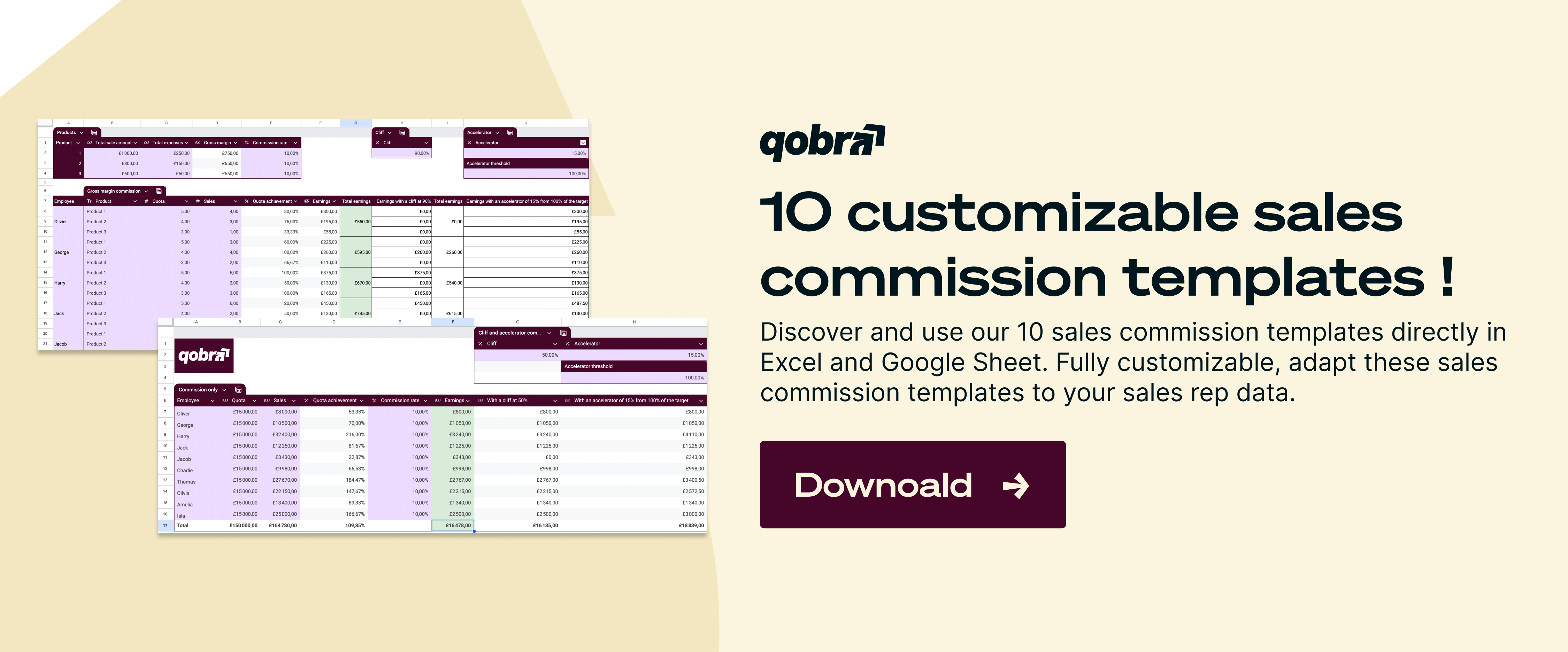
- Determine the Pay Mix and On-Target Earnings (OTE): OTE represents the total potential earnings if a representative hits 100% of their target. You must then decide the pay mix—the ratio of base salary to variable pay. A role with a long, strategic sales cycle may have a 70/30 mix, while a high-velocity transactional role might be closer to 50/50. Learn more about how to calculate OTE.
- Set Fair and Attainable Quotas: A quota should be a challenging but realistic goal. Research shows that around 60-70% of a sales team should be able to achieve their quota for a plan to be considered effective. Setting unattainable quotas is one of the fastest ways to demotivate a team.
- Structure the Mechanics: Define the specific rules. Will you include commission accelerators for over-performance? Will there be a cap on earnings? What is the payout frequency (monthly, quarterly)? This is the core logic of your plan.
- Communicate and Document Clearly: A plan is useless if it is not understood. Provide every employee with a formal compensation plan document that clearly explains every component, including examples of how commissions are calculated. Transparency builds trust.
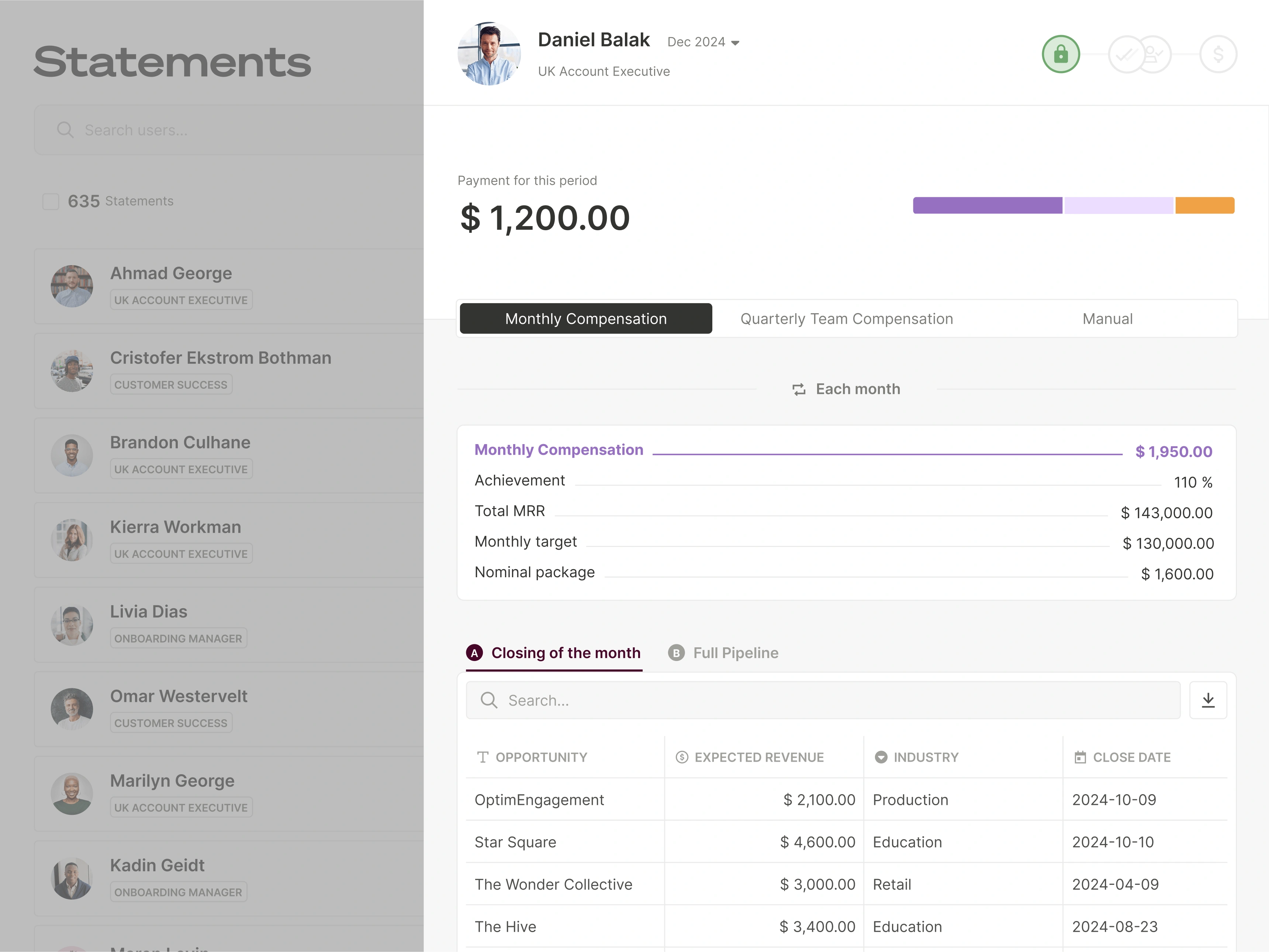
- Automate and Manage Efficiently: Manually managing commissions on spreadsheets is a recipe for disaster. It is time-consuming, prone to costly errors, and lacks transparency. Implementing a commission automation platform like Qobra eliminates these issues. With a no-code rule editor, direct CRM integration, and real-time dashboards for representatives, Qobra ensures your plan is calculated accurately and serves as a powerful motivational tool rather than a source of frustration. This frees up your RevOps and Finance teams to focus on strategy instead of tedious calculations. Discover how to automate your calculations.
Note: Review and Adapt Regularly
A pay plan is not a "set it and forget it" document. Business priorities change, markets shift, and products evolve. You should review your compensation plans at least once a year to ensure they are still aligned with your company’s goals and remain competitive in the market. Be prepared to make adjustments to keep your team motivated and focused on the right activities.
Pay Plan vs. Salary vs. Total Compensation: Clearing the Confusion
These terms are often used interchangeably, but they have distinct meanings. Understanding the difference is key for both employers and employees.
| Term | Definition | Example |
|---|---|---|
| Salary | A fixed amount of money paid to an employee on a regular schedule (e.g., annually). It is one component of a pay plan. | $60,000 per year. |
| Pay Plan | The complete structure and rules governing how an employee's total cash compensation (fixed + variable) is calculated and paid. | A base salary of $60,000 plus a 10% commission on all revenue generated. |
| Total Compensation | The broadest term, encompassing the pay plan (salary + variable pay) PLUS all non-cash benefits and perks. | $110,000 OTE + health insurance, retirement plan, and stock options. |
Ultimately, a pay plan is much more than a number on a paycheck. In the public sector, it is a pillar of administrative order and equity. In the private sector, it is a strategic lever for growth, a powerful communication tool, and a critical factor in attracting and retaining top talent. By designing a plan that is clear, fair, and aligned with core business objectives—and by managing it with modern tools that ensure accuracy and transparency—organizations can transform compensation from a simple expense into a strategic investment in their success.
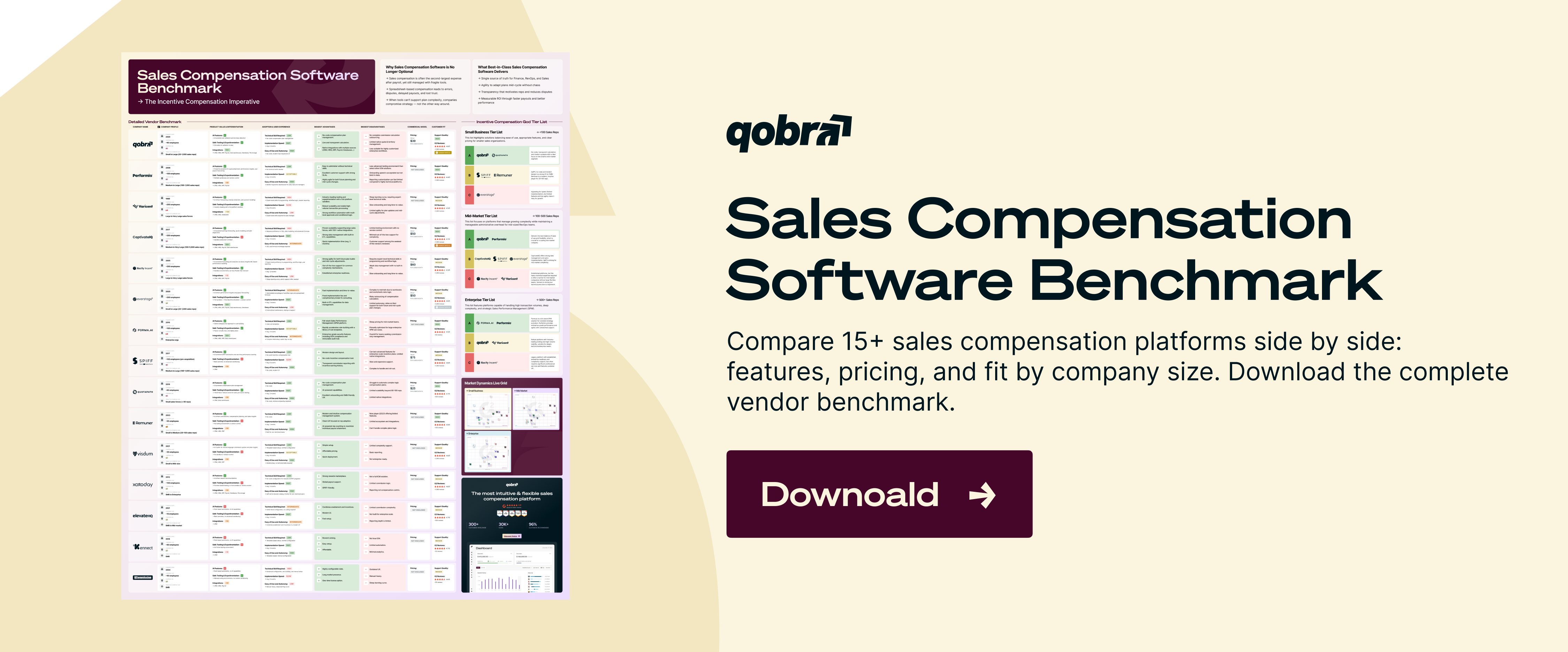
In the private sector, a pay plan is reviewed annually but executed every payroll cycle, and the variable part is where the work concentrates. Qobra's sales compensation platform handles that execution from live CRM data.
Frequently Asked Questions
How does a pay plan work?
A pay plan works by establishing a formal set of rules for employee compensation. In performance-driven roles, it typically combines a stable base salary with a variable component (like commissions or bonuses) that is tied to achieving specific, measurable KPIs. The plan outlines the metrics, payout rates, and frequency of payment, creating a direct link between an employee's performance and their earnings.
Who decides on a pay plan?
Designing a pay plan is typically a collaborative effort. It usually involves input from Sales Leadership (who understand the market and sales process), Finance (who ensure the plan is financially sound and sustainable), and HR or Revenue Operations (who handle the administration and ensure the plan is equitable and compliant).
What makes a good pay plan?
A good pay plan is S.M.A.R.T.:
- Simple: Easy for everyone to understand.
- Motivating: It encourages the desired behaviors and rewards high performance.
- Aligned: It directly supports the company's strategic goals.
- Realistic: The targets and quotas are challenging but achievable.
- Transparent: Calculations are clear, and employees have visibility into their earnings in real-time.
How often should a pay plan be reviewed?
Pay plans should be reviewed at least annually. However, a review may be needed sooner if there is a significant shift in business strategy, a new product launch, a change in market conditions, or if data shows the current plan is not driving the desired results (e.g., very few representatives are hitting their quota).