
Best AI Tools for Sales Commission Management in 2026: The Complete Guide
Compare 8 AI-powered commission platforms for UK teams: what the AI actually does (plan building, simulation, rep Q&A), pricing, integrations.


- Qobra fits collaborative mid-market revenue teams because its three AI agents split the work the way Sales, Finance and RevOps do: The Architect builds commission plans, The Analyst reconciles commission data and flags errors before payroll, and The Sales Coach answers reps' questions, all under one audit log and one approval workflow (qobra.co, Oct 2026).
- Three of the 8 platforms compared state that AI can build a commission plan from a text description: Qobra ("add a SPIFF, remove a threshold, adjust an accelerator", with "Simulate before" publishing), QuotaPath ("no SQL skills required") and Forma.ai (AI configures rules from plain text) (vendor websites, Sept 2026).
- Qobra connects to Salesforce and HubSpot for CRM data and to Snowflake and BigQuery for warehouse data, and the Qobra MCP Server lets teams "orchestrate Qobra's agents directly from your own stack, pull data, trigger actions" (qobra.co, Sept 2026).
- For commission analytics and predictive modelling, vendors state: Qobra, a data-analysis agent (The Analyst) and side-by-side scenarios; CaptivateIQ, AI-generated scenarios; Everstage, "Crystal" forecasting and prebuilt BI dashboards; Forma.ai, unlimited scenarios against last year's data; Xactly, best-case, high-performance and cost-reductive models (vendor websites, Sept 2026).
- Of the 8 platforms compared, only QuotaPath and Spiff (Salesforce) publish list prices; Qobra, CaptivateIQ, Forma.ai, Visdum, Xactly and Everstage are quote-based, and CaptivateIQ adds a one-time setup fee (vendor websites, Sept 2026).
- On G2, Qobra, QuotaPath, Visdum and Everstage are rated 4.8/5, CaptivateIQ 4.7/5, Spiff 4.6/5 and Xactly Incent 4.2/5 (G2, Sept 2026; Qobra: 1,071 reviews, Oct 2026).
In 2026, "AI" in sales commission software means five concrete jobs: drafting or editing a commission plan from a text description, simulating a change on real data before it is published, flagging anomalies before payouts, answering reps' questions about their own pay, and forecasting commission spend. This guide compares what 8 platforms state publicly about those jobs: Qobra, CaptivateIQ, Forma.ai, QuotaPath, Spiff (Salesforce), Visdum, Xactly and Everstage. In every case the approval workflow and the audit trail remain the control layer before the monthly pay run: the AI drafts, people publish.
Sales commission management has historically been one of the most frustrating processes for revenue operations teams. According to a 2024 Qobra x Modjo survey of 1,409 sales professionals in France, 68% of employees are dissatisfied with manual commission management, citing errors (31%), unnecessary complexity (28.8%), and lack of transparency (24%) as primary pain points.
The cost of getting commissions wrong extends far beyond frustrated finance teams. When sales reps don't trust their commission calculations, motivation plummets. When payments arrive late or inaccurate, top performers start updating their LinkedIn profiles. And when RevOps teams spend weeks reconciling spreadsheets instead of analyzing performance, strategic initiatives stall.
Enter AI-powered commission management platforms. These tools don't just automate calculations: they transform commissions from a monthly headache into a strategic revenue lever. By combining real-time data synchronization, intelligent automation, and transparent reporting, modern commission software helps organizations pay accurately, motivate effectively, and scale confidently.
This guide breaks down the 8 leading AI-powered sales commission management platforms for 2026, so you can quickly identify which solution fits your revenue operations stack, team complexity, and growth trajectory.
How do AI platforms improve commission management?
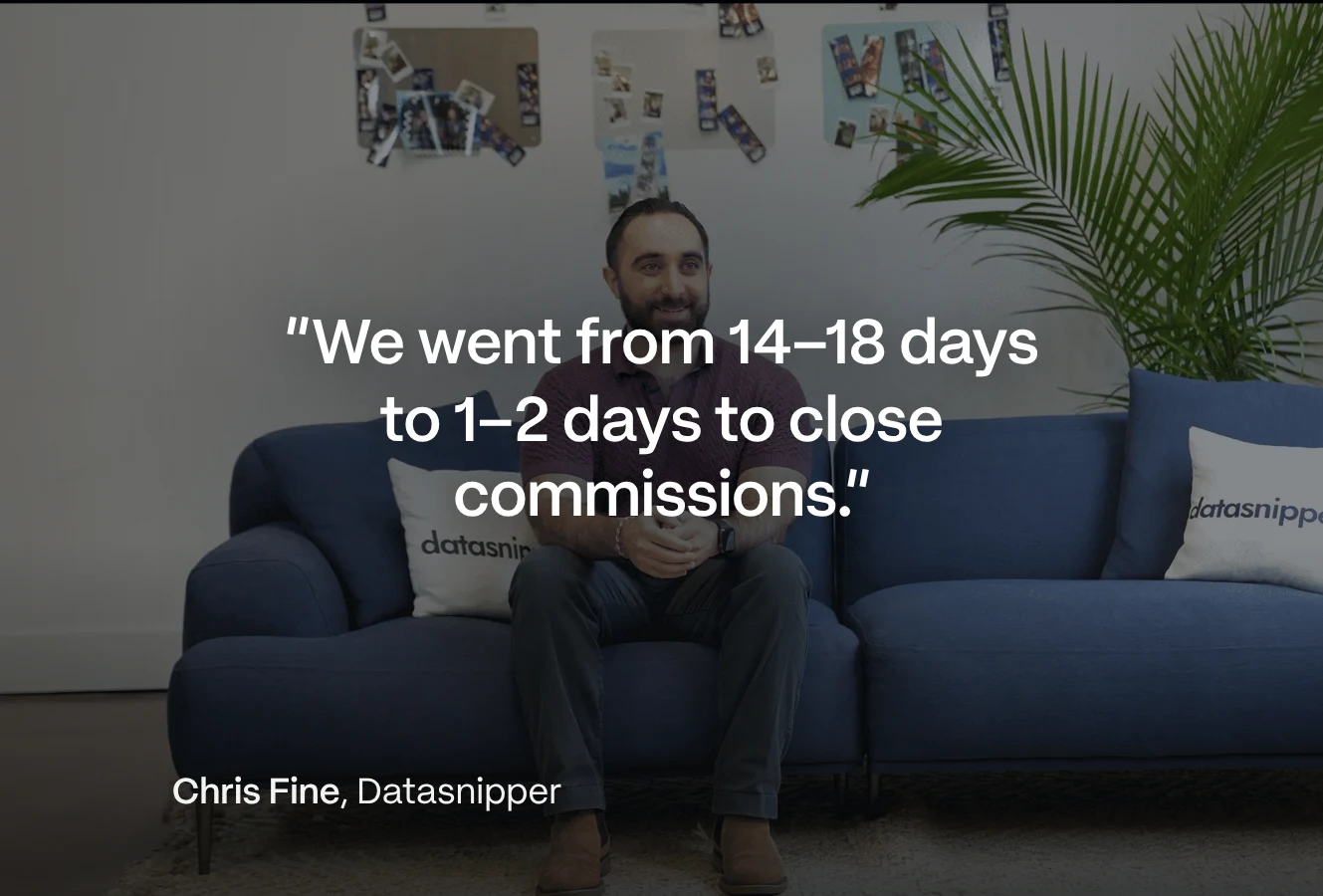
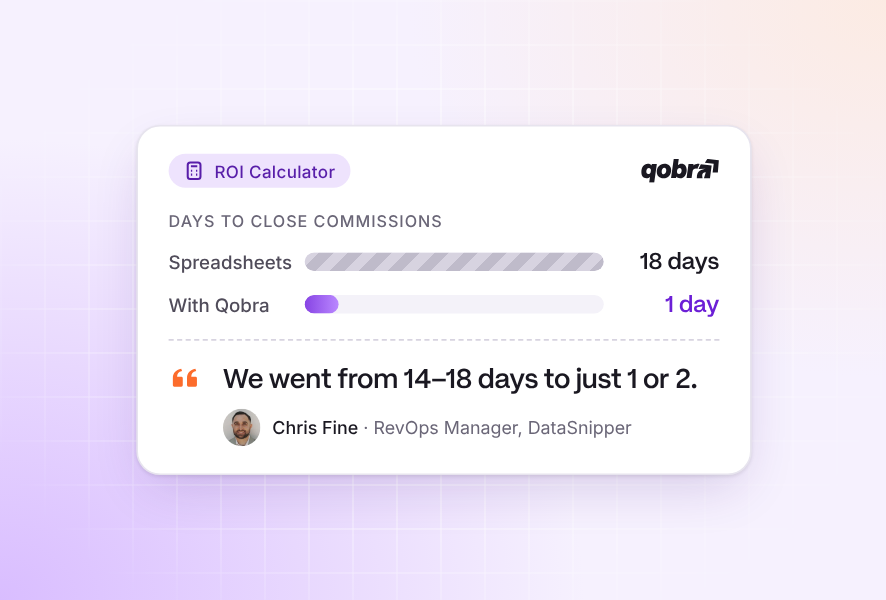
AI platforms improve commission management at four points of the monthly cycle: they draft and simulate plan changes on historical data, reconcile commission data and flag anomalies before payroll, answer reps' pay questions, and forecast commission spend. Qobra states that its agents divide implementation time by three and cut rep questions by 90% (qobra.co/uk/ai-agents-sales-compensation, Oct 2026). Chris Fine, RevOps Manager at DataSnipper (customer quote on qobra.co): "Closings went from 2 weeks to 2 days, we're getting down to 1 day now."
Before diving into specific tools, it's worth understanding why AI has become essential for modern commission management, not just a nice-to-have.
Traditional commission management relies on three broken approaches:
- Manual spreadsheets that crash under complexity, harbor untraceable errors, and require days of reconciliation
- Legacy commission software that demands professional services for every plan change and offers zero flexibility
- Homegrown systems that only one person understands and break when that person goes on vacation
AI-powered platforms solve these problems through:
- Intelligent automation that calculates commissions in real-time as deals close, eliminating month-end scrambles
- Smart data validation that catches errors before payments go out, not after reps complain
- Predictive analytics that show reps their potential earnings based on the current pipeline, driving motivation
- Natural language processing that makes complex plan rules readable for humans, not just Excel experts
- Scenario modeling that lets finance test plan changes before deployment, preventing expensive mistakes
Teams using modern commission platforms report higher productivity and faster deal cycles because reps can see exactly what they'll earn on every opportunity.
One sourced figure exists: in the 2024 Qobra x Modjo survey of 1,409 sales professionals in France, 61.9% of reps using a commission tool exceeded their sales targets, against 30.1% of reps on spreadsheets (Qobra x Modjo study, 2024).
The 8 Best AI Tools for Sales Commission Management
1. Qobra: Best for Collaborative Revenue Teams
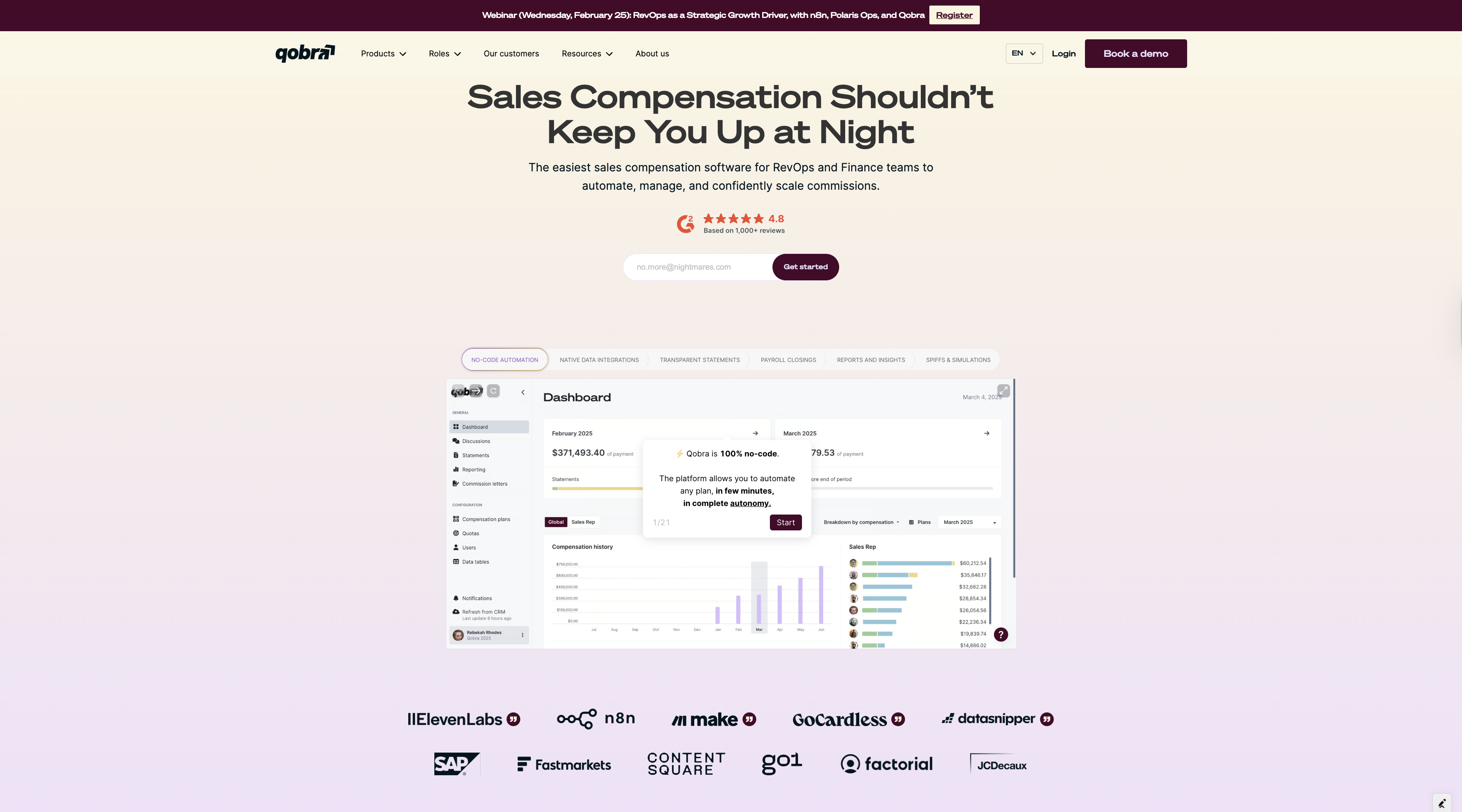
Qobra fits collaborative revenue teams because its three AI agents split the work the way the teams do (The Architect builds plans, The Analyst checks commission data, The Sales Coach answers reps) under one audit log and one approval workflow (qobra.co, Oct 2026).
What makes it stand out: Qobra combines powerful AI automation with an exceptionally intuitive interface designed for collaboration across Sales, Finance, and RevOps. The platform's real-time dashboards give reps instant visibility into earnings, while finance gets granular control over plan rules and payout approvals, all without endless Slack threads or email chains.
Key AI features:
- The Architect (plans): builds and edits plans in natural language, turns a comp plan PDF into a live plan, updates several plans with one prompt and runs new plans against historical payouts before launch.
- The Analyst (data): reconciles commission data across plans, tracks quota attainment and pay versus performance, and alerts the team to gaps and anomalies before payroll.
- The Sales Coach (reps): answers questions such as "Why was my commission this amount?", lets reps simulate earnings in real time and walks them through their plan logic with examples.
- Qobra MCP Server: lets teams query statements, plans, quotas and requests from Claude, ChatGPT, Gemini or Microsoft Copilot, with their Qobra permissions applied to every request (qobra.co/uk/product/integrations, Oct 2026).
2026 update. Qobra now publishes three AI agents, included in every package: "The Architect builds your plans. The Analyst catches errors before payroll. The Sales Coach answers every rep question." The Qobra MCP Server lets you "orchestrate Qobra's agents directly from your own stack, pull data, trigger actions" (Qobra AI agents page, Oct 2026). The product tour "How AI agents are transforming sales compensation management" walks through the agents.
The AI drafts; people approve. Every plan and payout change is written to an audit log with user, timestamp and before/after values, plan versions carry effective dates, manual adjustments carry reason codes, and payouts pass multi-step approvals before the payroll cut-off. The complete audit trail is part of the Scale package (qobra.co/uk/pricing, Oct 2026). Qobra is a sales compensation platform headquartered in New York, with offices in Paris and London (its UK office opened in June 2024), with $1B+ in commissions certified across 350+ companies (qobra.co/uk/about-us, Oct 2026). Implementation takes weeks for a mid-market team. Overview on the sales compensation platform page. To see the agents on your own plan, book a Qobra demo.
What sets Qobra apart: Unlike legacy platforms that require technical expertise, Qobra's no-code approach means your RevOps team can model, test and analyse a plan "in minutes instead of weeks" (qobra.co/uk/pricing, Oct 2026). The platform's collaborative design reduces commission-related disputes, because transparency builds trust. Trusted by high-growth companies like ElevenLabs, n8n, GoCardless, and Contentsquare, Qobra fits teams with 10 or more people on commission plans or bonus schemes, and customers move from Core to Advanced or Scale "without re-implementing anything" (qobra.co/uk/pricing, Oct 2026).
Best for: B2B SaaS and tech companies (Series A through Enterprise) that prioritize user experience, cross-functional collaboration, and rapid deployment.
Pricing: Quote-based, by package (Core, Advanced or Scale) and number of payees, with the AI agents included in every package (qobra.co/uk/pricing, Oct 2026).
Integrations: Native connections to Salesforce, HubSpot, Snowflake, Slack, and modern data stacks. 100+ integrations (CRM, HRIS, ERP, Payroll, Data warehouses, Databases, and File Storage Systems).
Verified on the Qobra integrations page (Sept 2026): CRM Salesforce, HubSpot, Microsoft Dynamics, Zoho, Pipedrive, Odoo; warehouses Snowflake, BigQuery; native HRIS connectors for ADP, Rippling, Gusto, Paylocity, Workday, BambooHR and HiBob; a REST API. Qobra sends approved commission data to payroll through a webhook.
2. CaptivateIQ: Best for Enterprise Flexibility
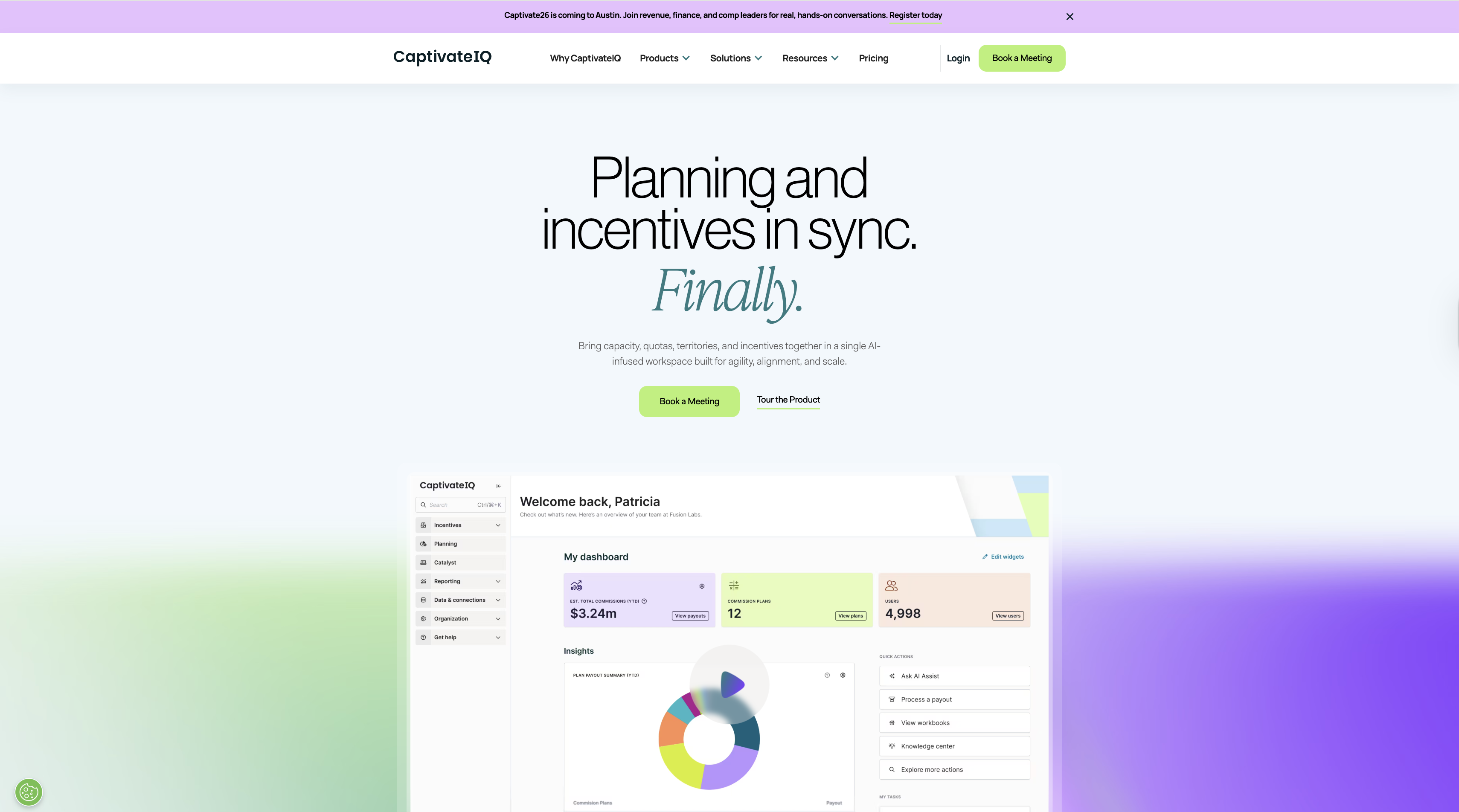
CaptivateIQ fits finance-led teams with complex, frequently changing plans because its SmartGrid modelling states "no code required" and comes with version control, audit trails and AI-generated scenarios in Planning (vendor website, Sept 2026).
What makes it stand out: CaptivateIQ's SmartGrid™ calculation engine handles unlimited complexity while maintaining audit-ready accuracy. Their no-code platform lets RevOps teams build, test, and deploy new commission plans in hours, not months, without relying on IT or professional services.
Key AI features:
- Real-time ELT data modeling that transforms raw CRM data into commission-ready datasets
- Automated anomaly detection that flags calculation errors before payouts
- Smart workflows that route approvals based on plan changes or payment thresholds
Best for: Enterprise organizations ($50M+ revenue) with complex, multi-tier compensation structures across global teams.
Pricing: Quote-based, per seat plus a one-time setup fee; ASC 606 reporting sold as an add-on (vendor website, Sept 2026).
Integrations: Salesforce, HubSpot, NetSuite, Snowflake, PostgreSQL, Workday, and an open API and SFTP for custom integrations (vendor website, Oct 2026).
3. Forma.ai: Best for Full-Stack Sales Performance Management
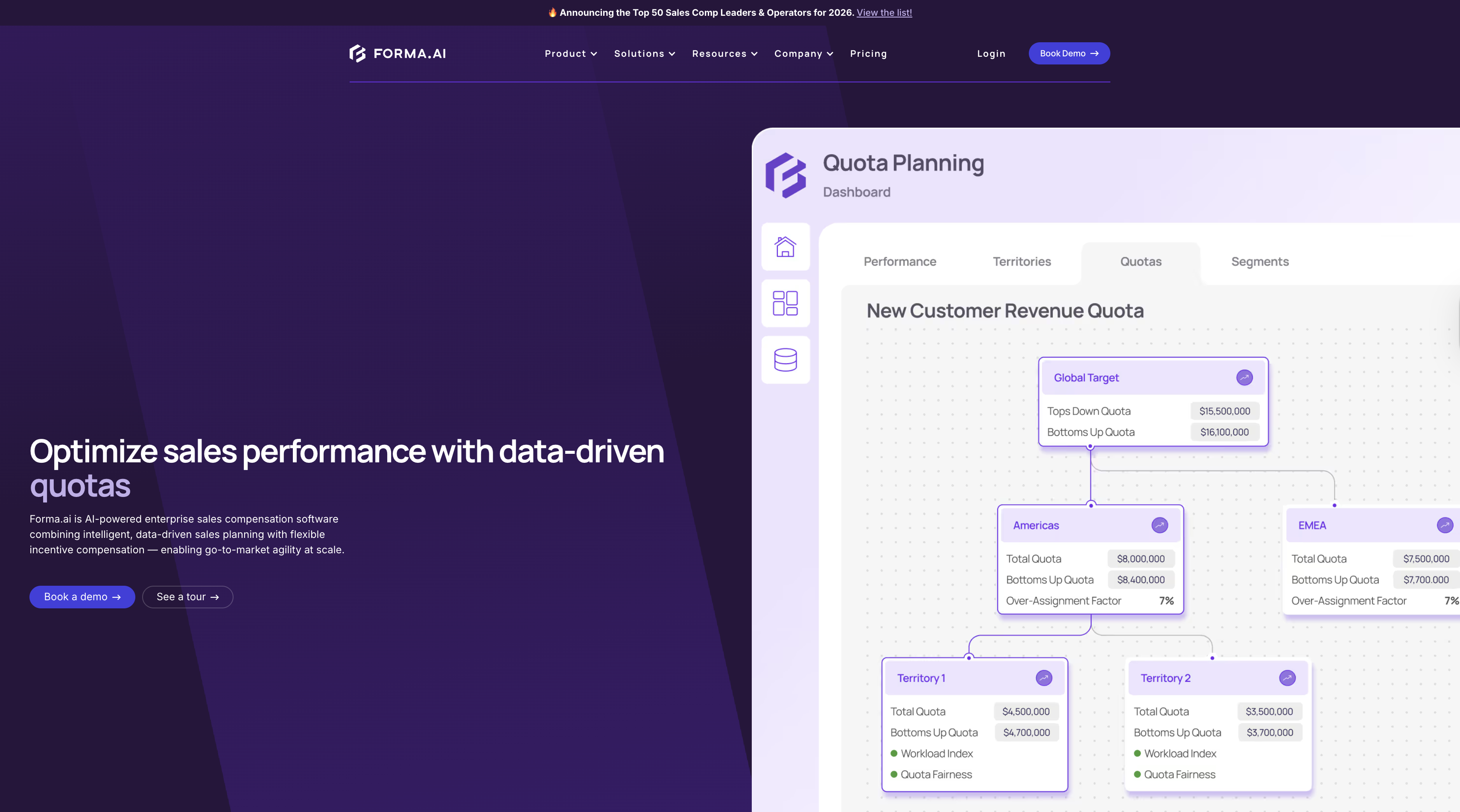
Forma.ai fits enterprise teams that redesign plans often because its AI configures rules from plain text, tests "any idea I have against last year's data" and deploys the modelled change in one click; it is headquartered in Toronto with an office in London (vendor website, Sept 2026).
What makes it stand out: Forma.ai isn't just commission software: it's a complete Sales Performance Management (SPM) platform combining territory planning, quota setting, and incentive compensation. With pre-built integrations, it connects seamlessly to any data source powering your GTM motion.
Key AI features:
- Machine learning models that optimize sales coverage and identify revenue risks
- AI-powered configuration that generates plan templates based on business rules
- Advanced analytics that reveal which compensation structures drive the best performance
Best for: Enterprise GTM organizations needing unified territory, quota, and compensation management.
Pricing: Not disclosed. Quote-based (vendor website, Sept 2026).
Integrations: Salesforce, NetSuite, Workday, Microsoft Dynamics 365, and major data warehouses.
4. QuotaPath: Best for Mid-Market Transparency
QuotaPath fits SMB and mid-market teams on HubSpot or Salesforce because it publishes its prices and its AI builder states "no SQL skills required" (vendor website, Sept 2026).
What makes it stand out: QuotaPath focuses on solving the transparency problem. Their real-time earnings dashboards let reps track commission on every deal, eliminating the "I don't know what I'll be paid until I see my paycheck" frustration that drives turnover.
Key AI features:
- AI-driven plan builder that designs compensation structures based on role requirements (stated on the vendor site as "AI builder, no SQL skills required", Sept 2026)
- Automated payout approvals with intelligent workflow routing
- Commission forecasting that projects earnings based on deal stages
Best for: Mid-market B2B companies ($10M-$100M revenue) that want fast implementation and rep-facing transparency.
Pricing: Growth $35 per user per month plus a $525 monthly platform fee; Premium $50 plus $800; billed annually (US pricing, vendor website, Sept 2026).
Integrations: Salesforce, HubSpot, Zoho, Pipedrive, Close, Copper, and major CRMs.
5. Spiff (Salesforce): Best for Salesforce Ecosystems
Spiff fits Salesforce-centric revenue teams because it is sold as a Sales Cloud add-on at $75 per user per month and other systems need paid connectors at $250 per month each (US pricing, salesforce.com, Sept 2026).
What makes it stand out: Now part of Salesforce, Spiff offers deep native integration with Sales Cloud. Their "spreadsheet-meets-automation" approach makes commission design familiar while delivering enterprise-scale accuracy.
Key AI features:
- Real-time calculation engine that updates commissions as Salesforce data changes
- Intelligent error detection that flags data quality issues before they impact payouts
- Automated compliance tracking for ASC-606 and other regulatory requirements (the vendor states ASC 606 / IFRS 15 expense reports, salesforce.com, Sept 2026)
Best for: Salesforce-heavy organizations that want commission management inside their existing ecosystem.
Pricing: From $75 per user/month (US pricing, billed annually; $250 per month per additional external connector; salesforce.com, Sept 2026)
Integrations: Native Salesforce; limited external CRM support.
6. Visdum: Best for No-Code Flexibility
Visdum fits SaaS teams on ARR or MRR plans because it compensates on those metrics, lists Workday, ADP, Paychex, HiBob and Deel among its HRIS and payroll integrations and cites a 0.65-month average go-live (vendor website, Sept 2026).
What makes it stand out: Visdum's AI-adaptive platform learns from your commission patterns to suggest optimizations. Their no-code designer makes complex plan creation accessible to non-technical users, while real-time data sync ensures calculations always reflect the latest performance.
Key AI features:
- Adaptive AI that identifies commission plan inefficiencies and suggests improvements
- Smart data validation that catches errors across multiple data sources
- Automated reporting that generates executive-ready commission analytics
Best for: Global organizations with diverse regional commission structures.
Pricing: Not disclosed. Quote-based: per-payee subscription plus a one-time setup fee; the vendor states a first-year investment in the low five figures (vendor website, Sept 2026).
Integrations: Salesforce, HubSpot, major ERPs, and data warehouses.
7. Xactly: Best for Enterprise Compliance
Xactly Incent fits large enterprises with global, multi-entity plans because it states a complete audit trail, multi-currency calculation and ASC 606 / IFRS 15 tracking through its Commission Expense Accounting module; its EMEA base is in London (vendor website, Sept 2026).
What makes it stand out: Xactly brings decades of enterprise SPM experience with robust compliance capabilities, extensive audit trails, and support for complex multi-currency, multi-entity structures. Their AI focuses on forecasting and territory optimization at scale.
Key AI features:
- Predictive analytics that forecast commission spend against revenue targets
- Territory optimization algorithms that balance workload and opportunity
- Enterprise-grade audit trails for SOX and regulatory compliance
For UK readers: the nearest UK counterpart to the US requirement named in this list is Provision 29 of the UK Corporate Governance Code 2024. It requires the board of a company applying the Code to give "a declaration of effectiveness of the material controls as at the balance sheet date", for accounting periods beginning on or after 1 January 2026 (frc.org.uk). Other companies answer to their auditors.
Best for: Large enterprises ($500M+ revenue) with strict compliance requirements.
Pricing: Quote-based; Incent Core, Plus and Ultimate packages (vendor website, Sept 2026).
Integrations: Extensive enterprise system support, including SAP, Oracle, Salesforce, and legacy ERPs.
8. Everstage: Best for Strategic Planning
Everstage fits mid-market RevOps teams that want forecasting because its "Crystal" tool projects rep earnings and Planning compares multiple scenarios; its integration list includes HiBob, Personio, BambooHR and Workday on the HRIS side (vendor website, Sept 2026).
What makes it stand out: Everstage goes beyond commission calculations to integrate territory planning, quota management, and capacity modeling. Their "Crystal" what-if tool lets reps see how pipeline deals impact future earnings, turning commissions into a real-time motivational dashboard.
Key AI features:
- Predictive forecasting that connects commission spend to revenue outcomes
- Intelligent territory balancing that identifies coverage gaps
- Automated plan optimization recommendations based on attainment patterns
Best for: RevOps-mature SaaS companies that want commissions tightly linked to strategic planning.
Pricing: Quote-based; licence, support and onboarding itemised; ASC 606 module sold as an add-on (vendor website, Sept 2026).
Integrations: Salesforce, HubSpot, Pipedrive, Freshsales, Snowflake, and major ERPs.
What the AI actually does, vendor by vendor (2026)
The table repeats what each vendor states publicly about its AI, what that changes in a monthly commission run, and which human controls stay in place. Nothing here was tested.
| Platform | AI features stated by the vendor (Sept 2026) | What it changes in the monthly run | Human control (approval, audit) | Pricing (USD, list price) |
|---|---|---|---|---|
| Qobra | Three agents: The Architect for plan building in natural language ("add a SPIFF, remove a threshold, adjust an accelerator") with "Simulate before" publishing, The Analyst for data analysis and alerts before payroll, "The Sales Coach" for reps; Qobra MCP Server for Claude, ChatGPT, Gemini and Microsoft Copilot | Plan changes drafted and simulated; rep questions answered in-app; data reconciled and anomalies flagged before payroll | Audit log (user, timestamp, before/after), plan versions with effective dates, reason codes, multi-step approvals before payroll | Quote-based |
| CaptivateIQ | AI-generated scenarios (Planning); SmartGrid modelling, "no code required"; what-if scenarios on historical data | Scenario comparison during plan design | Version control and audit trails; approvals with segregation of duties | Quote-based, per seat plus setup fee; ASC 606 add-on |
| Forma.ai | AI configures rules from plain text; "apply any idea I have against last year's data"; unlimited scenarios; one-click deploy of a modelled change | Rules set up from a text description; modelled change deployed | Vendor states "complete traceability and auditability" across the ICM process, with multiple levels of data validation (vendor website, Oct 2026) | Quote-based |
| QuotaPath | AI builder, "no SQL skills required"; draft mode on historical data; forecasting by attainment scenario | Plan drafted by the AI builder, tested in draft mode | Approvals (basic on Growth, multi-level on Premium) and deal flagging; full audit log not documented publicly | Growth $35 per user per month + $525 monthly platform fee; Premium $50 + $800 (US pricing) |
| Spiff (Salesforce) | Related, not AI: formula-based Designer, hidden test plans, near real-time calculation inside Salesforce. | Recalculation as Salesforce data changes | Audit logs, effective dates on plans and logic, locked statements; ASC 606 / IFRS 15 reports | $75 per user per month, billed annually; $250 per month per extra connector (US pricing) |
| Visdum | AI-Assisted Plan Builder; AI Copilot that "simulates real-time payout scenarios" and "monitors each compute cycle"; AI-driven forecasting; AI Report Builder; MCP connector for Claude (vendor website, Oct 2026) | Plans drafted with the AI builder; each compute cycle checked by the AI Copilot | Role-based access; audit-ready reporting with ASC 606 amortisation; SOC 2 Type II, ISO 27001 | Quote-based, per payee plus setup fee; first year in the low five figures |
| Xactly | Related: simulation of "current and potential plan components", best-case / high-performance / cost-reductive models (Incent + Design). | Scenario models; admin-led configuration | Complete audit trail; ASC 606 / IFRS 15 via Commission Expense Accounting (separate module) | Quote-based; Core, Plus, Ultimate packages |
| Everstage | "Crystal" forecasting in rep statements; multiple scenarios (Planning); spend estimate per plan for a selected period | Reps see projected earnings; Finance estimates plan spend | Approvals logged, "every action is logged"; ASC 606 amortisation schedules (add-on) | Quote-based; licence, support, onboarding itemised |
How we evaluated: vendor websites checked in September 2026. Performio, not on this page's list, states AI to "evaluate updates, model impacts" and 4 to 8 weeks of AI-assisted configuration (vendor website, Sept 2026). Qobra, Forma.ai and Visdum cells updated from their websites in October 2026.
How do you model complex commission tiers before launch?
Model a tier change by replaying last period's real deals under the new rules, then compare total cost and rep-level payouts before anything is published. Qobra, CaptivateIQ, Forma.ai, QuotaPath and Everstage state that they run changes on historical or real data, Xactly simulates "current and potential plan components" and Spiff offers hidden test plans (vendor websites, Sept 2026).
Worked example: a rep's quarterly quota is £150,000. The current plan pays 10% up to quota and 15% above it; the proposed plan adds a 20% tier above 120% of quota (£180,000). Each rate applies only to the bookings inside its tier.
| Quarterly bookings | Current plan | Proposed plan | Difference |
|---|---|---|---|
| £160,000 (107% of quota) | £16,500 | £16,500 | £0 |
| £180,000 (120%) | £19,500 | £19,500 | £0 |
| £200,000 (133%) | £22,500 | £23,500 | +£1,000 |
For the team, if reps booked £60,000 in total above their 120% thresholds last quarter, the new tier costs £60,000 × 5 points = £3,000 more. Then test the boundary: at £180,001 the proposed plan should pay 5 pence more than the current one; a jump of about £1,500 means 20% was applied retroactively to all bookings above quota.
In Qobra, The Architect runs a new plan against historical payouts before it reaches reps, the Scale package adds a sandbox on historical data (qobra.co/uk/pricing, Oct 2026), and the free accelerator ROI calculator estimates what multi-tier accelerators cost before you take the plan to Finance. Khaled AlSaleh, Head of RevOps at incident.io (customer quote on qobra.co): "I will say the Architect has been off the charts good."
Feature Comparison: What to Look For
When evaluating AI-powered commission platforms, prioritize these capabilities:
| Feature | Why It Matters | Platforms that state the feature |
|---|---|---|
| Real-time calculation | Reps see earnings update as deals progress, driving motivation | CaptivateIQ, Spiff, Qobra, Visdum |
| No-code plan builder | RevOps can deploy plan changes without IT tickets | Qobra, Visdum, QuotaPath |
| Native CRM integration | Eliminates data sync errors and manual imports | All platforms; Spiff leads for Salesforce |
| What-if modeling | Finance can test plan changes before deployment | Everstage, Forma.ai, CaptivateIQ, Qobra, QuotaPath, Xactly, Visdum |
| Rep-facing dashboards | Reduces “when do I get paid?” disputes | Qobra, QuotaPath, Spiff |
| Automated approvals | Workflow routing based on payment thresholds or plan changes | Qobra, CaptivateIQ, Xactly |
| Multi-currency support | Essential for global teams | Xactly, Forma.ai, Visdum, Qobra, CaptivateIQ, Everstage, QuotaPath |
| Compliance & audit trails | SOC 2, ASC-606, GDPR compliance | Xactly, CaptivateIQ, Forma.ai, Qobra, Spiff, Visdum, Everstage |
UK buying criteria for the 8 platforms
| Platform | HRIS and payroll integrations listed | Pricing (USD, list price) | Implementation time | Audit trail |
|---|---|---|---|---|
| Qobra | Native HRIS connectors: ADP, Rippling, Gusto, Paylocity, Workday, BambooHR, HiBob; approved commission data sent to payroll through a webhook | Quote-based, by package and number of payees | Weeks for a mid-market team | Yes: audit log of plan and payout changes, approvals, deal-level statements; complete audit trail in the Scale package |
| CaptivateIQ | ADP Workforce Now (North American product), BambooHR, Workday | Quote-based, per seat plus one-time setup fee; ASC 606 reporting add-on | Vendor claim: weeks instead of months | Yes: version control and audit trails |
| Forma.ai | HRIS and payroll integration stated; no payroll vendor named (vendor website, Oct 2026) | Quote-based | Not published | Yes: "complete traceability and auditability" across the ICM process (vendor website, Oct 2026) |
| QuotaPath | Rippling payout sync on Premium; QuickBooks, NetSuite, Sage Intacct, Xero for accounting | Growth $35 per user per month + $525 monthly platform fee; Premium $50 + $800; billed annually (US pricing) | 45 to 60 days (Growth), 60 to 90 days (Premium); included in the platform fee | Approvals and deal flagging; full audit log not documented publicly |
| Spiff (Salesforce) | CRM, ERP, HCM and payroll connectors at $250 per month each (US pricing); no payroll provider named | $75 per user per month (US pricing), billed annually; annual contract | Vendor claim: days, not weeks | Yes: audit logs, locked statements; ASC 606 / IFRS 15 reports |
| Visdum | Workday, ADP, Paychex, HiBob, Deel; NetSuite, QuickBooks for accounting | Quote-based, per payee plus one-time setup; first year in the low five figures | Vendor claim: 0.65-month average go-live | Yes: audit logs; SOC 2 Type II, ISO 27001 |
| Xactly Incent | Workday, NetSuite, ServiceNow; no payroll provider named | Quote-based | Not published; usually several months with a system integrator | Yes: complete audit trail; ASC 606 / IFRS 15 via the separate CEA module |
| Everstage | BambooHR, Workday, HiBob, Personio, Ceridian Dayforce, ADP Workforce, Gusto | Quote-based; licence, support and onboarding itemised | 2.5-month average go-live; some teams live in 7 weeks | Yes: approvals and governance, "every action is logged" |
Qobra and Forma.ai cells updated from their websites in October 2026.
Which AI commission platforms connect to your CRM, HR and payroll systems?
All 8 platforms connect to Salesforce and most also list HubSpot, so the real differences are the payroll handoff and the route for custom data (vendor websites, Sept to Oct 2026). Shortlist by payroll route:
- Qobra, because approved payouts reach payroll without exports: the next pay run in Rippling or Employment Hero, payout amounts sent back to Workday, approved commissions sent to payroll through Deel or added to the next local pay run in Remote, and commission accruals in the NetSuite ledger (qobra.co/uk/product/integrations, Oct 2026).
- Everstage, because its integration list names HiBob and Personio alongside Workday, BambooHR and US payroll systems such as ADP Workforce and Gusto (vendor website, Sept 2026).
- Visdum, because it posts approved payouts to Deel through an API and connects ADP, Paychex and Workday (vendor website, Oct 2026).
- CaptivateIQ, because it adds an open API and SFTP to its Salesforce, HubSpot, Workday, ADP Workforce Now and BambooHR connectors (vendor website, Oct 2026).
- QuotaPath, Spiff, Xactly and Forma.ai offer narrower payroll routes, because QuotaPath syncs payouts to Rippling only, Spiff charges $250 per month per external connector, and Xactly and Forma.ai name no payroll vendor (vendor websites, Sept to Oct 2026).
For custom CRM setups, Qobra adds a public REST API that pushes data in or reads statements and payouts (documented at docs.qobra.co) and SFTP for scheduled CSV files. It also syncs Attio, beyond the CRMs in its profile above, and it is listed on the HiBob marketplace, with 30+ shared customers (qobra.co/uk/product/integrations, Oct 2026). For a 50-rep UK team, Core includes one native CRM integration, Advanced adds ERP, warehouse and API integrations, and Scale adds native HRIS integration and SSO (qobra.co/uk/pricing, Oct 2026). Commissions can be calculated in GBP, and data is hosted in the EU with UK GDPR compliance (qobra.co/uk/about-us).
No vendor page proves sync reliability, so test it in the demo: close a test deal, time how long it takes to reach the rep's statement, then change the owner and check that the credit follows. Details by connection are in the commission software integrations comparison.
Which are the top-rated platforms for commission analytics and reporting?
Qobra, QuotaPath, Visdum and Everstage share the top G2 rating among these platforms (4.8/5), ahead of CaptivateIQ (4.7/5), Spiff (4.6/5) and Xactly Incent (4.2/5) (G2, Sept 2026). Beyond ratings, compare what each platform reports besides payouts: commission cost against bookings, attainment against pay, and the cost of a plan change.
| Platform | Dashboards and reports | Cost and ROI analytics | G2 rating |
|---|---|---|---|
| Qobra | Custom reports and dashboards by team, period or plan; plan performance monitoring | Commission costs, quota attainment and payout trends; payout forecasts and accruals | 4.8/5 (1,071 reviews, Oct 2026) |
| CaptivateIQ | Custom and leadership dashboards | "Cost of commissions" listed as an out-of-the-box metric; Catalyst predictive modelling | 4.7/5 (3,489) |
| Everstage | Out-of-the-box BI dashboards and leaderboards | Commission spend estimates in BI dashboards; Time Machine modelling on historical data | 4.8/5 (2,152) |
| Xactly Incent | Plan effectiveness dashboards plus Xactly Intelligence benchmarks | Commission Expense Accounting (separate module) | 4.2/5 (1,096) |
| QuotaPath | Plan Performance Insights (Growth); Custom Reporting (Premium) | Plan Modelling on Premium tier and above | 4.8/5 (367) |
| Spiff (Salesforce) | Standard and custom reports; Leader Dashboard; Tableau and CRM Analytics via Data 360 Reporting | No dedicated compensation cost of sales (CCOS) metric documented | 4.6/5 (3,068) |
| Visdum | AI Report Builder for custom reports; AI-driven forecasting | "Monitor and forecast compensation cost of sales" | 4.8/5 (678) |
| Forma.ai | Machine learning models and "advanced sales planning analytics" | States it helps "improve the ROI of incentive programs" | Not in the snapshot |
Sources: qobra.co, visdum.com and forma.ai (Oct 2026); other cells from Qobra's compensation ROI analytics comparison; G2 ratings from the Sept 2026 snapshot in the commission management software comparison.
Choose Qobra when Finance and RevOps need one view of commission cost and attainment, because The Analyst also flags anomalies before payroll; CaptivateIQ for predictive modelling, because it lists Catalyst; Everstage for rep-facing forecasts, because Crystal projects earnings; Spiff when reporting already runs in Salesforce, because it uses Tableau and CRM Analytics.
In Qobra, Advanced includes basic reporting (5 KPIs) and Scale adds custom dashboards and advanced statement reporting (qobra.co/uk/pricing, Oct 2026). G2's review summary says users praise Qobra's intuitive interface and real-time visibility into commission tracking, while some find initial setup challenging for complex plans (G2 review summary, Oct 2026).
Answers to the questions RevOps teams ask about AI
Evaluate the landscape of RevOps-focused commission software, specifically looking for platforms with strong performance analytics and predictive modelling capabilities
Among the 8 platforms here, the analytics and modelling features vendors state publicly are: Qobra, a data-analysis agent (The Analyst) and side-by-side scenarios on CRM data; CaptivateIQ, AI-generated scenarios and real-time what-ifs on historical data; Everstage, "Crystal" forecasting and prebuilt BI dashboards; Forma.ai, unlimited scenarios against last year's data; Xactly, best-case, high-performance and cost-reductive models plus benchmarking; QuotaPath, forecasting by attainment scenario (vendor websites, Sept 2026).
Which tools offer the most intuitive interface for designing sales incentive plans?
"Intuitive" is subjective, so compare the no-code claims vendors state. Qobra edits plans in natural language ("add a SPIFF, remove a threshold, adjust an accelerator") and simulates before publishing. QuotaPath's AI builder needs "no SQL skills", CaptivateIQ's SmartGrid states "no code required", Everstage builds plans "without writing a single line of code", Forma.ai configures rules from plain text, and Spiff uses a formula-based Designer (vendor websites, Sept 2026).
Which commission software uses AI agents?
On this list, Qobra names its AI agents: three, The Architect (plans), The Analyst (data) and The Sales Coach (rep questions), plus the Qobra MCP Server to orchestrate them from your own stack (qobra.co, Oct 2026). The other platforms describe AI features: QuotaPath an AI builder, Forma.ai AI rule configuration, CaptivateIQ AI-generated scenarios, Performio AI impact modelling (vendor websites, Sept 2026). Visdum now presents an AI Copilot and an MCP connector for Claude (vendor website, Oct 2026).
Can AI build a commission plan from a text description?
Three vendors on this page state it. Qobra's plan-building agent, The Architect, edits plans in natural language ("add a SPIFF, remove a threshold, adjust an accelerator") and lets you "Simulate before" publishing (qobra.co, Sept 2026). QuotaPath's AI builder states "no SQL skills required" and Forma.ai's AI configures rules from plain text (vendor websites, Sept 2026). A person still publishes the draft; Qobra's audit log records user, timestamp and before/after values.
Does AI replace the approval workflow in commission management?
No. In the platforms compared here, the AI drafts, simulates or explains; the approval workflow and the audit trail stay in place. Qobra records every plan and payout change with user, timestamp and before/after values, keeps plan versions with effective dates, requires reason codes on manual adjustments and runs multi-step approvals before payroll (qobra.co, Sept 2026). CaptivateIQ states approvals with segregation of duties, Performio multi-level approvals (vendor websites, Sept 2026).
How to Choose the Right Commission Management Platform
Your ideal commission platform depends on three factors:
1. Team complexity
- 10-50 reps with 2-5 plan types: Qobra, QuotaPath, Visdum
- 50-200 reps with regional variations: Qobra, Everstage, CaptivateIQ
- 200+ reps with multi-entity structures: Forma.ai, Xactly, CaptivateIQ
2. Tech stack maturity
- Salesforce-native: Spiff
- HubSpot-centric: Qobra, QuotaPath
- Modern data stack (Snowflake, etc.): Qobra, CaptivateIQ, Forma.ai
- Legacy ERP systems: Xactly, Forma.ai
3. Implementation timeline
- Need live in weeks: Qobra (weeks for a mid-market team), Visdum (0.65-month average go-live); QuotaPath states 45 to 60 days on Growth and 60 to 90 days on Premium, so it belongs in the next row (vendor websites, Sept 2026)
- Can invest 2-3 months: CaptivateIQ, Everstage, Forma.ai
- Enterprise 6+ month rollout: Xactly, Forma.ai
The ROI of AI-Powered Commission Management
Organizations switching from spreadsheets to modern commission management systems typically see:
- A shorter payback period driven by reduced operational overhead
- Hours saved every month for each RevOps team member
- Fewer commission-related disputes and escalations
- Better sales rep retention within the first year
- Annual savings on avoided professional services fees
Automation alone produces savings, before accounting for increased rep productivity and reduced turnover.
Want to calculate your specific ROI? Our commission ROI calculator takes your team size, current manual effort, and error rates to show exactly how much you could save by automating.
Next Steps: Finding Your Fit
The commission platform market has matured significantly. Every tool on this list can calculate commissions accurately. The differentiators lie in user experience, implementation speed, collaboration features, and total cost of ownership.
For fast-growing B2B teams that value ease of use and collaborative workflows, Qobra offers the optimal balance of power and simplicity.
For enterprise organizations with complex global structures and strict compliance requirements, CaptivateIQ or Xactly provides the necessary sophistication.
For Salesforce-native environments, Spiff eliminates integration headaches through native platform integration.
The best way to choose? Define your must-have integrations, complexity requirements, and timeline, then schedule demos with 2-3 platforms from this list that match both your current needs and where your revenue organization will be in 18-24 months.
Transform Commissions from Pain Point to Growth Driver
Modern sales commission management isn't about replacing spreadsheets with software. It's about transforming incentive compensation from an administrative burden into a strategic lever that drives rep motivation, operational efficiency, and predictable revenue growth.
AI-powered platforms make this transformation possible by delivering accuracy, transparency, and real-time insights that manual processes simply cannot match.
Ready to see how Qobra's AI-powered commission platform can eliminate disputes, motivate your team, and save your RevOps team hours every month?
Book a personalized demo to see how Qobra adapts to your commission structures!
Frequently asked questions
What does AI do in sales commission software?
Five jobs, as vendors describe them: build or edit a plan from text (Qobra, QuotaPath, Forma.ai); simulate a change on real or historical data before publishing (Qobra, CaptivateIQ, Forma.ai, Everstage, Xactly); compare scenarios; answer reps' questions about their own pay (Qobra's "The Sales Coach"); analyse commission data (Qobra's data agent, The Analyst) (vendor websites, Sept 2026). Ask vendors to demonstrate any anomaly detection on your own data.
Is AI commission software accurate enough for payroll?
Treat accuracy as a process question: keep a parallel run against last period's payouts, multi-step approvals before payroll and an audit log of every change. Qobra records user, timestamp and before/after values on every plan and payout change (qobra.co, Sept 2026). In the UK, commission runs through PAYE and Class 1 National Insurance like salary (HMRC, NIM02010), so a wrong payout also means wrong deductions in the pay run.
How much do AI commission tools cost?
Two of the 8 platforms publish list prices, billed annually: QuotaPath, Growth $35 per user per month plus a $525 monthly platform fee, Premium $50 plus $800; Spiff (Salesforce), $75 per user per month plus $250 per month per additional external connector (US pricing, vendor websites, Sept 2026). Qobra, CaptivateIQ, Forma.ai, Visdum, Xactly and Everstage are quote-based; CaptivateIQ adds a one-time setup fee, and Visdum states a low five-figure first-year investment.
What is the Qobra MCP Server?
The Qobra MCP Server lets you "orchestrate Qobra's agents directly from your own stack, pull data, trigger actions" (qobra.co, Sept 2026). It works with Claude, ChatGPT, Gemini and Microsoft Copilot, applies your Qobra permissions to every request and is listed in the Dust integrations marketplace (qobra.co, Oct 2026). The three agents, one that builds commission plans, one that analyses data and one that answers reps, become callable from the tools your team already uses rather than only from the Qobra interface. The AI agents page and the product tour describe the set-up. Emily Harte, Revenue Strategy and Operations at ElevenLabs (customer quote on qobra.co): "I flew through all the sales reps' tickets, using the MCP to resolve them."
What tools can automate commission calculations for my sales team?
The 8 platforms compared in this guide automate commission calculations: Qobra, CaptivateIQ, Forma.ai, QuotaPath, Spiff (Salesforce), Visdum, Xactly and Everstage. Each platform integrates with the CRM, applies the plan rules and keeps an approval workflow before payroll. The platforms differ on plan building, pricing model and integrations, so the right choice depends on team complexity, tech stack maturity and implementation timeline.
How does Qobra help teams create and understand commission plans?
Qobra's AI agent The Architect builds and edits plans from natural-language prompts, turns a comp plan PDF into a live plan and tests it against historical payouts before launch; new admins can ask it to explain any plan. For reps, The Sales Coach explains each statement with examples and simulates a deal before it closes (qobra.co/uk/ai-agents-sales-compensation, Oct 2026).
Which software automates complex sales pay structures without coding?
Qobra, CaptivateIQ, QuotaPath, Everstage, Forma.ai and Visdum state no-code or natural-language plan building; Spiff uses a formula-based Designer (vendor websites, Sept 2026). Qobra configures accelerators, SPIFFs, multi-currency, ramp-ups, true-ups and clawbacks without code (qobra.co/uk, Oct 2026). Test your most complex rule on last period's data before choosing.
Related guides
- Best commission calculation software: rules engines, approvals and payroll export compared.
- Sales compensation modelling software: no-code editors, what-if simulation and AI plan builders.
- Best commission reporting software: dashboards, rep statements and "Crystal"-style forecasting.
- Sales commission audit trail software: change logs, plan versioning, approvals and commission accounting reports.