Sales Compensation Software Benchmark | Compare 15+ sales compensation platforms (features, pricing, fit by company size...)
Download
- Deferred commissions under ASC 606 are incremental costs to obtain a contract that are capitalized as an asset and amortized to align expense recognition with the related revenue.
- Capitalize only costs that are incremental and expected to be recovered (exclude base salaries, general marketing); a practical expedient allows immediate expensing if the amortization period is one year or less.
- Amortize systematically over a defensible period that reflects the revenue pattern (commonly 3–5 years for many SaaS businesses), including expected renewals when supportable by data.
- Accounting entries: record the deferred commission asset when payable, expense periodic amortization (e.g., straight-line), and write off any unamortized balance on early termination; treat renewals and upsells based on incrementality.
- Implement strong controls: maintain a detailed sub-ledger, document assumptions and disclosures, regularly review amortization judgments, and automate integration between CRM and accounting to reduce errors and ease audits.
Is your finance team still grappling with how to correctly account for sales commissions? Since the introduction of ASC 606, the old method of simply expensing commissions when paid has become obsolete for many contracts. This shift has left many accounting and operations leaders searching for clarity on a new standard: deferred commissions. This isn't just accounting jargon; it's a fundamental change that reframes sales commissions as an investment in future revenue.
Instead of treating commissions as an immediate cost of doing business, ASC 606 requires many companies to capitalize them as an asset and amortize them over time. This approach ensures that the costs of acquiring a contract are recognized in tandem with the revenue that contract generates, providing a much more accurate and transparent picture of your company's financial health. Let's demystify this standard and explore how to apply it correctly.
What Are Deferred Commissions Under ASC 606?
Deferred commissions under ASC 606 refer to the practice of treating certain sales commissions as assets on the balance sheet rather than immediate expenses on the income statement. The standard identifies these as incremental costs of obtaining a contract—costs that would not have been incurred if the contract had not been signed.
The core principle is simple: to align the recognition of expenses with the recognition of the revenue they help generate. Before ASC 606, companies often expensed the entire commission upfront. For a multi-year subscription contract, this created a significant distortion. The first year would show a large expense and potentially lower profit, while subsequent years would appear more profitable because the associated sales cost had already been fully recognized.
By deferring and amortizing commissions, companies spread the cost over the contract's duration. This method provides stakeholders, from investors to auditors, with a clearer and more consistent view of profitability over the life of a customer relationship. It prevents the misrepresentation of financial health in initial periods and ensures that financial statements accurately reflect the timing and value of sales performance.
The Shift from Expense to Asset
Under previous standards like ASC 605, the treatment of sales commissions varied widely, leading to inconsistencies across industries. Some companies expensed them, while others capitalized them, but there was no uniform practice. ASC 606 standardized the approach, establishing clear criteria for when these costs should be treated as an asset.
This change is particularly impactful for businesses with long-term contracts, such as SaaS companies, where the initial cost to acquire a customer generates revenue over several years. Treating the commission as an asset properly reflects its role in securing that future revenue stream.
The Core Principle: Capitalize and Amortize
The ASC 606 framework for commission accounting is built on a two-step process: first, identify and capitalize the eligible costs, and second, amortize that asset over an appropriate period. Getting both steps right is crucial for compliance.
Identifying Costs to Capitalize
Not all sales-related costs can be deferred. ASC 606 is specific that only incremental costs of obtaining a contract are eligible.
This means two conditions must be met:
- The costs are incremental: The company would not have incurred the cost if the contract had not been obtained. Direct sales commissions paid to a salesperson for closing a specific deal are the classic example.
- The costs are recoverable: The company expects to recover these costs through the future revenue generated by the contract (including renewals).
Costs that are not incremental, such as the base salary of a salesperson, general marketing expenses, or the cost of preparing a contract proposal that would have been incurred regardless of the outcome, must be expensed as incurred.
The Amortization Period: How Long to Spread the Cost?
Once a commission is capitalized as an asset, it must be amortized (expensed systematically) over a period that reflects the transfer of goods or services to the customer. This period should align with the revenue recognition pattern. For a simple two-year service contract, the amortization period is straightforward: two years.
However, for SaaS and other subscription businesses, determining the period can be more complex, especially with contracts that include anticipated renewals. There are two main schools of thought:
- Three-year amortization periods: This is a common choice for many SaaS companies. It reflects the reality that products evolve quickly and customer relationships may not extend far beyond this timeframe. A shorter period provides a more current picture of amortized assets.
- Five to six-year amortization periods: Some companies with high customer retention and long product lifecycles opt for a longer period, arguing it better reflects the average customer life. This leads to less frequent disruptions in accounting but may be harder to justify to auditors without strong historical data.
The key is to select a period that is systematic, rational, and defensible based on your specific business model, technology, and customer behavior. This includes considering the initial contract term plus any expected renewals.
Practical Application: Calculation and Journal Entries
Applying the principles of ASC 606 requires a structured approach to calculation and accounting entries. While the concept can seem abstract, the execution follows a logical sequence.
Calculating the Amortization Expense
The most common method for amortization is the straight-line method, which allocates the cost evenly over the determined period. The calculation is simple:
For example, a salesperson closes a three-year SaaS deal and earns a $9,000 commission. The company determines the appropriate amortization period, considering customer life, is three years.
- Total Commission Cost: $9,000
- Amortization Period: 36 months
- Monthly Amortization Expense: $9,000 / 36 = $250
Instead of a $9,000 expense hit in the month the deal closes, the company will recognize a $250 commission expense each month for the next three years.
The Accounting Playbook: Journal Entries
Recording deferred commissions involves two primary journal entries: one to create the asset and one to record the periodic amortization.
Step 1: Recognize the Deferred Commission Asset
When the commission is earned and becomes payable, you record it as an asset on the balance sheet. Assuming the $9,000 commission is paid in cash:
To record the commission cost as an asset.
Step 2: Amortize the Asset Over Time
Each month, for the next 36 months, the company will record the amortization expense.
To record monthly amortization of deferred commission.
This two-step process ensures the income statement accurately reflects a portion of the commission cost in each period that revenue from the contract is also recognized.
Navigating Complex Scenarios
While the basic principles are straightforward, real-world contracts often involve renewals, modifications, and terminations that require careful accounting treatment.
Contract Renewals and Upsells
How you treat commissions on renewals depends on the nature of the commission.
- If the renewal commission is commensurate with the initial commission (i.e., just as high), it is also capitalized and amortized over the renewal period.
- If the renewal commission is significantly lower than the initial commission, it may not be considered an incremental cost to obtain the renewal contract but rather a cost to fulfill it. In many such cases, this lower commission can be expensed as incurred.
For upsells or other modifications, any additional commission paid should be capitalized and amortized over the remaining life of the modified contract.
Contract Modifications and Early Terminations
If a contract is terminated early, the company can no longer expect to recover the remaining deferred commission asset. Therefore, the entire unamortized balance must be written off and recognized as an expense in the period of termination.
For example, if the client in our earlier example churns after 24 months, there would be a remaining asset balance of $3,000 (12 months x $250). This amount would be expensed immediately:
To write off remaining asset upon contract termination.
Impact on Financial Reporting and Compliance
Adopting ASC 606 for commissions has a significant impact on financial statements and requires new disclosures and internal controls.
Balance Sheet and Income Statement Impact
The most visible change is on the balance sheet, where a new asset—"Deferred Commissions" or "Contract Assets"—appears. This increases total assets. On the income statement, the impact is smoother profitability. In the period a large deal is signed, net income will be higher than under the old method because the full commission cost is not expensed. In subsequent periods, net income will be slightly lower due to the ongoing amortization expense. This generally improves metrics like EBITDA in periods of high growth.
Disclosure Requirements
ASC 606 mandates specific disclosures in the financial statement notes to provide transparency. Companies must disclose:
- The judgments made in determining the amortization period for capitalized costs.
- The closing balance of assets recognized from the costs to obtain contracts.
- The amount of amortization recognized in the reporting period.
- The method used for determining amortization for each reporting period.
Internal Controls and Audit Readiness
Auditors will closely scrutinize the logic behind your amortization period and the accuracy of your tracking. It's essential to have a robust and well-documented process for managing deferred commissions. This includes maintaining a detailed sub-ledger that tracks each capitalized commission, its amortization schedule, and its remaining balance. Without a dedicated system, this can quickly become an audit risk.
Best Practices for Managing Deferred Commissions
Successfully navigating the complexities of ASC 606 requires a proactive and systematic approach. Here are five best practices to ensure compliance and efficiency:
- Establish Clear Policies: Create a formal accounting policy that clearly defines which costs are eligible for deferral and documents the methodology for determining amortization periods. This consistency is key for audit purposes.
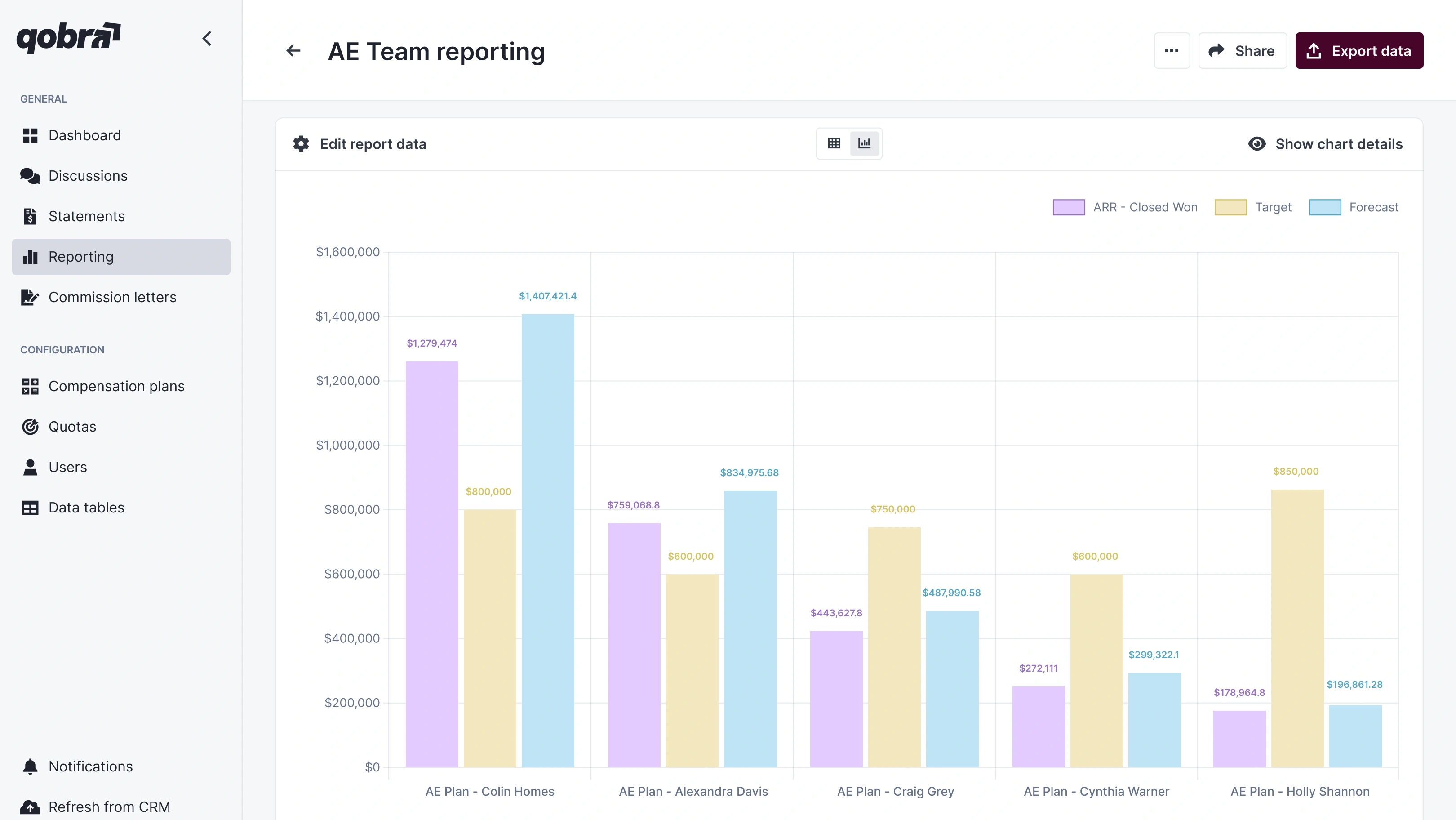
- Integrate Your Systems: Manually transferring data between your CRM and accounting software is a major source of errors. Integrating your systems ensures data flows seamlessly. A powerful sales commission tool like Qobra automates this by pulling deal data directly from sources like Salesforce or HubSpot.
- Maintain Detailed Schedules: Use a sub-ledger or specialized software to maintain a detailed schedule for each individual contract. This schedule should track the initial capitalized commission, accumulated amortization, and the remaining net book value of the asset.
- Regularly Review Assumptions: The business environment changes. Periodically reassess your assumptions for amortization periods, especially if you observe changes in customer churn rates, product lifecycles, or sales strategies.
- Educate Your Teams: Ensure both your finance and sales operations teams understand the principles of ASC 606. When everyone understands why commissions are being treated a certain way, it fosters better alignment and smoother processes, especially when designing compliant commission plans from the start.
Ultimately, ASC 606 forces a more disciplined and accurate approach to accounting for sales commissions. It treats these costs not as a sunken expense but as a strategic investment in acquiring long-term revenue. While the transition requires careful planning and robust systems, the result is financial reporting that offers a truer reflection of a company's performance. Automating this process with a dedicated platform like Qobra transforms a complex compliance burden into a streamlined, accurate, and scalable business function.
Frequently Asked Questions
Do all sales commissions have to be capitalized under ASC 606?
No, not all commissions must be capitalized. The primary criteria are that the costs must be incremental to obtaining the contract and are expected to be recovered. Furthermore, ASC 606 provides a practical expedient allowing companies to expense commissions if the amortization period would be one year or less. This simplifies accounting for short-term contracts.
What is a reasonable amortization period for a SaaS contract with automatic renewals?
There is no single "correct" answer, as it must be based on company-specific facts and judgments. A common and defensible approach is to use the average estimated customer life, which can be derived from historical churn and retention data. For many SaaS companies, amortization periods of three to five years are typical, but this must be supported by evidence and documented in your accounting policies.
What are the main benefits of capitalizing commissions?
The primary benefit is improved financial reporting that better aligns with the matching principle. This leads to:
- More accurate profitability: Expenses are matched to the revenue they generate over time.
- Smoother earnings: It avoids large expense fluctuations tied to big deals.
- Better comparability: Financial performance is more easily compared between different periods and different companies.
- A clearer view of unit economics: It provides a better understanding of the long-term return on customer acquisition costs.
How does an automated commission platform like Qobra help with ASC 606?
An automated platform like Qobra is designed to handle the complexities of modern commission management, including ASC 606 compliance. It helps by:
- Centralizing data: Integrating directly with your CRM (like Salesforce or HubSpot) to automatically capture the necessary contract and commission data.
- Automating calculations: It automatically calculates the capitalized asset value and the periodic amortization expense for every single contract.
- Maintaining an audit trail: It keeps a detailed, auditable record of all calculations and adjustments.
- Managing complexity: It easily handles adjustments for contract modifications, renewals, and terminations, ensuring calculations remain accurate and compliant without manual intervention. This is a core part of a modern guide to sales commissions.