Sales Compensation Software Benchmark | Compare 15+ Sales Compensation Platforms
Download
That thrilling, sometimes elusive moment when you close a deal. It's why you're in sales, isn't it? You love the challenge, the process of helping customers solve their problems, and, of course, hitting your numbers. But what worked yesterday might not work today. Are you still relying on outdated and ineffective methods to get that signature? How can you adapt your approach to close like a boss in today's demanding market?
Let's move past the old-school pressure tactics and explore the modern art of closing. We'll dive into proven strategies, common pitfalls to avoid, and the mindset that separates top performers from the rest of the pack.
Why Mastering Your Sales Closing Approach Matters
Finalizing a deal is more than just getting a signature; it's the culmination of a strategic process. In today's volatile economic climate, buyers are more cautious, deal cycles are longer, and more stakeholders are involved in every decision. The average B2B sale now requires sign-off from 6 to 10 decision-makers, each with their own priorities and concerns. This complexity makes the final stage of the sales cycle more critical than ever.
Choosing the right closing technique isn't about manipulation; it's about alignment and understanding. When done correctly, it builds trust and reinforces the value you've demonstrated throughout the entire process. A well-executed close can significantly impact your success in several key ways:
- Faster Sales Cycles: Deals can stall for weeks or even months in the final stage. Armed with the right tactics, you can confidently shorten the sales cycle without appearing aggressive or desperate, guiding the prospect toward a timely decision.
- Stronger Customer Relationships: No one enjoys being pressured by a pushy salesperson. Conversely, a timid approach can signal a lack of confidence in your own product. The best closing methods are rooted in empathy and a deep understanding of the customer's needs, which helps build the trust necessary to turn a prospect into a long-term partner.
- Less Wasted Time: We've all chased a non-committal prospect, investing countless hours in demos and meetings only to be ghosted. Effective closing techniques help you gauge a deal's health more accurately, allowing you to identify when it's time to move on and focus your energy on more promising opportunities.
Common Hurdles in the Final Stretch (and How to Overcome Them)
Even when a deal seems like a sure thing, several common challenges can derail your efforts at the last minute. Being aware of these obstacles is the first step to overcoming them.
One of the biggest hurdles is a lack of collaboration among the buying committee. If key stakeholders are brought in late or don't have a clear understanding of the deal's value, reaching a consensus becomes nearly impossible. To counter this, you must engage in multi-threading early on, identifying and building relationships with all relevant parties, from the end-user to the finance department.
Next, many deals fall apart during negotiation. A staggering 48% of sellers report that competing against lower-priced alternatives is their biggest obstacle. If you aren't prepared to justify your price with undeniable value and negotiate terms effectively, you risk losing out to the competition. This is where a deep understanding of your solution's ROI is crucial.
Finally, a common mistake is talking to the wrong person. While an enthusiastic marketing manager might love your solution, they may not have any purchasing power. It's vital to qualify your contacts early and ensure you are connected with the actual decision-makers. Use your initial conversations to map out the organization and understand who holds the purse strings.
Top 10 Tried-and-Tested Sales Closing Techniques
There's no single "magic" technique that works every time. The best salespeople have a versatile toolkit and know which approach to deploy based on the prospect, the situation, and the relationship they've built. Here are ten powerful methods to add to your repertoire.
1. The Assumptive Close
This is a power move that requires confidence. You operate under the assumption that the prospect has already decided to buy. Instead of asking if they're ready, you move on to logistical questions.
- How to use it: After clearly demonstrating the value and benefits, confidently ask questions about the next steps. The key is to be assertive without being aggressive.
- Example: "Great, so should we schedule the implementation for next Monday, or would Wednesday work better for your team?"
2. The Puppy Dog Close
This technique is named after the idea that once you take a puppy home for a weekend, you're never going to bring it back. The same principle applies to your product.
- How to use it: Offer a free, no-strings-attached trial or pilot program. The goal is for the prospect to integrate your solution into their workflow and find it so indispensable that they can't imagine going back.
- Example: "I understand you want to be sure this is the right fit. Why don't you try the full version of our software with your team for 14 days? I'll set everything up for you."
3. The Scarcity Close
Also known as the "now-or-never" close, this method leverages the fear of missing out (FOMO) to encourage a quick decision.
- How to use it: Sweeten the deal with a special discount, a bonus feature, or a limited-time offer that is only available if they act now. This works best when the prospect is genuinely interested but hesitating.
- Example: "We have a 20% discount for new clients that expires at the end of this week. If you sign today, I can lock that in for you."
4. The Takeaway Close
This is a bold technique that uses a bit of reverse psychology. By suggesting your solution might not be a good fit, you can trigger the prospect's desire for something they think they can't have.
- How to use it: When a prospect is overly focused on a minor feature you lack or is heavily debating the price, you can subtly suggest that perhaps another solution would be better. This can make them reconsider and start selling you on why it's a good fit.
- Example: "Based on your focus on X, it sounds like our solution might not be the best fit for your priorities right now. Perhaps we should revisit this in a few quarters."
📌 To Note
The Takeaway Close is an advanced technique that should be used with caution. It requires a strong rapport with the prospect and a deep understanding of their needs. If used incorrectly, it can come across as arrogant and end the conversation permanently.
5. The Summary Close
B2B sales cycles can be long and complex. The prospect may have forgotten some of the key benefits you discussed weeks ago. The summary close is your opportunity to remind them.
- How to use it: Before you ask for the sale, recap the main pain points they shared and connect each one to a specific feature or benefit of your solution. This helps them visualize the full value proposition one last time.
- Example: "So, to recap, we've established that our platform will help you reduce response times by 30%, automate your reporting to save 10 hours a week, and improve customer satisfaction. Does that sound right?"
6. The Question Close
This technique involves asking a series of questions designed to uncover any final objections and lead the prospect to a positive conclusion on their own.
- How to use it: Ask open-ended questions that get to the heart of their decision-making process. Actively listen to their responses and address any lingering concerns.
- Example: "In your opinion, does the solution I've presented solve your key problems?" or "What are your biggest concerns about moving forward with this?"
7. The Empathy Close
This approach focuses on building a genuine connection by understanding and acknowledging the prospect's emotions and challenges.
- How to use it: Show that you're on their side. Acknowledge the pressure they might be under to make the right decision. This builds trust and positions you as a partner rather than just a vendor.
- Example: "I can see you're feeling overwhelmed with all the options out there. It's a big decision. Let's focus on your top priorities and see how we can make this process easier for you."
8. The Scale Close
Also called the gauge close, this is a straightforward way to take the prospect's temperature and find out where you really stand.
- How to use it: Simply ask them to rate their interest on a scale of one to ten. Their answer gives you a clear indication of their readiness and opens the door to address any issues that are holding them back.
- Example: "On a scale of 1 to 10, where 1 is 'let's end this now' and 10 is 'let's get this implemented Monday,' how ready are you to move forward?"
9. The Sharp Angle Close
This is a clever negotiation tactic for when a prospect asks for a concession. You agree to their request, but only if they commit to buying immediately.
- How to use it: When a buyer asks, "Could you add in the premium training package at no extra cost?" you respond with a counter that moves the deal forward.
- Example: "Absolutely, we can include that package. If I can get that approved for you, are you ready to sign the agreement today?"
10. The Visual Close
Some people need to see it to believe it. This technique uses visual aids to demonstrate the impact of your solution.
- How to use it: Use charts, graphs, live demos, or case studies to show the tangible results your product can deliver. A powerful visual can often be more persuasive than words alone.
- Example: "Let me show you a case study from a company just like yours. As you can see on this graph, they increased their sales by 25% within six months of implementing our software."

Beyond Techniques: How to Genuinely Improve Your Closing Skills
While the techniques above are powerful, they are only tools. True success in closing comes from a deeper, more holistic approach to the entire sales process. It’s not about what you do in the final call; it's about everything that leads up to it.
"Fundamentally, closing a deal should be the easiest part of a sales cycle. There are a series of key milestones you have to hit in order to be in a position to close a deal. If those key milestones are done well, closing is the easy part because the work’s already been done."
To improve, focus on these core principles:
- Know Your Customer: The best selling feels like helping. Adopt a consultative approach. Use discovery calls and research to understand their business, their pain points, and their goals inside and out. This personalized approach builds the trust that is essential for any major deal.
- Anticipate Objections: Preparation is half the battle. Your prospect will have objections, most commonly around pricing or timing. Be ready with solid, value-based answers. Knowing your sales conversion metrics and having ROI calculations on hand can make all the difference.
- Identify the Decision-Maker: Are you talking to the right person? A huge part of closing is getting the key stakeholders in the room. Don't waste weeks communicating value to someone who can't sign the check.
- Know When to Fold 'Em: You won't close every deal, and that's okay. A small percentage of your leads will likely bring in the majority of your revenue. Learning to recognize when a prospect isn't a good fit and moving on is a critical skill. It frees up your time to focus on opportunities that are more likely to close.
Sales Closing Mistakes to Avoid at All Costs
❌ Going in for the Hard Close
Pressure selling is a relic of the past. Today's buyers are more informed and have more options than ever before. Coming in with an aggressive ask before you've established clear value is off-putting and shows you're more focused on your quota than their needs. Remember, selling isn't about you; it's about them.
❌ Not Asking for the Sale
On the opposite end of the spectrum is the fear of asking for the sale. Inertia is a powerful force. Many prospects will waffle if given the chance. If you end a great call by saying, "Take some time to think about it," you may never hear from them again. After you've effectively communicated the value and they've shown interest, sometimes the most powerful thing you can do is simply and directly ask if they're ready to buy.
❌ Only Closing at the End
This is a trick. The "right time to close" isn't a single moment. As mentioned earlier, closing is a process. You should be securing small commitments throughout the sales cycle, closing for the next meeting, closing for an introduction to another stakeholder, closing for access to data. If you've done this effectively, the final signature becomes a simple formality, not a high-pressure event.
Leveraging Technology to Streamline the Close and Beyond
In modern sales, using the right technology can be a game-changer. Tools for meeting management, deal progression, and opportunity management can help you stay organized and execute your strategy more effectively. However, the role of technology doesn't end when the deal is signed.
Imagine this: you've just successfully closed a major deal. The ink is still wet. Instead of waiting weeks for manual commission calculations, you and your manager can see the updated numbers reflected in your compensation dashboard in real-time. This is the power of a modern sales compensation platform. By integrating natively with your CRM, like Salesforce or HubSpot, tools like Qobra automate the entire commission process.
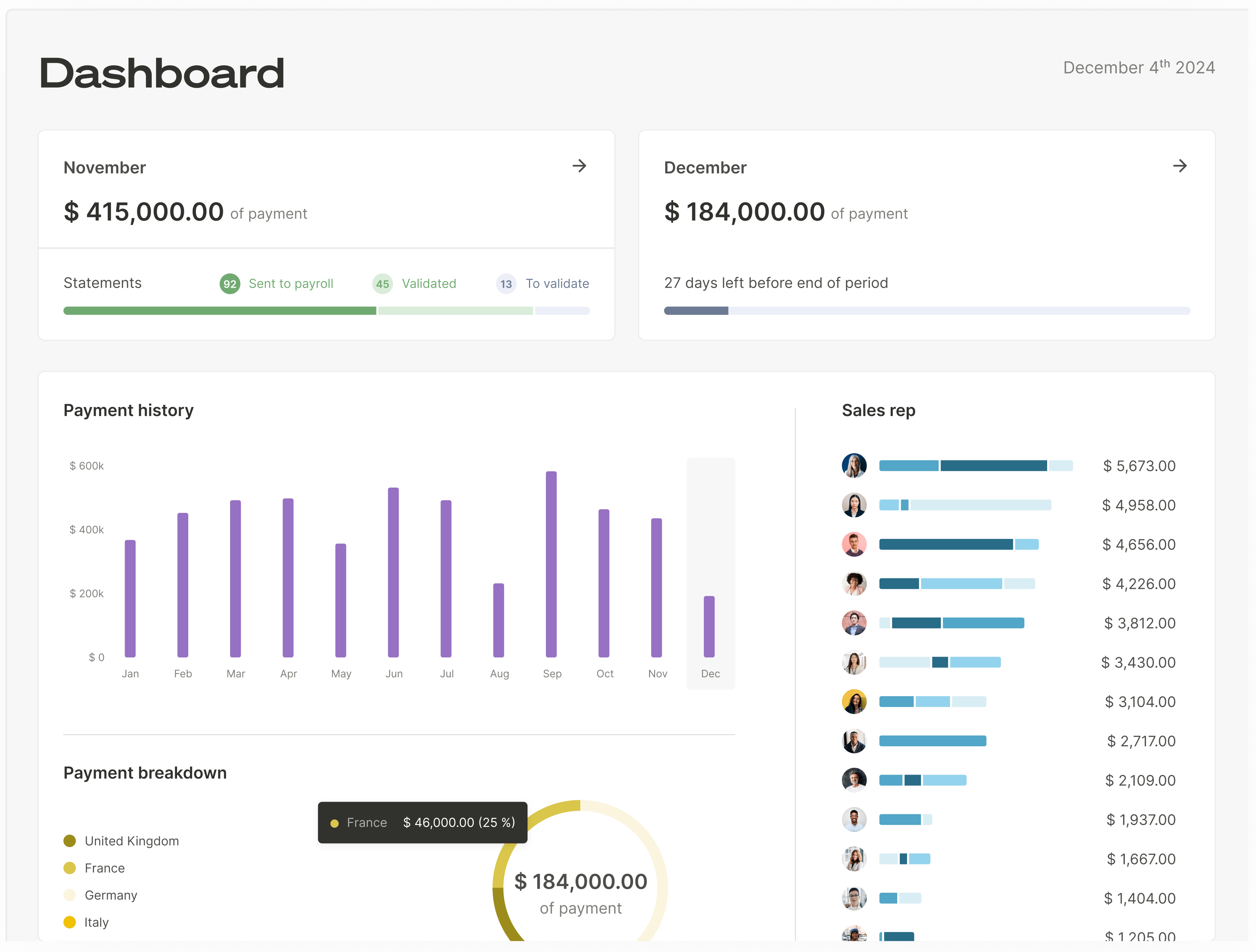
This immediate feedback loop is incredibly motivating. It provides reps with instant visibility into their earnings and progress toward their goals, reinforcing the positive behaviors that led to the close. For Sales Ops and Finance, it eliminates tedious manual work, reduces errors and disputes, and provides a clear audit trail for every payment. It aligns the entire revenue team around a single source of truth, fostering a culture of transparency and trust. This is a crucial part of modern sales planning software and revenue operations.
The old mantra of "Always Be Closing" has evolved. Today, it's about "Always Be Connecting." The close is no longer a conquest but a collaboration. When you focus on understanding your prospect, building trust, and demonstrating undeniable value throughout the entire sales process, the final step becomes the easiest part of the journey. You're not just closing a deal; you're starting a partnership.
What's the single most important thing to remember after closing a sale?
After the celebration, the most crucial step is to ensure a smooth and successful handoff. Your job isn't done until the customer is satisfied and seeing the value you promised. Follow up with a thank-you, clearly outline the next steps for onboarding and implementation, and make yourself available for any questions. This post-sale diligence builds immense trust, reduces churn, and opens the door for future upsells, cross-sells, and valuable referrals. It's the foundation of a lasting customer relationship.