Webinar: The Biggest Release Sales Comp Has Ever Seen. Come See For Yourself (Wednesday, October 7)
Register
- Different bonus types (performance, commissions, profit-sharing, sign‑on, retention, spot, milestone) require matching calculation methods tied to their strategic purpose.
- Core formulas: Bonus = Salary × Bonus% for target bonuses; Prorated Bonus = (Full‑year Bonus × Days Worked) / Total Workdays; Final Bonus = Target × Performance Multiplier; commissions use revenue/tiers/margin rules.
- Practical employer workflow: set the bonus pool, define eligibility and target amounts, apply KPI-based multipliers or prorations, then compute gross payouts and document the policy.
- Remember tax and legal rules: bonuses are supplemental income with specific withholding practices and potential statutory requirements—verify local laws and consult a tax/legal advisor.
- Use tools to reduce errors and increase transparency: small teams may start with spreadsheets, but automated compensation platforms, templates, and real‑time dashboards scale accuracy and trust.
Ever wondered how the final number on your bonus pay stub is determined? Whether you are an employee anticipating a reward or an HR leader designing a compensation plan, understanding the mechanics behind bonus calculations is crucial. It is the key to ensuring fairness, fostering motivation, and aligning individual efforts with company goals.
Calculating bonuses can range from a simple percentage of salary to a complex formula tied to multiple performance indicators. Moving beyond opaque spreadsheets to a clear and consistent methodology not only builds trust but also transforms compensation from a simple transaction into a powerful strategic tool. This guide will walk you through the essential steps, formulas, and examples to demystify the process.
Understanding the Different Types of Employee Bonuses
Before you can determine the payout, you must first understand the type of bonus being offered. The calculation method is intrinsically linked to the bonus's purpose, whether it is to reward past performance, incentivize future results, or retain key talent. Each structure serves a different strategic objective.
Here are some of the most common types of bonuses:
- Performance Bonuses: These are tied directly to the achievement of specific goals by an individual, a team, or the entire company. The payout is often variable and depends on how well predefined Key Performance Indicators (KPIs) are met.
- Sales Commissions: This is a form of variable compensation paid to salespeople based on the sales they generate. Commissions are typically a percentage of the revenue or profit from a deal and are a core component of designing a fair compensation plan.
- Profit-Sharing: Employees receive a portion of the company's profits over a specific period. This model helps employees feel more connected to the organization's success, as their bonus is directly tied to the business's financial health.
- Holiday or Year-End Bonuses: Often paid out in December or early in the new year, these bonuses reward employees for their contributions throughout the year. They can be a fixed amount, a percentage of salary, or dependent on company performance.
- Sign-On Bonuses: A one-time payment offered to a new employee as an incentive to join the company. It can help attract top talent, especially in competitive markets.
- Retention Bonuses: Offered to key employees to encourage them to stay with the company through a critical period, such as a merger, acquisition, or major project launch.
- Spot or Discretionary Bonuses: These are "surprise" bonuses given by a manager to recognize an employee for exceptional work on a specific task or project. They are unexpected and serve as a powerful tool for immediate recognition.
- Milestone or Project Bonuses: Awarded upon the successful completion of a significant project or milestone. This incentivizes teams to deliver high-quality work efficiently and on schedule.
Core Methods for Bonus Calculation
Once the type of bonus is established, you can apply the appropriate formula. While some bonuses are simple fixed amounts, most variable compensation requires a more structured calculation to ensure fairness and consistency.
Percentage-Based Bonus Calculation
This is one of the most common methods, especially for annual or performance-based bonuses. The bonus is calculated as a straight percentage of the employee's base salary.
Bonus Amount = Annual Salary × Bonus Percentage
For example, if an employee has a target bonus of 10% and earns an annual salary of $60,000, their on-target bonus would be $6,000.
Here is how this plays out across different salary levels and bonus targets:
Annual Salary | Target Bonus % | On-Target Bonus Amount |
|---|---|---|
$45,000 | 5% | $2,250 |
$60,000 | 10% | $6,000 |
$90,000 | 15% | $13,500 |
Prorated Bonus Calculation for Partial Employment
What happens when an employee joins or leaves mid-year? In these cases, the bonus is often prorated to reflect the portion of the year they were actively employed. This ensures that new hires and departing employees are compensated fairly for their contribution.
Prorated Bonus = (Full Year Bonus Amount × Days Worked) / Total Workdays in Year
- Example: An employee starts on April 1st and is eligible for a $10,000 annual bonus. They will work for 275 days out of 365 in their first year.
- Calculation: ($10,000 × 275) / 365 = $7,534
This method can also be applied to employees on long-term leave.
Performance-Based and KPI-Driven Calculations
For bonuses tied to performance, the calculation often involves a "multiplier" that adjusts the target bonus based on goal achievement. This directly links the payout to results, making it a powerful motivational tool.
Final Bonus = Target Bonus Amount × Performance Multiplier
The multiplier is determined by performance against predefined KPIs. For instance, a company might set the following structure:
- 80% of Goal Achieved: 0.8x Multiplier
- 100% of Goal Achieved: 1.0x Multiplier (On-target earnings)
- 120% of Goal Achieved: 1.2x Multiplier (Accelerator)
Example: A sales manager has a target bonus of $15,000. Her team achieves 110% of their annual revenue target.
- Calculation: $15,000 × 1.1 = $16,500
These calculations can become incredibly complex when multiple KPIs are involved. This is where manual tracking in spreadsheets becomes a major risk, leading to errors and disputes. Modern platforms are designed to handle the complexities of variable pay by automating these calculations with precision.
Calculating Sales Commissions
Sales commissions are a distinct category of variable pay. Their calculation depends entirely on the established commission structure, which can vary significantly. Common models include:
- Revenue Percentage: Sales reps earn a fixed percentage of the revenue they generate.
- Tiered Commissions: The commission percentage increases as the sales rep hits higher revenue targets. This incentivizes overperformance.
- Gross Margin Commissions: Commissions are based on the profitability of a sale, not just the revenue.
Here is an example of a tiered structure:
Monthly Revenue | Commission Rate |
|---|---|
$0 - $10,000 | 5% |
$10,001 - $20,000 | 7% |
$20,001+ | 10% |
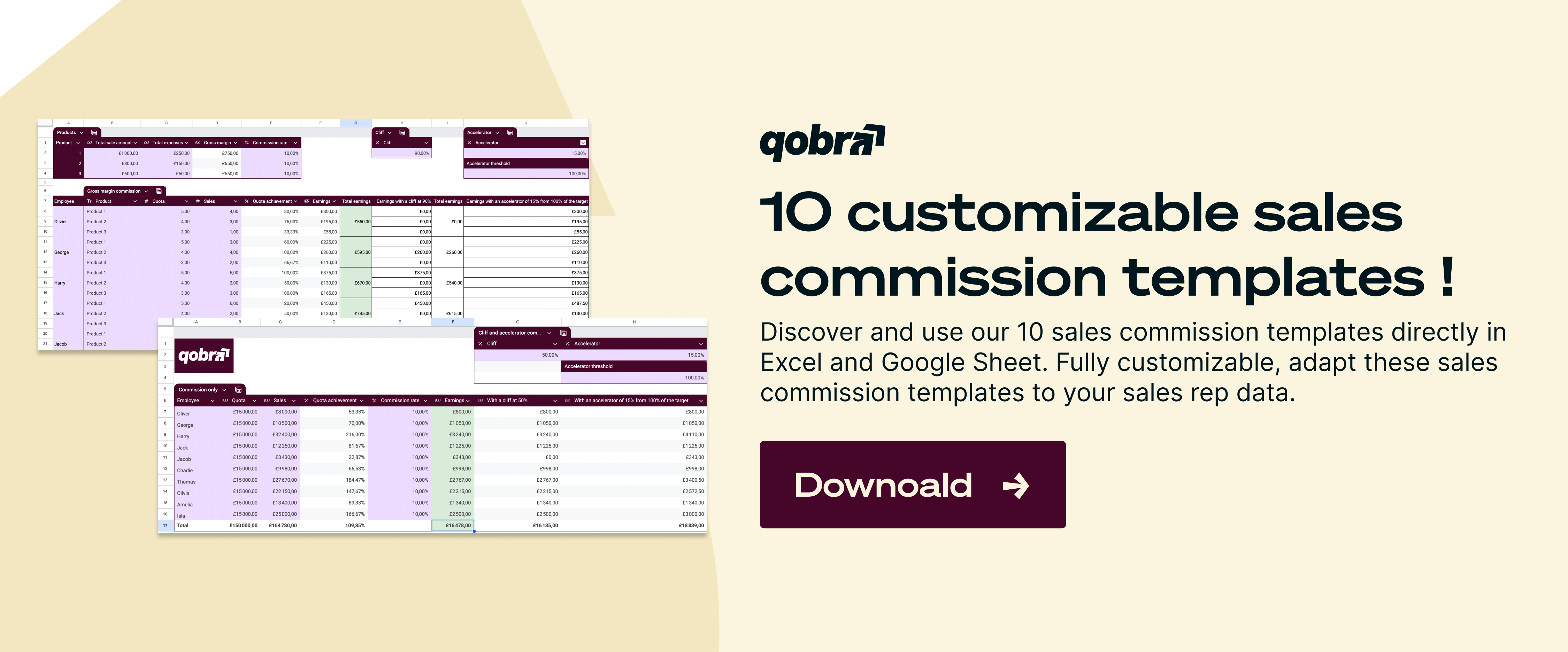
An accurate and transparent calculation process is critical for keeping sales teams motivated. Using a dedicated sales commission tool eliminates errors and gives reps real-time visibility into their earnings, which is a major advantage over manual methods.
A Step-by-Step Guide to Calculating a Bonus Payout
Bringing it all together, here is a practical framework that employers can follow to structure their bonus calculation process from start to finish.
- Determine the Bonus Pool: The first step is for the company to decide the total amount of money available for bonuses. This can be a fixed amount or a percentage of company profits or revenue.
- Define Eligibility Criteria: Clearly establish who is eligible for a bonus. Common criteria include being employed on the payout date, having passed a probationary period, or having worked for a minimum duration (e.g., 90 days).
- Establish the Target Bonus: For each eligible employee or role, define the on-target bonus amount. This is typically expressed as a percentage of their annual salary.
- Apply Performance Metrics: Assess individual, team, and/or company performance against the established goals. This assessment will determine the final multiplier or adjustment to be applied to the target bonus.
- Calculate the Gross Bonus: Apply the formulas discussed above to calculate the final pre-tax bonus for each employee. This includes any necessary prorations for new hires or part-time staff.
Expert Tip: Create a Formal Bonus Policy
A well-documented bonus policy is your best defense against confusion and disputes. It should clearly outline eligibility, the calculation formula, performance metrics, and the payout schedule. Having accessible documentation, like downloadable bonus policy templates, can provide a great starting point for formalizing your process.
Navigating Bonus Taxation and Legal Considerations
It is important for both employers and employees to remember that bonuses are considered supplemental income and are subject to taxation. The way taxes are withheld from a bonus can differ from regular salary, sometimes resulting in a higher initial withholding rate. The final tax liability, however, depends on the employee's total annual income and tax bracket.
Furthermore, some countries or regions have specific laws governing mandatory bonuses. For example, some jurisdictions have a "statutory bonus" that employers are legally required to pay to eligible employees, often calculated based on profitability and employee wages.
Disclaimer: Consult a Professional
This article provides general information and should not be considered legal or financial advice. Bonus structures, tax laws, and employment regulations vary significantly by location. Always consult with a local tax advisor, accountant, or legal counsel to ensure compliance.
From Manual Spreadsheets to Automated Solutions
For years, finance and HR teams have relied on spreadsheets to manage bonus and commission calculations. While functional for very small teams with simple plans, this approach quickly becomes a liability as a company grows. Manual data entry is prone to human error, creating a significant risk of over- or under-payment. These errors can erode trust and demotivate your top performers.
The process is also incredibly time-consuming. Ops teams can spend days each month pulling data, checking formulas, and validating payouts, distracting them from more strategic work. For employees, especially sales reps, the lack of real-time visibility is a major source of frustration. They often have no idea what their commission check will look like until it arrives, making it impossible to track their progress toward goals.
This is where modern compensation platforms like Qobra revolutionize the process. By offering a no-code rule editor and native integrations with CRMs like Salesforce and HubSpot, Qobra automates the entire workflow.
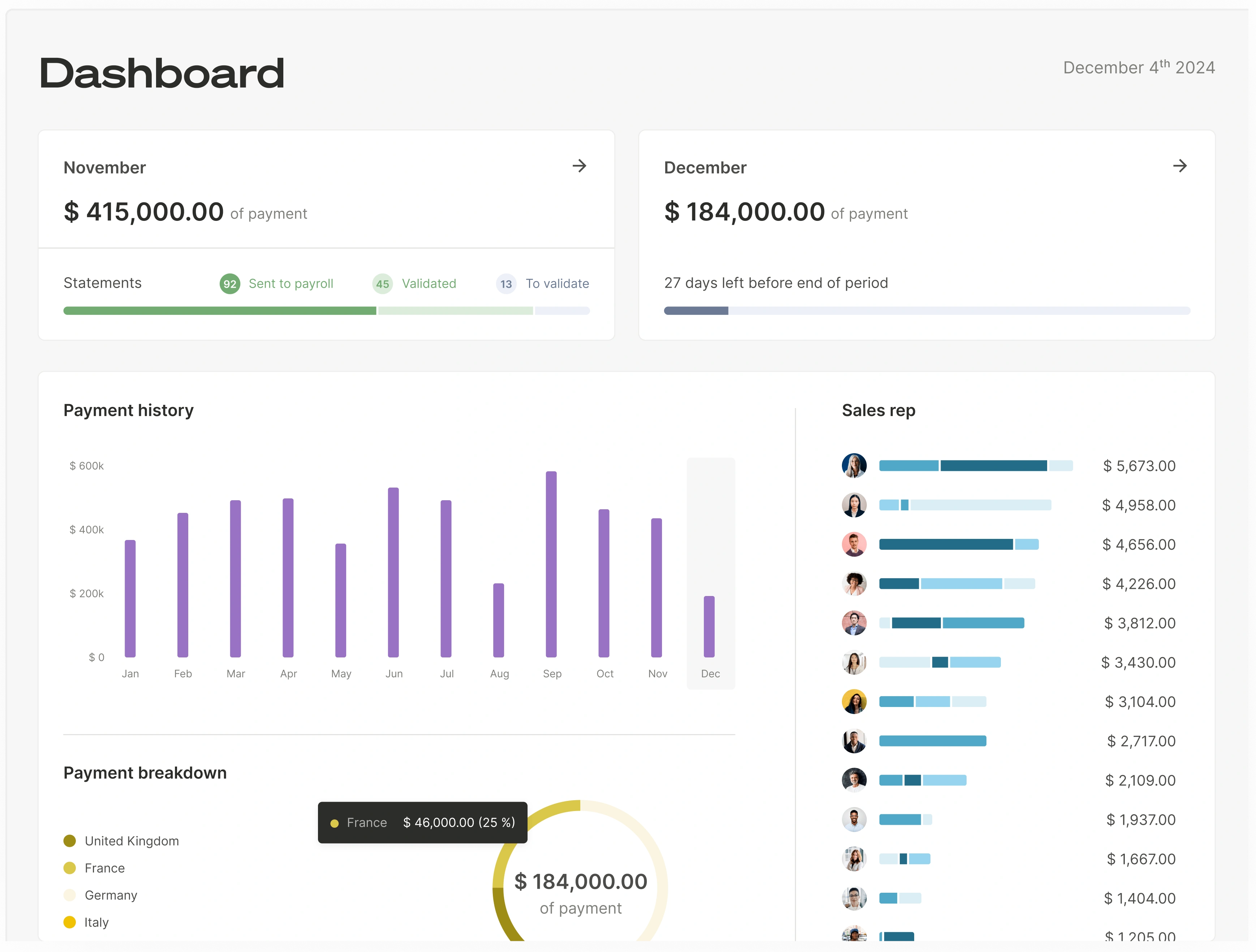
- Reliability: Calculations are automated and updated in real time as deals are closed, reducing errors by up to 95%.
- Transparency: Sales reps get personalized dashboards showing their current and projected earnings, which boosts motivation and builds trust.
- Efficiency: Finance and Ops teams save dozens of hours per month, freeing them up to focus on analyzing performance and optimizing compensation plans.
By automating the process, you can connect directly to your CRM data, ensuring that everyone is working from a single source of truth.
The Power of Transparency
When employees have a clear line of sight into how their efforts translate into rewards, their motivation soars. Real-time dashboards and transparent calculations eliminate disputes and empower employees to take ownership of their performance. This shift transforms compensation from a confusing, back-office process into a dynamic driver of business growth.
Calculating bonuses effectively requires a clear, consistent, and transparent process. Whether you are using a straightforward percentage of salary or a complex, multi-layered commission structure, the ultimate goal is to reward employees fairly and motivate them to achieve key business objectives. As companies scale, moving away from manual, error-prone spreadsheets to a dedicated, automated platform becomes essential for maintaining accuracy, building trust, and driving performance.
Frequently Asked Questions
How do you calculate a bonus as a percentage of salary?
To calculate a bonus based on a percentage of salary, you multiply the employee's annual base salary by the target bonus percentage. For example, if an employee's salary is $70,000 and their target bonus is 15%, the calculation is: $70,000 × 0.15 = $10,500.
Is a bonus always taxed at a higher rate than regular salary?
Not necessarily. Bonuses are supplemental income, and tax authorities often have specific withholding rules for them, which can result in a higher initial withholding rate. However, the final tax owed is based on your total annual income and marginal tax bracket. Any over-withholding is typically refunded when you file your annual tax return.
How is a bonus calculated if I leave the company mid-year?
This depends on your company's bonus policy. Most companies will pay a prorated bonus based on the number of days you were employed during the performance period. For example, if you worked for 6 months (roughly 182 days) out of the year, you would be eligible for approximately half of your on-target annual bonus (182/365). Some policies may require you to be an active employee on the payout date to be eligible.
What's the difference between a bonus and a commission?
A bonus is typically tied to broader performance goals (individual, team, or company) and is often paid out over a longer period (quarterly or annually). A commission is a form of direct sales incentive calculated as a percentage of the value of a specific transaction an employee generates. Commissions are a core part of different commission structures and are usually calculated more frequently (monthly or quarterly).
Can my employer change the bonus plan at any time?
In many cases, yes, especially for discretionary bonus plans. However, changes to non-discretionary or contractual bonus plans are typically subject to the terms of your employment agreement and local labor laws. Employers should communicate any changes to the bonus plan clearly and well in advance to maintain transparency and trust.
Calculating bonuses by hand doesn't scale — software to manage variable compensation automates the math and the payouts.