Sales Compensation Software Benchmark | Compare 15+ Sales Compensation Platforms
Download
Wondering how to elevate your sales team from good to great? In today's competitive market, simply having a solid product isn't enough. Your team needs the right skills, knowledge, and confidence to close deals effectively. But how do you provide consistent, engaging, and impactful training, especially with remote or distributed teams? Are you struggling to find a solution that reps actually use and that delivers a measurable return on investment?
You know you need to invest in your team's development, but the sheer number of sales training platforms can be overwhelming. Each one promises amazing results, but how do you sift through the noise to find the tool that will truly move the needle for your organization? Let's explore how to find the perfect solution to sharpen your team's skills and drive unprecedented growth.
What Exactly is Sales Training Software?
Sales training software is much more than a digital library of PDFs and videos. It's a dynamic platform designed to formalize, manage, track, and automate your entire sales training curriculum. These tools are built to address the core challenges sales teams face: keeping up with new products, adapting to evolving sales methodologies, and consistently hitting ambitious targets. They provide a structured environment for ongoing education and skill development, moving beyond one-off training events.
Effective platforms help salespeople learn faster, stay informed about their offerings, and refine their selling strategies through practice and reinforcement. They often incorporate interactive elements like AI-powered role-playing simulations, quizzes, and real-time feedback modules. This allows reps to practice handling objections, pitching new products, and navigating complex sales scenarios in a safe, low-stakes environment. By simulating real-world interactions, these tools build the confidence and competence necessary to close deals and satisfy customers, which is essential for both individual success and the company's bottom line.
Key Features to Look for in Sales Enablement Platforms
With so many options available, focusing on the core functionalities that drive results is crucial. A platform with a long list of features isn't always the best; the most effective tools are often those that integrate seamlessly into a rep's daily workflow. Based on feedback from sales leaders and power users, here are the essential features to prioritize.
- Interactive and Engaging Learning Modules: Static content leads to disengaged reps. Look for platforms that offer interactive video coaching, AI-driven role-play simulations, and quizzes. This ensures training is an active experience, significantly boosting knowledge retention.
- Customizable Content & Templates: Your business is unique, and your training should be too. The best tools allow you to tailor materials to your specific products, services, and sales methodologies. Many, like Trainual, offer a library of pre-built templates for processes, policies, and playbooks that you can customize to save time.
- Robust Analytics and Reporting: To justify the investment, you need to measure impact. A strong platform provides detailed analytics on user engagement, completion rates, assessment scores, and skill progression. This data helps managers identify which training initiatives are working and where individual reps may need more support, creating a foundation for an effective sales force performance evaluation checklist.
- Seamless Integration Capabilities: A training tool that exists in a silo will be ignored. Crucially, it must integrate with your existing tech stack, especially your CRM (like Salesforce or HubSpot). This allows training to be delivered in-context and helps correlate learning activities with actual sales outcomes.
- Mobile Accessibility: Your sales team is often on the go. Mobile-first design ensures reps can access training materials anytime, anywhere, whether they're preparing for a meeting or have downtime between calls. This flexibility dramatically increases engagement.
- Gamification and Social Learning: Features like leaderboards, badges, and team competitions can significantly boost motivation. Platforms like SmartWinnr leverage gamification to drive friendly competition and encourage participation. Social features that facilitate peer-to-peer knowledge sharing also help build a collaborative learning culture.
💡 Expert Advice
When evaluating integrations, look beyond the CRM. Consider how a training tool connects with your communication platforms (like Slack or Teams) and knowledge management systems (like Guru). A deeply integrated tool becomes part of the daily workflow, not another login to remember.
The Tangible Benefits of Investing in Sales Training Tools
Implementing a dedicated sales coaching platform goes far beyond just ticking a box for employee development. The right software delivers concrete, measurable benefits that directly impact your organization's revenue and culture. It transforms training from a cost center into a strategic growth driver.
First and foremost, it leads to enhanced and consistent skill development. By standardizing the curriculum, you ensure every team member, from a new hire to a seasoned veteran, receives the same high-quality instruction on your products, messaging, and sales process. This consistency is vital for creating a unified customer experience and a cohesive, well-informed sales force. It eliminates the "knowledge silos" that often form when training is informal or inconsistent.
Furthermore, these platforms provide flexible and accessible learning. They cater to modern workstyles by allowing reps to learn at their own pace and on their own schedule. This asynchronous approach is perfect for remote teams and busy field reps, leading to higher completion rates and better knowledge retention. Instead of pulling everyone off the floor for a day-long seminar, training becomes a continuous, integrated part of their job.
Most importantly, sales training software delivers a measurable impact on performance. Advanced analytics allow you to track training progress and correlate it with key performance indicators. You can see how quickly new hires ramp up, if a new product training module leads to higher sales for that product, or if a course on negotiation skills helps shorten the sales cycle. This data-driven approach allows you to prove the ROI of your training programs and make informed decisions to optimize them for even better results.
A Breakdown of the Top Sales Training Software in 2026
Navigating the market for sales training software can be a challenge. To simplify your search, we've reviewed and analyzed some of the top contenders, highlighting what makes each one stand out. Whether you need an all-in-one solution or a specialized tool for AI coaching, there's a platform to fit your needs.
| Tool | Best For | Key Standout Feature |
|---|---|---|
| Second Nature AI | AI-driven training and coaching | Realistic AI role-play simulations for practicing sales conversations. |
| MindTickle | Data-driven sales readiness | A "Readiness Index" that identifies when reps are field-ready. |
| HubSpot | Sales platform with training features | Conversation intelligence records and transcribes calls for feedback. |
| Guru | AI-driven knowledge sharing | Delivers relevant information (battle cards, playbooks) within the rep's workflow. |
| Trainual | Pre-built learning templates | Massive library of templates for processes, policies, and company knowledge. |
| SmartWinnr | Gamification and team engagement | Customizable competitions, leaderboards, and rewards to motivate reps. |
| Attention | Real-time sales coaching | Provides live talk tracks and battle cards during actual sales calls. |
For AI-Powered Practice: Second Nature AI
Second Nature stands out for its use of AI avatars to create realistic, scalable role-playing simulations. Sales reps can practice their pitches, handle objections, and refine their conversational skills with an AI coach named "Jenny." The platform provides instant, unbiased feedback on everything from talk-to-listen ratio to the use of filler words, allowing reps to practice repeatedly without taking up a manager's time. This is ideal for organizations looking to build conversational confidence at scale.
For Comprehensive Sales Readiness: MindTickle
MindTickle is a robust platform focused on ensuring your sales team is always prepared to win. It goes beyond simple training modules to encompass conversation intelligence, coaching, and digital sales rooms.
Its signature "Readiness Index" is a powerful feature that scores reps based on their training completion, assessment scores, and real-world performance, giving managers a clear, data-driven view of who is ready for the field and who needs additional coaching. This makes it a favorite for data-centric sales organizations.
For an All-in-One Solution: HubSpot
While known primarily as a CRM, HubSpot offers a surprisingly powerful suite of sales enablement and training features within its Sales Hub. The platform includes tools for creating sales playbooks, which provide reps with call scripts and competitive battle cards directly within their CRM interface. Its conversational intelligence feature records, transcribes, and analyzes sales calls, allowing managers to review performance and provide targeted feedback. For teams already invested in the HubSpot ecosystem, it's an excellent way to consolidate their IT sales tools.
How to Choose the Right Sales Coaching Platform for Your Team
Selecting the best software requires a strategic approach that aligns with your specific organizational goals and workflows. A tool that's perfect for a fast-growing startup might not suit a large enterprise. Before you book a demo, take time to evaluate your needs based on these key considerations.
Start by clearly identifying the problem you're trying to solve. Are you struggling with long ramp times for new hires? Do you need to train your team on a complex new product line? Is the primary goal to improve specific sales conversion metrics? Defining your main objective will help you filter out platforms that don't address your core pain point.
Next, consider who will be using the software and their technical proficiency. Your sales reps are the primary audience, so the interface must be intuitive and easy to navigate. If a tool is clunky or requires extensive training to use, adoption rates will plummet. Involve a few reps in the trial process to get their direct feedback.
The platform's ability to integrate with your existing tools is non-negotiable. At a minimum, it should have a deep, native integration with your CRM. This ensures a seamless flow of data and allows you to tie training activities directly to sales performance. Also, consider integrations with HRIS, communication tools, and business intelligence platforms to create a truly connected ecosystem.
Finally, define what success looks like. Establish clear outcomes you want to achieve. This could be reducing new hire ramp time by 20%, increasing the average deal size by 10%, or improving win rates against a key competitor. Having these goals in mind will help you evaluate whether a platform has the features and analytics to help you achieve and measure them.
Connecting Training to Motivation: The Role of Compensation
Effective training is only half the battle. To truly drive performance, your team needs to see a clear and immediate link between their newly acquired skills, their efforts, and their rewards. This is where a modern sales compensation platform becomes a critical part of your sales enablement stack. After a rep hones their skills with a training tool, their motivation to apply those skills is fueled by their commission plan.
This is why we built Qobra. Qobra is a sales compensation and commission management platform designed to bridge the gap between performance and reward. While sales training tools build competency, Qobra provides the real-time visibility and transparency that fuels motivation. When a rep uses a new technique learned in training to close a deal, they shouldn't have to wait until the end of the month and sift through a complex spreadsheet to see their earnings. With Qobra, they see the commission on each deal in their dashboard: Qobra syncs CRM data automatically throughout the day, and on demand in one click.
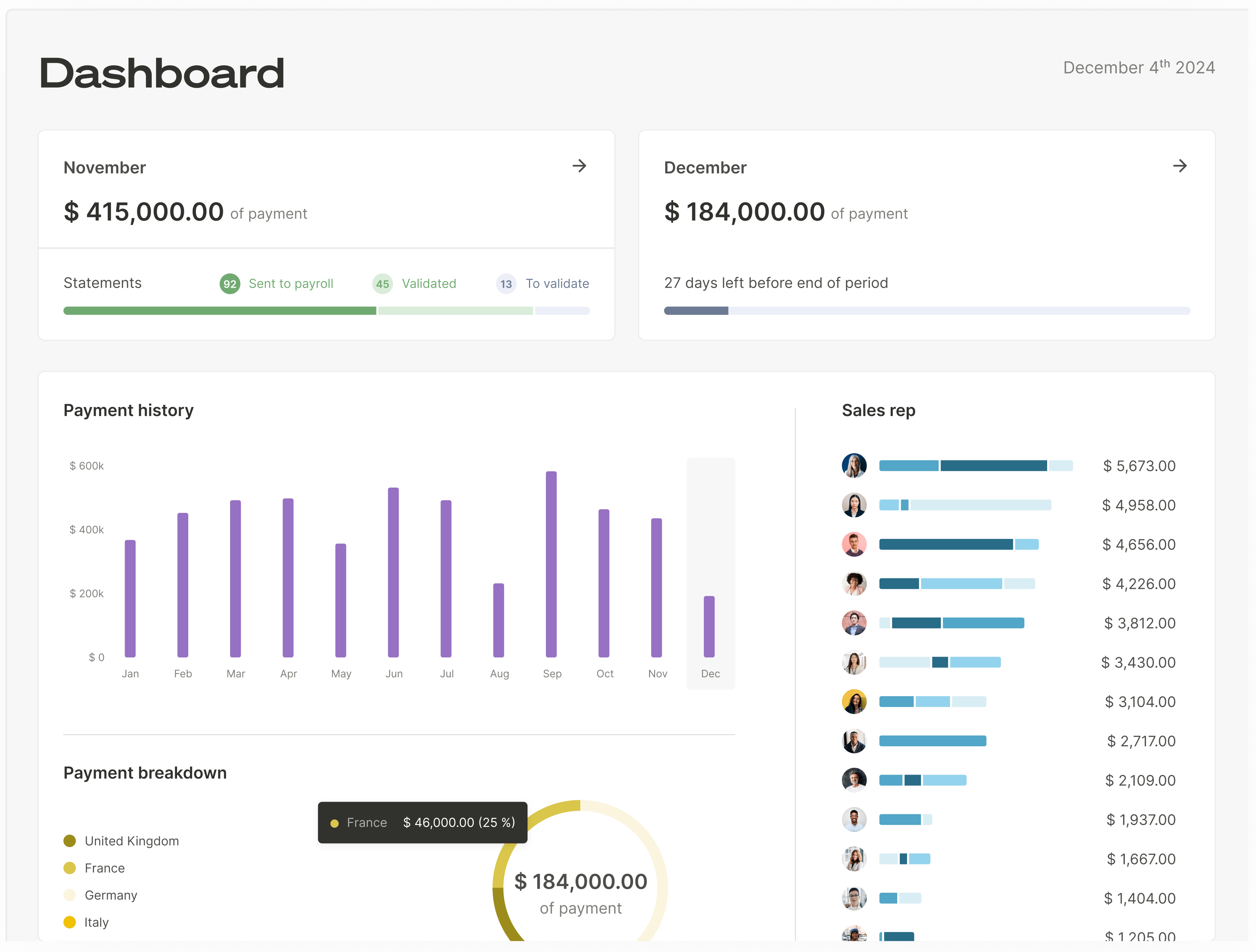
This creates a powerful, immediate feedback loop that reinforces positive behaviors. It validates the training and proves its value in a tangible way. Our platform automates the entire commission lifecycle, from real-time calculations via native CRM integrations (Salesforce, HubSpot, etc.) to complex approval workflows and secure payment processing. For Sales Ops, this eliminates hours of manual spreadsheet work and reduces costly errors. For reps, it provides a transparent, trustworthy view of their earnings and progress toward goals, which is fundamental to a fair pay-for-performance model. By combining best-in-class training with transparent, real-time compensation, you create a high-performance culture where reps are empowered, engaged, and driven to succeed.
📌 A Note on Your Tech Stack
The most successful sales organizations build a synergistic tech stack. Your sales training tool teaches the 'how,' your CRM manages the 'what,' and your compensation platform like Qobra powers the 'why.' When these systems work together seamlessly, you create an unstoppable engine for revenue growth.
Investing in the right sales training tools is a crucial step toward building a high-performing team. These platforms equip your reps with the skills, knowledge, and confidence they need to thrive in a competitive landscape. By focusing on interactive content, seamless integrations, and robust analytics, you can move beyond simple training and foster a culture of continuous learning and improvement. When you pair this powerful skill development with a transparent and motivating compensation strategy, you unlock your team's full potential and pave the way for sustainable growth.
How does sales training software integrate with existing sales tools?
Excellent sales training software is designed to operate as part of a connected ecosystem, not as a standalone application. The most critical integration is with your Customer Relationship Management (CRM) platform, such as Salesforce or HubSpot. This native connection allows for training content to be pushed to reps based on specific deal stages, competitor mentions, or products in a pipeline. It also enables the system to pull performance data from the CRM to measure the real-world impact of training. Beyond the CRM, these platforms often integrate with communication tools like Slack and Microsoft Teams for sending notifications and fostering social learning, as well as with HRIS and payroll systems to connect learning and development records with the employee's overall profile, creating a more holistic view of their journey.