Sales Compensation Software Benchmark | Compare 15+ Platforms (Features, Pricing, User Reviews, etc.)
Download
Are your sales commission plans causing more friction than motivation? When a major deal closes, do you find yourself untangling who deserves credit instead of celebrating the win? If you're looking for a way to fairly reward teamwork, encourage collaboration across departments, and align everyone on a shared goal, it's time to explore the world of split sales compensation. But what exactly are split commissions, how do you implement them without creating an administrative nightmare, and which structure is right for your business?
This guide will walk you through everything you need to know. We'll explore the different types of commission splits, provide best practices for managing them effectively, and show you how to build a system that not only rewards fairly but also drives your entire sales engine forward.
What Are Split Sales Commissions? A Clear Definition
At its core, a split sales commission is a method of dividing the commission from a single sale among multiple individuals or teams who contributed to closing the deal. This stands in contrast to a traditional model where 100% of the credit goes to a single account executive.
In the context of B2B sales, split commissions acknowledge the modern reality that major deals are rarely a solo effort. Imagine a company selling enterprise software to a global corporation with decision-makers in both the United States and Japan. To win the deal, the company needs its US and Japanese sales teams to collaborate. A split commission model ensures both teams are credited for their work. If the deal is worth $10 million, a 50/50 split means each team gets $5 million attributed to their quota. This system recognizes contributions from various roles that are critical to the sales cycle:
- Sales Development Reps (SDRs) who generate and qualify the initial lead.
- Account Executives (AEs) who manage the relationship and close the deal.
- Sales Engineers or Product Specialists who provide technical demos and expertise.
- Customer Success Managers who may be involved in securing an expansion or renewal.
By splitting the credit, you create a framework that accurately reflects the collaborative nature of complex sales.
Why Split Commissions Are Crucial for Modern Sales Teams
Adopting a shared commission model is more than just an administrative decision; it's a strategic move that can fundamentally improve your sales culture, talent retention, and overall performance. Traditional "lone wolf" commission structures often fail to capture the nuances of today's team-based selling environments, leading to disputes and misaligned incentives.
Fostering True Collaboration
Incentives drive behavior. When only the closer gets paid, there's little motivation for other team members to go the extra mile to support a deal they won't be rewarded for. This can lead to knowledge hoarding and internal friction. Split commission plans dismantle these silos. By ensuring everyone who contributes gets a piece of the pie, you encourage proactive teamwork. According to a report from Salesforce, businesses that utilize team-based incentives report a 17% increase in deal closures. This collaborative spirit means SDRs are more motivated to provide high-quality leads, and sales engineers are more invested in delivering compelling demos, as everyone is working toward a common financial goal.
Improving Talent Retention and Morale
Fair and transparent compensation is a cornerstone of employee satisfaction. A recent survey revealed that 60% of U.S. workers would consider switching to a company with more transparent pay practices. When employees feel their contributions are overlooked or unfairly compensated, morale plummets and turnover rises. A Gallup survey found that employees who feel recognized for their efforts are 67% less likely to leave. A well-defined split sales commission structure demonstrates that your organization values every role in the sales process, leading to higher engagement and loyalty from top talent.
Aligning Incentives with Complex Business Goals
In industries like SaaS, manufacturing, or real estate, sales cycles can be long and involve multiple touchpoints. A technical presales expert might be the key to overcoming a client's objections, while a customer success manager's work on a pilot program could be what ultimately secures a multi-year contract. A split compensation system allows you to reward these critical, yet often overlooked, contributions. This ensures that no part of the sales funnel is neglected and that your compensation strategy is perfectly aligned with the realities of your go-to-market motion.
Common Types of Split Sales Commission Structures
There is no one-size-fits-all approach to splitting commissions. The ideal structure depends on your industry, the complexity of your sales cycle, and the roles involved. Choosing the right model is key to shaping team dynamics and minimizing administrative headaches. Here are some of the most common structures:
- Proportional Split: Commissions are allocated based on the perceived effort or contribution of each team member. This is a flexible model but can be subjective. For example, in a $20,000 deal, the manager might decide the AE contributed 60% ($12,000), the SDR 20% ($4,000), and the Sales Engineer 20% ($4,000). This requires clear guidelines and often managerial discretion.
- Fixed Percentage Split: This model assigns a fixed percentage to each role involved in a typical deal. It's ideal for businesses with predictable and repeatable sales cycles. For instance, a company might have a standard rule: the AE always receives 70% of the commission, and the originating SDR always receives 30%. This method is simple, transparent, and easy to automate.
- Role-Based Split: Similar to a fixed split, this structure defines commission shares by job function to prioritize collaboration over competition. The focus is less on individual deals and more on the expected contribution of the role. A standard deal might be split as: 50% for the closer (AE), 30% for the product specialist, and 20% for the support roles that helped secure it.
- Threshold-Based Split: This structure is designed to incentivize overachievement. A bonus pool is created once a team or region surpasses a specific target (e.g., $500,000 in quarterly revenue). Once unlocked, the bonus is split among all contributors based on a predefined formula. This powerfully motivates teams to work together to exceed their collective quota.
☝️ A more advanced, though less common model, is over-crediting.
In this scenario, the total credit given out exceeds 100% of the deal value to strongly encourage collaboration. For a $10M deal split between two reps, each might receive 75% credit, meaning $7.5M is counted toward each of their quotas. While this can be highly effective at promoting teamwork, it adds complexity to financial reporting and requires careful management to ensure it aligns with the company's financial goals.
| Structure Type | How it Works | Best For | Key Advantage |
|---|---|---|---|
| Proportional Split | Credit is allocated based on assessed contribution. | Highly variable and complex sales cycles. | Flexibility |
| Fixed Percentage Split | Each role receives a predetermined percentage. | Standardized and repeatable sales processes. | Simplicity & Predictability |
| Role-Based Split | Splits are defined by job function's expected impact. | Promoting cross-functional collaboration. | Role clarity & teamwork |
| Threshold-Based Split | A bonus pool is unlocked after hitting a team target. | Driving overachievement and team performance. | High motivation |
| Over-Crediting | Total credit exceeds 100% of the deal value. | Aggressively promoting collaboration on key deals. | Maximum incentive |
📌 A Note From Our Experts
The best structure often depends on your industry and sales cycle. A fast-moving SaaS sale might benefit from a clear, role-based split that can be easily automated. In contrast, a long-term enterprise deal with unpredictable challenges may require a more flexible proportional model that allows for managerial discretion.
How to Implement and Manage a Split Commission System
Implementing a split commission system requires more than just choosing a model; it demands clear rules, robust technology, and transparent communication. A poorly managed system can create more problems than it solves, while a well-executed one can become a significant competitive advantage.
Defining the Rules of Engagement
Before you can pay a single commission, you must establish a clear and documented policy. This process starts with a deep dive into your sales process to identify which roles contribute value at each stage. Ask critical questions:
- Is the deal primarily driven by lead generation, or does it depend on deep technical expertise from a product team?
- What is the impact of post-sales teams, like customer success or implementation, on long-term revenue and renewals?
- Can you use metrics to quantify contributions fairly? Tracking lead sources, product demos delivered, or customer onboarding milestones can help make splits more objective.
Once you have this understanding, document the rules in a formal commission plan. This document should be the single source of truth for how splits are determined, requested, and approved, leaving no room for ambiguity.
The Technology: Moving Beyond Spreadsheets
While it's tempting to manage splits on a spreadsheet, this approach quickly becomes unmanageable as your team grows. Manual calculations are prone to errors, lead to disputes, and consume countless hours for your Sales Operations team. This is where Incentive Compensation Management (ICM) software becomes essential.
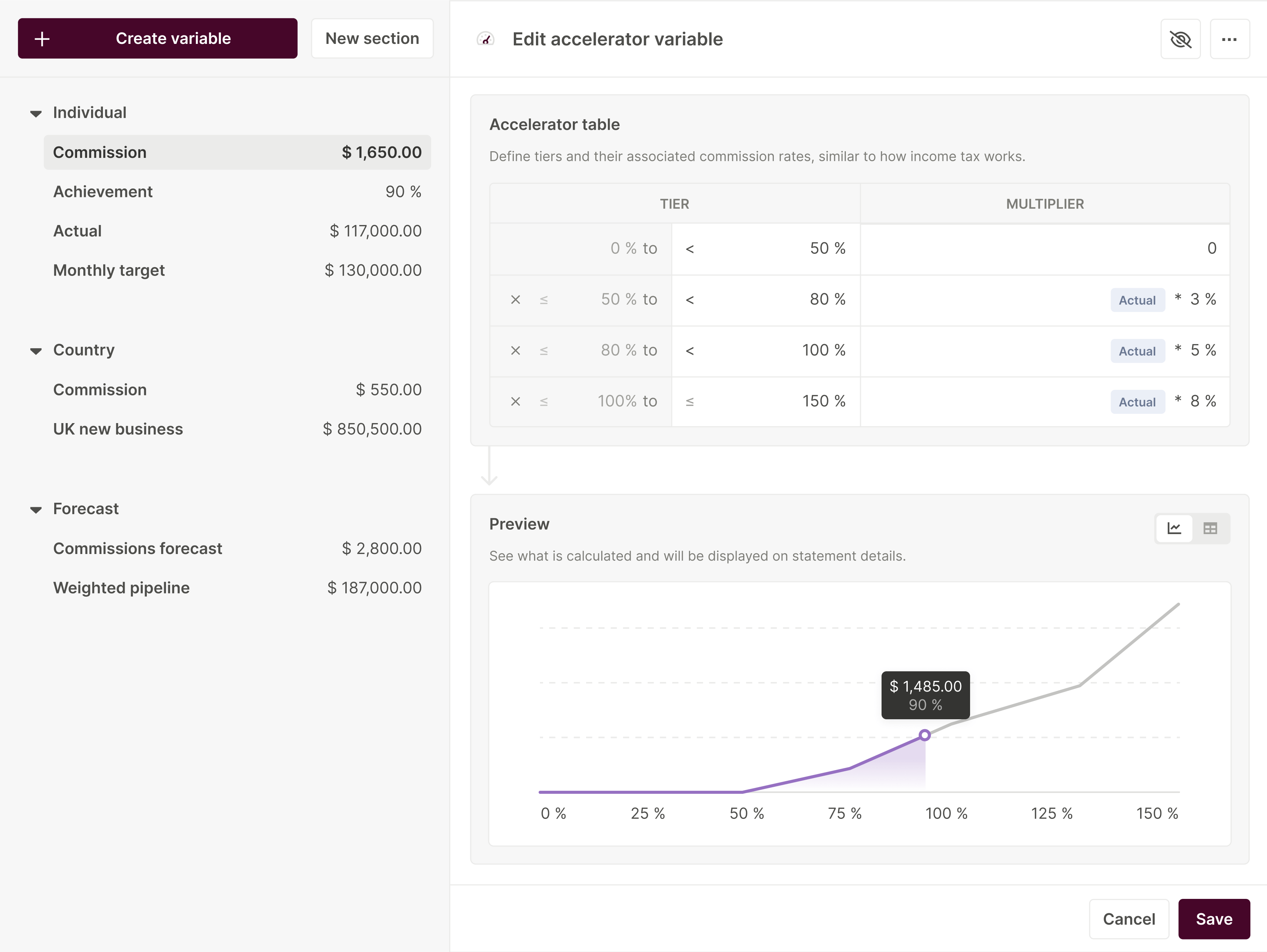
A modern platform like Qobra is designed to handle this complexity with ease. Instead of wrestling with formulas, you can use a 100% no-code plan builder to design even the most sophisticated split commission structures. By connecting natively with your CRM (like Salesforce or HubSpot), data flows in real-time, so calculations are always accurate and up-to-date. This automation eliminates manual work, ensures data integrity, and provides a reliable audit trail for every single commission payment.
Best Practices for Day-to-Day Management
With a clear policy and the right technology in place, effective management comes down to a few key practices:
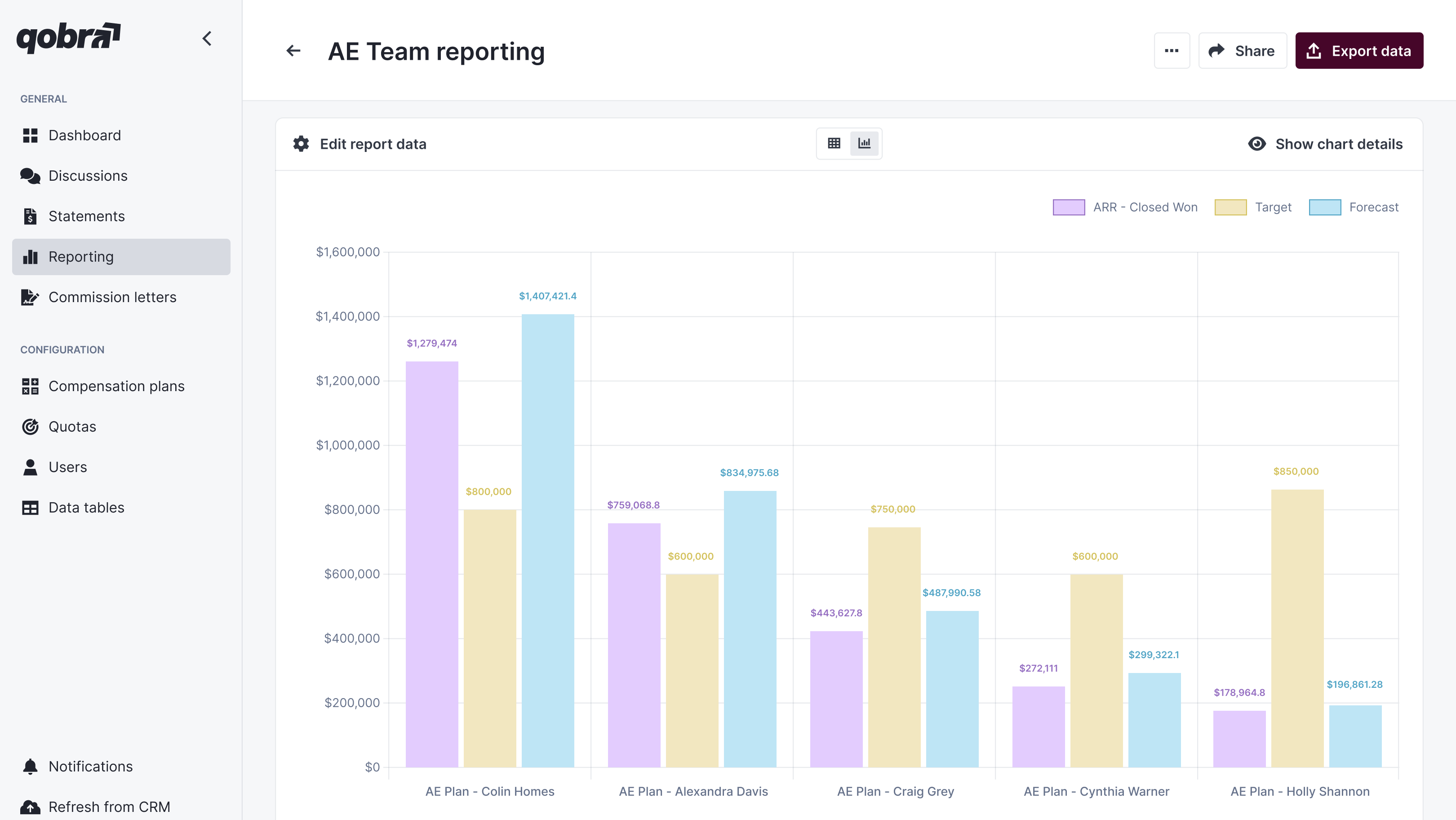
- Provide Real-Time Visibility: One of the biggest causes of frustration for salespeople is a lack of clarity on their earnings. A platform like Qobra gives sales reps a real-time dashboard where they can see exactly how much they've earned on every deal, including splits, as soon as it's closed in the CRM. This level of pay transparency dramatically reduces disputes and frees up Ops and Finance from answering constant inquiries.
- Streamline Approvals: Implement a clear workflow for approving splits. With Qobra, managers, finance, and HR can review and validate commission statements directly within the platform. The built-in audit trail tracks every change and approval, ensuring compliance and accountability.
- Tie Commissions to Revenue Realization: To protect cash flow, consider linking commission payouts to aged accounts receivable metrics. This ensures you only pay commissions on revenue that has actually been collected. You can also structure payouts across milestones, such as paying a portion at booking and the remainder upon invoicing.
🚨 Warning
Without a clear, documented policy and a reliable system, split commissions can create more conflict than they solve. Ambiguity is the enemy of a fair compensation plan. Ensure every rule is written down and accessible to all team members.
Navigating the Challenges of Split Commissions
Despite their benefits, split commission models are not without challenges. Being aware of these potential pitfalls allows you to address them proactively, often by leveraging the right processes and technology.
The first major challenge is accurately assessing contribution. In many cases, it's difficult to determine if the work on a deal was truly a 50/50 effort. One team member may have put in significantly more hours or had a greater impact than another. This subjectivity can lead to feelings of unfairness if not managed carefully. While no system is perfect, establishing clear criteria and using data to inform decisions can help mitigate this.
Another significant hurdle is the administrative overhead. Managing split requests, gaining approvals, and ensuring accurate calculations requires significant operational work. This burden falls squarely on Sales Ops and Finance teams, who must act as neutral arbitrators in any disputes. This is where manual systems like spreadsheets break down completely, creating bottlenecks and delaying payouts.
These challenges underscore the importance of a centralized system. An automated platform like Qobra resolves these issues by design. The audit trail provides an objective record of deal data, reducing debates over contribution. The automated workflows for approvals and calculations eliminate the administrative burden, freeing up your operations team to focus on more strategic initiatives. By providing a single source of truth, the platform ensures fairness and builds trust in the compensation process.
💡 Expert Advice
Don't try to create a perfect, complex system from day one. Start with a simple, clear model for your most common deal types, such as a role-based split for your core product. Gather feedback from the sales team after the first quarter, and iterate on the plan. A phased approach is far more effective than aiming for immediate perfection.
Ultimately, adopting a split commission model is a strategic decision that signals a commitment to teamwork. It sends a clear message: we succeed together, and we win together. While the transition requires thoughtful planning and the right tools, the payoff is a more aligned, motivated, and collaborative sales force. By moving beyond outdated, individualistic compensation plans, you build a foundation for scalable and sustainable growth. When your team wins together, they earn together, and that’s the kind of momentum that builds empires.
How do you handle disputes in a split commission model?
Handling disputes effectively is crucial for maintaining trust in your compensation system. The process should be clear, fair, and consistent. First, always refer back to your official, documented commission policy as the primary source of truth. Second, leverage data from your systems; a robust ICM platform like Qobra provides a detailed audit trail, showing every change and data point associated with a deal, which can often resolve disagreements objectively. If the issue remains unresolved, it should be escalated to a neutral party, typically sales leadership or a dedicated commission committee, who can arbitrate based on the established rules and the available data, ensuring the final decision reinforces a culture of fairness.
A documented split policy settles disputes only if the split actually applied is retrievable per deal. Qobra's sales compensation platform records the split on the deal itself, with the rule and the approval that produced it.