Sales Compensation Software Benchmark | Compare 15+ Sales Compensation Platforms
Download
How confident are you that your compensation practices are truly fair? Is your salary structure a strategic asset that attracts top talent, or a hidden liability that creates friction and risk? For many companies, defining and implementing fair compensation feels like a moving target, caught between legal requirements, market pressures, and internal complexities. But what if you could transform compensation from a source of anxiety into a powerful lever for performance and trust? What if every employee, from the shop floor to the sales team, understood how their salary is calculated and felt it was a fair reward for their contribution?
What is fair compensation? Beyond salary
Fair compensation is much more than just a number on a paycheck. It is a fundamental principle that reflects an organization's values and its commitment to its employees. While strict accounting principles provide a basis, true fairness is a matter of professional judgment and ethical considerations. It involves compensating employees fairly for the work they do and the value they create, ensuring that the process is both transparent and consistent.
At the heart of this fair compensation strategy are several objectives:
- Internal equity: ensuring that employees in similar positions with comparable skills and responsibilities are compensated similarly.
- External competitiveness: Align salary scales with the market in order to attract and retain the best talent.
- Decent wages: Offer compensation that allows employees to cover their basic needs and live with dignity, a crucial issue in global manufacturing and supply chains.
- Perceived fairness: Create a system where employees understand the “why” behind their compensation, fostering trust and motivation.
This comprehensive vision goes beyond simple compliance. The main goal is to build a system based on mutual agreement and understanding. Rather than relying solely on rigid cost data, it incorporates a range of criteria to achieve compensation that is perceived as fair. This approach minimizes administrative burden while maximizing the protection of the company's interests and the well-being of employees.
The pillars of a fair compensation strategy
Developing a framework for fair compensation requires a deliberate and structured approach. It is not a one-time project, but an ongoing commitment to clarity, consistency, and continuous improvement. By focusing on a few key pillars, organizations can create a robust, criticism-proof system that actively supports business objectives.
Establish clear and consistent salary structures
The foundation of any fair compensation system is a well-defined structure. This typically involves creating job grades and salary ranges for each role within the organization. The process begins with a thorough analysis of positions to understand responsibilities, skills, and impact. Positions are then grouped into levels or grades based on these criteria.
For each grade, a salary range is set with a minimum, midpoint, and maximum. This structure brings clear and defensible logic to salary decisions. It ensures that compensation is linked to the scope of the position and its market value, rather than arbitrary factors or negotiating skills. This approach also facilitates career progression, allowing employees to visualize opportunities for advancement and increase within the company. It is a crucial step in your compensation planning for RevOps and other departments.
The role of data and benchmarking
How do you know if your salary scales are fair and competitive? The answer lies in data. Forward-thinking companies regularly collect and analyze salary data to assess their position. This involves comparing internal salaries with reliable external benchmarks from their industry, geographic area, and similar positions in terms of complexity. For organizations with global supply chains, this assessment extends to comparing with decent wage standards in different countries to ensure that workers have a satisfactory standard of living.
This data-driven approach eliminates guesswork and helps identify pay gaps before they become systemic issues. For sales teams, this means analyzing the effectiveness of different types of incentive pay and ensuring that commission plans incentivize the right behaviors without creating unintended inequities. The goal is to track progress over time, demonstrating a tangible commitment to improving workers' wages and quality of life.
A note on transparency
Data is powerful, but its impact is greatly enhanced by transparency. While not all companies are ready to publish their full salary ranges, greater clarity around compensation philosophy, job classification, and factors influencing compensation can significantly boost employee trust and engagement. True pay transparency is about explaining the “how” and “why” of compensation decisions.
From manual calculations to automated confidence
For sales teams, a significant portion of compensation is variable, based on complex commission plans. Managing this process via spreadsheets is not only time-consuming but also a major source of errors, disputes, and perceptions of unfairness. A single formula error can lead to underpayments or overpayments, undermining trust and demotivating top performers.
That's why automating commission calculations is becoming an essential part of a fair compensation strategy. By connecting directly to your CRM, a dedicated platform can extract sales data in real time, instantly apply the correct commission rules, and present the results in a clear and accessible dashboard. Our platform is designed to completely eliminate these manual pain points. With a 100% code-free plan editor, you can create and deploy commission structures based on gross margin or other metrics, even the most complex ones, in minutes. This ensures accurate, consistent, and fully audited calculations, transforming commissions from a black box into a transparent driver of motivation.
Navigating the legal framework of equitable compensation
Beyond ethical considerations, equitable compensation is a legal obligation. Laws around the world require equal pay for equal or substantially similar work, prohibiting discrimination based on gender, race, religion, and other protected characteristics. Compliance is not just about avoiding lawsuits; it is about upholding fundamental principles of fairness in the workplace.
The consequences of wage discrimination can be severe, including:
- Legal penalties: substantial fines, back pay, legal fees.
- Reputational damage: Bad publicity can harm a company's brand and its ability to attract customers and talent.
- Low morale: Pay inequities, or even the perception of them, can destroy employee motivation, increase turnover, and reduce productivity.
- Recruitment difficulties: Top talent actively seeks employers known for fair and transparent practices.
Organizations must be proactive in ensuring that their pay practices are defensible. This means meticulously documenting legitimate, business-related factors that justify pay differences, such as experience, performance, seniority, or geographic location. Keeping detailed records is not only good practice, it is an essential defense against potential legal action.
🚨 Caution: the risk of inconsistent practices
One of the major legal risks stems from the inconsistent application of salary policies. Granting ad hoc exceptions to certain employees, relying on the subjective discretion of managers without clear guidelines, or using outdated job descriptions can create indefensible pay gaps. It is essential to regularly audit your salary practices against your established policies to mitigate this risk.
Practical tools and strategies for implementation
Moving from theory to practice requires the right tools and a clear roadmap. For companies committed to fair pay, technology is a powerful ally, enabling accuracy, transparency, and data-driven decision-making that is impossible with manual systems.
Automate for accuracy and fairness
The key to a fair system is consistency, and the enemy of consistency is manual error. Whether you're calculating base salary adjustments or complex commissions, automation is essential to ensure that every employee is compensated according to the same rules. For variable compensation, this is paramount.
Our platform automates the entire commission lifecycle. By integrating natively with CRMs such as Salesforce and HubSpot, sales data instantly and accurately feeds the calculation engine. This eliminates manual entry and reconciliation, which are often sources of error. Sales Ops teams save dozens of hours each month, finance teams benefit from complete and auditable traceability of each payment, and sales reps have the assurance that their commissions are always calculated correctly. This reliability is the foundation of a fair and motivating performance-based compensation model.
A settlement should fairly compensate the contractor for the work performed... The use of professional judgment, as distinct from strict accounting principles, is at the heart of a settlement. This principle of contract law also applies to employee compensation: fairness ultimately rests on informed judgment supported by clear and reliable data.
Gain real-time visibility and boost motivation
What good is a fair system if no one can see it? Transparency transforms a well-designed compensation plan into a powerful motivational tool. When salespeople can see in real time how their performance translates into earnings, they are more engaged and better equipped to focus their efforts.
We offer a dedicated dashboard for each stakeholder:
- Salespeople: can track their commissions as they are updated instantly after each sale, monitor their progress toward quotas, and simulate their potential earnings on future transactions. This immediate feedback loop is a powerful driver of performance.
- Managers: have a clear view of their team's performance, identify top performers, and conduct more productive coaching conversations based on real data.
- Finance & Operations: gain a comprehensive view of commission commitments, generate detailed reports, and manage approval workflows to ensure compliance and control, particularly in light of regulations such as ASC 606 for commissions.
This level of visibility ensures that compensation discussions are always based on a single, reliable source, reducing conflict and reinforcing a culture of trust.
Bridging the gap: from data to actionable insights
Effective compensation management is a continuous cycle of measurement, analysis, and adjustment. Scalable tools are essential for collecting salary data across the organization and comparing it to internal and external benchmarks. Once the data is gathered, it must be analyzed and the impact of potential changes modeled.
Our platform's advanced reporting and analysis capabilities allow you to do just that. You can analyze key performance indicators down to the transaction level, such as margin and cost of sales, to ensure that your B2B commission plans are not only fair but also profitable. In addition, the sandbox feature allows you to simulate the financial impact of new compensation plans before they are rolled out. This allows you to test different scenarios, forecast costs, and design plans that are perfectly aligned with your strategic objectives, ensuring that your compensation strategy evolves with your business.

Addressing common challenges to fair compensation
Despite the best intentions, organizations often face persistent challenges in maintaining pay equity. Phenomena such as pay compression and hidden biases can gradually creep into compensation structures. Proactively identifying and addressing these issues demonstrates a genuine commitment.
Managing wage compression
Wage compression occurs when the gap between the salaries of new hires and those of experienced, long-term employees narrows. This frequently happens in competitive labor markets, where companies must offer high starting salaries to attract talent, while the salaries of existing employees grow more slowly. This can lead to situations where a new, less experienced employee earns almost as much—or even more—than an experienced employee in an identical or similar position.
The consequences are harmful. It demotivates loyal employees, creates a feeling of undervaluation, and can increase turnover among the most experienced employees. To remedy this, organizations should:
- Regularly review salary ranges: ensure that your salary structures keep pace with market developments.
- Make internal equity adjustments: proactively adjust the salaries of senior employees who are lagging behind the market or new hires.
- Emphasize total rewards: value other forms of compensation, such as bonuses, stock options, and professional development opportunities, to reward long-term commitment.
Conduct pay equity audits
A pay equity audit is a systematic analysis of a company's compensation data to identify and correct pay disparities between employees in similar positions, particularly between different demographic categories (gender, race, etc.). This involves going beyond job titles by conducting a statistical analysis of salaries, controlling for legitimate factors such as experience, performance, location, and seniority.
The goal is to detect any systemic biases that may have unintentionally influenced salary decisions. If the audit reveals statistically significant disparities that cannot be explained by legitimate factors, the organization must take corrective action, such as targeted adjustments to undervalued salaries and a review of hiring, promotion, and salary-setting processes to eliminate the root cause of the inequity.
💡 Expert advice: steps for a successful pay equity audit
To conduct a meaningful audit, start by grouping employees who perform substantially similar work. Gather all relevant data for each employee, including compensation and factors that you consider legitimate explanations for variations. Use statistical regression analysis to determine whether a pay gap exists after controlling for these factors. Finally, work with legal counsel to interpret the results and develop a preferred and confidential plan to correct any unexplained disparities.
Fair compensation is not an end in itself, but an ongoing journey. It requires a strategic mix of clear policies, robust data, and appropriate technologies to ensure accuracy and transparency. By moving beyond outdated manual processes and embracing automation, organizations can build a foundation of trust and motivation. This commitment not only reduces legal risk but also becomes a powerful competitive advantage, attracting and retaining the talent essential to success. When compensation is clear, consistent, and fair, it aligns everyone—from sales and operations to finance—around a common goal of sustainable growth.
How do we start building a fair compensation strategy if we currently use spreadsheets?
The first step is to recognize the limitations and risks associated with spreadsheets. The next step is to centralize your data and processes. Start by documenting your current compensation philosophy and formally defining your roles and job levels. Then, leverage a specialized platform to automate the most error-prone parts, such as sales commissions. A platform like ours can integrate directly with your CRM, retrieve data in real time, and provide a single source of truth. This not only eliminates calculation errors, but also provides the visibility and analytics needed to perform pay equity audits and make data-driven decisions, laying a solid foundation for a fair and scalable compensation strategy.
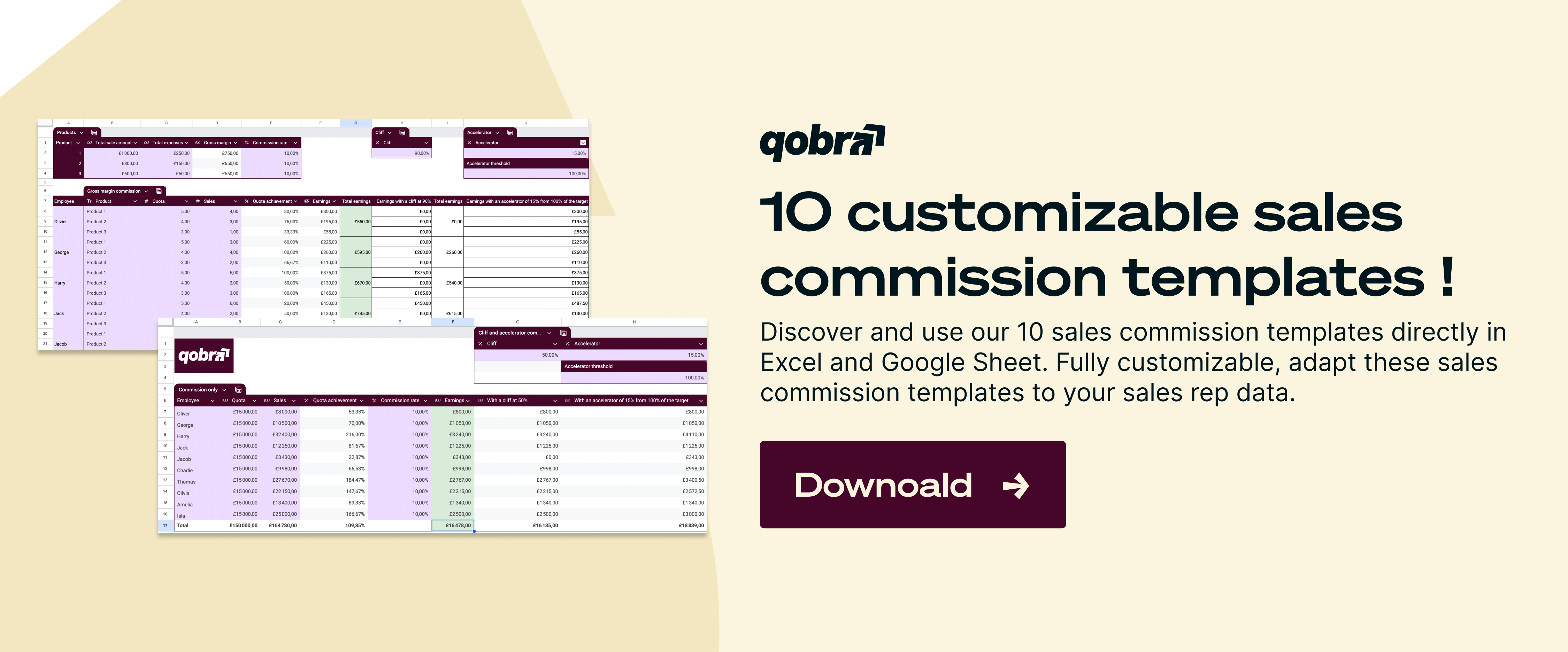
Centralising data, as recommended above, is what makes pay equity measurable rather than declarative. For the variable share, that centralisation comes from variable compensation software: one rule set, one source of truth, one audit trail.