Sales Compensation Software Benchmark | Compare 15+ Sales Compensation Platforms
Download
How many customers did you lose last quarter? Do you know not just the number, but the real financial impact on your bottom line? For any subscription-based business, understanding customer churn is not just an accounting exercise, it's a critical health check. It reveals the truth about your product's value, the effectiveness of your customer service, and the long-term viability of your growth strategy. Ignoring churn is like trying to fill a leaky bucket; no matter how many new customers you pour in, you'll always struggle to grow.
So, how do you move from a vague sense of customer loss to a precise, actionable metric? How can you calculate churn in a way that tells a meaningful story about your business? This guide will walk you through the essential formulas, from basic customer counts to nuanced revenue analysis, helping you transform a simple percentage into a powerful tool for strategic decision-making.
What is Churn Rate and Why Is It So Important?
The churn rate, often called the attrition rate, measures the percentage of customers or revenue a business loses over a specific period, such as a month, quarter, or year. In its simplest form, it answers the question: "What percentage of our existing customers did we fail to retain?" For SaaS, subscription, and recurring revenue models, this metric is a fundamental indicator of business health and customer satisfaction.
Losing customers directly translates to lost revenue, but the impact runs deeper. The cost of acquiring a new customer is almost always higher than the cost of retaining an existing one. A high churn rate forces a company into a relentless and expensive cycle of customer acquisition just to stay afloat, let alone grow. This dynamic is perfectly captured by the LTV/CAC ratio, which compares a customer's lifetime value (LTV) to the customer acquisition cost (CAC). High churn shrinks the LTV, making it much harder to achieve a profitable LTV/CAC ratio, a cornerstone KPI for sustainable growth.
Ultimately, monitoring your churn rate helps you identify weaknesses in your product, pricing strategy, or customer experience. It’s a red flag that prompts you to investigate why customers are leaving, enabling you to take corrective action to improve retention, boost loyalty, and secure your company's long-term future.
The Core Methods for Churn Calculation
Calculating churn isn't a one-size-fits-all process. The method you choose depends on what you want to measure: the loss of customer volume or the loss of financial value. Both are important, but they tell different stories.
Customer Churn vs. Revenue Churn
The first critical distinction to make is between customer churn and revenue churn.
- Customer Churn measures the percentage of customers lost during a period. It treats every customer equally, regardless of how much they spend. This metric is useful for understanding the overall volume of customer departures.
- Revenue Churn measures the percentage of recurring revenue (MRR or ARR) lost from existing customers during a period. This is often a more telling metric for business health because it accounts for the financial value of each lost customer.
Consider this example: Company A loses 10 customers who each paid $10/month (a $100 MRR loss). Company B loses just two customers, but they each paid $500/month (a $1,000 MRR loss). Company A has a much higher customer churn rate, but Company B has suffered a far greater financial blow. This is why most mature SaaS businesses focus heavily on revenue churn.
💡 Expert Advice
While customer churn is a good starting point, prioritize tracking net revenue churn for a truer picture of your business's health. This metric accounts for both lost revenue (churn and downgrades) and new revenue from existing customers (upgrades and cross-sells), revealing your ability to grow your existing customer base.
How to Calculate Customer Churn Rate
Calculating customer churn is a straightforward, four-step process. The formula is simple and provides a clear percentage of customer loss.
Formula: Customer Churn Rate (%) = (Number of Churned Customers / Total Customers at Start of Period) x 100
Here's how to apply it:
- Define the Period: First, decide on the timeframe you want to measure (e.g., monthly, quarterly, annually). Consistency is key.
- Count Your Starting Customers: Determine the total number of customers you had at the very beginning of that period.
- Count Churned Customers: Identify the number of those starting customers who canceled their subscription or did not renew by the end of the period. Crucially, do not include new customers acquired during the period in this calculation.
- Calculate the Rate: Divide the number of churned customers by your starting customer count and multiply by 100 to get the percentage.
Example: Monthly Customer Churn
- Customers at the start of March: 500
- Customers who canceled in March: 25
- Churn Calculation: (25 / 500) x 100 = 5%
- Your monthly customer churn rate for March is 5%.
How to Calculate Revenue Churn Rate
Calculating revenue churn provides deeper financial insight. It can be broken down into two key types: Gross Revenue Churn and Net Revenue Churn.
Gross Revenue Churn
This metric measures the total monthly recurring revenue (MRR) lost from cancellations and downgrades. It reflects the total revenue leakage from your existing customer base.
Formula: Gross MRR Churn Rate (%) = (MRR Lost from Churn & Downgrades / MRR at Start of Period) x 100
Net Revenue Churn
This is arguably the most powerful churn metric. It takes your gross revenue churn and subtracts any expansion revenue you gained from existing customers (through upsells, cross-sells, or add-ons).
Formula: Net MRR Churn Rate (%) = ((MRR Lost from Churn & Downgrades - MRR Gained from Expansion) / MRR at Start of Period) x 100
Net Revenue Churn gives a holistic view of your customer base's health. A low or even negative net churn rate is the gold standard for SaaS companies.
📌 What is Negative Churn?
Negative churn occurs when the expansion revenue from your existing customers is greater than the revenue you lose from cancellations and downgrades. It means your business can grow its revenue even without acquiring a single new customer. This is a powerful indicator of a strong product that customers are willing to invest more in over time.
Example: A More Complex Monthly Revenue Churn Calculation
Let's see how this works in practice. Imagine you start January with $50,000 in MRR.
| Category | Description | MRR Impact |
|---|---|---|
| Starting MRR | Revenue at the start of January | $50,000 |
| Churned Revenue | Customers who cancelled their subscriptions | -$2,500 |
| Contraction Revenue | Customers who downgraded to a cheaper plan | -$1,000 |
| Expansion Revenue | Customers who upgraded to a more expensive plan | +$4,000 |
| Net Revenue Change | (Churn + Contraction + Expansion) | +$500 |
| Ending MRR | Revenue at the end of January | $50,500 |
Now, let's calculate the churn rates:
- Gross Revenue Churn: ($2,500 + $1,000) / $50,000 = 7%. Your business lost 7% of its starting revenue from churn and downgrades.
- Net Revenue Churn: (($2,500 + $1,000) - $4,000) / $50,000 = -1%. Your business achieved a negative churn rate of -1%, meaning revenue from existing customers grew by 1%.
Interpreting Your Churn Rate: What's a Good Number?
A "good" churn rate is highly dependent on your industry, business model, and stage of growth. However, some general benchmarks can provide context.
- For B2B SaaS: A monthly customer churn rate of 1-2% (or an annual rate below 20%) is generally considered strong for companies targeting small to medium-sized businesses (SMBs). For enterprise-level SaaS, the target should be even lower, often under 1% monthly, due to longer contracts and higher switching costs.
- For B2C Subscription: B2C companies (like streaming services or e-commerce subscriptions) often experience higher churn, sometimes between 5-7% monthly. Their business models are built to handle this higher volume.
Many startups are told that a 5% monthly churn rate is acceptable. Be cautious with this figure. A 5% monthly churn doesn't sound alarming, but when compounded, it translates to an annual churn rate of over 46% (1 - (1 - 0.05)12). This means you would lose nearly half of your customer base every year, creating an unsustainable growth treadmill. While a new startup might tolerate higher churn as it refines its product-market fit, a mature business should aim for a much lower rate to ensure sustainable growth.
🚨 Attention
Beware of survivorship bias in early-stage churn data. Your first customers are often early adopters who are more forgiving and passionate about your product. This can lead to an artificially low churn rate initially. As you scale and attract a broader audience, your churn rate may naturally increase before stabilizing.
Key Drivers of Churn and How to Reduce It
Understanding why customers churn is the first step toward fixing the problem. While some churn is unavoidable, much of it can be prevented by addressing its root causes.
Identifying the Root Causes
Customer churn can be categorized into two main types:
- Voluntary Churn: The customer actively decides to cancel. This is typically due to issues like:
- Poor customer service or support.
- The product not meeting expectations or delivering value.
- Pricing that is perceived as too high.
- A competitor offering a better solution.
- A lack of engagement or poor onboarding.
- Involuntary Churn: The customer churns unintentionally. This is often due to technical or administrative issues like:
- Expired credit cards.
- Payment processing failures.
- Network errors.
5 Actionable Strategies to Reduce Churn
Once you identify the drivers, you can implement targeted strategies to improve retention.
- Adopt a Customer-Centric Culture: Place the customer at the heart of every business decision. Actively listen to their needs, anticipate their problems, and constantly seek to exceed their expectations.
- Proactively Identify At-Risk Customers: Don't wait for customers to cancel. Use data to spot warning signs, such as a drop in product usage, a lack of communication, or recent negative support interactions. Reach out to these customers with targeted offers or support to get them back on track.
- Invest in a Superior Customer Experience (CX): A single bad experience can be enough to drive a customer to a competitor. Invest in training and tools for your support team to ensure every interaction is positive, efficient, and helpful.
- Build and Reward Customer Loyalty: Create programs that reward long-term customers. This could include loyalty discounts, exclusive access to new features, or multi-year contract incentives. Make your best customers feel valued.
- Analyze Feedback and Take Action: Regularly collect customer feedback through surveys (like NPS or CSAT), interviews, and support tickets. The most important step is to analyze this feedback to identify trends and then act on it to improve your product and services.
The Link Between Sales Compensation and Churn
An often-overlooked driver of churn originates in the sales process itself. If a sales team's incentives in business are structured solely around acquiring new logos, they may be motivated to close deals with customers who are not a good fit for the product. These "bad-fit" customers are highly likely to churn once they realize the solution doesn't meet their needs, wasting acquisition costs and damaging your brand's reputation.
This is where aligning sales compensation with retention goals becomes a powerful anti-churn strategy. Instead of paying the full commission upfront, you can structure plans that reward long-term customer value. For example:
- Clawbacks: Reclaiming a portion of the commission if a customer churns within a specific period (e.g., 6 months).
- Renewal Bonuses: Paying an additional bonus when a salesperson's customer renews their contract for a second year.
- Tying Commission to LTV: Basing a portion of the compensation on the long-term value or profitability of the deals closed.
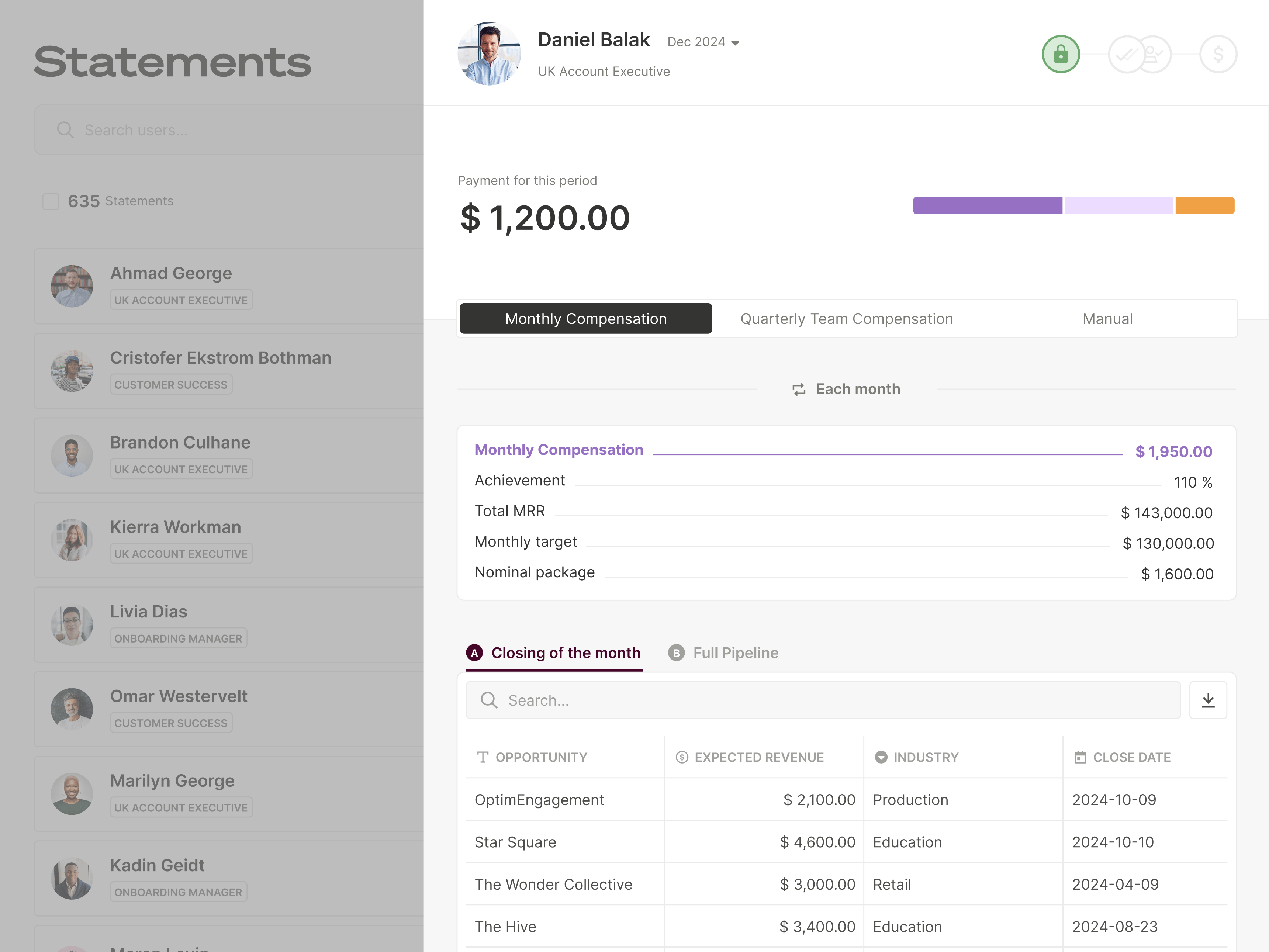
Implementing these more sophisticated plans can be a nightmare with spreadsheets. This is where a dedicated platform becomes essential. Our solution at Qobra is designed to handle this complexity with ease. With our flexible, no-code plan editor, you can build and automate retention-focused commission structures based on gross profit or renewal rates. By connecting directly to your CRM, our platform provides sales reps with real-time visibility into how their actions impact both their immediate payout and long-term bonuses, motivating them to sell to the right customers. This transparency transforms your sales team from a pure acquisition engine into a key driver of sustainable, long-term growth. An effective sales management report should not only track new sales but also the quality and longevity of those sales.
Reducing churn is a company-wide effort, but it starts with measuring it accurately. By moving beyond simple customer counts and embracing a nuanced view of both customer and revenue churn, you can gain a clear understanding of your business's health. Use these calculations not as a judgment, but as a diagnostic tool. Let the numbers guide you to where you need to improve, whether it's your product, your customer support, or even your sales incentive plans. A focused effort on reducing churn is one of the highest-leverage investments you can make for profitable, long-term growth.
What is the difference between attrition and churn?
While the terms "attrition" and "churn" are often used interchangeably, there can be a subtle distinction. Churn typically refers to customers who actively cancel their service and often switch to a competitor due to dissatisfaction with the product, price, or service. It's often seen as a preventable loss. Attrition, on the other hand, can sometimes refer to a more natural, unavoidable loss of customers, such as a business closing down, a user changing roles, or their need for the product simply ending. In most practical business discussions, however, both terms are used to describe the overall rate of customer loss.