Sales Compensation Software Benchmark | Compare 15+ Sales Compensation Platforms
Download
- Qobra fits RevOps and compensation managers who need to design, model and deploy complex incentive plans without IT: the Qobra no-code plan builder handles tiered structures and spiffs and runs simulations to forecast the financial impact of different plan designs.
- Compensation transformation aligns incentive programs with business objectives such as gross profit margin, customer retention or new revenue streams, for example through a commission structure based on gross profit where reps earn more for selling higher-margin products.
- One executive incentive technique sets "business-as-usual" performance at a 50% payout level, creating a significant downside for mediocrity and a large upside for breakthrough results in areas like customer retention or new market entry.
- Compensation transformation success is measured by gross profit margin, revenue expansion from existing customers, customer churn, the number of commission disputes and the time Ops and Finance teams spend on administration, plus employee surveys and sales team retention.
Are your compensation plans truly driving the right behaviors, or are they a source of constant disputes and manual adjustments? In a rapidly changing market, relying on outdated incentive structures is like navigating a storm with a broken compass. How can you transform your approach from a reactive, administrative burden into a proactive, strategic lever for growth? It requires more than just tweaking percentages; it demands a fundamental rethinking of how you connect performance to reward.
This shift, known as compensation transformation, is a critical journey for any organization looking to align its teams, boost motivation, and accelerate performance. It’s about building a system that is not only fair and transparent but also agile enough to adapt to new business goals and market volatility.
Why Compensation Transformation is More Than a Pay-Scale Update
At its core, a compensation transformation is a strategic initiative designed to align an organization's incentive programs with its overarching business objectives. It’s not merely about adjusting commission rates or salary bands. It's a cultural and operational break from "business-as-usual" performance. For many companies, especially those experiencing slowing growth or relying on financial engineering like share buybacks, the existing compensation model may inadvertently reward stagnation rather than innovation and true growth.
The goal is to create a system that introduces both risk and upside, penalties for maintaining the status quo, and exceptional rewards for transformational success. This means tying incentives directly to the metrics that matter most for the company's future, whether that's improving gross profit margins, increasing customer retention, or scaling new revenue streams. For instance, paying a high commission on a low-margin product might contradict an efficiency-first strategy. A true transformation assesses these disconnects and redesigns the system to drive behaviors that directly support strategic priorities.
This process is a multi-year effort that impacts every level of the organization. For executives, it might mean re-purposing long-term incentive programs like Performance Share Units (PSUs) with "turbo-charged" upside potential for hitting ambitious targets. For the broader employee base, it could involve new bonus programs that reward contributions to company-wide transformation projects. Ultimately, a successful transformation ensures that every employee understands how their efforts contribute to the company's success and how they will be rewarded for it.
The Foundation of Success: Going Slow to Go Fast
In the fast-paced business world, the instinct is often to implement changes quickly. However, when it comes to redesigning something as sensitive as compensation, the most successful organizations embrace a counterintuitive truth: sometimes, you must go slow to go fast. Rushing into a new compensation system without adequate preparation often leads to hasty corrections, employee dissatisfaction, and critical data integrity issues.
The most effective transformations are built on a solid foundation of preparation. This upfront investment in planning, stakeholder engagement, and system design pays exponential dividends during execution. Think of an emergency room's trauma team; they move with incredible speed and precision not because they are frantic, but because they have spent countless hours running simulations, building protocols, and establishing clear communication patterns. The same principle applies to compensation system redesigns. Success depends on the organization's ability to embrace change, which is grounded in trust. This trust isn't built through a single town-hall announcement; it emerges from consistent, thoughtful engagement over time between leadership, managers, and employees.
This foundational phase is the perfect opportunity for deep, focused work. It involves cleaning and auditing data, mapping existing workflows, and reconciling disparate systems. Organizations that skip this step often find themselves debugging data issues in real-time after going live, slowing down the very processes they hoped to accelerate. A methodical approach ensures that when the time comes to execute, the organization can move with confidence and agility.
💡 Expert Advice
Involve a broad committee of key stakeholders from the very beginning. Compensation planning can no longer be done in a vacuum by Finance or RevOps. Sales leaders offer real-world insights into rep motivation, HR provides critical input on fairness and equity, and Finance ensures the plan is fiscally sound and administratively feasible. This collaborative approach builds buy-in and ensures the final plan is balanced and effective.
A Practical Checklist for Organizational Readiness
To ensure no critical step is missed, using a checklist can transform an overwhelming project into manageable, sequential steps. This systematic approach helps create a culture of discipline where thoroughness becomes habitual.
1. Current State Assessment
- Have you inventoried all files, sources, and artifacts in your current compensation process?
- Do you have a comprehensive workflow diagram that maps every step, from data collection to final payment?
- Have you identified all stakeholders (people, departments, systems) impacted by compensation?
2. Stakeholder Analysis
- Have you created a RACI (Responsible, Accountable, Consulted, Informed) diagram to clarify roles and decision-making authority?
- Do you understand the difference between decision-makers, influencers, and implementers?
- Have you identified potential champions and resisters across departments?
3. Data and Systems Audit
- Have you audited your current data sources for accuracy, completeness, and reliability?
- Do your systems, like your CRM and ERP, communicate effectively, or are there data silos?
- Have you established clear data governance processes and ownership of data quality? A successful transformation relies on clean, trustworthy data.

Core Strategies for Modernizing Your Compensation Plans
Once the foundational work is complete, you can begin redesigning the compensation plans themselves. Modern incentive strategies are dynamic, multi-faceted, and tailored to the unique goals of the business and the motivations of its employees.
Aligning Incentives with True Business Objectives
The most critical step in any compensation overhaul is ensuring that incentives are perfectly aligned with your company's primary business goals. For years, the default metric for sales teams was top-line revenue. However, in an era of economic volatility, many companies are shifting their focus to more sustainable indicators like gross profit margin and efficiency. A transformation requires you to ask: Are we rewarding the most profitable activities?
For example, consider a company aiming for efficient growth. If its compensation plan pays the highest commission rate on a product with a low profit margin, the plan is actively working against the company's strategic goals. The transformation process involves identifying these misalignments and restructuring incentives to reward sales that contribute most to the bottom line. This could mean implementing a commission structure based on gross profit, where reps earn more for selling higher-margin products. This not only supports financial health but also educates the sales team on the commercial impact of their decisions.
This principle extends to all levels. For executives, this means anchoring long-term incentives to transformational goals rather than standard performance. A powerful technique is to set "business-as-usual" performance at a 50% payout level, creating a significant downside for mediocrity and a massive upside for achieving breakthrough results in areas like customer retention or new market entry.
Expanding Beyond New Business: Incentivizing the Full Lifecycle
Market data shows a clear trend: revenue from existing customers (upsells, cross-sells, renewals) is becoming an increasingly vital part of annual recurring revenue (ARR). While new business acquisition remains important, an effective compensation strategy must also incentivize revenue expansion. If you want your reps to focus on upselling or cross-selling, their compensation must reflect that priority.
A successful transformation looks beyond just the closed deal and rewards every important touchpoint in the deal lifecycle. Complex B2B sales cycles involve numerous "micro-wins"—from rapid lead response times to successful product demos and post-sale follow-ups. Failing to incentivize these behaviors means you are not properly facilitating the "macro-wins." One effective method is to assign points to key activities and offer rewards to reps who accumulate the most points. This gamified approach encourages the consistent, positive behaviors that build trust and lead to closed deals and long-term customer relationships.
By rewarding key milestones throughout the sales process, you not only motivate the right actions but also gain valuable data on what activities are most effective. This allows for continuous optimization of both your sales process and your incentive plans, creating a virtuous cycle of improvement and helping to shorten the sales cycle over time.
Personalization and Collaboration: The Keys to Motivation
Compensation is a top reason sales reps leave a job. In a competitive talent market, a one-size-fits-all approach is no longer effective. Personalization is key. While you likely already differentiate plans by role (e.g., an Account Executive vs. a Sales Development Representative), consider taking it a step further. Experiment with offering a range of incentive options. For example, a qualifying rep might prefer extra vacation days or enhanced benefits over a small monetary bonus. Giving reps more say in their compensation fosters a sense of ownership and can significantly boost morale and retention.
Furthermore, as sales cycles become more complex and involve multiple team members, it's crucial to balance individual and team-based incentives. While individual rewards for closing deals are essential, shared rewards foster collaboration, boost morale, and encourage a "shared victory" mindset. Instead of incentivizing reps to compete against each other for a limited pool of resources, team-based incentives encourage them to share information, help each other with open opportunities, and work together to achieve collective goals. This is particularly important for fostering strong partnerships between roles like Account Executives and Solutions Engineers.
📌 A Note on Data Hygiene
Your compensation transformation is only as good as the data that fuels it. Before implementing any new system, conduct a thorough audit of your data sources, especially your CRM. Inaccurate or incomplete data will lead to incorrect calculations, disputes, and a loss of trust in the new system. Establishing clear data governance and cleaning your data beforehand is a non-negotiable step for success.
The Role of Technology in Compensation Transformation
Manual processes and spreadsheets are the enemies of a modern compensation strategy. They are error-prone, time-consuming, and lack the transparency needed to truly motivate a sales team. The administrative burden of manually calculating commissions, managing exceptions, and resolving disputes steals valuable time from Sales Ops and Finance teams that could be spent on strategic initiatives. This is where technology becomes a critical enabler of transformation.
Automating compensation management is no longer a luxury; it’s a necessity for any organization seeking to scale efficiently and maintain a competitive edge. Specialized platforms are designed to handle the entire commission cycle, from plan design to final payment, with accuracy and transparency. By replacing spreadsheets with a centralized, automated solution, you can eliminate calculation errors, reduce disputes, and provide every stakeholder with a single source of truth.
Leveraging Automation for Precision, Transparency, and Agility
The right technology revolutionizes nearly every facet of your compensation strategy. By connecting directly to your CRM, a modern compensation platform syncs deal data automatically throughout the day and calculates commissions without manual re-entry. This gives sales reps clear visibility into their earnings, eliminating uncertainty and keeping them focused and motivated. This level of pay transparency is a powerful driver of performance.
Platforms like Qobra offer an intuitive, no-code plan builder that empowers RevOps and compensation managers to design, model, and deploy complex incentive plans without relying on IT. You can easily create tiered structures and spiffs, and even run simulations to forecast the financial impact of different plan designs. This agility allows you to adapt your compensation strategy quickly in response to changing market conditions or business priorities.
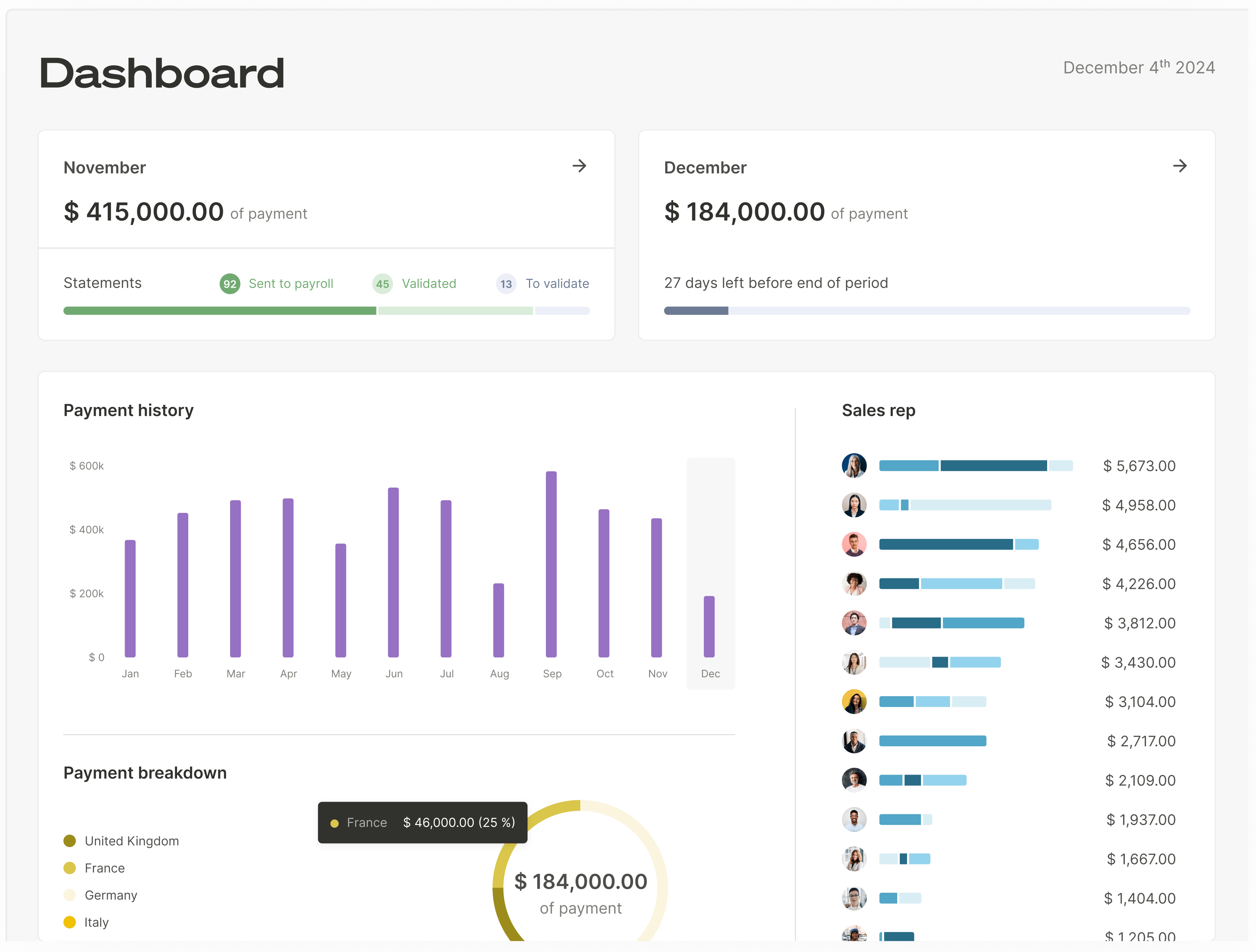
Furthermore, these systems provide robust approval workflows and audit trails, ensuring every payment is accurate and compliant. Finance teams gain full control and visibility. Qobra sends approved commission data to payroll through a webhook, which streamlines the final payment process. This end-to-end automation frees up your teams to focus on strategic analysis and optimization, turning compensation from a backward-looking administrative task into a forward-looking strategic tool.
🚨 Attention: High-Risk, High-Reward Plans
While "turbo-charged" incentive plans with significant upside can be incredibly effective during a major business transformation, they also carry considerable risk. An unconventionally high payout potential can attract scrutiny from shareholders and proxy advisors. If you consider such a strategy, ensure it is backed by extremely ambitious, yet achievable, goals. It is crucial to involve the full Board of Directors in the approval process and to communicate the rationale clearly to all stakeholders.
The journey of compensation transformation is a strategic imperative for businesses aiming for sustained growth and a motivated workforce. It begins with a commitment to deep preparation and stakeholder alignment, progresses through the strategic redesign of incentive plans to reflect true business goals, and is powered by technology that brings automation, transparency, and agility to the process. By moving beyond outdated models and embracing a holistic approach, you can build a resilient compensation program that satisfies your employees and supports your business objectives, no matter what conditions you face.
Frequently asked questions
How do you measure the success of a compensation transformation?
The success of a compensation transformation should be measured against a combination of quantitative and qualitative metrics. Key quantitative indicators include improvements in the strategic goals the plan was designed to influence, such as an increase in gross profit margin, a higher rate of revenue expansion from existing customers, or a reduction in customer churn. You should also track operational metrics like a reduction in commission disputes and the time spent by Ops and Finance teams on administration. Qualitatively, success can be measured through employee surveys assessing satisfaction and clarity regarding the new compensation plans, as well as talent metrics like an improvement in sales team retention rates and the ability to attract top performers. A successful transformation should result in a clear, measurable positive impact on both business performance and employee engagement.
Which sales compensation software allows for real-time simulation of incentive plans before they go live?
Platforms like Qobra let RevOps and compensation managers design, model, and deploy incentive plans in a no-code plan builder, without relying on IT. Qobra users can run simulations to forecast the financial impact of different plan designs before deploying a plan. Testing a plan design in a simulation helps a company adapt its compensation strategy quickly when market conditions or business priorities change.