Sales Compensation Software Benchmark | Compare 15+ Sales Compensation Platforms
Download
Is your sales commission plan really working for you? Does it simply reward closing deals, or does it actively drive your company toward its most important financial goal: profitability? Many businesses focus solely on top-line revenue, but what if your top performers are selling high-volume, low-margin products that barely move the needle on your bottom line? It might be time to ask a critical question: is your compensation structure aligned with your business's true financial health?
This is where rethinking the very foundation of your sales incentives can be a game-changer. Moving beyond simple revenue targets to a model that rewards profitability can transform your sales team from deal-closers into strategic business partners.
What is a Commission Structure Based on Gross Profit?
A sales commission structure is the blueprint that defines how your salespeople are compensated for the sales they generate. While many plans are based on total revenue, a commission structure based on gross profit ties a salesperson's earnings directly to the profitability of each sale. Instead of receiving a percentage of the total sale price, they earn a percentage of the gross margin.
Gross Margin is the revenue from a sale minus the Cost of Goods Sold (COGS). It represents the profit a company makes on a sale before accounting for overhead, marketing, and other operating expenses.
Formula: Gross Margin = Total Revenue - Cost of Goods Sold (COGS)
By using this model, you fundamentally shift the focus. A salesperson is no longer incentivized to sell at any cost; they are motivated to sell smarter. This means prioritizing products with higher margins, negotiating better prices, and avoiding excessive discounts that erode profitability. This approach aligns the sales team's personal financial goals directly with the company's overall financial success.
How to Calculate Gross Margin Commission
Calculating commissions based on profitability requires a bit more data than a simple revenue-based plan, but the logic is straightforward. It involves determining the gross margin of a sale and then applying a pre-determined commission rate to that amount.
Here’s a step-by-step breakdown of the calculation:
- Determine the Total Revenue: This is the final price the customer pays for the product or service.
- Identify the Cost of Goods Sold (COGS): This includes all direct costs associated with producing or delivering the product, such as raw materials, manufacturing labor, or software subscription costs.
- Calculate the Gross Margin Amount: Subtract the COGS from the Total Revenue.
Gross Margin Amount = Total Revenue - COGS - Apply the Commission Rate: Multiply the Gross Margin Amount by the salesperson's commission percentage.
Gross Margin Commission = Gross Margin Amount x Commission Percentage
Let's illustrate with an example:
| Metric | Sale A (Low Margin Product) | Sale B (High Margin Product) |
|---|---|---|
| Total Revenue | $20,000 | $20,000 |
| Cost of Goods Sold (COGS) | $18,000 | $12,000 |
| Gross Margin Amount | $2,000 | $8,000 |
| Commission Rate | 15% | 15% |
| Salesperson's Commission | $300 | $1,200 |
As you can see, even though both sales generated the same revenue, Sale B was four times more valuable to the salesperson and the company. This immediately encourages reps to focus their efforts on selling products like the one in Sale B.
The Pros and Cons of a Gross Profit Commission Model
Adopting a commission plan based on gross margin can be highly effective, but it's essential to weigh its advantages against its potential drawbacks.
Advantages:
- Increased Company Profitability: This is the primary benefit. It directly incentivizes the sales team to focus on deals that contribute most to the bottom line, rather than just chasing revenue volume.
- Aligns Sales with Company Goals: It creates a powerful synergy between the sales department and the broader financial objectives of the organization. Sales reps begin to think more like business owners.
- Encourages Strategic Selling: Salespeople are motivated to understand the product portfolio more deeply, pushing higher-margin items and crafting solutions that are valuable for both the customer and the company. It naturally discourages deep, margin-killing discounts. For more information on different incentive structures, explore the various types of incentive compensation.
- More Stable Rep Income in Some Industries: In markets where product margins vary significantly, this model can provide a more predictable and often higher income stream for skilled reps who can successfully sell profitable solutions.
Disadvantages:
- Increased Complexity: Calculating gross margin for every deal, especially with complex product bundles or services, can be challenging. It requires accurate, real-time data on COGS, which isn't always readily available.
- Potential for Data Errors: The entire system relies on the accuracy of your COGS data. Inaccurate or outdated cost information can lead to incorrect commission payments and disputes.
- May Require Additional Training: Sales reps need to be educated on what drives profitability. They need to understand the margins of different products to effectively prioritize them.
- Risk of Neglecting Customer Needs: In a worst-case scenario, a hyper-focus on margin could lead reps to push products that aren't the best fit for a customer, potentially harming long-term relationships.
🚨 Attention: Maintain a Customer-Centric Focus
While a gross profit model is excellent for aligning sales with financial goals, it's crucial to reinforce a customer-first culture. Train your team to understand that the most sustainable high-margin sales come from solving a customer's core problem effectively, not just pushing the most expensive product. Long-term relationships built on trust will always be more profitable than short-term gains.
When to Use a Gross Margin Commission Structure
A gross profit commission plan isn't a one-size-fits-all solution. It is most effective in specific business environments and industries where profitability can vary dramatically from one sale to the next.
Consider implementing this structure in the following scenarios:
- Industries with Diverse Product Portfolios: It’s ideal for companies that sell a mix of products or services with widely different profit margins. For example, a technology company selling both low-margin hardware and high-margin SaaS subscriptions.
- Businesses Where Sales Reps Control Pricing: If your salespeople have the autonomy to offer discounts, a gross margin plan incentivizes them to protect the profit on each deal.
- Competitive or Low-Margin Markets: When every percentage point of profit matters, this model ensures that the sales team is focused on maximizing the return from every single transaction.
- Companies with Complex or Long Sales Cycles: For deals that require significant investment in time and resources, it's crucial to ensure the final sale is profitable. This model helps reps focus their energy on the opportunities with the highest potential return. This can be a key factor in shortening the sales cycle for profitable deals.
Examples Across Different Industries
- Technology/SaaS: A reseller might earn a 5% commission on hardware sales (low margin) but a 20% commission on the gross margin of a multi-year software subscription (high margin).
- Manufacturing: A sales rep is encouraged to sell custom-engineered products with higher margins over standardized, mass-produced items that face heavy price competition.
- Retail: Sales associates in a luxury goods store might be incentivized to sell exclusive, high-margin brands over more common, lower-margin products.
- Automotive: A salesperson earns a higher commission for selling a fully-loaded, high-end model with premium add-ons compared to a base-level model with no extras.
The Challenge of Complexity and the Path to Automation
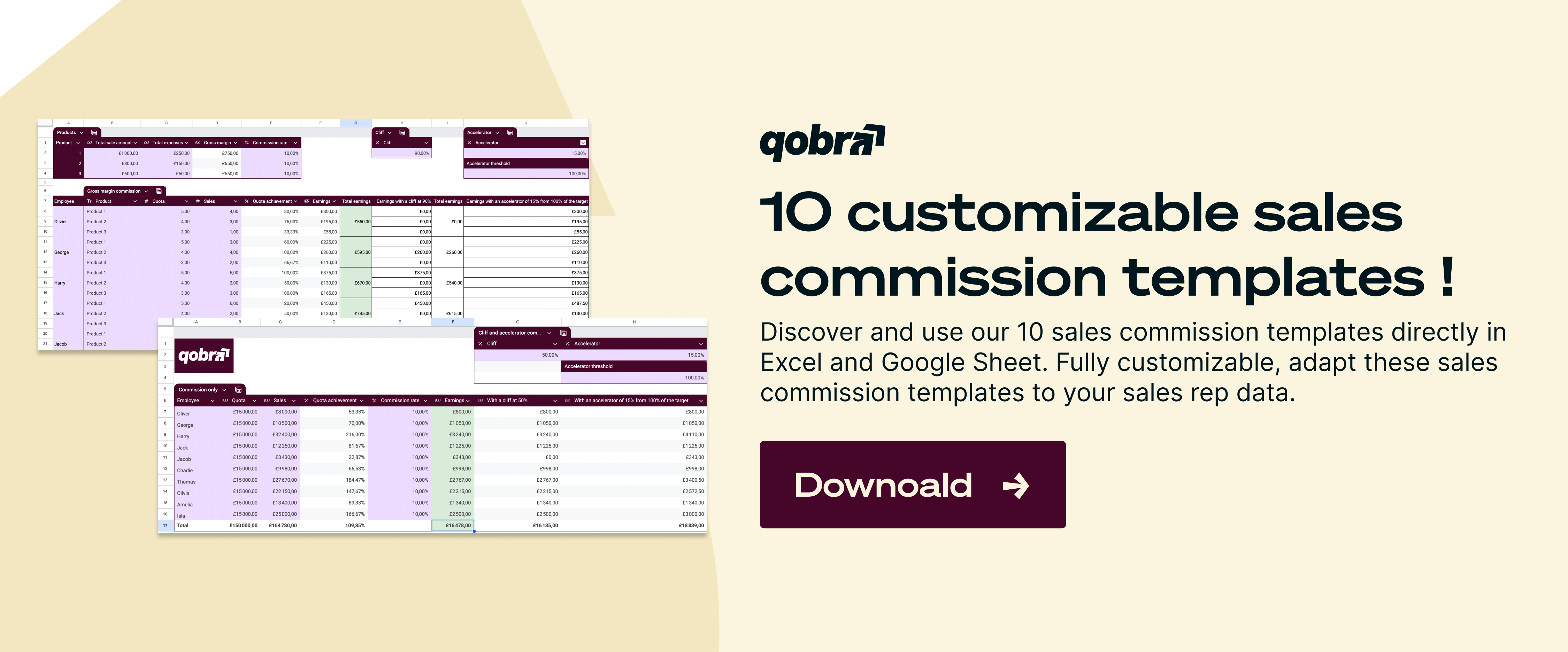
The biggest hurdle to implementing a commission structure based on gross profit is its administrative complexity. Manually calculating commissions based on margin for a large sales team using spreadsheets is a recipe for disaster. It's time-consuming, prone to human error, and lacks the transparency needed to truly motivate your team.
Imagine the workload for your Sales Ops or Finance teams:
- Pulling revenue data from the CRM.
- Finding and matching COGS data from an ERP or another database.
- Manually calculating the margin for hundreds or thousands of line items.
- Dealing with deal splits, exceptions, and disputes from reps who don't trust the numbers.
This manual grind not only wastes valuable time but also creates a delay between a sale being closed and the salesperson seeing their commission. This lag disconnects the action (the sale) from the reward (the commission), significantly reducing its motivational impact.
Streamlining Profit-Based Commissions with Automation
This is where a dedicated sales commission platform becomes essential. To effectively manage a gross profit commission plan, you need a system that can automate the entire process, ensuring accuracy, transparency, and real-time visibility.
With an intuitive and flexible platform like Qobra, you can overcome the challenges of complexity. Our solution is designed to:
- Automate Calculations: By integrating natively with your CRM (like Salesforce or HubSpot) and other data tools, we pull revenue and cost data automatically. Qobra syncs CRM data automatically throughout the day, and on demand in one click. The gross margin and corresponding commission are calculated automatically for each closed deal.
- Provide Full Transparency: Sales reps no longer have to wait for a spreadsheet at the end of the month. They can access a real-time dashboard to see exactly how much they've earned on each deal, understand which products are most profitable, and track their progress toward their goals. This visibility is a powerful performance driver.
- Simplify Complex Plan Building: Our 100% no-code plan editor allows you to build sophisticated commission structures, including multi-tiered, gross profit-based plans, without writing a single line of code. You can easily manage spiffs, bonuses, and exceptions with a complete audit trail.
- Streamline Approvals and Payouts: Our automated workflows ensure that commissions are reviewed, validated by managers and Finance, and sent to your HR or payroll system securely and accurately, eliminating payment disputes and accelerating pay runs. This process helps maintain compliance with standards like ASC 606 for commissions.
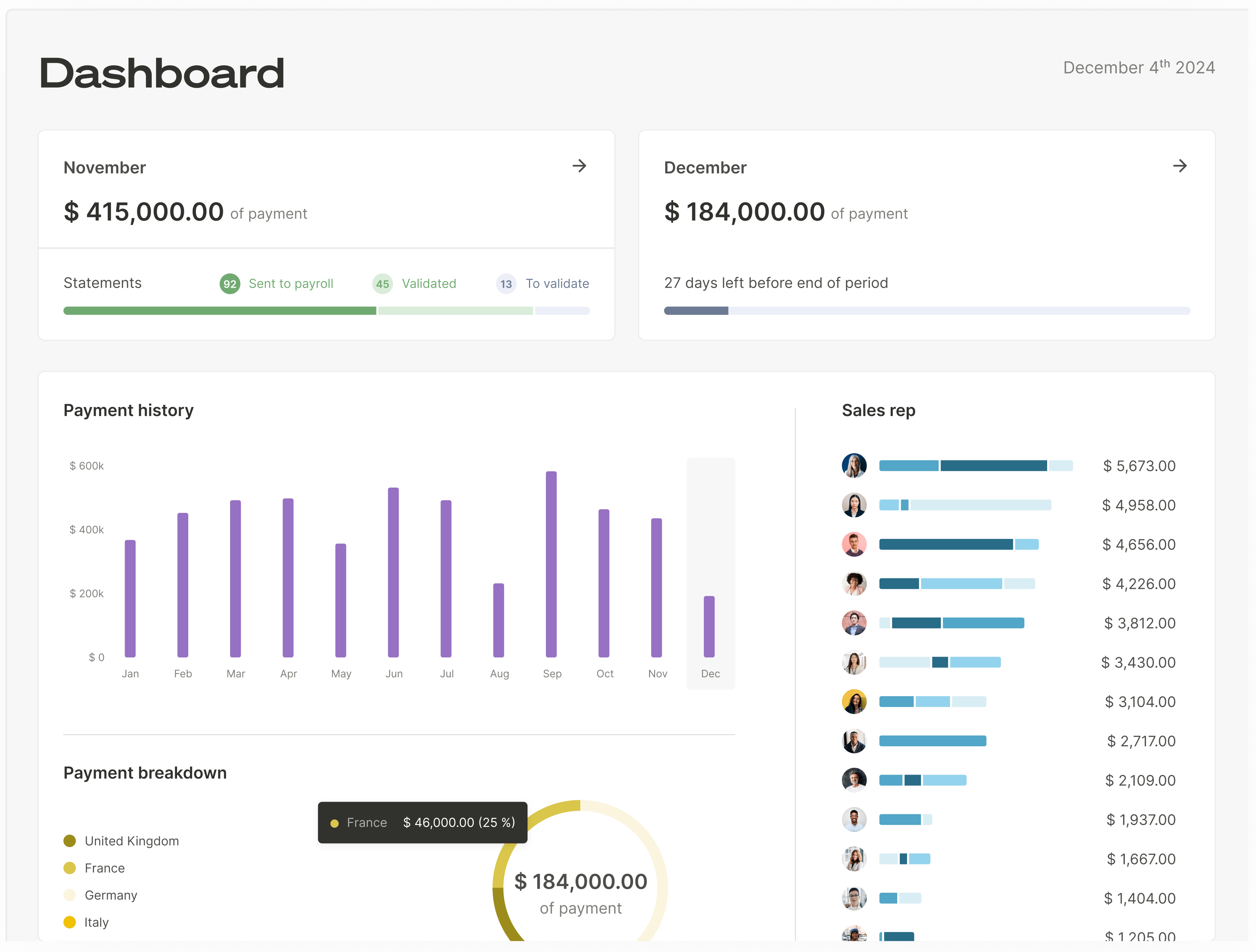
By automating your commission process, you empower your Sales Ops teams to focus on strategy instead of administration, give your reps the clarity they need to perform at their best, and provide your finance department with the control and forecasting ability to manage the company's financial health effectively. The right RevOps software can make all the difference.
💡 Expert Advice: Ensure Data Integrity
For a gross profit commission model to succeed, the data it relies on must be impeccable. Before launching your plan, conduct a thorough audit of the COGS data in your CRM and ERP systems. Ensure that costs are assigned accurately to each product or service and that the data synchronization between systems is seamless. A commission automation platform can help flag inconsistencies, but the underlying data quality is paramount.
A commission structure based on gross profit is a powerful lever for aligning your sales team with your company's core financial objectives. By shifting the focus from pure revenue to profitability, you encourage smarter selling, protect your margins, and ultimately build a healthier, more sustainable business. While this approach introduces complexity, modern automation tools can eliminate the administrative burden, providing the real-time visibility and accuracy needed to make your compensation plan a true strategic asset. You can further enhance this with strong B2B sales commission practices.
Frequently Asked Question: What is the main difference between a gross revenue and a gross profit commission plan?
The main difference lies in the basis of the calculation. A gross revenue commission plan pays a salesperson a percentage of the total sale amount, regardless of the costs associated with that sale. It incentivizes maximizing the total value of all deals. In contrast, a gross profit (or gross margin) commission plan pays a percentage of the profit made on the sale (Revenue - Cost of Goods Sold). This incentivizes salespeople to focus on the most profitable deals, even if their total revenue is lower.
Gross-profit commissions get complex fast; a commission management system handles the logic and the payouts automatically.