Webinar: The Biggest Release Sales Comp Has Ever Seen. Come See For Yourself (Wednesday, October 7)
Register
Are you consistently maxing out your 401(k) and IRA contributions each year? Do you find yourself looking for additional, tax-efficient ways to save for retirement or other significant life goals? If your company offers an executive deferred compensation plan and you haven't yet explored it, now might be the perfect time. Imagine being able to set aside a portion of your salary or bonus, let it grow tax-deferred, and only pay taxes on it years down the road.
These specialized plans can be a powerful tool in a high-earner's financial toolkit, but they aren't without their complexities and risks. How do they really work? What are the key decisions you'll need to make, and what are the potential pitfalls to avoid? Understanding the intricate details is crucial before committing a portion of your hard-earned income.
Understanding Executive Deferred Compensation Plans
An executive deferred compensation plan, often called a nonqualified deferred compensation (NQDC) plan, is a strategic arrangement between an employer and key employees. It allows eligible executives to postpone receiving a portion of their income, such as salary, bonuses, or commissions, until a future date, typically upon retirement. The primary allure is tax deferral. Both the deferred income and any investment earnings it generates are not subject to federal or most state income taxes until the money is actually paid out. This allows your savings to compound more rapidly.
Unlike qualified retirement plans like a 401(k), NQDC plans are not governed by the strict rules of the Employee Retirement Income Security Act (ERISA). This exemption gives companies much more flexibility in designing their plans. They can be selective about who participates, often limiting them to a group of management or highly compensated employees. Because they are "nonqualified," these plans don't have the same contribution limits imposed by the IRS, though your employer will likely set their own cap.
The core mechanism is straightforward: you elect to defer a certain amount of your compensation before the year it is earned. This decision is irrevocable for that year. You also pre-select a distribution schedule, deciding whether you want the funds as a lump sum or as a series of payments over several years. This foresight is critical, as changing your mind later is difficult and subject to strict rules.
How NQDC Plans Function in Practice
When you enroll in an NQDC plan, you're faced with a few crucial, binding decisions. First, you must decide what percentage of your upcoming salary or bonus to defer. This choice has to be made before the compensation period begins, meaning you're making a commitment based on anticipated earnings. This is where clarity on your total compensation becomes vital. For sales leaders and executives whose pay is heavily weighted toward variable components, understanding potential commission payouts is key to making an informed deferral decision.
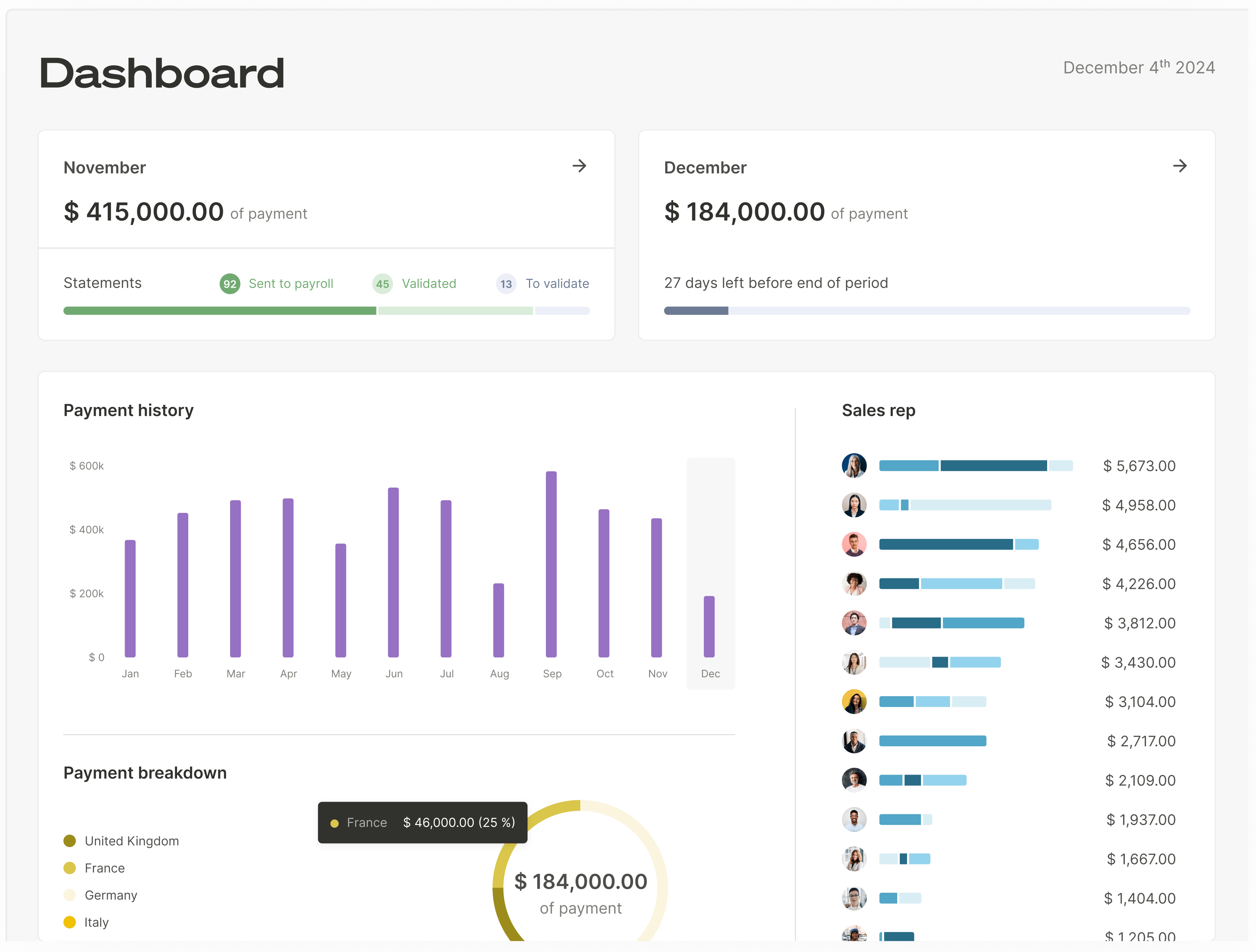
A robust platform for managing variable pay can provide the real-time visibility needed for such planning. For instance, Qobra's solution syncs directly with CRMs like Salesforce, offering instant calculations and transparent statements on commissions earned. This level of clarity empowers executives to forecast their earnings with greater accuracy, making the decision of how much income to defer less of a guess and more of a data-driven strategy.
Once deferred, the funds are typically credited to a bookkeeping account in your name. You will likely be offered a menu of investment options, similar to what you might find in your company's 401(k) plan. You can choose how to allocate these "phantom" investments, whether aggressively for long-term growth or conservatively if your distribution date is nearer. The performance of these underlying investments determines the growth of your deferred compensation account. Your distribution schedule, chosen at enrollment, dictates when you'll receive the funds. You could time it to create an income stream in early retirement, bridge a financial gap, or fund a major purchase.
📌 A Note on Taxes
While federal and state income taxes are deferred until distribution, FICA taxes (Social Security and Medicare) are generally due in the year the compensation is deferred and earned. Your employer will handle this withholding, but it's an important detail to remember when assessing your take-home pay for the year.
Types of Deferred Compensation Arrangements
While the concept of deferring income is central, NQDC plans come in several forms. They can be broadly categorized based on who funds them and how they operate, much like the distinction between defined contribution and defined benefit plans in the qualified world.
The most common types for executives are elective deferral plans:
- Salary Reduction Plans: This is the classic model where an executive chooses to defer a portion of their base salary.
- Bonus Deferral Plans: Similar to salary reduction, but specifically allows for the deferral of annual or performance-based bonuses. This is particularly popular as it allows executives to save a significant lump sum without impacting their regular monthly cash flow.
In addition to these elective plans, some companies offer supplemental, employer-funded plans:
- Supplemental Executive Retirement Plans (SERPs): These are funded entirely by the employer and are designed to provide retirement benefits above and beyond what's possible through qualified plans. They act more like a traditional pension or defined benefit plan, promising a specific benefit at retirement.
- Excess Benefit Plans: These plans are specifically designed to replace benefits that an executive loses in their qualified plan due to IRS limits on contributions or compensation.
Understanding which type of plan your company offers is the first step in evaluating if it aligns with your components of compensation and long-term financial goals.
The Strategic Advantages of Deferring Compensation
The primary reason high-earning executives participate in NQDC plans is the significant tax advantage. By deferring income, you lower your current taxable income, potentially saving thousands of dollars in your peak earning years when you are in the highest tax bracket. The goal is to receive this income in retirement, when you anticipate being in a lower tax bracket, thus paying less tax overall on the same earnings. For those considering a move to a state with no income tax in retirement, the savings can be even more substantial, provided the distributions are structured correctly (often in 10 or more annual payments).
Beyond taxes, these plans offer a way to save far beyond the limits of a 401(k) or IRA. In 2024, the 401(k) contribution limit is $23,000 (plus a catch-up for those over 50). For an executive earning a high six- or seven-figure income, this represents a small fraction of their total pay. NQDC plans have no IRS-mandated limits, allowing for much more aggressive, tax-advantaged savings. This "super-saving" capability can dramatically accelerate wealth accumulation.
Finally, an NQDC plan imposes a valuable savings discipline. The money is locked away and inaccessible for day-to-day spending, forcing a systematic approach to saving. Contributing $30,000, $50,000, or more each year can build a formidable nest egg over a decade or two. This fund can be strategically used to enable early retirement, providing a crucial income stream before you start drawing from Social Security or other retirement accounts, allowing them to continue growing.
Understanding the Risks and Drawbacks
While the benefits are compelling, NQDC plans carry significant risks that are crucial to understand. The most significant is credit risk. Unlike the funds in your 401(k), which are held in a trust and protected from your employer's creditors, the money in an NQDC plan is not. Your deferred compensation is essentially an unsecured promise from your company to pay you in the future.
🚨 Warning: The Risk of Company Failure
If your employer declares bankruptcy or becomes insolvent, you become a general, unsecured creditor. This means you'll be in line behind secured creditors (like banks) to reclaim your money, and you may only receive a fraction of what you're owed, or nothing at all. Before enrolling, you must have strong confidence in the long-term financial stability of your company.
Another major drawback is the lack of liquidity and flexibility. Once you elect to defer income, that decision is irrevocable. You cannot access the funds early, even in a financial emergency. There are no provisions for loans or hardship withdrawals like those available in a 401(k). If your financial situation changes unexpectedly, the money remains locked away until your chosen distribution date. While some plans allow you to delay distributions further (with a mandatory five-year additional waiting period), you can never accelerate them.
Other risks to consider include:
- Tax Rate Risk: There is no guarantee that tax rates will be lower in the future. If rates increase substantially, the tax benefit of deferral could be diminished or even eliminated.
- Investment Risk: Just like any investment account, the value of your NQDC plan can decrease if the underlying investments perform poorly.
- No Rollover Option: If you leave your job, you cannot roll your NQDC funds into an IRA or your new employer's plan. You must adhere to the distribution schedule you originally elected, or as specified by the plan's terms for termination.
Is a Deferred Compensation Plan Right for You?
Deciding whether to participate in an executive savings plan requires a careful assessment of your personal financial situation, your goals, and your risk tolerance. This type of plan is generally best suited for a specific profile of executive.
You might be a good candidate if:
- You are a high-income earner and are already contributing the maximum amount to all available qualified retirement plans, like your 401(k) and IRAs.
- You have sufficient liquid savings and post-deferral income to cover all your current and anticipated expenses without needing access to the deferred funds.
- You have a high degree of confidence in your company's long-term financial health and stability. This is particularly important for those at private or early-stage companies compared to established public corporations.
- You are in a high tax bracket and have a reasonable expectation of being in an equal or lower tax bracket during your retirement years.
Conversely, you may want to reconsider if you are uncomfortable with the credit risk, if you need more flexibility in your savings, or if you don't have a stable, predictable cash flow.
| Factor to Consider | 401(k) Plan | NQDC Plan |
|---|---|---|
| Contribution Limits | IRS-mandated annual limits | No IRS limits; set by employer |
| Eligibility | Generally open to all employees | Restricted to management/high-earners |
| Creditor Protection | Funds protected from employer's creditors | Funds are an asset of the company; at risk in bankruptcy |
| Early Access | Loans and hardship withdrawals may be available | Generally no early access or loans |
| Rollover Options | Can be rolled over to an IRA or new 401(k) | No rollover options available |
| Distribution Rules | Must begin withdrawals at age 73 (RMDs) | No required minimum distributions; schedule is pre-set |
Making the Right Decisions: Enrollment and Strategy
If you decide to move forward, your strategy matters. The decisions you make at enrollment will shape the outcome for years to come. First, determine how much to defer. Analyze your budget and cash flow meticulously to ensure your remaining income is sufficient for your lifestyle, other savings goals, and unexpected expenses. For sales executives, this requires a solid grasp of potential earnings from variable pay, which is why leveraging a tool for effective sales forecasting can be instrumental in this process.
Next, choose your distribution schedule wisely.
- Lump-Sum Distribution: This can be useful for a large, specific goal like buying a vacation home or paying off a mortgage. However, it can also push you into a high tax bracket in the year you receive it, partially negating the tax-deferral benefit.
- Installment Payments: Spreading payments over 5, 10, or 15 years can provide a steady retirement income stream and help manage your tax liability by keeping your annual income lower.
Finally, align your investment choices with your overall financial plan. Your NQDC plan should not exist in a vacuum. Coordinate the asset allocation within the plan with your other investment accounts to ensure you have a diversified, balanced portfolio that reflects your time horizon and risk tolerance. A financial advisor can be invaluable in helping you integrate your NQDC strategy with your broader wealth management plan. Using a flexible sales planning software can also help model different income scenarios to inform these long-term financial decisions.
An executive deferred compensation plan offers a unique and powerful opportunity for high earners to enhance their savings and manage their tax burden. It provides a disciplined way to save for the future, far beyond the constraints of traditional retirement accounts. However, its advantages come with significant risks, primarily the lack of creditor protection and the inflexibility of access. The decision to participate should only be made after a thorough evaluation of your company's stability and your own comprehensive financial plan. When used correctly, it can be an indispensable tool for achieving your most ambitious long-term goals.
Frequently Asked Questions
What's the main difference between a 401(k) and an NQDC plan?
The biggest differences relate to regulation and risk. A 401(k) is a "qualified" plan, heavily regulated by ERISA to protect employees. Your 401(k) funds are held in a trust and are safe from your employer's creditors. An NQDC plan is "nonqualified," offering more flexibility but lacking ERISA protection. Your NQDC funds remain an asset of the company, making them subject to credit risk if the company fails. Additionally, 401(k)s have IRS contribution limits, while NQDC plans do not.
Can I change my mind after I decide to defer my income?
No, the deferral election is irrevocable for the year it is made. You must decide to defer the income before you earn it. Once that election is made, you cannot access the money until the pre-determined distribution date. While some plans may allow you to make a subsequent election to delay the payment further (typically for at least five more years), you can never accelerate the payment.
What happens to my deferred compensation if my company goes bankrupt?
If your company goes into bankruptcy, your status is that of a general, unsecured creditor. This means you will have to wait in line behind secured creditors (like banks with loans collateralized by company assets) to try and recover your funds. In many bankruptcy scenarios, unsecured creditors receive only a small percentage of what they are owed, and sometimes nothing at all. This is the single greatest risk associated with NQDC plans.
Are there limits on how much I can contribute to an NQDC plan?
The IRS does not impose annual contribution limits on NQDC plans, which is a key advantage over 401(k)s and IRAs. However, your employer will almost certainly establish its own limits. The plan document will specify the maximum percentage of your salary and/or bonus that you are permitted to defer each year. These limits are set at the company's discretion and can vary widely. It is important to review the specifics of your company's incentive eligibility requirements and plan documents carefully.