Sales Compensation Software Benchmark | Compare 15+ Sales Compensation Platforms
Download
- Qobra fits RevOps teams that tie sales compensation to go-to-market strategy: with a no-code solution like Qobra, RevOps can build and deploy complex B2B sales commission structures that incentivize ICP sales, multi-year contracts or cross-sells, and can quickly adapt the compensation plan.
- As RevOps takes ownership of the GTM stack, commission calculation is usually the last process still handled outside the stack; Qobra's sales compensation platform brings commission calculation back in, with the same CRM data the rest of the stack uses.
- The modern RevOps stack includes CRM and data hygiene platforms, revenue intelligence platforms such as Gong, forecasting platforms that rely on data aggregation and AI, sales engagement platforms such as Salesloft, and sales compensation management platforms that automate commission calculations.
- Research from Forrester highlights that organizations aligning people, processes and technology across their entire revenue engine experience 36% more revenue growth and up to 28% more profitability.
- RevOps in 2026 is moving beyond historical reporting to predictive analytics, using AI to forecast revenue and identify opportunities and risks proactively, and is aligning finance and product teams, not only sales, marketing and customer success, around a single data-driven revenue strategy.
Is your revenue engine truly aligned, or are sales, marketing, and customer success still operating in separate lanes? As buyer expectations skyrocket and economic pressures mount, the old siloed approach to growth is no longer sustainable. How are you preparing for a future where data-driven strategy and operational efficiency aren't just goals, but table stakes for survival? The answer lies in Revenue Operations (RevOps), a function that has moved from the periphery to the very core of strategic planning. But as this discipline matures, what are the critical shifts and evolutions you need to anticipate for 2026 and beyond?
The Unstoppable Rise of RevOps: A Strategic Imperative
The growth of RevOps has been nothing short of explosive. In 2020, only about a third of companies had a dedicated RevOps function. Today, that number is approaching 50%, and industry analysts predict that by 2026, a staggering 75% of the world's highest-growth companies will have adopted a RevOps model. This isn't a fleeting trend; it's a fundamental response to a changing market. Modern buyers demand a consistent, self-directed, and seamless experience, forcing businesses to break down the traditional walls between their revenue-generating departments.
The results of this alignment speak for themselves. Research from Forrester highlights that organizations that successfully align the people, processes, and technology across their entire revenue engine experience 36% more revenue growth and up to 28% more profitability. The data consistently shows that companies introducing a RevOps function see greater alignment and productivity, with many experiencing significant increases in operating margin and revenue growth.
This strategic shift is also reflected in the job market. RevOps is now considered the fastest-growing job in America, with a recent search on ZipRecruiter revealing over 174,000 open positions. For many organizations, the question is no longer if they should adopt RevOps, but how quickly they can build a team to harness its power.
Key RevOps Evolutions Shaping 2026
As RevOps solidifies its role as a strategic driver, several key evolutions are defining its future. These are not just minor adjustments but significant shifts in mindset, technology, and strategy that B2B leaders must understand to stay competitive.
AI as the RevOps Co-pilot: From Insight to Action
Artificial intelligence is arguably the largest and most transformative trend impacting every industry, and RevOps is at the epicenter of its application. AI copilots are no longer a "nice-to-have" novelty; they've become a necessity for teams looking to forecast, coach, and execute at scale. RevOps teams are drowning in data, and AI provides the means to not only analyze it but to extract deep, predictive insights in a fraction of the time a human could.
We are seeing a surge in AI-powered forecasting, real-time sales coaching, and automated deal execution. These tools handle the heavy lifting, freeing up RevOps and sales leaders to focus on high-level strategy rather than getting bogged down in manual analysis. For example, some teams are feeding all their sales call notes and emails from lost opportunities into an AI tool to uncover the real, underlying reasons for churn, insights that were previously hidden in unstructured data. This evolution is transforming RevOps from a reactive, report-generating function to a proactive, predictive engine for growth.
🚨 Attention: Data Hygiene is Non-Negotiable
AI-powered insights and accurate forecasting are only as good as the data they're built on. A primary, ongoing responsibility of any RevOps team is to establish and enforce strict CRM data hygiene. Without clean, reliable data, your entire tech stack's ROI is at risk, and your AI initiatives will fail to deliver on their promise.
The Shift from Silos to Synergy: Driving Cross-Functional Collaboration
At its core, RevOps was conceived to dismantle the silos between sales, marketing, and customer success. In 2026, this mandate is expanding to include finance, product, and HR, creating a truly unified revenue organization. Silos are a drag on efficiency and create a disjointed customer experience. With B2B buyers now interacting with an average of nine different roles before making a purchase, a lack of internal alignment is immediately apparent and detrimental.
The most effective RevOps teams are those that foster a culture of synchronized movement, powered by tools that keep everyone aligned, informed, and focused on the buyer. This means shared data, unified account plans, and transparent success metrics that are accessible to all stakeholders. When every department operates from the same playbook and speaks the same language, the entire GTM motion becomes faster and more effective. This is where transparent systems become critical. Providing a single source of truth for key metrics, such as sales commissions, aligns Sales, Ops, and Finance by eliminating disputes and fostering trust. That's a core principle behind how we designed our platform at Qobra, ensuring everyone from reps to the finance department has a clear, real-time view of performance and earnings.
Redefining GTM Success: Retention and Efficiency Over Growth-at-all-Costs
The era of "growth at all costs" is over. With new business becoming more difficult and expensive to acquire, savvy B2B leaders are shifting their focus to customer longevity, retention, cross-sells, and upsells as the primary drivers of sustainable growth. The mindset has evolved from simply winning new customers to winning the right customers—those most likely to renew and expand.
This strategic shift has profound implications for RevOps. The priority is now on identifying and targeting prospects that match the Ideal Customer Profile (ICP) to ensure long-term value. This requires a new level of sophistication in both outreach and incentive structures. Cold outreach must be hyper-targeted and relevant to elicit a response. More importantly, compensation plans must be designed to reward the right behaviors.
For instance, if your business development representatives (BDRs) receive a bonus for every demo they book, consider adding a kicker if that demo is with an ICP account. Similarly, your sales team should earn higher commission rates for closing deals with customers who have a higher potential for retention and expansion.
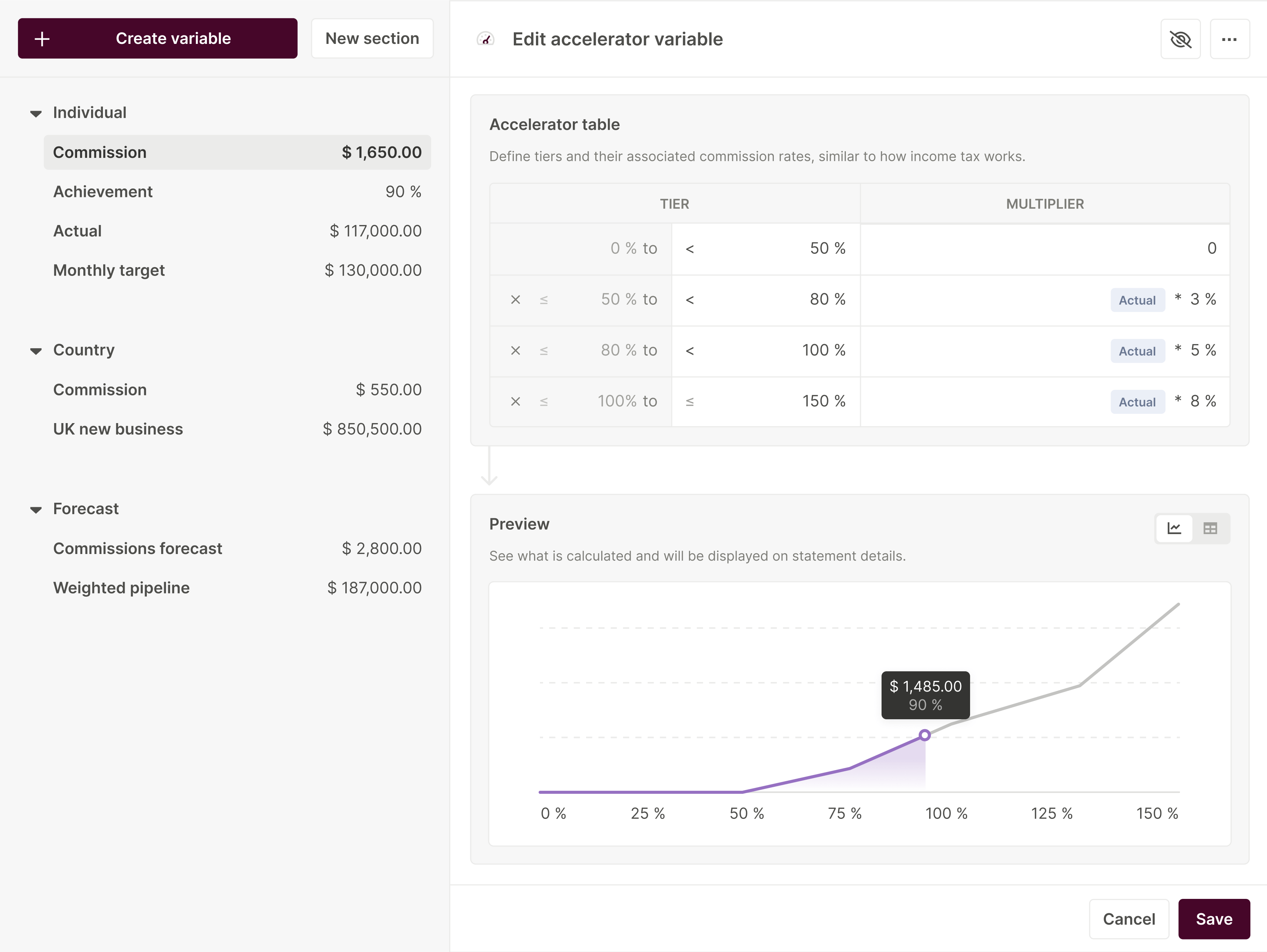
This is where a flexible compensation platform is indispensable. With a modern, no-code solution like Qobra, you can easily build and deploy complex B2B sales commission structures that directly support your strategic goals. Whether it's incentivizing ICP sales, multi-year contracts, or cross-sells, the ability to quickly adapt your compensation plan is a powerful lever for driving desired outcomes.
Proving Value: The Scrutiny on Tech Stack ROI
As budgets tighten, every piece of technology in the GTM stack is under a microscope. RevOps leaders are being asked to justify every expenditure and prove a clear return on investment. It's no longer enough for a tool to claim it makes leaders more productive; it must demonstrate tangible time and dollar savings. This pressure is driving a more strategic approach to technology acquisition and management.
Despite the scrutiny, the RevOps platform market is booming, with a valuation of over $3.6 billion in 2023 and a projected compound annual growth rate exceeding 17%. This growth is fueled by the critical need to streamline processes and achieve predictable revenue. The most valuable tools in the modern RevOps stack include:
- CRM & Data Hygiene Platforms: Tools that enforce sales process compliance and maintain clean CRM data.
- Revenue Intelligence Platforms: Systems like Gong that analyze customer interactions to provide coaching and insights.
- Forecasting Platforms: Solutions that enable more effective sales forecasting through data aggregation and AI.
- Sales Engagement Platforms: Tools like Salesloft that help reps execute outreach campaigns at scale.
- Sales Compensation Management Platforms: Solutions designed to automate commission calculations and provide real-time visibility.
Platforms like ours are crucial for automating one of the most time-consuming and error-prone processes, providing real-time visibility into earnings, and ensuring that GTM strategy expenses are tied directly to results. The ROI is clear: saved time for Ops, increased motivation for Sales, and complete accuracy and control for Finance.
📌 A Note on Tech Stack Consolidation
While the market is flooded with new tools, the trend among mature RevOps teams is shifting towards consolidation and deep integration. Before adding a new piece of software, evaluate if its function can be covered by an existing platform or one that offers a more integrated suite. A bloated, disconnected tech stack creates more problems than it solves.

Building and Scaling a Modern RevOps Function
Recognizing the trends is the first step; building a team capable of executing on them is the next. The structure and evolution of your RevOps function will vary depending on your company's size and growth stage, but there are common milestones and roles to consider.
Structuring Your RevOps Team: From Analyst to CRO
In the early stages, a company may not have a formal RevOps presence. However, experts suggest that once you reach about 20 employees and a growth rate of 10-25%, it's time to establish a dedicated RevOps role. This initial hire is crucial for building and refining processes during a volatile growth period. As your company surpasses $1 million in revenue with sustained growth over 25%, the RevOps function becomes more strategic, shifting its focus to optimizing product-market fit and scaling growth efficiently.
The most common entry point into the function is the Revenue Operations Analyst. As the team and company grow, leadership roles emerge, such as Head of Revenue Operations in small to medium-sized businesses, which often evolves into a Chief Revenue Officer (CRO) at the enterprise level. These roles are increasingly found in major tech hubs like San Francisco, New York, and Los Angeles, but the rise of remote work is distributing this talent globally. For startups looking to build their first team, understanding these initial steps is critical for laying a solid foundation for sales operations for startups.
The RevOps Salary Landscape
Reflecting its growing importance, RevOps has become a lucrative career path. As of mid-2024, the average annual salary for a RevOps role in the United States is approximately $110,000, with the majority of salaries falling between $85,000 and $128,000. Significantly, recruiting firms note that a RevOps manager typically earns 20% more than a comparable sales operations manager, highlighting the strategic premium placed on the role.
While salaries can vary by location, the difference is often less pronounced than in other fields. The following table shows the top 10 U.S. cities where RevOps salaries exceed the national average, suggesting that optimizing income may be best achieved by considering locations with a lower cost of living.
| City | Annual Salary | Monthly Pay | Weekly Pay | Hourly Wage |
|---|---|---|---|---|
| San Francisco, CA | $138,384 | $11,532 | $2,661 | $66.53 |
| Fremont, CA | $134,834 | $11,236 | $2,592 | $64.82 |
| San Jose, CA | $129,693 | $10,807 | $2,494 | $62.35 |
| Oakland, CA | $128,696 | $10,724 | $2,474 | $61.87 |
| Jackson, WY | $128,581 | $10,715 | $2,472 | $61.82 |
| Vallejo, CA | $126,337 | $10,528 | $2,429 | $60.74 |
| Hayward, CA | $125,853 | $10,487 | $2,420 | $60.51 |
| Seattle, WA | $125,762 | $10,480 | $2,418 | $60.46 |
| Sunnyvale, CA | $124,809 | $10,400 | $2,400 | $60.00 |
| Santa Barbara, CA | $124,724 | $10,393 | $2,398 | $59.96 |
The Human Element: Leadership and Enablement in the Age of AI
Amidst all the talk of AI, automation, and data, it's easy to lose sight of the most critical component: people. The most advanced RevOps strategy will fail without human-centric leadership and effective enablement. Modern sales leadership isn't just about hitting a number; it's about coaching and developing people. Top-performing teams are led by individuals who expertly balance empathy with accountability.
This new era of leadership demands a shift in enablement. Traditional, "just-in-case" training programs are being replaced by "just-in-time" coaching. Modern enablement focuses on providing reps with real-time insights and guidance precisely when they need it, often during a live sales call. This approach not only improves the buyer experience but also accelerates rep development and confidence. It's about building resilient, motivated teams that can navigate a constantly shifting market, which requires a focus on everything from emotional intelligence to performance coaching. This means designing a pay for performance model that is both motivating and perceived as equitable, ensuring that your team feels valued and driven.
💡 Expert Advice: Implementing AI in RevOps
Start small and build momentum. Use AI to analyze a specific, data-rich problem like churn reasons or lost deal notes before deploying it across your entire forecasting process. This builds trust within the organization and demonstrates quick, tangible wins, making it easier to get buy-in for larger AI initiatives.
The landscape of B2B sales and operations is evolving at an unprecedented pace. The trends shaping RevOps in 2026, AI integration, cross-functional synergy, a focus on efficient growth, and a human-centric approach to leadership, are not disparate themes but interconnected parts of a larger strategic shift. For B2B leaders, embracing this evolution is no longer optional. It is the definitive path to building a resilient, predictable, and high-growth revenue engine for the future.
How is RevOps evolving in 2026?
In 2026, Revenue Operations is solidifying its transition from a tactical support function to a central strategic driver of business growth. The key evolution is its expanding scope and influence. RevOps is now taking full ownership of the GTM tech stack, ensuring all tools are integrated and delivering clear ROI. It's moving beyond historical reporting to predictive analytics, using AI to forecast revenue and identify opportunities and risks proactively. Most importantly, it's becoming the primary force for aligning not just sales, marketing, and customer success, but also finance and product teams around a single, data-driven revenue strategy, making it the indispensable operational core of the modern enterprise.

As RevOps takes ownership of the GTM stack, commission calculation is usually the last process still handled outside it. Qobra's sales compensation platform brings it back in, with the same CRM data the rest of the stack uses.