Sales Compensation Software Benchmark | Compare 15+ Platforms (Features, Pricing, User Reviews, etc.)
Download
Are your annual performance reviews feeling more like a dreaded administrative task than a source of motivation? Do you struggle to connect daily efforts with long-term company goals, leaving employees feeling disconnected and undervalued? What if you could transform this outdated process into a continuous, data-driven dialogue that fuels engagement, clarifies expectations, and drives real business results? The key lies in leveraging the right technology to build a modern performance ecosystem.
The traditional model of performance management is broken. A Deloitte report revealed that nearly half of all executives find their current process ineffective, a sentiment echoed by the 72% of employees who distrust these systems. In today's dynamic work environment, especially with the rise of hybrid and remote teams, relying on a once-a-year conversation is no longer viable. The modern workforce, particularly younger generations, expects regular feedback and clear pathways for growth. This shift demands a more agile, human-centered approach, powered by intelligent software that supports ongoing development rather than just annual checkboxes.
The Evolution from Annual Reviews to Continuous Dialogue
Performance management has transformed from a top-down, annual evaluation into a continuous and collaborative process. The goal is no longer simply to rate past performance but to cultivate future potential. This evolution is driven by the need for agility and a deeper focus on employee development. A staggering 94% of employees report they would have stayed longer at a company if it had invested in their learning and development, highlighting a direct link between growth opportunities and retention.
This new paradigm, often called Continuous Performance Management (CPM), is built on frequent communication between managers and their teams. It creates a culture of trust and support where feedback is a regular part of the workflow, not a rare event. By implementing a system that facilitates ongoing check-ins, real-time recognition, and dynamic goal adjustments, organizations can identify and address performance gaps before they become critical issues. This proactive approach boosts productivity—McKinsey found that improving workplace communication can increase team efficiency by up to 25%—and ensures that individual contributions are consistently aligned with strategic business objectives.
Ultimately, modern performance management system software is the engine that powers this change. It provides the structure and tools necessary to move beyond subjective assessments and toward a data-informed strategy that fosters both individual and organizational growth. By automating administrative tasks, it frees up managers to focus on what truly matters: coaching, mentoring, and empowering their people.
Key Features of a Modern Performance Management Platform
When selecting a platform, it’s crucial to look beyond basic review templates. The best solutions offer a comprehensive suite of tools designed to create a holistic performance ecosystem. While every organization's needs are unique, certain features are fundamental to driving engagement and achieving strategic alignment.
Continuous and 360-Degree Feedback
The cornerstone of modern performance management is the ability to give and receive feedback in real time. A continuous feedback mechanism allows managers and peers to share constructive insights or recognition instantly, reinforcing positive behaviors and addressing challenges as they arise. This eliminates the surprise factor of annual reviews and fosters a culture of open communication.
360-degree feedback, also known as multi-rater feedback, expands on this by gathering anonymous input from a variety of sources, including managers, direct reports, and cross-functional colleagues. This provides a well-rounded view of an employee's contributions, interpersonal skills, and overall impact, reducing the risk of leniency or proximity bias in evaluations.
Goal Setting and Alignment (OKRs & SMART Goals)
Effective platforms help organizations set clear, measurable goals and cascade them from the executive level down to individual contributors. This is often achieved through frameworks like OKRs (Objectives and Key Results) or SMART (Specific, Measurable, Achievable, Relevant, Time-bound) goals. Over 50% of employees aren't clear on what's expected of them at work; a robust goal-setting module provides the clarity needed to focus their efforts. The software should allow for dynamic tracking, making it easy for everyone to see how their work contributes to the bigger picture.
People Analytics and Reporting
Data is essential for making informed talent decisions. A powerful performance management system should include an analytics dashboard that provides insights into team performance, engagement levels, and skill gaps. These people analytics help HR leaders and managers identify high-potential employees for succession planning, spot trends that may indicate burnout, and measure the ROI of learning and development initiatives. By transforming raw data into actionable insights, organizations can build a more strategic and proactive HR function.
Other critical features to consider include:
- Learning Management System (LMS): Integrating learning modules helps create personalized development plans, enabling employees to upskill and reskill based on performance feedback and career aspirations.
- Rewards and Recognition: Tools that facilitate peer-to-peer recognition and rewards—often through gamification—make employees feel valued and boost morale. A lack of recognition is a primary driver of attrition.
- Automation and Integration: The software should automate reminders for check-ins and reviews, integrate seamlessly with your existing HRIS, CRM, and communication tools (like Slack or Teams), and offer customization to fit your unique workflows.
💡 Expert Advice
When evaluating software, don't get distracted by a long list of features. Instead, start by defining your primary objective. Is it to increase employee engagement, improve goal alignment, or streamline review cycles? Prioritize platforms that excel in your key area of need. A simpler tool that your team actually uses is far more valuable than a complex system that gathers dust.
The Critical Link: Connecting Performance to Compensation
While feedback, goals, and development are crucial pillars of performance management, the cycle is incomplete without a clear and transparent link to compensation. For sales teams in particular, performance is directly tied to variable pay, and managing this connection effectively is vital for motivation and retention. This is where specialized platforms that bridge the gap between performance evaluation and financial reward become indispensable. A robust system ensures that when performance goals are met, the corresponding rewards are calculated accurately and paid out reliably.
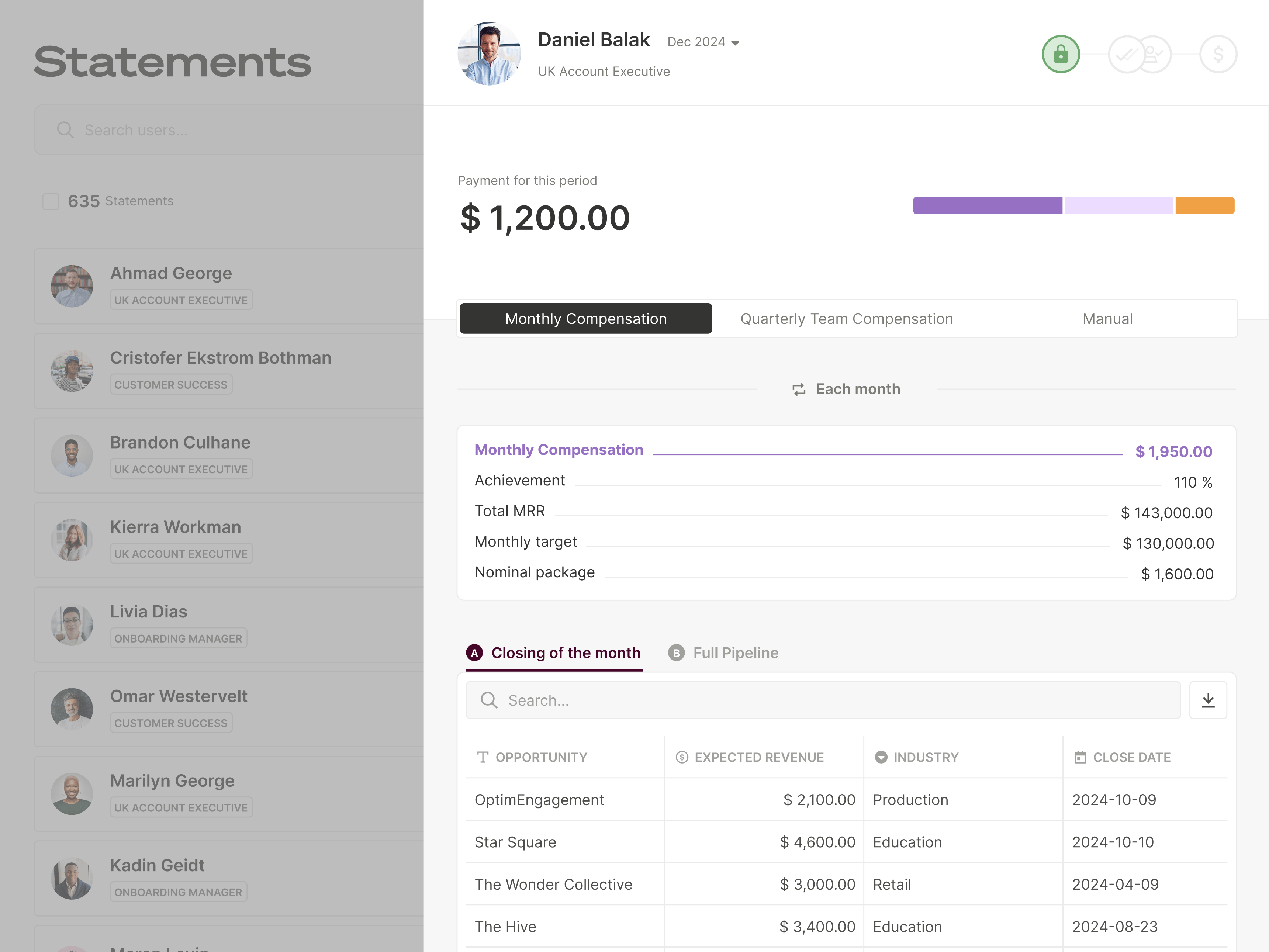
At Qobra, we specialize in automating this critical link for sales teams. Our platform is designed to eliminate the complexities and errors associated with manual commission tracking in spreadsheets. By integrating directly with your CRM, like Salesforce or HubSpot, we provide a single source of truth for sales performance data. This means that as soon as a deal is closed, its impact on commissions is calculated and reflected in real-time, giving sales reps instant visibility into their earnings. This transparency is a powerful motivator and builds trust in the compensation process, turning it into a key driver of your pay-for-performance model.
Automating Sales Compensation for Ultimate Transparency
Our intuitive, no-code plan editor allows Sales Ops and Finance teams to build and manage even the most complex compensation plans, from tiered commissions to special incentives (SPIFFs). The automation extends beyond calculation to include multi-level approval workflows, ensuring that every payout is validated by managers, Finance, and HR before being sent to payroll. This streamlined process not only saves countless hours but also drastically reduces disputes and ensures compliance. For finance teams, the audit trail provides full traceability. And AI simplifies control further: create your plans and views in natural language, give reps the "Explain my comp" assistant, and query your performance and commission data in plain language. By automating the entire commission cycle, we empower sales teams to focus on selling, managers to focus on coaching, and leadership to make strategic decisions based on accurate data. This is how you transform compensation from a back-office chore into a strategic tool for growth.
Top Performance Management System Software: A 2025 Comparison
The market is filled with excellent tools, each with a unique focus. Selecting the right one depends on your organization's size, culture, and specific goals. Here’s a look at some of the top platforms shaping the future of work.
- Engagedly: An AI-powered, all-in-one talent management platform. It uses its "Marissa AI" to automate HR tasks, provide real-time insights, and integrate performance management with employee engagement, learning, and recognition.
- Lattice: A unified platform that combines performance management, employee engagement, and career development. It's known for its user-friendly interface and strong capabilities in OKRs, 360-degree feedback, and engagement surveys.
- 15Five: Focuses heavily on improving manager effectiveness and fostering a positive employee experience. Its weekly check-ins are a core feature, designed to facilitate continuous, meaningful conversations between managers and their teams.
- Leapsome: A versatile platform that creates a continuous cycle of performance management and personalized learning. It excels at connecting OKRs, reviews, engagement surveys, and learning modules into a cohesive strategy.
- Betterworks: A goal-focused tool that helps enterprises align their workforce around strategic objectives. It specializes in OKRs and continuous conversations, providing actionable insights to keep teams on track.
- PerformYard: A flexible and data-rich platform that allows for highly customizable performance review cycles. It supports everything from simple check-ins to complex 360-degree reviews, making it adaptable for various business needs.
- Reflektive: A comprehensive solution that emphasizes real-time feedback and employee engagement tracking. Its tools are designed to increase productivity by fostering a culture of continuous improvement.
- ClearCompany: An integrated talent management platform that combines performance management with recruitment, onboarding, and workforce planning. It provides a seamless experience from candidate to tenured employee.
- Paycor (formerly 7Geese): Part of a larger Human Capital Management (HCM) suite, it offers robust tools for OKRs, coaching, and automated workflows, helping to build an engaged and collaborative culture.
- Small Improvements: A lightweight and user-friendly solution ideal for small to mid-sized companies. It focuses on facilitating continuous feedback, lightweight goal setting, and 1:1 meetings without overwhelming complexity.
Quick Comparison Table
| Software | Key Focus | Best For |
|---|---|---|
| Engagedly | AI-driven talent management | Organizations looking for an all-in-one, intelligent solution. |
| Lattice | Performance, engagement & development | Tech companies and enterprises seeking a unified, user-friendly platform. |
| 15Five | Manager effectiveness & weekly check-ins | Companies prioritizing a culture of continuous manager-employee dialogue. |
| Leapsome | OKRs, feedback & learning integration | Businesses wanting to tightly connect goals with development. |
| Betterworks | Strategic goal alignment (OKRs) | Enterprises focused on cascading and tracking strategic objectives. |
| PerformYard | Customizable review cycles | Organizations needing high flexibility in their performance processes. |
| Reflektive | Real-time feedback & engagement | Teams looking to build a strong, continuous feedback culture. |
| ClearCompany | Integrated talent lifecycle | Companies wanting a single platform from recruiting to performance. |
| Paycor | HCM integration & OKRs | Businesses that need performance tools integrated with HR & payroll. |
| Small Improvements | Simplicity and continuous feedback | Startups and growing teams that need a lightweight, effective solution. |
How to Choose the Right Software for Your Organization
Navigating the options can be overwhelming, but a structured approach will lead you to the best fit. Follow these steps to make an informed decision and ensure successful implementation.
First, define your core objectives. Before looking at any software, clarify what you want to achieve. Are you trying to solve low employee engagement, a lack of goal clarity, or an inefficient review process? Having clear goals will act as your north star during the selection process. Conduct internal surveys or interviews with managers and employees to understand their biggest pain points.
Second, consider your company culture and scale. A fast-paced startup might prioritize lightweight tools for real-time feedback, while a large, established enterprise may need a robust platform with advanced analytics and compliance features. The right software should feel like a natural extension of your culture, not an alien system imposed from above. Ensure the platform can scale with you as your organization grows. For a deeper dive, explore these best practices for performance management.
Third, prioritize user experience (UX) and integrations. The most feature-rich software is useless if no one uses it. Look for an intuitive, user-friendly interface that requires minimal training for both employees and managers. Crucially, verify that the platform integrates seamlessly with the tools you already use daily, such as your HRIS, payroll system, CRM, and communication platforms like Slack or Microsoft Teams. This ensures a smooth workflow and higher adoption rates.
🚨 Attention: Avoid Feature Overload
It can be tempting to choose the software with the longest feature list, but this often leads to a complex and underutilized system. Focus on platforms that master the core functionalities you identified in your objectives. A clean, simple tool that excels at facilitating feedback and tracking goals will deliver more value than a bloated system with dozens of features you'll never touch.
Finally, request demos and run a pilot program. Shortlist your top 2-3 choices and schedule personalized demos. Prepare a list of questions based on your specific use cases. If possible, ask for a trial or run a pilot program with a single department. This real-world test will provide invaluable feedback on usability and help you build a case for a company-wide rollout.
By shifting from outdated annual rituals to a modern, continuous approach, you build a workforce that is more aligned, motivated, and equipped for future challenges. The right performance management system software is not just an HR tool; it's a strategic investment in your most valuable asset—your people. It's the key to unlocking their potential and driving sustainable business success.
How does performance management software improve employee retention?
Performance management software directly impacts employee retention by addressing key reasons why people leave their jobs. First, it fosters a culture of regular feedback and recognition, making employees feel seen and valued for their contributions, a stark contrast to the 50% of employees who leave due to a lack of appreciation. Second, by integrating goal setting with learning and development modules, it provides clear career paths and demonstrates a company's investment in its employees' growth, a factor that 94% of workers say would convince them to stay longer. Finally, by ensuring fair and transparent evaluations and linking performance to fair compensation and promotions, it builds trust and shows employees that their hard work leads to tangible rewards and advancement opportunities.