Sales Compensation Software Benchmark | Compare 15+ Sales Compensation Platforms
Download
Is your sales cycle dragging on for months, only for promising deals to stall right before the finish line? Do you find your team spending valuable time on leads that never convert, while revenue forecasts become increasingly unpredictable? You know there has to be a more efficient way to move prospects from initial contact to a closed-won deal, but identifying the exact bottlenecks can feel like searching for a needle in a haystack.
Accelerating your sales process isn't about rushing buyers or using high-pressure tactics. It's about precision, control, and creating a seamless, value-driven journey for your prospect. It involves mastering each stage, understanding buyer psychology, and leveraging the right technology to eliminate friction. By refining your approach, you can not only close deals faster but also improve profitability and build a more motivated, successful sales team.
Understanding the B2B Sales Cycle Before You Can Shorten It
Before you can optimize your sales process, you need a crystal-clear understanding of its fundamental stages. A B2B sales cycle is the repeatable, step-by-step framework your sales team follows to convert a lead into a customer. While the specifics can vary by industry and company, most B2B sales cycles follow a similar path. Recognizing these stages is the first step toward identifying where delays and inefficiencies occur.
A typical B2B sales cycle includes the following phases:
- Prospecting: Identifying potential customers who fit your Ideal Customer Profile (ICP) through various channels like outbound outreach, inbound marketing, or referrals.
- Qualification: Determining if a prospect has a genuine need for your product, the budget to afford it, and the authority to make a purchasing decision. This is a critical filtering stage.
- Needs Assessment & Discovery: Engaging in deep conversations with the qualified prospect to uncover their specific pain points, challenges, goals, and aspirations. This is where you connect their problems to your solution.
- Presentation & Demo: Showcasing your product or service as the solution to the prospect's identified needs. This stage is about demonstrating tangible value and a clear return on investment.
- Objection Handling: Addressing any concerns, questions, or doubts the prospect may have about your offering, its price, implementation, or comparison to competitors.
- Proposal & Negotiation: Submitting a formal proposal outlining the scope, pricing, and terms. This may involve negotiating specific details to reach a mutually beneficial agreement.
- Closing: Obtaining a final agreement, signing contracts, and officially converting the prospect into a customer.
- Post-Sale Follow-Up: Ensuring a smooth onboarding process, managing the relationship to prevent buyer's remorse, and setting the stage for future upselling or cross-selling opportunities.
Each of these stages presents an opportunity for delay. By breaking down your process, you can begin to measure the time spent in each phase and pinpoint exactly where deals are getting stuck.
7 Proven Strategies to Accelerate Your Sales Process
Optimizing your sales cycle is a strategic initiative that pays dividends in revenue, predictability, and team morale. It requires a multi-faceted approach that touches on everything from initial messaging to internal processes. Here are seven proven strategies to help you compress your sales timeline and win more deals, faster.
1. Nail Your Value Proposition and Qualify Rigorously
The biggest time-waster in any sales cycle is spending time with the wrong people. If you don't have a crisp, clear value proposition, you'll attract unqualified leads. If you don't qualify them effectively, you'll carry them through multiple stages of your pipeline before realizing they can't or won't buy. The solution is to be relentlessly disciplined at the very top of the funnel. Your value proposition should instantly resonate with your target audience, clearly differentiate you from the competition, and be substantiated with proof. Ask yourself: if a prospect only heard one sentence about what you do, would they immediately understand the value?
Once you've captured their attention, qualification begins. This isn't just about confirming budget and authority; it's about understanding their readiness to buy. Are they actively seeking a solution now, or just casually exploring options? Uncovering their timeline and the urgency of their pain points is critical. A lot of sales teams are so eager to get in front of a buyer that they cling to any sign of interest, failing to find a reason not to work with them. This is a recipe for a long, drawn-out process that often ends in "no decision."
A powerful value proposition answers three questions for the prospect:
- Does it resonate? (Does it speak directly to my most pressing needs or goals?)
- Does it differentiate? (Why should I choose you over every other option, including doing nothing?)
- Can it be substantiated? (Can you prove you can deliver on your promises with case studies, testimonials, or data?)
2. Identify and Engage the Right Decision-Makers
Why do so many sales cycles stretch out indefinitely? Often, it's because the salesperson is talking to someone who lacks the authority to make a final decision. You can have the most compelling conversations and build incredible rapport, but if your champion can't sign the contract or control the budget, your deal will stall. The shortest path to a sale is a direct line to the economic buyer and key influencers.
Whenever possible, aim to start your conversations at the highest relevant level within the organization. If you can't start there, one of your primary goals during the discovery phase should be to map the decision-making unit. Ask direct questions like, "Besides yourself, who else is typically involved in evaluating a solution like this?" or "What does the purchasing process look like at your company for an investment of this size?" Understanding who holds the purse strings, who will be the end-user, who will be a technical evaluator, and who could potentially block the deal allows you to build a multi-threaded engagement strategy, ensuring you have broad support when it's time to make a decision. Don't let your deal's fate rest in the hands of a single contact.
3. Uncover Deep Needs—Aspirations and Afflictions
Too often, salespeople talk at prospects rather than with them. They launch into a product pitch before truly understanding the business context. To shorten the sales cycle, you must draw a direct and undeniable line between the prospect's most critical business problems and your solution. This is achieved through a highly-tuned questioning strategy that goes beyond surface-level pain.
You need to uncover two types of motivators:
- Afflictions (Pain Points): These are the current, tangible problems that are costing the business time, money, or resources. They are the immediate drivers for seeking a solution.
- Aspirations (Goals): These are the future-state ambitions the company or individual wants to achieve. What are their dreams for growth, efficiency, or market leadership?
Connecting your solution to both afflictions and aspirations creates a powerful sense of urgency. You're not just selling a tool to stop a problem; you're selling a pathway to a better future. When a prospect sees your offering as indispensable to achieving their most important goals, the decision process naturally accelerates.
4. Build Trust and Handle Objections Proactively
Every B2B purchase involves risk. The buyer is asking themselves: "Can this company really do what they say they can?" "Will this investment actually pay off?" "What if I make the wrong choice?" The faster you can lower this perceived risk and build trust, the faster the prospect will move toward a decision. Trust is built through consistency, transparency, and demonstrating genuine expertise. Share relevant case studies, offer testimonials from similar companies, and be honest about what your solution can and cannot do.
Furthermore, don't wait for objections to derail you at the end of the sales process. Treat them as buying signals—they indicate the prospect is seriously considering your offer. When a buyer raises an objection, they are engaging with you and asking for help to resolve a concern. The best approach is to surface potential objections early. You might say, "Often, when I speak with leaders in your industry, they have concerns about X and Y. Are those on your mind as well?" By addressing these hurdles proactively, you deal with them, build credibility, and maintain momentum instead of being caught off guard during the final negotiation.
💡 Expert Advice
Reframe your thinking: an objection isn't a rejection; it's a request for more information. When a prospect says, "Your price is too high," they might really be asking, "Can you help me understand and justify the value to my team?" When they say, "We already have a supplier for that," they could mean, "I'm busy, and you need to quickly show me why I should even consider a change." Listening to the question behind the objection is key to advancing the sale.
5. Master Your Sales Conversations with Meticulous Planning
Nothing stalls a sales cycle faster than aimless "checking in" calls. Every single interaction with a prospect must have a clear purpose and a defined next step. This requires meticulous pre-call planning. Before you pick up the phone or join a video call, you should know the answers to several key questions.
| Planning Element | Key Question to Answer |
|---|---|
| Prospect Goal | What is the prospect's long-term objective that this project supports? |
| Conversation Goal | What is the single most important thing I need to achieve in this specific call? |
| Strengths | What unique advantages or information do I bring to this conversation? |
| Vulnerabilities | What potential objections, knowledge gaps, or competitive weaknesses might arise? |
| Planned Next Step | What is the logical, concrete next action we will agree on to advance the sale? |
An outcome of good planning is the ability to advance the sale, not just continue it. A continuance is ending a call with a vague, "Let's talk again soon." An advance is ending with a concrete, scheduled next step, such as, "Based on our discussion, the logical next step is a 30-minute demo for your Head of Operations. I'll send an invitation for next Tuesday at 10 AM." Always be the one to propose the next step and secure a commitment to it before ending the conversation.
6. Make It Effortless for the Prospect to Buy
Even after you've built trust and demonstrated value, a prospect might hesitate at a large, upfront commitment. A $300,000 project can feel daunting as a first engagement. To reduce this friction and accelerate the decision, make it easy for them to say "yes" to something smaller. Breaking down your offering into more manageable, lower-risk entry points can be a powerful strategy.
This could take several forms:
- A Pilot Program: Offer a limited-scope, fixed-duration trial to a small part of their organization to prove the concept and demonstrate ROI.
- An Upfront Assessment: Propose a paid discovery or diagnostic project where you analyze their current processes and deliver a strategic roadmap. This showcases your expertise and builds a strong business case for a larger engagement.
- Tiered Offerings: Structure your services in different packages, allowing them to start with an essential version and scale up over time.
By providing an easy "on-ramp," you lower the barrier to entry, allow the prospect to experience your value firsthand, and build the internal momentum needed to approve a larger investment down the line.
7. Leverage Technology to Automate and Empower
In today's sales landscape, technology is not just an advantage; it's a necessity for efficiency and speed. The right B2B sales tools can automate repetitive tasks, provide deep insights, and empower your team to focus on what they do best: selling. Start with a well-configured CRM to serve as your single source of truth for all customer interactions. Tools for conversation intelligence can analyze sales calls to identify winning patterns and coachable moments.
But what about the internal processes that create friction and delay? One of the most significant yet often overlooked drivers of sales behavior is compensation. If your reps can't see how their activities translate into commissions, or if they have to wait weeks for manual calculations after a quarter ends, motivation wanes. This is where modern sales optimization software can be a game-changer. By automating commission calculations and providing real-time visibility, you directly link daily actions to financial rewards. When a sales rep can see their potential commission update instantly after closing a deal within their CRM, it creates a powerful feedback loop that encourages them to close the next deal even faster.
A Note on Speed vs. Quality
The goal of shortening the sales cycle is not to sacrifice the quality of the deal or the relationship. Rushing a prospect who isn't ready will only lead to buyer's remorse and a higher likelihood of churn. The focus should be on eliminating unnecessary delays, internal inefficiencies, and periods of inaction—not on skipping crucial steps like discovery or trust-building.
The Role of Sales Compensation in Driving Urgency
Your compensation plan is one of the most powerful levers you have to influence your sales team's behavior. A plan that is confusing, opaque, or slow to pay out can inadvertently lengthen your sales cycle. Reps may lose motivation or spend valuable selling time shadow accounting and disputing their payouts. Conversely, a clear, transparent, and real-time compensation system can be a powerful accelerator.
Imagine a world where your salespeople don't have to wait until the end of the month to know where they stand. With a platform like Qobra, which integrates directly with your CRM, reps get instant visibility into their commissions the moment a deal is marked "Closed-Won." This immediate feedback reinforces winning behaviors and builds momentum. When reps clearly see how each deal impacts their earnings in real-time, they are more motivated to proactively manage their pipeline and push deals across the finish line. This transparency transforms compensation from a backward-looking administrative task into a forward-looking performance driver.
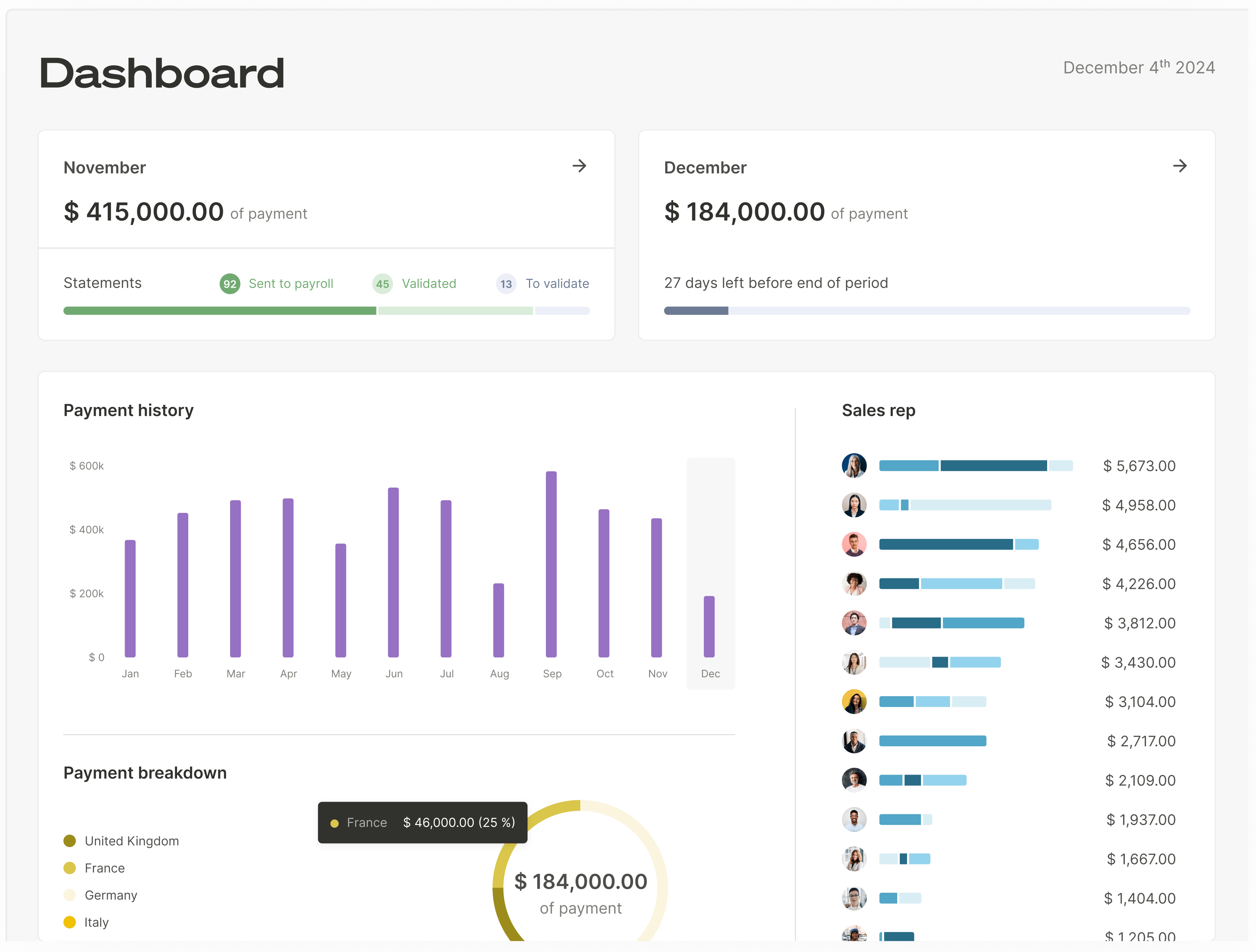
Furthermore, automating the entire commission process frees up countless hours for your Sales Ops and Finance teams. Instead of spending days buried in spreadsheets, they can focus on strategic analysis and support. This internal efficiency translates directly to a shorter cycle. Approval workflows are streamlined, disputes are minimized, and payouts are accurate and on time. This reliability builds trust between sales and operations, creating a healthier, more performance-oriented culture focused on one thing: closing deals efficiently. A well-managed B2B sales commission structure is fundamental to this goal.
A faster sales cycle is the result of a deliberate and continuous effort to remove friction, add value, and maintain momentum at every stage. It’s not about finding a single magic bullet, but about implementing a holistic strategy that combines sharp messaging, disciplined processes, proactive communication, and empowering technology. By focusing on these proven strategies, you can transform your sales process from a long, unpredictable marathon into a series of well-executed sprints, leading to increased revenue, better forecasting, and a more successful sales organization.
What is the most critical factor in reducing the sales cycle length?
While there is no single answer, one of the most impactful factors is rigorous, upfront qualification. So much time is lost pursuing deals that were never going to close in the first place due to a lack of budget, authority, or genuine, urgent need. By instilling a disciplined qualification process where your team isn't afraid to disqualify prospects early, you ensure that your resources are focused exclusively on high-potential opportunities. This, combined with building deep trust and demonstrating undeniable value, creates the strongest foundation for an accelerated and successful sales process.