Sales Compensation Software Benchmark | Compare 15+ Sales Compensation Platforms
Download
- A B2B sales compensation plan blends a base salary with commission, usually 40 to 60 percent base, so sales professionals get stability plus upside.
- Typical B2B commission rates run 7 to 15 percent of deal value for physical products and 20 to 50 percent for services and SaaS, with accelerators once reps exceed targets.
- Independent reps working on straight commission usually earn more than salaried reps, often 5 to 15 percent of net sales, since there is no base salary to fall back on.
- Key components to align: quotas, KPIs, accelerators, thresholds, and non-monetary incentives like recognition and experiential rewards.
- Reviewing the plan quarterly, with team feedback and real attainment data, keeps commissions tied to business goals instead of drifting out of date, and is what really drives performance over time.
Only 42.69 percent of B2B SaaS reps hit quota in Q2 2025, according to RepVue's Cloud Sales Index, which makes commission plan design less about copying a rate off a benchmark chart and more about building something reps can actually hit.
Struggling to design a B2B sales commission plan that actually works? How do you strike the perfect balance between motivating your top performers, controlling costs, and staying competitive in a cutthroat market? You've seen top reps leave for a competitor with a "way better" commission structure, and now you're left scrambling to figure out what went wrong.
If you’re still wrestling with complex spreadsheets to calculate payouts, you know the pain of manual errors, endless disputes, and the sinking feeling that your compensation plan might be demotivating your team instead of firing them up. Where do you even begin to fix it? Should you use a tiered structure or stick to a simple straight commission? How can you ensure your plan rewards the right behaviors without breaking the bank?
You’re not alone. This guide will break down everything you need to know about B2B sales incentive plans. From average industry rates to the most effective structures and actionable strategies, we’ll help you design a plan that retains top talent, drives predictable revenue, and transforms compensation from a headache into your most powerful strategic tool.
What is a B2B Sales Compensation Plan and Why It Matters?
A B2B sales compensation plan is a structured system that defines how your sales team earns their pay based on performance. It’s more than just a commission check; it’s a strategic framework that includes base salary, commission rates, bonuses, and other incentives, all meticulously aligned with your company's overarching business goals.
When designed correctly, it is what drives revenue growth across your entire sales team, not just a paycheck mechanism. Many companies manage this with a dedicated sales commission platform rather than spreadsheets, which keeps everything accurate as headcount and total sales revenue grow.
The stakes are higher in B2B sales compared to B2C. Sales cycles are longer, often spanning months and involving multiple high-level stakeholders. Deal sizes are significantly larger, and the sales process is far more complex. This means a B2B compensation plan can't just reward volume; it must incentivize persistence, strategic relationship-building, and high-value wins. Trying to apply a simple, transactional B2C model to a B2B team is like using a sprinting strategy for a marathon—it’s doomed to fail.
A well-crafted plan is critical for several reasons. First, it directly drives high performance. When individual earnings are tied to key business objectives like Annual Contract Value (ACV) or pipeline growth, reps are naturally motivated to focus on the outcomes that matter most. Second, it is your best tool for attracting and retaining top talent. High-performing reps know their worth, and in a competitive market, a transparent and lucrative compensation plan is non-negotiable. With turnover costs reaching as high as 33% of an employee's salary, retention isn't just a goal; it's a financial necessity.
Finally, a clear structure improves sales forecasting and aligns sales behavior with your go-to-market strategy, ensuring every activity is intentional and value-driven.
B2B vs. B2C Sales Compensation at a Glance
| Aspect | B2B Sales Compensation | B2C Sales Compensation |
|---|---|---|
| Sales Cycle | Long, multi-stakeholder, often several months | Short, single buyer, typically minutes to days |
| Deal Size & Volume | High-value deals, low frequency | Low-value transactions, high frequency |
| Performance Metrics | ACV, pipeline quality, renewals, margin | Units sold, conversion rates, transaction volume |
| Role Specialization | Distinct roles: SDR, AE, AM, CS | Often generalist roles, one person per sale |
| Compensation Structure | Complex: tiered commissions, accelerators, bonuses | Simple: flat or basic tier-based commission |
| Motivational Focus | Long-term value, relationship-building, retention | Short-term volume, transactional outcomes |
Key Components of an Effective B2B Compensation Plan
A robust B2B sales compensation plan is a carefully balanced mix of monetary and non-monetary elements. Each component serves a distinct purpose, and together they create a compelling package that motivates, retains, and aligns your sales team with your company's most important goals, with additional incentives layered in where they make sense.
Base Salary
The foundation of any plan, the base salary provides financial stability. This guaranteed income allows reps to focus on nurturing long-term deals without the constant pressure of a purely variable income. In most B2B roles, the base salary constitutes 40–60% of the On-Target Earnings (OTE). This ratio can shift based on the role; for example, a Sales Development Representative (SDR) who influences but doesn't close revenue might have a higher base, while an Account Executive (AE) will have a larger portion of their OTE tied to performance-based commissions.
Commission Structure
Commission is the primary variable component and the most powerful motivator. In B2B, commissions can be structured in several ways:
- Flat-Rate: A fixed percentage paid on every deal closed. It's simple, transparent, and easy to understand.
- Tiered Commission: Commission rates increase as reps surpass their quotas. For instance, 8% on sales up to quota, and 10% on everything beyond. This strongly encourages overperformance.
- Revenue-Based: Reps earn a commission based on the total revenue they generate, which is common in SaaS or enterprise sales with variable deal sizes.
- Gross Margin-Based: The commission is calculated on the deal's profitability rather than its total revenue. This is ideal for businesses with tight margins, as it discourages excessive discounting. A well-designed commission structure based on gross profit ensures reps think like business owners.
Bonuses and Incentives
Bonuses are short-term rewards layered on top of commissions to drive specific behaviors, and many B2B teams incorporate bonuses precisely because they add flexibility without a full plan redesign. Examples include performance bonuses for exceeding a quarterly quota, signing bonuses for landing a strategic new logo, or "spiffs" (Sales Performance Incentive Funds) for pushing a specific product during a promotional period. These targeted incentives in business can be incredibly effective at focusing team effort on immediate priorities.
📌 To Note
Managing these intricate components manually is a recipe for disaster. Spreadsheets are prone to errors, lack real-time visibility, and can quickly erode trust when disputes arise. This is where a dedicated platform becomes essential. Automating commission calculations with a tool like Qobra ensures accuracy and eliminates conflicts, with native integrations that save your ops team from re-keying data by hand instead of stitching together exports from your CRM.
Sales Quotas and KPIs
Quotas are the benchmarks that define success. A good quota is both challenging and achievable, backed by historical data, territory potential, and market analysis. It's worth noting that industry-wide, B2B quota attainment often hovers around 50% (Forrester), so setting a 100% attainment goal for the entire team may not be realistic.
Alongside quotas, Key Performance Indicators (KPIs) track the daily activities that lead to results. For B2B sales, where deals take time, leading indicators like discovery calls booked, demos completed, or customer satisfaction scores offer real insight into whether a rep is on the right track.. Clearly defining both quotas and KPIs makes performance measurable and keeps targets visible.
Accelerators and Thresholds
Accelerators are powerful multipliers that kick in once a rep surpasses their quota. For example, a rep earning a 10% commission might jump to 15% after hitting 120% of their target. This is a fantastic tool for motivating top performers and driving strong end-of-quarter pushes.
Thresholds, or "floors," are the opposite. They set a minimum performance level, say, 50% of quota, that a rep must achieve before earning any commission. This helps guard against low engagement and ensures that payouts are tied to meaningful contributions.
Non-Monetary Incentives and Benefits
Motivation isn't always about money. Recognition programs, such as "Rep of the Month" or peer-nominated awards, build a positive and competitive culture. Experiential rewards like President's Club trips or exclusive retreats create a powerful sense of accomplishment and belonging, and even a simple perk like extra paid time off can reinforce good work without touching the commission plan. When considering your total rewards package, understanding the difference between non-monetary and monetary compensation is key to building long-term loyalty.
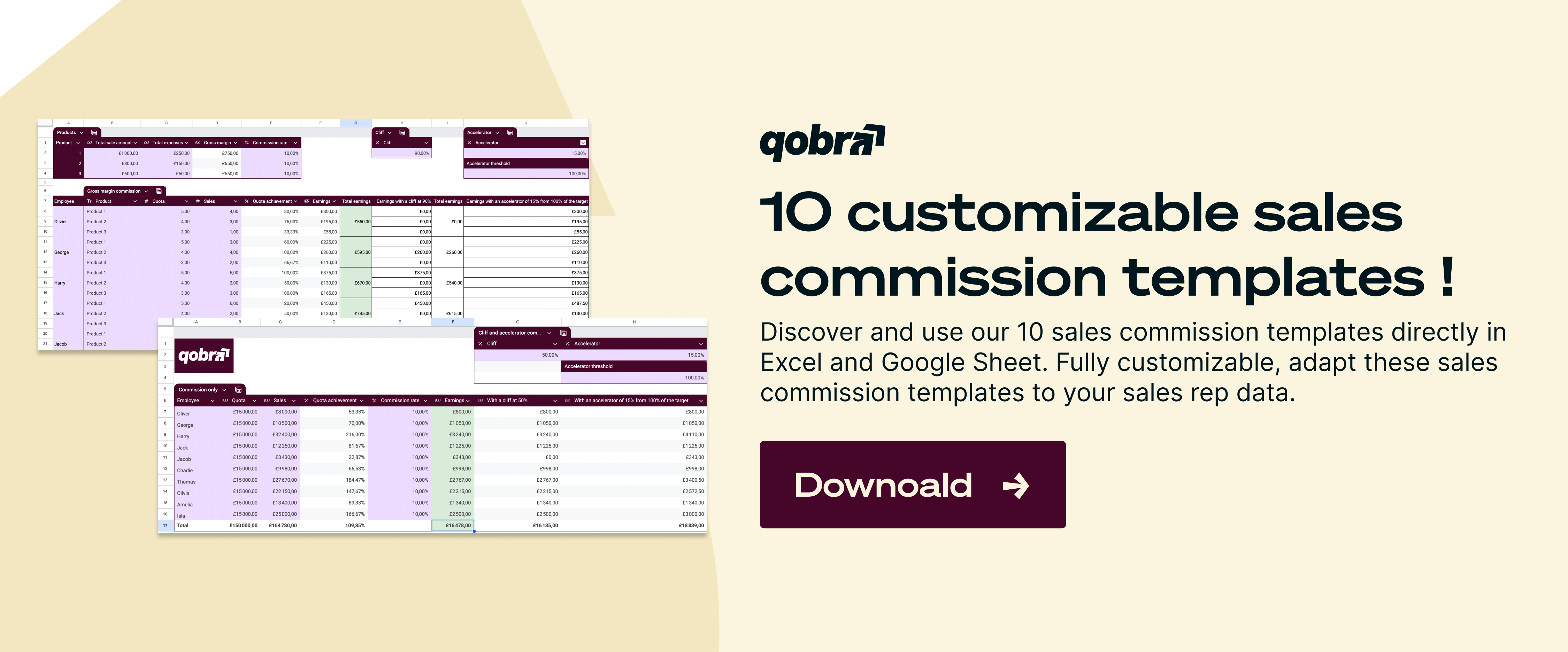
Common B2B Sales Commission Structures & Rates
Choosing the right commission model is fundamental. Each structure incentivizes different behaviors, so the best fit depends entirely on your business goals, sales cycle length, and the specific roles within your team.
Average Commission Rates
There's no one-size-fits-all answer, but B2B sales commission rates typically fall within a predictable range.
- For physical products, rates often sit between 7% and 15% of the sale value, or 20% to 40% of the gross margin. This accounts for the higher costs associated with manufacturing and distribution.
- For services and SaaS, where overhead per sale is much lower, commissions are significantly higher, ranging from 20% to 50% or even more.
These rates are influenced by several factors, including industry norms, the complexity and length of the sales cycle, deal size, and whether the commission is paid on recurring or one-time revenue.
Key factors that shape your rate
Averages are a starting point, not the answer. A few things decide where your commission rate should actually land.
- Coverage model: the more people touch a deal, SDR, AE, solutions engineer, the more the commission pool gets split, and the lower any single rep's rate.
- Business priority: if the goal is market share, rates need to stay competitive enough to reward aggressive prospecting. If the goal is margin, the structure should favor high value clients over easy, low-margin wins.
- Process complexity: straightforward sales processes with a short cycle justify a lower rate than a complex, multi-stakeholder sale.
A quick benchmark: many B2B teams set quota at 4 to 5 times OTE, split roughly 50/50 to 60/40 between base and commission. Use it as a sanity check, not a formula to copy blindly, your numbers should still reflect your own coverage model and business priorities.
Commission rates for independent sales professionals
Independent reps working on a straight commission basis usually command higher rates than salaried reps, since there is no base salary to fall back on. According to ZenBusiness, they typically earn 5 to 15 percent of net sales, and rates can run higher on a gross-margin basis. If you rely on contractors or channel partners, benchmark them separately from your salaried team rather than applying the same grid.
Top Commission Models Explained
Here are some of the most common structures used in B2B sales organizations:
- Base Salary + Commission: This is the industry standard. It offers reps the stability of a fixed salary while motivating performance with variable commissions. The split between base and variable pay (e.g., 60/40, 50/50) depends on the role and the length of the sales cycle.
- Straight Commission (Commission-Only): In this high-risk, high-reward model, pay is 100% variable. It attracts highly confident, self-motivated reps and is often used by startups or companies with short sales cycles to scale aggressively while keeping fixed costs low.
- Tiered Commission: As discussed, this model increases the commission rate as reps hit higher levels of attainment. It’s extremely effective for driving overperformance and is a favorite among high-growth companies.
- Residual Commission: Ideal for subscription-based businesses (like SaaS), this model pays a recurring commission for as long as a client remains a customer. It incentivizes reps to not only close deals but to bring in high-quality customers who are likely to stick around, directly impacting churn.
- Territory Volume Commission: This team-based model pools commissions across a geographic region or account-based team and distributes them among the members. It fosters collaboration and is perfect for complex enterprise sales where multiple people—SDRs, AEs, and solution engineers—contribute to a single win.
- Draw Against Commission: This model provides reps with a guaranteed minimum income, or "draw." This amount is an advance that is later deducted from commissions earned. It offers a safety net, particularly for new hires who are still building their pipeline.
How to Design and Optimize Your B2B Sales Commission Plan?
Building a compensation plan from scratch or refining an existing one can feel daunting. Following a structured, step-by-step process ensures your plan is aligned, motivating, and built for success.
Step 1: Align Compensation with Business Goals
Start with the big picture. Is your primary goal for the year to land new logos, drive expansion revenue from existing accounts, or improve customer retention? Your compensation plan must directly reward the behaviors that support these objectives. If you're in a "land-and-expand" phase, incentivize AEs to close high-potential accounts and Account Managers to excel at cross-selling and upselling. When your plan mirrors your strategy, every commission payout becomes a direct investment in growth.
Step 2: Define Sales Roles and Responsibilities
Different roles contribute to revenue in different ways, so their compensation plans should reflect that. Clearly segment your team into roles like SDRs, AEs, and Customer Success Managers (CSMs).
- SDRs build the pipeline. Compensate them based on qualified appointments set or sales-qualified leads (SQLs) generated.
- AEs close the deals. Their compensation should be tied directly to new business revenue or ACV.
- CSMs and AMs retain and grow accounts. Their incentives should be based on metrics like net revenue retention (NRR) or expansion revenue.
Here are two sample templates for common B2B roles:
Account Executive (AE) Compensation Plan Example
| Component | Details |
|---|---|
| On-Target Earnings (OTE) | $150,000/year (50/50 split) |
| Base Salary | $6,250/month |
| Commission Rate | 10% of New Business Annual Contract Value (ACV) |
| Quota | $187,500 in New Business ACV per quarter |
| Accelerator | 12.5% commission after 100% of quota; 15% after 125% |
| Bonus | $1,000 for closing a deal over $50,000 ACV |
Sales Development Representative (SDR) Compensation Plan Example
| Component | Details |
|---|---|
| On-Target Earnings (OTE) | $70,000/year (70/30 split) |
| Base Salary | $4,083/month |
| Quota | 20 Sales Qualified Opportunities (SQOs) per month |
| Bonus | $75 per SQO up to quota; $100 per SQO beyond quota |
| Bonus Accelerator | An additional $500 bonus if an SQO converts to closed-won within 90 days |
Step 3: Communicate Clearly and Provide Visibility
Even the world's best compensation plan will fail if your reps don't understand it or trust the numbers. This is where manual processes create the most friction. Reps waste time "shadow accounting" in their own spreadsheets, and every payroll cycle brings a new round of disputes that Ops and Finance have to resolve.
This is why modern sales organizations are moving to automated commission platforms. A tool like Qobra integrates directly with your CRM (like Salesforce or HubSpot). Qobra syncs CRM data automatically throughout the day, and on demand in one click. Reps can see their estimated commissions after closing a deal, giving them the transparency and motivation they need. Clear dashboards show them exactly how they're tracking against their quota and what they need to do to reach the next accelerator tier. This kind of shared visibility is what aligns your whole organization around the same numbers, instead of sales, finance, and ops each trusting a different spreadsheet.

Step 4: Review, Get Feedback, and Iterate
A sales compensation plan is not a "set it and forget it" document. Markets shift, strategies evolve, and products change. Your plan must be agile enough to adapt. Schedule regular reviews, at least quarterly, to analyze performance data. Are reps hitting their quotas? Is the plan producing the desired behaviors? Track team performance over time, not just individual attainment, since a comp plan that only rewards your top closers can leave the rest of the team disengaged.
Expert Advice
Before you roll out changes, model their financial impact. A commission platform with a sandbox environment is invaluable here. It allows you to test new structures, quotas, or accelerator tiers using historical data to see how they would have affected both rep earnings and company costs. This data-driven approach to compensation planning removes the guesswork and ensures your new plan is financially sound before it goes live.
Avoiding Common Pitfalls in Commission Planning
Even with the best intentions, it's easy to make mistakes when designing a B2B compensation plan. Being aware of these common pitfalls can help you avoid them.
Overly Complex Structures
If a rep needs an advanced degree in mathematics to calculate their paycheck, your plan is too complicated. Overengineered plans with too many variables, multi-layered bonuses, and confusing clawback rules create confusion and mistrust. The goal should be clarity and simplicity. Focus on one or two primary levers that align with your business goals and ensure that earnings calculations are transparent and easy to follow.
Misaligned Metrics
Rewarding the wrong behavior will inevitably lead to the wrong outcomes. A classic mistake is compensating AEs purely on deal volume when the strategic goal is to land high-margin enterprise accounts. Reps will naturally chase the easy, low-value wins to hit their number, even if those customers churn quickly or aren't a good fit. Regularly revisit your core metrics to ensure they reflect what truly matters to the business today, whether that's ACV, customer lifetime value (CLTV), or expansion revenue.
Ignoring Ramp-Up Time for New Hires
Expecting a new sales rep to hit a full quota in their first month is setting them up for failure. It takes time to learn the product, understand the market, and build a pipeline. A proper ramp-up period, typically 3 to 6 months, should be built into your plan. During this time, offer a guaranteed commission or a reduced quota to give them the space to learn and grow. This simple adjustment dramatically improves new hire retention and long-term success.
🚨 Attention
Be careful with commission caps. While they might seem like a good way to control costs, they often demotivate your top performers. Once a star rep hits their earnings ceiling for the quarter, they may stop selling or "sandbag" deals for the next period. A better approach is to use accelerators, which reward overperformance without limit and encourage your best reps to keep pushing.
A well-designed B2B sales compensation plan is far more than an expense, it is a strategic lever for growth, and managing it well is what turns commission spend into measurable ROI. It aligns your sales team's motivations with your company's most important objectives, turning individual ambition into collective success.
Frequently Asked Questions
What is a typical B2B sales commission rate?
For physical products, B2B sales commission rates typically range from 7% to 15%. For services and SaaS, where margins are higher, rates are often much greater, ranging from 20% to 50% of the annual contract value or gross margin. The exact rate depends on industry, deal size, and sales cycle complexity.
How do you structure a B2B sales compensation plan?
Start by aligning the plan with your primary business goals (e.g., new customer acquisition vs. expansion). Define clear roles and responsibilities for your sales team, then choose a compensation model (like Base + Commission) that fits each role. Set realistic quotas and KPIs, and incorporate motivational factors like accelerators and bonuses. Finally, ensure the plan is communicated clearly and reviewed regularly.
What are the most common mistakes to avoid in a B2B commission plan?
The most common mistakes include creating overly complex structures that confuse reps, misaligning metrics with company goals (e.g., rewarding volume over value), ignoring ramp-up time for new hires, and capping commissions, which can demotivate top performers.
How can technology help manage B2B sales commissions?
Modern commission management software goes beyond automating calculations. Tools like Qobra give leadership sandbox environments to model plan changes before rolling them out, so you can see the financial impact on both rep earnings and company costs before anything goes live. That turns commission data into an input for revenue strategy instead of a monthly reconciliation chore.
What are the most effective ways to model complex commission tiers using modern, automated software?
Model the financial impact of commission tiers before rolling them out. A commission platform with a sandbox environment lets you test new structures, quotas, or accelerator tiers using historical data, to see how they would have affected both rep earnings and company costs. Keep the structure to one or two primary levers aligned with your business goals, and give reps clear dashboards showing what they need to do to reach the next accelerator tier.
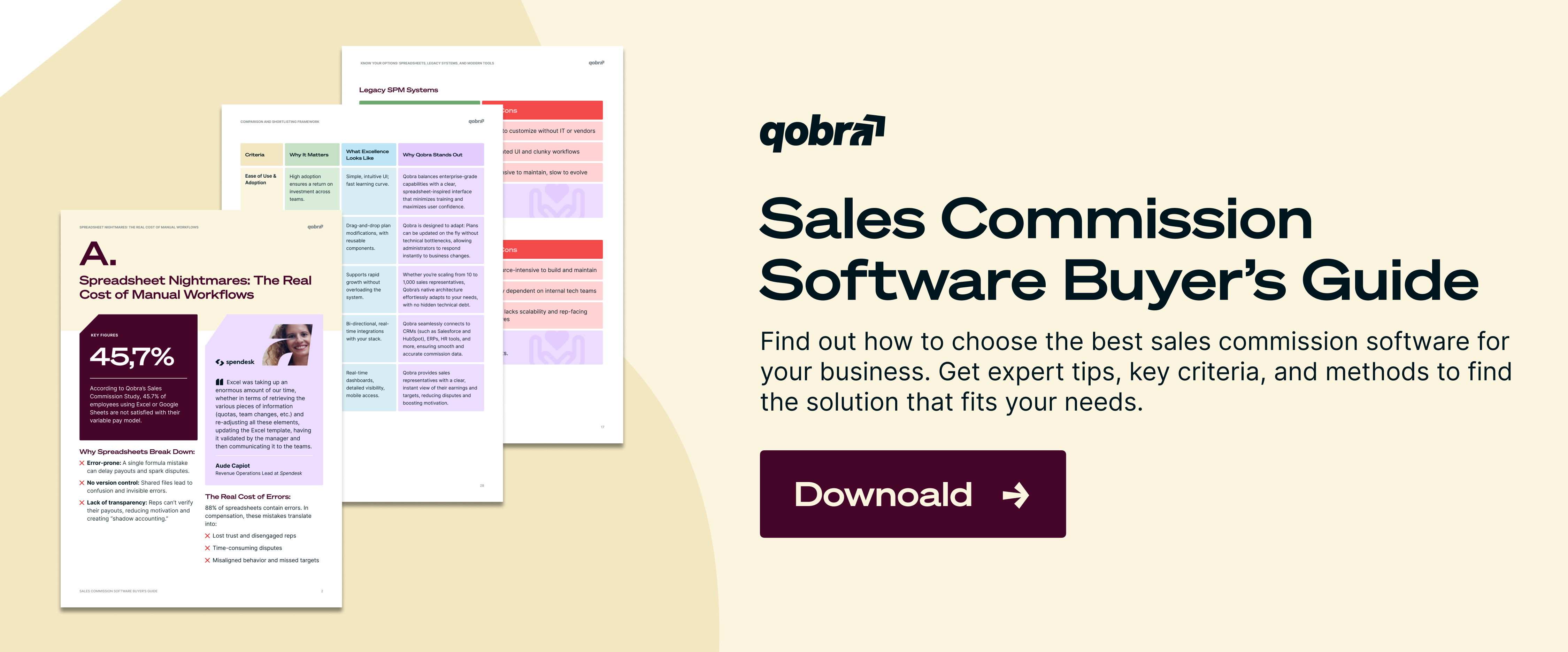
Whatever B2B structure you land on, a sales commission software keeps every plan accurate and transparent for reps.