Sales Compensation Software Benchmark | Compare 15+ Sales Compensation Platforms
Download
Is your sales team spending more time on tedious administrative tasks than on actually closing deals? Are you struggling to gain a clear, unified view of your customer journey in an increasingly crowded digital landscape? Succeeding in sales in 2026 requires more than just grit and drive; it demands the right technology to work smarter, not just harder. Leveraging the proper sales software isn't just an advantage anymore, it's essential for survival and growth.
But with a sea of options available, how do you build a tech stack that truly empowers your team instead of overwhelming them? Which platforms will help you understand your prospects intimately, know exactly when to reach out, and what to say? Let's explore the critical categories of IT sales tools that top-performing teams are using to automate workflows, personalize outreach at scale, and ultimately, smash their revenue targets.
The Foundation of Your Sales Tech Stack: CRM
For most companies, a Customer Relationship Management (CRM) system is the first and most crucial investment in sales technology. It acts as the central nervous system for your entire sales operation, a single source of truth where all customer interactions, data, and history are stored and made accessible to your entire organization. A powerful CRM helps you track existing customers, enhance relationships, improve retention, and stay on top of all sales and marketing efforts.
Modern CRMs have evolved far beyond simple contact management databases. They are complex, multi-tiered support systems offering real-time updates, advanced lead scoring, and automation for repetitive tasks. By centralizing this information, you gain a clear snapshot of where each customer relationship stands, providing invaluable insight into the health of your entire business. With a detailed history of every interaction, purchase, and preference, your team can personalize communication, strengthen relationships, and make data-driven decisions that lead to more closed deals. Only with clean, reliable CRM data can you truly leverage the power of advanced technologies like generative AI.
Choosing the Right CRM
Picking the right platform is a critical decision, as you'll want to integrate it with other applications as your business grows. Make sure you select a solution that won't limit you down the road. The CRM space is crowded, but there are clear leaders in different segments:
- For Enterprises: Salesforce is often the go-to for its scalability and extensive feature set.
- For Small to Medium-Sized Businesses: Pipedrive offers a user-friendly, sales-focused experience.
- For a Full Growth Suite: HubSpot provides an all-in-one platform that combines sales, marketing, and service hubs.
💡 Expert Tip
When selecting a CRM, prioritize integration capabilities and scalability. Your immediate needs might be simple, but choosing a platform that can grow with you will save significant time and resources in the long run. Don't just look at features; evaluate the platform's app ecosystem and API accessibility.
Finding and Understanding Your Buyers
Once your CRM is in place, the next step is to fill it with high-quality leads. This is where sales intelligence and prospecting tools come into play. These technologies help salespeople find, monitor, and understand critical information about prospects and existing clients, ensuring they know exactly who they should be talking to, what they should be talking about, and when they should reach out.
Sales Intelligence and Prospecting Tools
Sales intelligence software provides contextual information surrounding your contacts, such as their purchase history, current contracts, business objectives, and digital footprint. This allows for hyper-personalized outreach that resonates with buyers' specific pain points. The category is geographically fragmented due to local data regulations, but new datasets are constantly emerging, making prospecting more effective. Intent data, for example, helps identify prospects who are actively researching solutions like yours, allowing you to engage them at the perfect moment. Tools like Seamless.AI and Apollo.io use AI to verify contact data and provide filters that help you pinpoint ideal customer profiles with remarkable accuracy.
Sales Engagement Platforms
After identifying your prospects, sales engagement tools help you manage and optimize every interaction. These platforms streamline the sales process by automating multi-channel outreach across email, calls, and social media while maintaining a human touch. You can create automated follow-up sequences, or cadences, that adjust based on a prospect's actions, ensuring no opportunity is overlooked. By tracking email open rates, call outcomes, and meeting attendance, these tools provide valuable data that helps teams prioritize leads and refine their strategies. This visibility allows sales leaders to identify what’s working and what isn’t, enabling them to shorten the sales cycle and improve overall team performance.
Empowering Buyers and Enabling Sales Teams
In today's market, buyers expect more personalization and self-service options. The most successful sales teams are those that empower buyers with the information they need to make a confident decision while equipping their own reps with the resources to guide them effectively.
Buyer Enablement and Digital Sales Rooms
As transactional B2B sales become more automated, reps are focusing their efforts on larger, more consultative deals. This is where buyer enablement tools and Digital Sales Rooms (DSRs) shine. A DSR is a secure, customer-facing microsite where buyers and sellers can share relevant materials, chat, and collaborate on proposals. This removes friction from the buying process and strengthens the relationship before a contract is even signed.
Platforms like Consensus are revolutionizing this space with demo automation. Instead of scheduling live demos for every prospect, you can create interactive video demos tailored to each buyer's unique needs. This not only qualifies leads more efficiently but also empowers buyers to explore your solution on their own terms and share it with other stakeholders. The backend analytics, or Demolytics, provide deep insights into how buyers engage with your content, revealing their top priorities and pain points.
Sales Enablement
While buyer enablement focuses on the customer, sales enablement tools equip your team with the resources they need to excel. These platforms serve as a central repository for sales playbooks, competitive intelligence, case studies, marketing collateral, and on-demand training modules. By integrating these resources directly into the daily workflow—often within the CRM—you ensure every seller has access to the latest information. This is crucial for onboarding new reps, rolling out new products, and mastering effective sales closing techniques.
A major challenge for modern sales teams is tool overload. The Salesforce State of Sales report found that two-thirds of reps feel swamped by their tools, and 94% of sales organizations plan to consolidate their tech stack in the next year. This highlights the importance of choosing integrated platforms over a collection of disjointed point solutions.
Leveraging AI and Automation for Peak Productivity
The rise of Artificial Intelligence is transforming the sales landscape, automating mundane tasks and delivering actionable insights that were previously impossible to uncover. From generating content to analyzing conversations, AI-powered tools are the key to unlocking your team's full potential.
AI Writing Tools and Content Generation
Sales and marketing professionals spend a significant amount of time writing emails, proposals, and follow-ups. Generative AI tools like ChatGPT and specialized assistants like Lavender can drastically reduce this workload. Lavender, for example, integrates with your inbox to help draft emails, score them for effectiveness, detect tone, and suggest personalizations based on prospect data. This allows you to add personalization at scale, ensuring every message is relevant and impactful. For proposals, tools like Qwilr enable you to create interactive, web-based documents with features like ROI calculators and e-signatures, providing detailed analytics on how buyers engage with them.
Conversation Intelligence
How much valuable information is lost in your sales calls and meetings? Conversation intelligence platforms like Gong.io and Fathom record, transcribe, and analyze customer interactions to uncover key insights. Using AI, these tools identify customer pain points, competitive mentions, and buying signals. They generate automated summaries and action items, which can be synced directly to your CRM. This not only improves coaching and helps reps refine their objection handling but also provides a searchable database of every customer conversation, ensuring no detail is ever missed.
Sales Productivity and AI Copilots
Beyond specific tasks, a new category of AI copilots is emerging to act as intelligent assistants for sales professionals. These tools integrate with your CRM and other platforms to automate tasks like note-taking, data entry, and follow-up reminders. They can provide real-time support during sales calls by suggesting talking points and answers to tough questions. By analyzing data across your pipeline, they help prioritize leads, recommend next steps, and contribute to more effective sales forecsting. This allows reps to focus on high-value activities: building relationships and closing deals.
Streamlining Operations from Quote to Cash
The final stages of the sales process are often bogged down by administrative hurdles. Modern sales tools are designed to streamline these critical workflows, ensuring a smooth transition from a verbal "yes" to a signed contract and beyond.
CPQ and E-Signature Software
Configure, Price, Quote (CPQ) software automates the quoting and proposal process. As product catalogs become more complex and personalized, CPQ tools ensure that reps can quickly generate accurate and professional quotes. This accelerates the sales cycle, improves accuracy, and helps identify upsell and bundling opportunities.
Once a quote is accepted, E-Signature and Document Tracking tools like DocuSign streamline the final step. This software allows you to securely collect digital signatures on contracts and proposals, eliminating the need for paper and reducing overhead. Many platforms also offer real-time tracking, notifying you the moment a prospect opens, views, or signs a document.
📌 A Note on Data Privacy
When using document tracking features, it's essential to consider data protection laws like GDPR, especially when selling to prospects in the European Union. These regulations place restrictions on how you can track user interactions with documents, so ensure your chosen platform is compliant and that you are transparent with your prospects.
Compensation Management Platforms
Nothing motivates a sales team like a clear and transparent commission plan. However, managing commissions using spreadsheets is a recipe for disaster. It's time-consuming, prone to costly errors, and creates a lack of trust that can demotivate your top performers. This is where a dedicated platform for managing variable pay becomes indispensable.
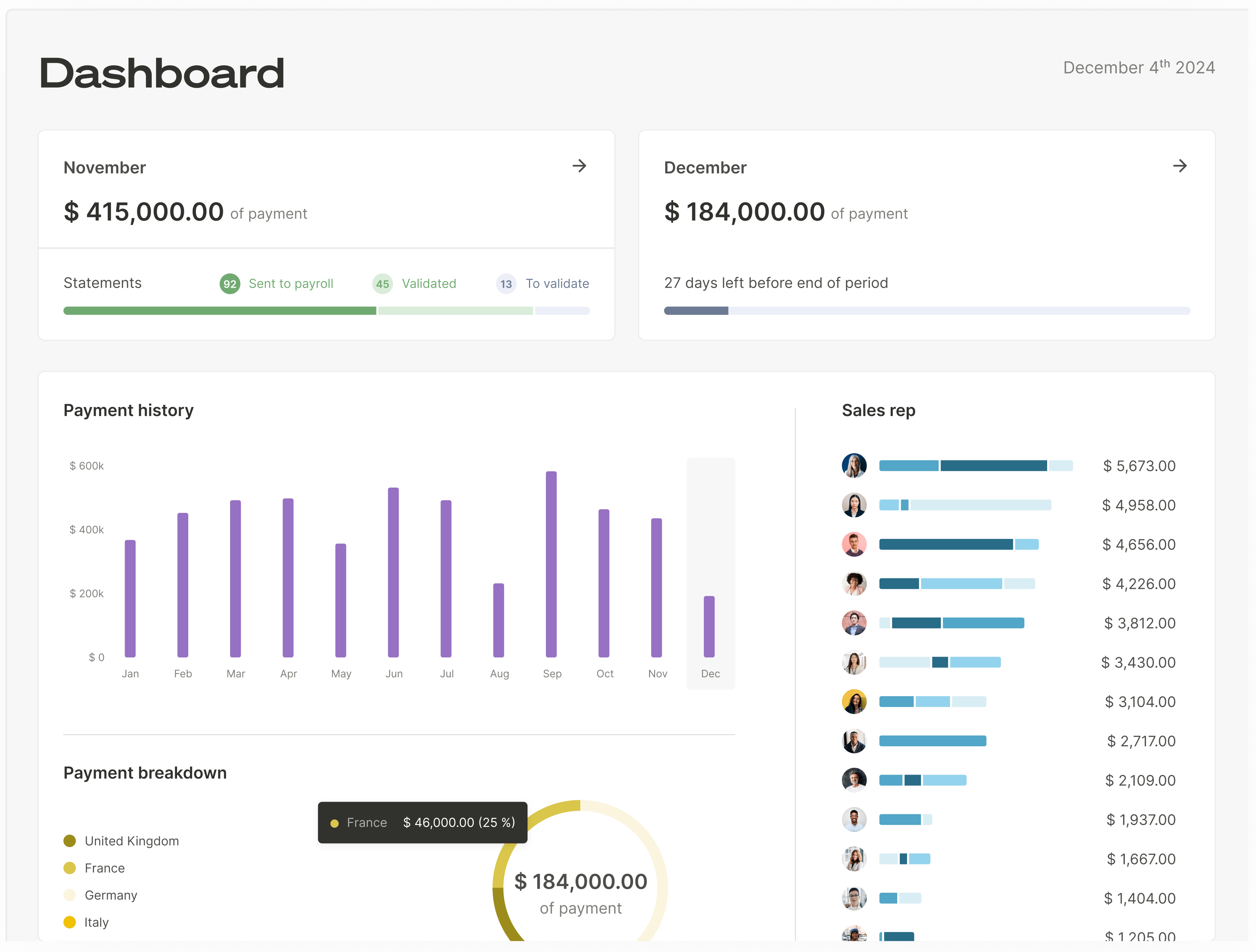
At Qobra, we designed our platform to automate the entire commission lifecycle. By connecting natively with your CRM (like Salesforce or HubSpot), we sync deal data in real time, so reps can see their potential earnings update the second a deal is closed. Our 100% no-code plan editor lets you build the most complex pay structures, bonuses and accelerators without writing a single line of code. Our AI goes further: natural-language plan and view generation, an "Explain my comp" assistant for reps, and reporting insights obtained from a single question.
This automation frees Sales Ops from hours of manual calculations, while giving reps instant visibility into their performance and earnings, directly aligning their efforts with company goals. For Finance, our platform provides complete control with multi-level approval workflows and a full audit trail for every calculation, ensuring every payment is accurate and compliant. It bridges the gap between sales performance and financial control, fostering a culture of transparency and motivation. By automating your B2B sales commission structure, you empower everyone to focus on what they do best.
Aligning the Entire Revenue Engine
Finally, top-performing organizations understand that sales doesn't operate in a vacuum. True growth comes from aligning sales, marketing, and customer success around a single goal: driving predictable revenue.
Revenue Operations (RevOps) Platforms
Revenue Operations (RevOps) is a strategic approach that aligns all revenue-generating departments. RevOps platforms are the tools that make this alignment possible. They centralize data, workflows, and performance insights from your CRM, marketing automation, and customer success tools into a single, unified view of the customer journey. This breaks down departmental silos and enables teams to identify bottlenecks, forecast accurately, and optimize processes across the entire revenue funnel. The future of RevOps lies in deeper integrations and predictive analytics, driven by trends in AI for RevOps, to make data-driven decisions that fuel sustainable growth.
Customer Success Platforms
Acquiring a new customer is just the beginning. Customer success platforms are vital for preserving and expanding revenue. These tools help you monitor customer health, identify at-risk accounts, and proactively manage relationships to prevent churn. By analyzing past behavior and product usage, they generate a "health score" that predicts customer satisfaction. This allows you to automate tasks, trigger interventions for dissatisfied customers, and identify upsell opportunities, turning your customer base into your biggest growth engine.
Building the right IT sales tool stack is an ongoing journey, not a one-time decision. The key is to start with a solid foundation like a CRM and then strategically add tools that address your team's biggest bottlenecks and align with your growth objectives. By choosing integrated, scalable, and user-friendly platforms, you can empower your team to not only meet their targets in 2026 but to redefine what's possible.
Frequently Asked Questions
What are the latest trends in sales tools for 2026?
The dominant trend is the deepening integration of Artificial Intelligence across all tool categories. This includes generative AI for content creation, predictive AI for forecasting and lead scoring, and conversational AI for analyzing customer interactions. Another key trend is platform consolidation, as companies move away from dozens of point solutions toward integrated platforms (like a CRM with built-in sales engagement and analytics) to reduce complexity and improve data consistency. Finally, there is a growing focus on buyer enablement tools that provide self-service and interactive experiences for prospects.
How can these IT sales tools improve our close rates?
These tools improve close rates in several ways. Automation frees up reps' time from administrative tasks, allowing them to focus more on high-value selling activities. Sales intelligence and personalization tools ensure that outreach is highly relevant, increasing engagement and response rates. Conversation intelligence provides insights for better coaching and objection handling, improving rep effectiveness on calls. Lastly, tools for compensation management provide real-time visibility into earnings, which directly motivates reps to push deals across the finish line.
What features should I look for in a sales tool?
When evaluating any sales tool, prioritize these four key features:
- Integration Capabilities: The tool must connect seamlessly with your existing tech stack, especially your CRM. A lack of integration creates data silos and manual work.
- Ease of Use: If a tool is not intuitive, your team won't adopt it. Look for a clean user interface and positive user reviews regarding usability.
- Analytics and Reporting: The tool should provide clear, actionable insights into performance. Customizable dashboards and detailed reports are essential for making data-driven decisions.
- Scalability: Choose a tool that can grow with your business. It should be able to handle more users, more data, and more complex processes as your needs evolve.