Sales Compensation Software Benchmark | Compare 15+ Sales Compensation Platforms
Download
Is your sales machine running at full capacity, or are you leaving revenue on the table? You might have top-tier talent and a solid product, but without the right processes, you're likely facing inefficiencies that add up fast. Imagine your best rep spending hours in traffic on a poorly planned route, or another struggling with an oversized territory while their peers coast. These are the silent revenue leaks that prevent teams from reaching their true potential.
What if you could transform that lost time into selling time? How can you ensure every sales rep has a fair and balanced shot at success? The answer lies in moving from guesswork to a data-driven strategy. By leveraging the right technology, you can refine every step of the sales cycle, turning complex data into a clear roadmap for growth and empowering your team with the tools they need to not just meet, but exceed their targets.
What is Sales Process Optimization?
Sales process optimization is the strategic refinement of every step involved in selling a product or service. It’s about methodically analyzing and improving the entire sales journey, from lead generation and qualification to needs assessment, proposal creation, negotiation, and closing the deal. The ultimate goal is to increase both efficiency and effectiveness, leading to more successful sales, shorter deal cycles, and increased revenue.
This discipline is particularly critical in B2B sales, where the cycle is often longer and more complex. B2B transactions typically involve multiple decision-makers and influencers, each with their own priorities and pain points. A sales rep must navigate this intricate web, demonstrating precisely how their solution addresses the specific needs of the business.
Optimizing this process involves a multi-faceted approach. It starts with identifying and targeting the most promising prospects with customized messaging. It requires a deep understanding of the customer's buying process to engage the right stakeholders at the right time. It also demands a compelling value proposition that clearly articulates the business value of your offering. Finally, it relies on continuous analysis and refinement, using data to understand what’s working and what isn’t, allowing your team to adapt and improve constantly.
How Sales Optimization Tools Drive Performance
The modern sales landscape is driven by data, not just intuition. Sales optimization platforms are the engines that turn raw information into actionable intelligence, empowering teams to work smarter and more strategically. They replace cumbersome spreadsheets and manual tracking with automated, insightful, and streamlined workflows.
From Manual Guesswork to Data-Driven Strategy
At its core, sales performance software helps you identify and target the right prospects with precision. Using data analytics, these tools can pinpoint businesses that are a perfect fit for your product or service, allowing you to create highly targeted marketing and outreach campaigns. This eliminates the "spray and pray" approach, ensuring your team's efforts are focused on leads with the highest conversion potential.
Once a prospect is engaged, these tools provide the intelligence needed to navigate the complex B2B buying process. They help reps identify key decision-makers, understand their unique needs and priorities, and tailor their messaging accordingly. This ability to articulate a compelling, personalized value proposition is often the difference between a stalled deal and a signed contract. By managing the entire process effectively—tracking leads, setting touchpoints, and guiding negotiations—these platforms ensure no opportunity falls through the cracks.
A sales funnel visualizes the customer's journey from awareness to purchase. Optimization tools work at every stage of this funnel:
- Top of Funnel (Awareness/Lead Gen): Automating lead capture and scoring to feed the pipeline with quality prospects.
- Middle of Funnel (Consideration/Nurturing): Personalizing communication and providing reps with the intelligence to address specific pain points.
- Bottom of Funnel (Decision/Closing): Streamlining proposals, managing negotiations, and providing analytics to shorten the sales cycle.
Streamlining the Entire Sales Funnel
Sales optimization isn't just about high-level strategy; it's also about improving the day-to-day operations that consume a sales team's time. By automating repetitive tasks like lead generation, data entry, and follow-up sequences, these platforms free up reps to focus on what they do best: building relationships and closing deals.
For field sales teams, this optimization extends to logistics. Sales mapping software, a key category of these tools, transforms chaotic travel into a strategic advantage. It visualizes customer locations, optimizes travel routes to account for traffic and appointment priority, and helps balance territories based on potential rather than just geography. The result is less time behind the windshield and more time in front of high-value customers. This newfound visibility and efficiency turn lost hours into real revenue opportunities.
Must-Have Features in Sales Optimization Software
Effective sales optimization software does more than just organize data; it provides strategic visibility and actionable insights. When evaluating platforms, look for a robust feature set that empowers your team to be more aligned, confident, and successful.
Here are some of the non-negotiable features to look for:
- CRM Integration: Seamless, two-way synchronization with your existing CRM (like Salesforce, HubSpot, or Zoho) is essential. This ensures that all customer data is accurate and up-to-date across platforms, creating a single source of truth.
- Lead Management & Automation: The software should help you capture, score, and nurture leads automatically. Look for workflow builders that can assign leads based on territory or other criteria, trigger follow-up sequences, and track activities without manual effort. You can specifically look at tools like Salesforce, HubSpot, and LeadAngel, so leads are routed and actions happen automatically as information changes, without the rigidity of linear workflows.
- Territory & Route Optimization: For field teams, interactive maps that plot customer locations, deal stages, and territory boundaries are crucial. Intelligent route planning that factors in traffic, appointment priority, and proximity can dramatically increase face-time with customers. A well-defined sales rep territory plan is foundational to success.
- Performance Analytics & Reporting: Real-time dashboards are a must for evaluating sales force performance. The ability to track territory effectiveness, key sales metrics, and individual rep productivity helps leaders identify what's working and where coaching is needed.
- AI-Powered Recommendations: Modern platforms leverage AI to provide intelligent suggestions. This can include cross-sell recommendations based on a customer's purchase history or predictive analytics to identify which leads are most likely to convert.
- Mobile Accessibility: Your field reps need access to maps, customer records, and scheduling tools on the go. A field-ready mobile app is critical for logging meeting notes, finding nearby prospects, and navigating their day efficiently.
- Commission & Incentive Management: Optimizing sales performance is fundamentally about motivation. The best strategies fail if reps aren't properly incentivized. Modern platforms must either include or seamlessly integrate with specialized tools that manage commissions. This ensures that compensation is calculated accurately, paid on time, and visible to reps in real time, directly linking their efforts to their earnings.
💡 Expert Advice
When adopting AI-powered tools, focus on the 'why' behind the recommendations. Ensure your team understands that AI is a guide to augment their skills, not a replacement for human intuition. The best results come from combining AI-driven insights with a rep's personal knowledge of the customer relationship and market dynamics.
Top Sales Optimization Tools for 2026 and Beyond
The market is filled with powerful tools, each with unique strengths. Finding the right fit depends on your team's size, industry, and specific needs. Look for platforms that offer seamless CRM integration, an intuitive design your team will actually use, and the flexibility to scale as you grow.
| Platform Name | Best For (Team Size/Industry) | Key Strength | CRM Integrations |
|---|---|---|---|
| monday.com CRM | Revenue teams of all sizes | No-code, AI-powered mapping + CRM | Extensive (native + Zapier) |
| Salesforce Maps | Large enterprises using Salesforce | Advanced analytics, enterprise security | Salesforce native |
| LeadAngel | B2B and SaaS sales teams | Rule-based, real-time lead routing and matching | Salesforce, HubSpot, MS Dynamics 365 |
| Badger Maps | Field sales reps, SMBs | Mobile-first route optimization | Salesforce, HubSpot, Zoho |
| Vendavo Sales Optimizer | B2B enterprises | AI-powered cross-sell recommendations | ERP, CPQ, and CRM systems |
| Nektar | B2B revenue teams | Automated data capture & pipeline intelligence | Salesforce |
| Zoho CRM | SMBs and mid-market | All-in-one business suite | Extensive (part of Zoho ecosystem) |
Beyond these general-purpose and specialized platforms, a critical area of optimization is sales compensation. This is where dedicated solutions come into play. While a CRM manages customer relationships and a mapping tool organizes territories, a sales commission platform optimizes the core driver of your sales team: their motivation. For instance, a platform like Qobra is designed specifically to automate commission calculations, provide real-time visibility to reps, and streamline approval workflows for finance and ops teams. Integrating such a tool is not just an operational upgrade; it's a strategic move to align individual performance with company goals.
The Role of AI in Revolutionizing Sales Optimization
Artificial intelligence is no longer a futuristic concept; it's a practical tool that is transforming sales operations. What used to be a tedious spreadsheet exercise is now a dynamic, predictive process. AI-powered mapping uses predictive analytics to reveal where your biggest opportunities are hiding, allowing you to deploy your top performers with surgical precision. This data-driven approach ensures that your sales forecasting becomes more accurate and reliable.
AI also automates complex logistical planning. It analyzes traffic patterns, appointment priorities, and customer locations to build the most efficient routes, giving your team back their most valuable asset: time. Fewer wasted miles and more meaningful conversations mean reps spend less time in traffic and more time in front of high-value prospects. Furthermore, AI can analyze vast amounts of historical sales data to recommend the right cross-sell or upsell products to the right customers at the right time, increasing average deal size with minimal effort.
This intelligence creates total team alignment and visibility. When everyone operates from a single, data-driven playbook, complex territories and sales cycles become a clear revenue roadmap. It’s how you equip your team with the confidence to not just manage their territory, but to truly own it, staying ahead of the latest B2B sales trends.
Best Practices for Implementing Sales Optimization Software
Simply purchasing a new tool is not enough. To unlock its full potential, you need a thoughtful implementation strategy that aligns technology with your people and processes.
Define Clear Goals and Analyze Your Current Process
Before you implement any new software, the first step is to define what success looks like. Set specific, measurable targets for revenue, number of sales, or other key metrics that matter to your business. This will serve as your benchmark for success.
Next, conduct a thorough analysis of your current sales process to identify bottlenecks and areas for improvement. This may involve reviewing sales data, interviewing your sales team, and gathering feedback from customers. Understanding your pain points will help you prioritize which features are most important and how the new tool can best address your challenges.
Ensure Seamless Integration and Drive Adoption
A sales optimization tool should simplify your tech stack, not complicate it. Prioritize platforms that offer deep, native integrations with your existing systems, especially your CRM. For instance, a commission tool is only as good as the data it receives. By integrating a platform like Qobra directly with your CRM, such as Salesforce or HubSpot, you ensure that every closed deal feeds a rep's commission statement: Qobra syncs CRM data automatically throughout the day, and on demand in one click. This feedback loop is a powerful motivator that connects action directly to reward.
Driving user adoption is equally critical. A powerful tool that no one uses is worthless. Involve your sales team in the selection process, provide comprehensive training, and clearly communicate the benefits—not just for the company, but for them individually. Highlight how the software will help them save time, manage their territory more effectively, and ultimately, earn more.
📌 To Note
Sales optimization isn't just about external processes like lead generation; it's also about internal motivation. A transparent and accurate compensation plan is one of the most powerful levers you can pull to drive desired sales behaviors and achieve revenue goals.
Motivate Your Team with Transparency and Fair Compensation
One of the most overlooked yet powerful areas of sales optimization is managing incentive compensation. For many companies, this process is stuck in the past, relying on complex and error-prone Excel spreadsheets. This manual approach is not only time-consuming for Sales Ops and Finance teams, but it also creates a black box for salespeople, leading to disputes, mistrust, and demotivation.
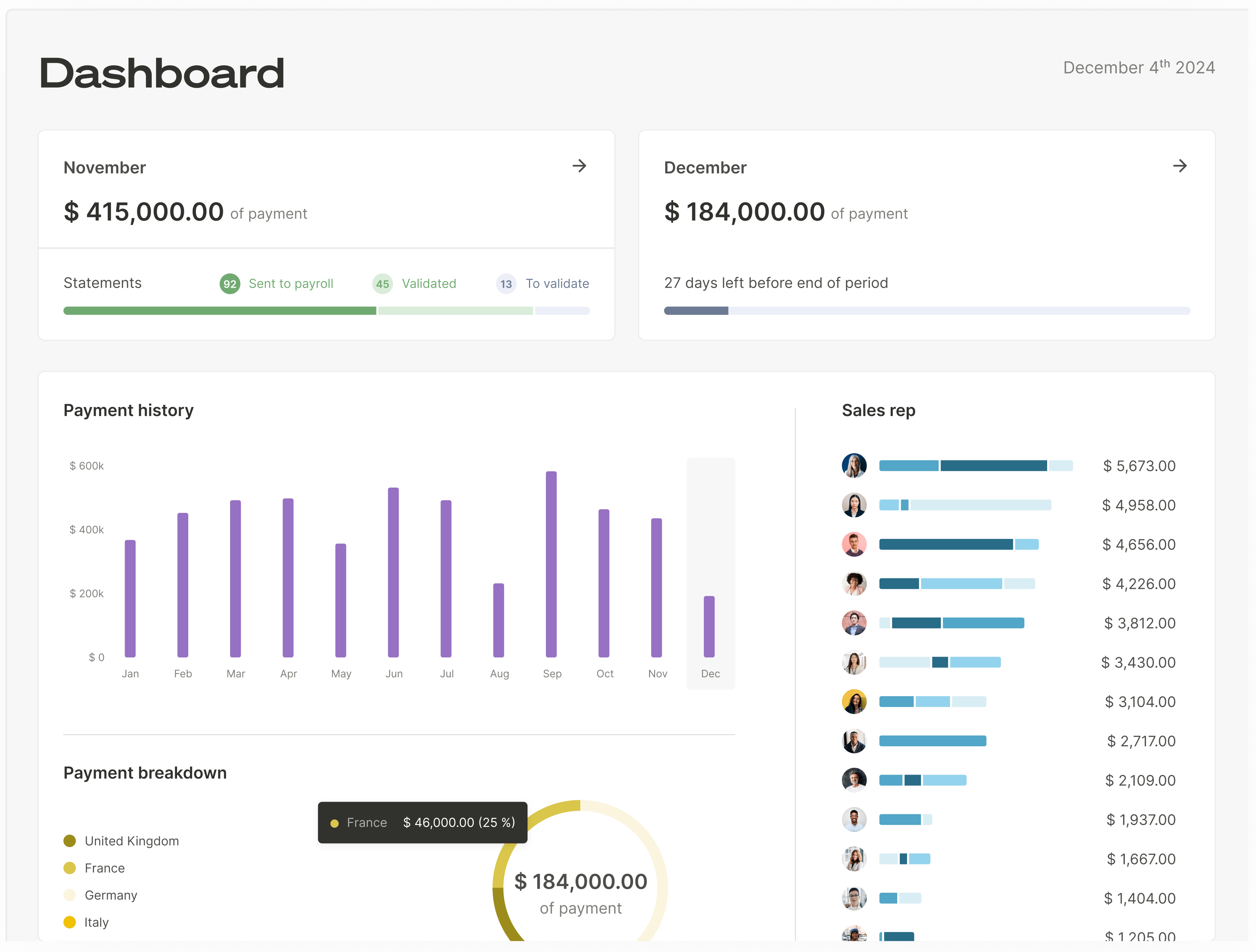
This is where a dedicated sales compensation platform becomes a game-changer. By automating the entire commission lifecycle, you eliminate manual errors and provide a single source of truth for everyone. With a no-code plan editor, you can build and adjust complex compensation models, spiffs, and bonuses without relying on IT. Real-time dashboards give sales reps instant visibility into their current and potential earnings after every closed deal. This transparency transforms compensation from a mysterious quarterly payout into a dynamic, real-time performance driver.
When reps can clearly see how their activities impact their paycheck, they become more engaged and motivated to pursue the right deals. For managers, it provides a clear view of team performance, while Finance gains robust audit trails and streamlined approval workflows, ensuring compliance and control. This focus on clear and fair types of incentive compensation fosters a culture of trust and high performance.
Sales optimization software is not a silver bullet, but rather a strategic GPS for your entire revenue organization. It provides the data, automation, and visibility needed to turn potential into performance. From intelligent routing and AI-driven recommendations to transparent, automated commissions, these tools empower every member of your team to work smarter, not just harder, and collectively drive sustainable growth.
What's the difference between sales optimization software and a CRM?
While the lines are increasingly blurring, there's a fundamental difference. A CRM (Customer Relationship Management) platform is primarily a system of record. It's the central database that stores all your customer information, interactions, and deal history. Its main function is to organize and manage customer relationships. In contrast, sales optimization software is a system of intelligence and action. It often sits on top of or integrates deeply with a CRM to analyze the data stored within it. Its purpose is to prescribe actions to improve sales efficiency and effectiveness by optimizing routes, recommending products, automating workflows, or calculating commissions. Essentially, a CRM tells you what is happening, while optimization software tells you how to make it happen better and faster.