Webinar: The Biggest Release Sales Comp Has Ever Seen. Come See For Yourself (Wednesday, October 7)
Register
Are you trying to design a sales commission plan that actually motivates your team, instead of creating confusion and disputes? How much time are you losing each month manually calculating payouts in complex spreadsheets, terrified of making a costly error? A well-structured commission proposal is more than just a document; it's the engine of your sales team, a clear roadmap that connects performance directly to reward, ensuring everyone is aligned and driving toward the same goals.
Getting it right means creating a framework that is both legally sound and strategically motivating. It should define every aspect of the compensation plan, from commission rates and payout schedules to performance expectations and legal safeguards. This document serves as the single source of truth for your sales representatives, eliminating ambiguity and fostering a culture of transparency and trust.
What is a Sales Commission Proposal?
A sales commission proposal, often formalized as a Sales Commission Agreement, is a foundational document that outlines the terms and conditions of a salesperson's compensation. It's a binding contract that details exactly how commissions, bonuses, and any other variable pay will be calculated, earned, and paid out. Its primary purpose is to create a clear, mutual understanding between the company and the salesperson, preventing misunderstandings and aligning individual efforts with broader business objectives.
This document goes beyond simply stating a commission rate. A comprehensive proposal includes critical details such as the base salary (if any), the structure of the variable component, performance metrics, sales quotas, and the rules of engagement. It also incorporates essential legal clauses covering aspects like non-competition, confidentiality, and termination procedures. By formalizing these elements, you provide your sales team with the transparency they need to understand their earning potential and focus on what they do best: selling.
More importantly, a well-crafted commission plan acts as a powerful strategic tool. It allows you to incentivize specific behaviors, such as pushing high-margin products, acquiring new logos, or expanding into new territories. It’s your opportunity to translate high-level company goals into tangible financial incentives for the people on the front lines.
Key Components of a Strong Commission Agreement
While templates provide an excellent starting point, a robust commission agreement must be tailored to your specific business needs. It should be comprehensive, clear, and legally sound. Structuring it with distinct sections ensures that no critical detail is overlooked and that both parties understand their rights and responsibilities.
Authorization and Scope
This initial section formally authorizes the representative to sell goods or services on behalf of your company. It should clarify the nature of this authorization, specifying whether the rights are exclusive or non-exclusive and transferable or non-transferable. It’s also the place to define any geographic or market-based restrictions.
Crucially, this clause should reinforce brand integrity. State clearly that the representative must sell under the company’s brand and adhere to official pricing policies. If discounts require approval, the process for obtaining that approval should be outlined here to prevent unauthorized price cuts that could erode margins.
Documentation and Tools
Consistency in sales operations is vital. This section should mandate the use of company-provided tools and documentation for all sales activities. Specify the required systems, such as your CRM, order forms, and any other tracking software. This ensures that sales data is recorded uniformly, which is essential for accurate commission calculations and performance analysis.
This is where the limitations of manual processes become apparent. While you can mandate the use of a CRM, ensuring data is updated in real-time for commission purposes is another challenge. This is why our platform integrates directly with leading CRMs like Salesforce and HubSpot. When a deal is closed, the data flows instantly into our system, automatically updating commission calculations and giving reps immediate visibility into their earnings. This eliminates the need for manual data entry and ensures everyone is working from the same, up-to-the-minute information.
Legal Clauses: Non-Compete & Non-Disclosure
Protecting your company's intellectual property and competitive edge is paramount. A commission agreement should include standard legal protections.
- Non-Disclosure Agreement (NDA): This clause obligates the representative to protect all confidential information they may access, including client lists, pricing strategies, and proprietary technology. It should remain in effect both during and after their employment.
- Non-Compete Clause: This provision prevents the representative from working for a direct competitor for a specified period after leaving your company. The scope (duration, geographic area, and definition of a competitor) must be reasonable to be legally enforceable.
🚨 Attention: Legal Review is Essential
Non-compete and non-disclosure laws vary significantly by state and country. Always have your commission agreement reviewed by a legal professional to ensure its clauses are reasonable and enforceable in your jurisdiction. An overly broad agreement may be struck down in court, leaving you unprotected.
Performance Expectations and Quotas
Clarity on performance standards is crucial for motivation and accountability. This section should define the minimum sales quota the representative is expected to meet to remain in good standing. Be specific about how the quota is measured (e.g., revenue, profit, number of units) and the period over which it is assessed (e.g., monthly, quarterly).
The agreement should also state the consequences of failing to meet the quota for a sustained period, which could include a performance improvement plan or potential termination. By setting these expectations in writing, you create a fair and transparent system for managing sales performance and making difficult decisions when necessary. A clear link between goals and outcomes is a cornerstone of an effective pay-for-performance model.
Choosing the Right Commission Structure for Your Team
The heart of your commission proposal is the compensation structure itself. There is no one-size-fits-all solution; the ideal structure depends on your industry, sales cycle length, business goals, and company culture. The goal is to choose a model that motivates the right behaviors while ensuring financial predictability for both the salesperson and the company. Below are seven common structures you can adapt for your sales commission plan.
1. Salary + Commission
This is the most common and balanced structure. Representatives receive a fixed base salary, providing income stability, plus a variable commission based on a percentage of the sales they generate.
- How it Works: Reps earn a predictable base pay plus a percentage of revenue, profit, or quota attainment. For example, a rep might have a $60,000 base salary and earn a 5% commission on all sales.
- Best For: Most sales roles, especially in B2B environments. It provides security to attract talent while incentivizing performance.
| Component | Description | Example |
|---|---|---|
| Base Salary | Fixed annual pay | $60,000 |
| Commission Rate | 5% of total revenue | 5% |
| Total Sales | $500,000 | $500,000 |
| Commission Earned | $500,000 * 5% | $25,000 |
| Total Earnings | $60,000 + $25,000 | $85,000 |
2. Tiered Commission
A tiered structure motivates high achievers by increasing the commission rate as sales volume grows. Reps are rewarded disproportionately for exceeding their targets.
- How it Works: The commission percentage increases once a salesperson reaches certain sales thresholds.
- Best For: Companies looking to aggressively drive growth and reward top performers. It’s highly effective at motivating reps to push past their quota.
| Sales Threshold | Commission Rate |
|---|---|
| $0 - $100,000 | 5% |
| $100,001 - $250,000 | 7% |
| $250,001+ | 10% |
3. Draw Against Commission
This model provides reps with an advance (a "draw") on future commissions. This draw is paid out regularly and is later deducted from the commissions they earn.
- How it Works: A rep receives a pre-determined monthly payment. If their earned commissions are less than the draw, they owe the company the difference. If they earn more, they receive the amount exceeding the draw.
- Best For: Roles with long or unpredictable sales cycles (e.g., large enterprise software, real estate) or for new hires who are still building their pipeline.
4. Residual Commission
Ideal for subscription-based business models, this structure pays the salesperson a commission for as long as the accounts they closed continue to generate revenue.
- How it Works: Reps earn an ongoing percentage of the recurring revenue from their clients (e.g., 2% of the monthly subscription fee).
- Best For: SaaS companies, insurance agencies, and any business focused on customer retention and long-term relationships.
Expert Advice
When implementing a residual commission plan, clearly define the duration of the payouts. Will the rep earn a commission indefinitely, or only for the first one or two years of the customer's life? Also, clarify what happens to residual commissions if the salesperson leaves the company. These details are crucial to prevent future disputes.
5. Profit-Based Commission
This structure aligns sales incentives directly with company profitability. Instead of paying a percentage of total revenue, commissions are based on the profit margin of each sale.
- How it Works: The commission is calculated on the gross profit of a deal (Revenue - Cost of Goods Sold).
- Best For: Businesses where salespeople have control over pricing and discounting. It incentivizes them to sell high-margin products and avoid unnecessary discounts. Adopting a commission structure based on gross profit ensures your sales team is focused on healthy growth, not just top-line numbers.
6. Territory Volume Commission
In this model, commissions are based on the total sales generated within a specific geographic area or market segment, often split among the team members responsible for that territory.
- How it Works: A commission pool is created from the total sales in a territory and then distributed among the reps based on a pre-determined formula.
- Best For: Collaborative sales environments where teamwork is essential for market penetration and regional growth. It requires a well-defined sales rep territory plan to be effective.
7. Variable Revenue-Based Commission
This flexible model allows commission rates to change based on strategic goals. For example, you might offer a higher commission rate for sales of a new product or for deals closed with a specific type of customer.
- How it Works: The commission rate is not fixed but varies depending on the product, service, or customer segment involved in the sale.
- Best For: Companies with diverse product lines or strategic goals, such as breaking into a new market or promoting high-value solutions.
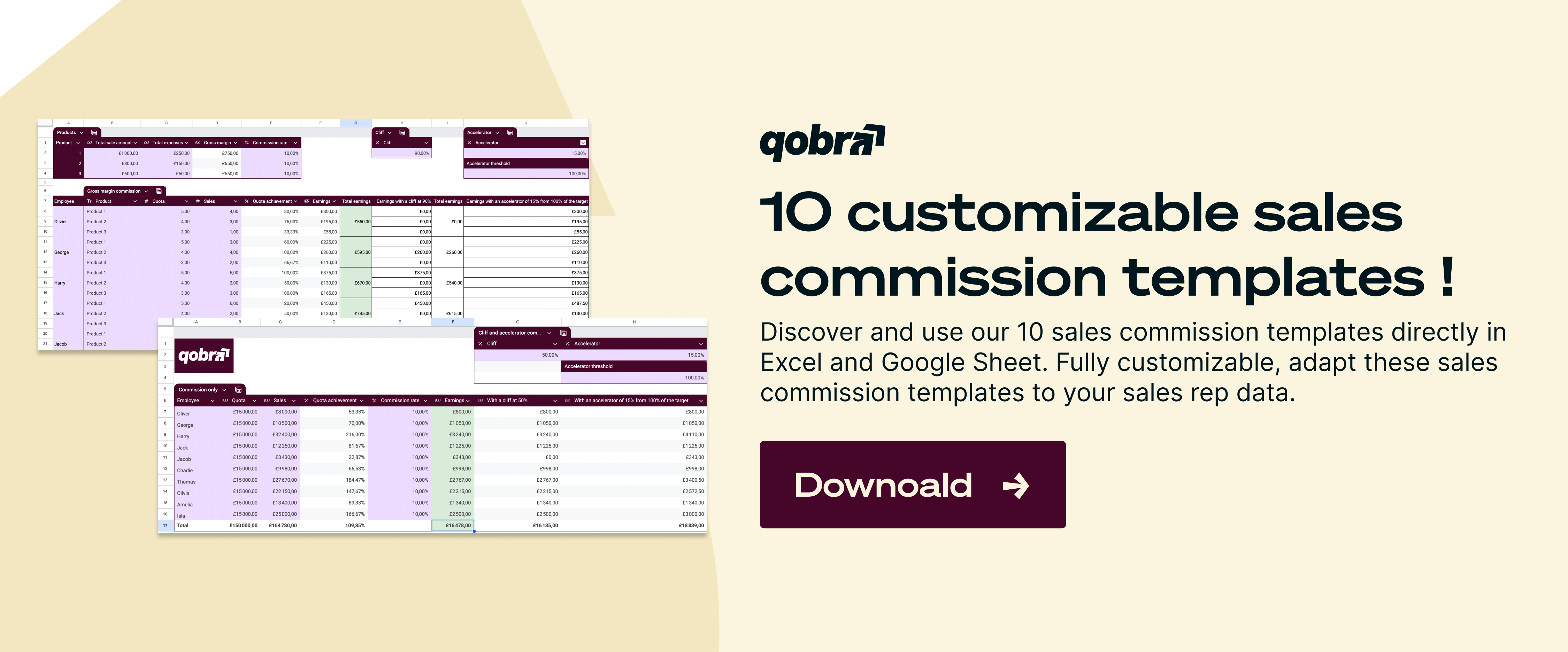
From Template to Reality: Implementing Your Plan
Once you’ve chosen a structure and drafted your agreement, the real challenge begins: implementation. For many growing companies, this means relying on spreadsheets. While templates for Excel or Google Sheets are a good starting point for small teams, they quickly become a bottleneck as your organization scales.
The manual approach is fraught with challenges. Data entry from your CRM is time-consuming and prone to human error. A single misplaced decimal or incorrect formula can lead to significant payroll mistakes, causing distrust and frustration among your sales team. Version control becomes a nightmare, and there’s no easy way to provide reps with real-time visibility into their potential earnings—a key motivational driver. Finance and Sales Ops teams spend days, not hours, at the end of each period validating data and resolving disputes instead of focusing on strategic initiatives.
This is precisely the problem we built Qobra to solve. We believe that compensation should be a growth driver, not an administrative burden. Our platform automates the entire commission process, from calculation to payout.
- Seamless CRM Integration: We connect natively with your CRM, so when a deal is updated, commission calculations are refreshed instantly. No more manual data transfers.
- Powerful No-Code Plan Builder: Design any compensation plan imaginable—from simple percentages to complex tiered structures with multiple accelerators and SPIFFs. Our intuitive editor handles all the calculations, giving you the flexibility to build plans that truly align with your goals, including various types of incentive compensation.
- Real-Time Transparency for Reps: Give your salespeople a live dashboard where they can track their performance against quota, see how much they’ve earned on each deal, and forecast their total compensation. This visibility empowers them, minimizes disputes, and keeps them motivated every day.
- Reliability and Control for Finance & Ops: With automated calculations, detailed audit trails, and streamlined approval workflows, you can trust your numbers. Finance can easily review and approve payouts, ensuring compliance and accuracy while drastically reducing the time it takes to close the books. This transforms your compensation planning from a reactive task to a proactive, strategic function.
📌 A Note on Communication
Whether you're rolling out a new commission plan or implementing a new tool like Qobra, clear communication is critical. Hold a kickoff meeting to walk the team through the changes, explain the rationale behind them, and provide ample time for questions. Ensure everyone has access to the documentation and understands how to use the new system to track their earnings.
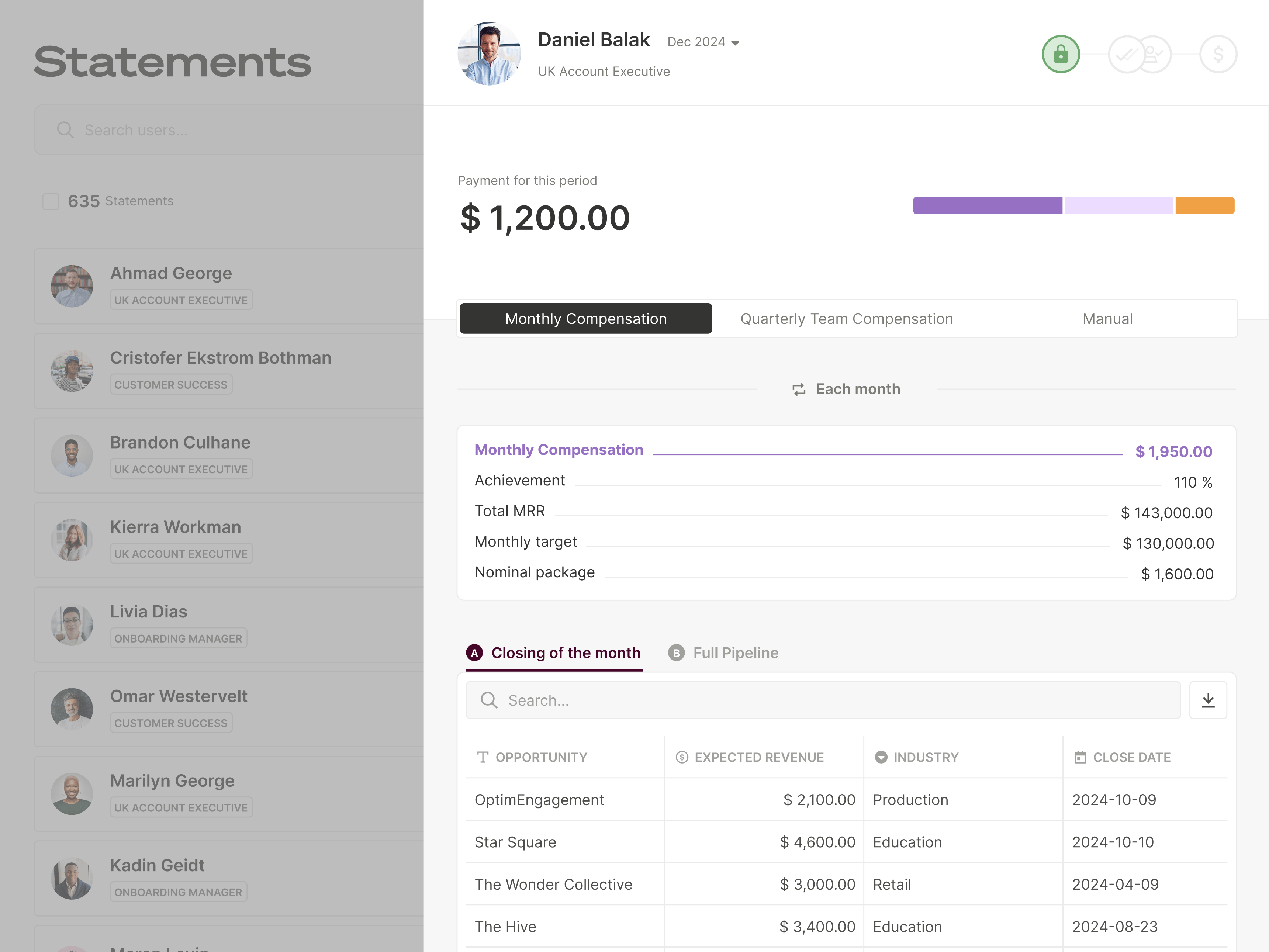
A successful rollout isn't just about providing a document or a tool; it's about fostering understanding and buy-in across the entire team.
While a solid template is the first step toward a clear and effective commission plan, it’s the execution that determines its success. By moving beyond static spreadsheets to an automated, transparent system, you not only save time and eliminate errors but also transform compensation into a strategic asset that fuels growth and keeps your top talent engaged and motivated.
How do you create a legally sound commission agreement?
A legally sound agreement starts with clarity and fairness. Define all terms explicitly, including how commissions are calculated, when they are earned (e.g., at booking, invoicing, or payment), and the exact payout schedule. Critically, include clauses that address termination, outlining how pending and residual commissions will be handled if a salesperson leaves the company. Most importantly, have the final document reviewed by a legal professional to ensure it complies with local and national labor laws.
What is a typical commission structure?
The most common structure is a base salary plus commission. This provides salespeople with a stable income while incentivizing them to close deals. The commission rate itself varies widely by industry but often falls between 5% and 10% of revenue. However, what's "typical" is less important than what's effective for your business. The best structure aligns with your company's goals, whether that's driving profitability, market share, or customer retention. Reviewing your performance regularly with a sales management report can help you fine-tune your structure.
Is a 20% commission rate normal?
A 20% commission is higher than average but can be normal in certain industries. It's most common in sectors with very high profit margins, such as high-end software, luxury goods, or some professional services where the cost of goods sold is low. It can also be found in commission-only roles, where the higher rate compensates for the lack of a guaranteed base salary.
How can I move beyond spreadsheets for commission tracking?
Moving beyond spreadsheets involves adopting a dedicated Sales Performance Management (SPM) or Incentive Compensation Management (ICM) solution. Platforms like Qobra are designed specifically for this purpose. The process typically involves:
- Connecting your data sources: Integrate your CRM (like Salesforce), ERP, and other data systems to automate data flow.
- Building your plans: Use a no-code plan builder to replicate and enhance your existing commission structures.
- Automating calculations: Let the software handle all the complex calculations in real-time.
- Providing visibility: Give your sales, ops, and finance teams access to dashboards to track performance, earnings, and approvals.
This transition eliminates manual errors, saves dozens of hours per month, and turns your commission plan into a transparent, motivational tool.