Sales Compensation Software Benchmark | Compare 15+ Sales Compensation Platforms
Download
Are your sales processes feeling chaotic as you scale? Do you find yourself buried in spreadsheets, struggling with inaccurate forecasts, and wondering why your expensive tech stack isn't delivering the growth you expected? For a startup, moving from initial traction to sustainable growth is a critical—and often bumpy—journey. The ad-hoc systems that worked for your first handful of customers can quickly become bottlenecks, slowing down productivity and obscuring the path forward. So, how do you build a revenue engine that's efficient, scalable, and built for the long haul? The secret lies in establishing a strong sales operations function from day one.
What is Sales Operations, and Why Should Your Startup Care?
Think of your sales team as racecar drivers, focused on speed and winning the next deal. In this analogy, sales operations (Sales Ops) is the expert pit crew. They're the strategic function working behind the scenes to fine-tune the engine, optimize the tools, analyze performance data, and ensure the driver has everything they need to perform at their peak. Sales operations is the set of activities and processes that helps a sales organization run effectively, efficiently, and in alignment with your startup's core business objectives.
In the past, Sales Ops was often seen as a purely tactical, administrative role. Today, it has evolved into a strategic powerhouse. A modern Sales Ops function is no longer just about reporting data; it’s about generating actionable insights that drive key business decisions. For a growing startup, a well-executed operations strategy is not just a nice-to-have—it's a critical force multiplier. The benefits are tangible and directly impact your bottom line:
- Accelerated Growth: By streamlining processes and equipping reps with the right tools, Sales Ops can increase sales productivity by 10-20%.
- Improved Forecasting: With clean, centralized data and standardized reporting, your revenue projections become far more accurate, enabling better resource planning and strategic pivots. See our guide on effective sales forecasting for more.
- Enhanced Efficiency: A dedicated operations function identifies and eliminates friction in the sales cycle, allowing your reps to spend more time selling and less time on administrative tasks.
- Resource Optimization: In a startup, every dollar and every minute counts. Sales Ops ensures your limited resources are allocated to the activities that will drive the most impact.
The Warning Signs: When Do You Need a Dedicated Sales Ops Function?
Many founders wait until they hit a growth plateau to invest in operations. By then, they’re often forced to untangle a web of inefficient processes and disconnected systems, a costly and time-consuming endeavor. Recognizing the early warning signs can make all the difference. If any of the following sound familiar, it’s time to seriously consider building your Sales Ops function:
- Your data lives in disconnected silos. Marketing, sales, and finance each have their own dashboards, and there's no single source of truth. You can't get a clear, holistic view of the customer journey.
- Your sales forecasts are consistently wrong. You regularly miss your revenue projections by a significant margin, or worse, you don’t have a reliable forecasting process at all.
- Processes crumble under pressure. The handoff from sales to customer success is bumpy, information gets lost, and new customer onboarding is a chaotic, manual effort.
- Your tech stack has become a tangled mess. You’ve accumulated numerous tools that don’t talk to each other, and no one is sure which ones are actually being used or providing a positive ROI.
- Inconsistency is creating bottlenecks. Different sales reps follow different processes for quoting, logging activities, and managing their pipeline, leading to unpredictable outcomes and a lack of visibility for leadership.
Building Your Sales Operations from the Ground Up: The 4 Pillars of Success
Creating an effective Sales Ops function isn't about hiring one person and hoping for the best. It's about building a robust system across four interconnected pillars: People, Processes, Technology, and Data.
Pillar 1: People & Structure - Your First Critical Hire
For an early-stage startup, your first Sales Ops hire is one of the most important investments you'll make. This person is your secret weapon for scale. You need someone who is an equal mix of strategic and tactical—a leader who can see the big picture but is also willing to roll up their sleeves and do the manual work required to build the foundation.
Look for a forward-thinking individual who isn't just solving today's problems but is laying the groundwork for a company that will look very different in 12 or 24 months. Because Sales Ops touches every part of the go-to-market engine, this person must be a master relationship builder, capable of working with leaders from product, marketing, finance, and sales. They are the central hub that connects all revenue-generating functions.
Pillar 2: Processes - Creating Repeatable Systems that Scale
Processes are the repeatable systems that allow your startup to scale without descending into chaos. The goal is to create a clear, documented playbook that guides your entire GTM team. If your processes only exist in people's heads, they'll walk out the door when those people leave. Key processes to define and document from the start include:
- Ideal Customer Profile (ICP): A crystal-clear definition of who you are selling to.
- Customer Engagement Journey (CEJ): Mapping out every touchpoint a prospect has with your company, from initial awareness to closing the deal and beyond.
- Lead & Opportunity Lifecycle Stages: Standardized definitions for each stage in your funnel (e.g., MQL, SQL, SAL, Closed-Won) to ensure consistent tracking.
- Rules of Engagement: Clear guidelines on lead ownership, territory management, and handling channel conflicts to prevent internal friction.
- Sales Methodology: A standardized approach to how your team approaches deals, from discovery to closing.
- Commission & Compensation Structure: A well-defined process for calculating and paying sales commissions. This is an area where manual work on spreadsheets can lead to costly errors, disputes, and demotivated reps. Automating this with a dedicated platform ensures accuracy and transparency.
💡 What is a Sales Process?
A sales process is a structured set of repeatable steps that a sales team follows to move a prospect from an early-stage lead to a closed customer. It provides a roadmap for sales reps, ensuring a consistent and optimized approach to every opportunity. A well-defined sales process is the backbone of any successful sales organization, enabling better forecasting, training, and performance management.
Pillar 3: Technology - Your Growth-Enabling Tech Stack
Your technology stack should enable growth, not create busywork. The philosophy here should be quality over quantity. A few well-integrated tools will always outperform a dozen disconnected platforms. Your stack should be built around a central hub, which is almost always your CRM.
- CRM (Customer Relationship Management): This is your single source of truth for all customer interactions. Whether it’s HubSpot, Salesforce, or another platform, it must be configured to support your defined sales process.
- Sales Automation & Engagement: Tools that help your reps automate repetitive tasks and engage with prospects at scale.
- Analytics & Reporting: Dashboards that provide a complete picture of the customer journey and sales performance.
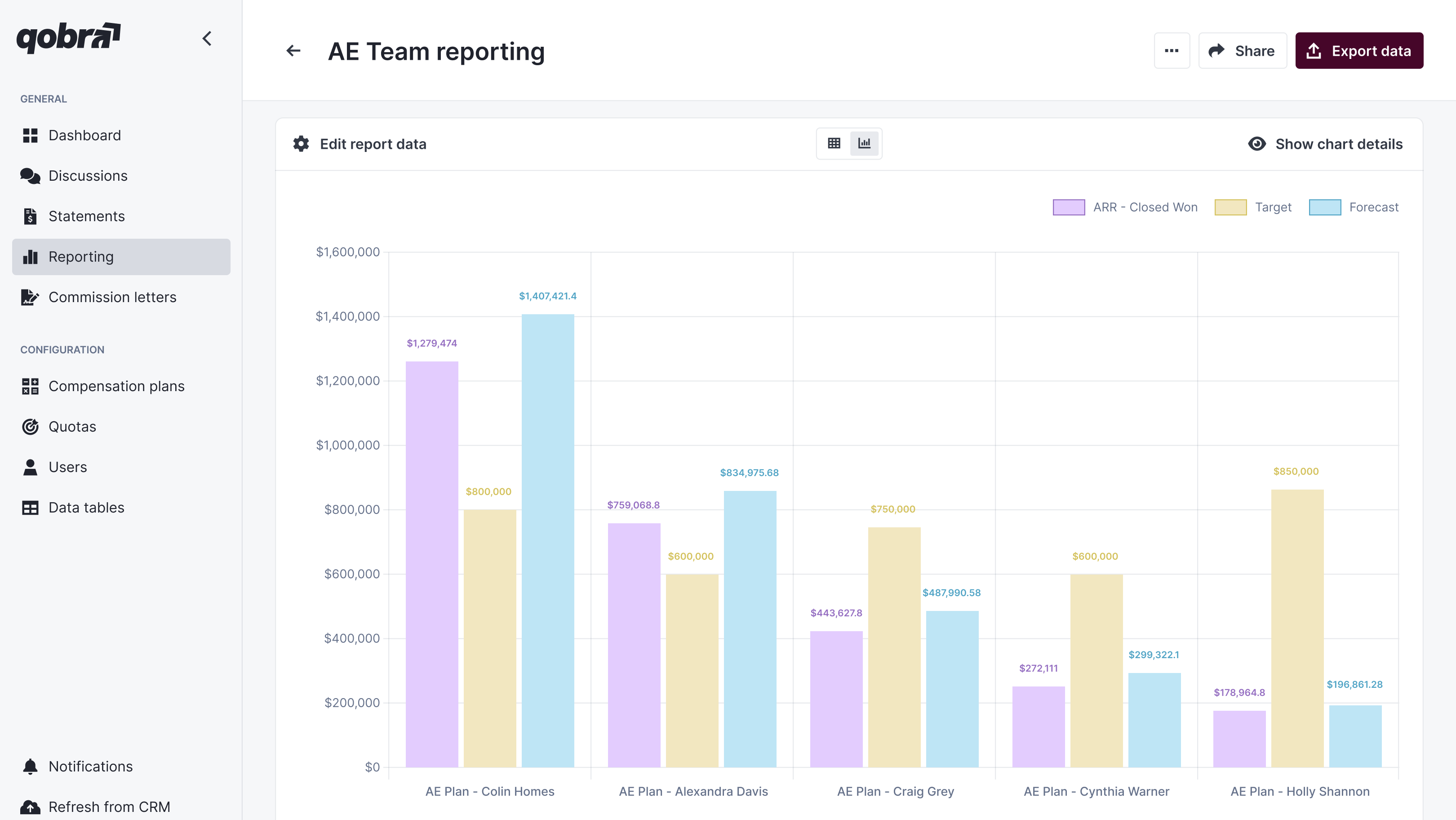
- Commission Management Software: As you grow, managing commissions on spreadsheets becomes untenable. It's slow, error-prone, and lacks transparency. This is where a dedicated platform like Qobra becomes a game-changer. By integrating directly with your CRM, it automates commission calculations. Sales reps gain instant visibility into their earnings after closing a deal, which is a powerful motivator. For Sales Ops and Finance, it eliminates hours of manual work, ensures payment accuracy, and provides a full audit trail for compliance. The no-code plan editor allows you to build and adapt complex B2B sales commission structures without relying on developers.
💡 Expert Advice
Don't try to boil the ocean. When building your initial processes and tech stack, focus on the fundamentals. Start by documenting your current 'as-is' process, even if it's messy. Then, identify the one or two biggest points of friction and solve for those first. It's far better to implement a simple, well-adopted process than a complex one that no one follows.
Pillar 4: Data & Analytics - From Reporting to Strategic Insights
The final pillar, Data & Analytics, is the intelligence engine that fuels smart decisions. A modern Sales Ops function must transition from being a data reporting organization to a data insights organization. It's no longer enough to report that the team hit its MQL target. The real value comes from answering the "why."
- Where did that success come from? Which channels or campaigns are delivering the highest ROI?
- Are there regional differences? Should we invest more in certain territories?
- Which investments are paying off, and which aren't?
This begins with establishing unified definitions for key metrics. Everyone in the company must agree on what constitutes a "qualified lead" or an "active opportunity." From there, you can build shared dashboards that everyone trusts as the single source of truth. Focus on forward-looking metrics that predict future outcomes, not just backward-looking reports. Furthermore, a tool like Qobra enhances your data capabilities by providing granular insights into your compensation plans. You can analyze KPIs at the deal level, such as margin and cost of sale, and use the sandbox feature to simulate the financial impact of new compensation plans before you roll them out. This transforms compensation from a simple expense into a strategic lever for growth.
A Phased Approach to Implementation
Implementing Sales Ops isn't an overnight project. It’s a journey that requires a structured approach to deliver quick wins while building toward long-term success.
- Phase 1: Assessment & Strategy (Days 1–60): The first two months are about discovery. Audit your existing systems, processes, and data. Interview stakeholders across sales, marketing, and finance to understand their pain points and priorities. Based on this, define your key success metrics, create a Sales Ops charter and roadmap, and get executive buy-in.
- Phase 2: Foundation Building (Days 60-180): This is where the building begins. Start by cleaning and consolidating your customer data in your CRM. Document and standardize your core processes, like your lead lifecycle and opportunity stages. Configure your CRM to support unified revenue reporting and begin training the team on the new, standardized way of working.
- Phase 3: Optimization & Scaling (Days 180–360+): Once the foundation is in place, you can focus on optimization. Launch automated workflows for repetitive tasks, implement advanced reporting and forecasting, and measure process adherence. This is a continuous cycle of measuring, refining, and iterating to drive efficiency and predictability as your startup grows.
Avoiding Common Pitfalls: Signs of a Weak Foundation
Even with the best intentions, it's easy to make mistakes when building from scratch. Watch out for these red flags that indicate your foundation may be shaky:
🚨 Attention: Your Sales Reps Are Your Customers
A common mistake is designing a sales process with only finance or leadership in mind. If your process is cumbersome and creates more work for your sales reps, they will find workarounds. The primary customer of the sales process is the salesperson. It must be designed to make their lives easier and help them sell more effectively. If it doesn't, adoption rates will plummet, and your data will become unreliable.
- Low adoption of tools and processes. If your reps are still using spreadsheets to track their pipeline or sending quotes in PowerPoint instead of using your CPQ tool, it’s a massive red flag. It means the system you’ve built is creating more friction than it removes.
- You can’t trust your data. If you spend more time trying to validate and make sense of the data coming out of your systems than using it to make decisions, your foundation is broken. Remember the old adage: garbage in, garbage out. A lack of trust in data is a clear indicator that your processes are not being followed.
- Constant friction between departments. If sales and marketing are constantly debating lead quality or the sales and finance teams are always at odds over commission payments, it signals a breakdown in your operational processes and SLAs (Service Level Agreements). For instance, automating payments can significantly reduce these tensions by introducing transparency and reliability, especially when managing complex types of incentive compensation.
Building a Sales Ops function is a strategic imperative for any startup serious about achieving rapid and sustainable growth. It transforms your sales organization from a group of individual contributors into a fine-tuned, data-driven revenue machine. By focusing on the four pillars—people, process, technology, and data—and taking a phased, iterative approach, you can create a powerful operational foundation that will not only support your company's growth today but will also scale to meet the challenges of tomorrow. This strategic investment is the key to unlocking your startup's full potential and building a best-in-class sales organization.
FAQ: What's the difference between Sales Ops and RevOps?
Sales Operations (Sales Ops) traditionally focuses on optimizing the processes and performance of the sales team specifically. Its scope is the sales funnel, from lead to close. Revenue Operations (RevOps), on the other hand, is a more holistic approach that aligns the operations of all revenue-generating departments: marketing, sales, and customer success. RevOps aims to manage the entire customer lifecycle and break down silos between teams to create a single, unified revenue engine. In a startup, the first Sales Ops hire often performs many RevOps functions, and the line between the two can be blurry. The key principle for both is using data and process to drive efficient, predictable growth. For deeper insights, explore our resources on RevOps software.