Sales Compensation Software Benchmark | Compare 15+ Sales Compensation Platforms
Download
What if you could dramatically shorten your sales cycle without burning out your team? How would your revenue chart look if every salesperson had the right information and the perfect motivation at their fingertips, exactly when they needed it? This isn't a far-off fantasy; it's the reality that high-performing sales organizations are building today with a strategic approach to sales acceleration. These powerful systems are designed to remove friction, enhance efficiency, and empower your team to focus on what they do best: building relationships and closing deals.
The question is no longer if you should use sales accelerators, but which ones you should implement and how you can weave them into the fabric of your sales process to unlock sustainable growth.
What Exactly Are Sales Accelerators?
At its core, a sales accelerator is a comprehensive toolkit of strategies and technologies designed to speed up and optimize the entire sales process. It's not a single piece of software but rather an ecosystem of solutions working in harmony to make your sales team more efficient and effective. Think of it as the result of multiple forces working together to achieve a larger goal. From generating high-quality leads to engaging prospects and closing deals faster, these tools are built to eliminate manual bottlenecks and provide actionable insights.
The ultimate goal is to accelerate the entire sales cycle. This involves leveraging technology to automate repetitive tasks, equipping reps with critical customer data, and streamlining workflows. By doing so, businesses can move prospects through the pipeline more quickly, respond to opportunities faster than the competition, and ultimately, drive more sustainable revenue growth. These tools empower your sales reps by giving them access to the right information at the right time, allowing them to focus more on high-value activities like strategic selling and less on administrative busywork.
The Core Benefits of Integrating Sales Acceleration Tools
Implementing a suite of sales acceleration tools isn't just about doing things faster; it's about doing them smarter. Organizations that successfully integrate these technologies into their workflows report significant improvements across the board. The alignment of sales and marketing teams, often facilitated by these tools, has been shown to result in 38% higher sales win rates. The benefits extend far beyond a single metric, creating a ripple effect that strengthens the entire revenue engine.
Here are some of the primary advantages your business can expect:
- Increased Efficiency and Productivity: By automating manual and time-consuming tasks like data entry, email follow-ups, and lead sorting, sales reps can reclaim valuable time. This allows them to focus their energy on revenue-generating activities such as building relationships with prospects and mastering proven sales closing techniques.
- Shorter Sales Cycles: With optimized lead generation, better prospect information, and streamlined communication, the time it takes to convert a lead into a customer is significantly reduced. This agility allows businesses to capitalize on opportunities more quickly and maintain a competitive edge.
- Enhanced Lead Quality and Engagement: Sales accelerators help refine lead generation processes by targeting the ideal customer profile with greater precision. This results in higher-quality leads that are more likely to convert. Furthermore, enablement tools provide reps with the right content to engage prospects in more meaningful, personalized conversations.
- Data-Driven Decision Making: These tools leverage analytics to provide deep insights into sales performance, customer behavior, and market trends. This data-driven approach allows managers to make informed strategic decisions, refine their sales process, and continuously optimize for better results.
- Stronger Competitive Edge: A faster, more efficient, and more intelligent sales process naturally gives you an advantage over competitors who are still relying on outdated, manual methods. You can identify and act on opportunities before they even appear on your rivals' radar.
A Breakdown of Key Sales Accelerator Categories
Sales accelerators come in many forms, each designed to address a specific stage of the sales funnel or a particular challenge within the sales process. Understanding these categories is the first step toward building a tech stack that truly supports your team's needs. The most effective strategies combine tools from several categories to create a seamless, end-to-end solution.
Tools for Prospecting and Lead Generation
The foundation of any successful sales motion is a consistent flow of qualified leads. Prospecting is often one of the most time-consuming parts of a sales rep's job, but modern tools can automate much of this legwork. Lead generation tools automatically find and supply sales leads that match a company’s ideal customer profile (ICP), allowing salespeople to spend their time selling rather than searching. By handling the heavy lifting of identifying potential customers, these platforms ensure that reps are always engaging with prospects who have a high probability of converting.
A popular example is LinkedIn Sales Navigator, which helps salespeople identify the right people at target companies by providing deep insights into their professional backgrounds, job roles, and activity on the platform. This allows for highly targeted and relevant outreach, dramatically increasing the chances of starting a meaningful conversation.
Tools for Intelligence and Engagement
Once a lead is identified, the next challenge is to engage them effectively. This requires a deep understanding of their needs and the ability to communicate your value proposition in a personalized way. Sales intelligence tools provide reps with critical information about their prospects, including the company's tech stack, recent news, and key decision-makers. This insight allows them to tailor their pitches and product demos, making every interaction more relevant and impactful.
This category also includes tools for scaling communication without sacrificing personalization.
- Email Templates & Autoresponders: These save countless hours by allowing reps to create and automate customized email sequences for nurturing new and existing customers.
- Inside Sales Call Recording Software: These systems record customer calls, allowing reps and managers to review them later to identify coaching opportunities and refine their pitch. Many platforms also use AI to transcribe and analyze conversations, flagging keywords and measuring sentiment.
Tools for Pipeline and Process Management
Visibility and organization are crucial for managing a healthy sales pipeline. Pipeline management tools track deals from the initial contact to the final close, giving the entire team a clear view of where every opportunity stands. This transparency helps reps stay organized and allows managers to spot potential roadblocks before they derail a deal. These tools often work in tandem with CRM (Customer Relationship Management) systems, which serve as the central repository for all customer data.
Effective CRM management tools automate the process of updating contact records and logging interactions, ensuring the data is always accurate and up-to-date. This clean data is the lifeblood of an effective sales organization, fueling everything from marketing campaigns to sales forecasts.
💡 Expert Advice
Maintaining pristine CRM data hygiene is non-negotiable. An accelerator tool is only as good as the data it runs on. Encourage your team to consistently update records and use CRM management tools to automate logging. This discipline ensures your intelligence tools provide accurate insights and your outreach is always relevant.
Tools for Motivation and Performance
Perhaps the most powerful accelerator isn't a piece of software, but the motivation of the salesperson. Financial incentives like bonuses and commission accelerators are designed to encourage reps to exceed their targets. However, managing these complex compensation plans can be a major administrative burden, often leading to errors, disputes, and delayed payments—all of which can demotivate the team.
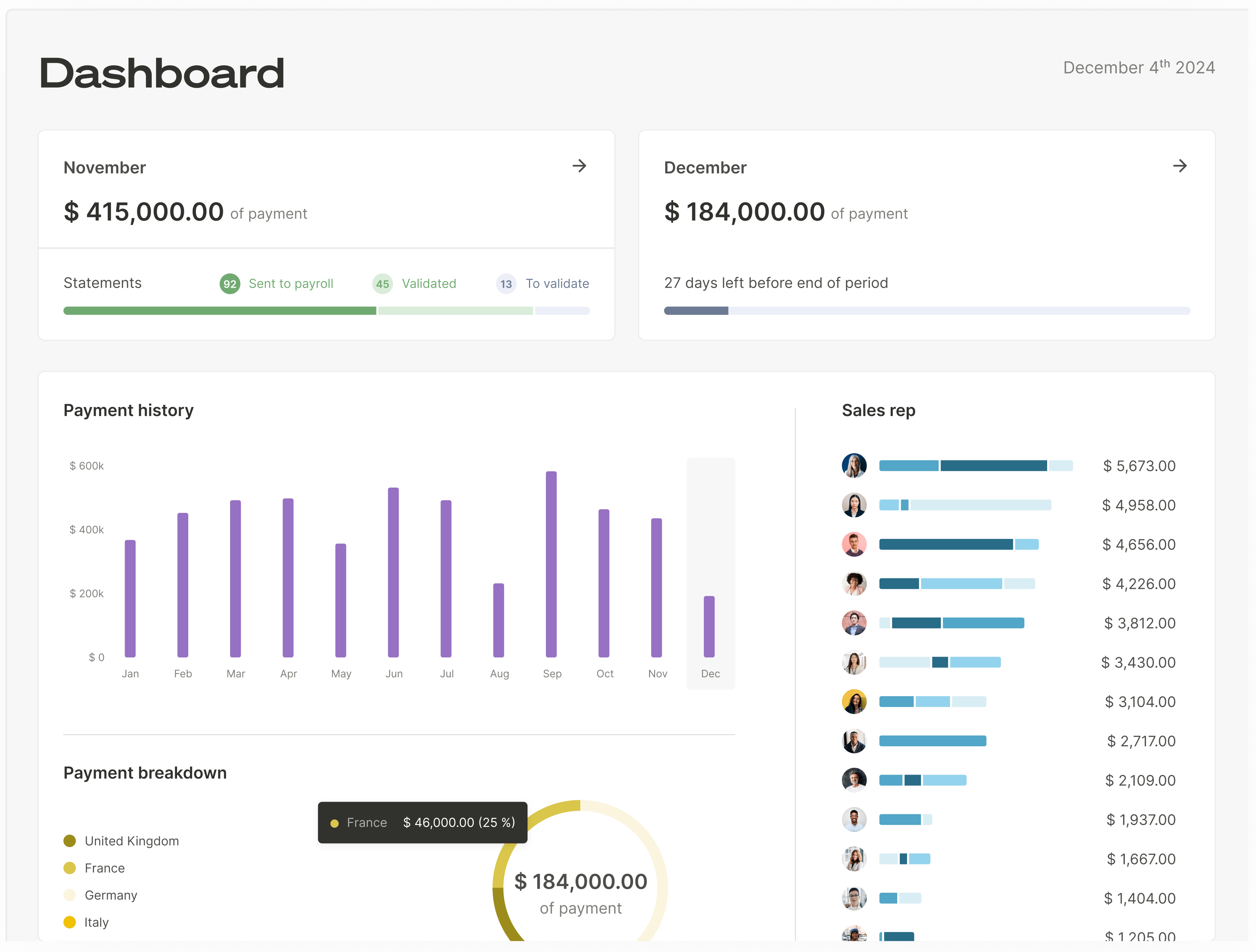
This is where modern Sales Compensation Management platforms act as a critical sales accelerator. Tools like Qobra automate the entire commission process, from calculation to payment. By integrating directly with your CRM, Qobra provides sales reps with a real-time, transparent view of their earnings as deals are closed. This instant visibility acts as a powerful motivator, directly connecting their actions to their rewards. For Sales Ops and Finance teams, it eliminates countless hours spent in spreadsheets, ensures accuracy, and provides a clear audit trail for compliance. Automating the B2B sales commission process transforms compensation from a complex administrative task into a strategic lever for driving performance.

How to Implement a Sales Acceleration Strategy Effectively
Deploying a set of tools is only half the battle. To truly accelerate sales, you need a cohesive strategy that integrates these tools into your daily workflows and aligns them with your broader business objectives. A haphazard approach can lead to wasted investment, low adoption rates, and frustrated teams. The key is to be deliberate, starting with a clear understanding of your current process and a vision for where you want to go.
This process often begins with benchmarking your current performance. Understand how your organization stacks up against competitors and, more importantly, against your customers' perception of "best-in-class." Conducting customer interviews can reveal critical insights into your strengths and weaknesses, providing a roadmap for improvement. Once you have a baseline, you can begin to strategically introduce tools and processes that address your most significant challenges and opportunities.
Choosing the Right Tools for Your Team
With countless IT sales tools available, selecting the right ones can feel overwhelming. There is no one-size-fits-all solution; the best tech stack for your business depends on your specific goals, team size, industry, and existing infrastructure. Before investing, assess your needs carefully. Are you struggling with lead generation? Is your sales cycle too long? Are commission disputes hurting morale? Identify your primary pain points to guide your selection process.
Integration capabilities are paramount. Your new tools must work seamlessly with your existing systems, especially your CRM. A sales accelerator that doesn't integrate with your central data source will create more silos and manual work, defeating its purpose. Look for platforms that offer native integrations with your key systems (e.g., Salesforce, HubSpot) and can connect with your data warehouse and HRIS. For instance, a compensation platform that pulls real-time deal data from your CRM and pushes finalized payment data to your payroll system creates a frictionless, automated workflow.
📌 To Note
When introducing new technology, consider starting with a pilot program. Select a small, tech-savvy group of reps to test the new tool and provide feedback. This allows you to work out any kinks, build a base of internal champions, and develop a best-practice guide before rolling it out to the entire organization, ensuring a smoother transition and higher adoption rates.
Fostering Adoption and Providing Training
The most sophisticated tool is useless if your team doesn't know how—or want—to use it. Change management is a critical component of any successful implementation. Sales reps need to understand the "why" behind the new tool: how it will make their job easier, help them hit their targets, and ultimately, earn more.
Comprehensive training is essential. This shouldn't be a one-time event but an ongoing process. Sales coaching, itself a form of sales acceleration, can help reps integrate new tools into their selling habits. Show them how to use the tool's features to solve real-world problems they face every day. For example, demonstrate how a sales intelligence tool can uncover the perfect conversation starter for a cold call or how a commission dashboard can help them track their progress toward a sales incentive. When reps see the direct benefit to their own success, adoption will follow naturally.
The Role of Technology and Data in Modern Sales Acceleration
Technology is the engine of modern sales acceleration, with data as its fuel. The evolution of selling has moved from relationship-based approaches to insight-driven strategies, all powered by sophisticated digital tools. Automation software streamlines repetitive tasks, freeing up reps for strategic thinking. CRM systems provide a 360-degree view of the customer. And sales enablement platforms ensure every rep is equipped with the most effective content for any sales scenario.
However, the most transformative element is data analytics. Sales accelerator systems with built-in analytics provide real-time insights into every aspect of sales performance. This allows leaders to identify winning behaviors, measure the effectiveness of different strategies, and make proactive adjustments. Leveraging historical and real-time data also enables more effective sales forecasting, helping the entire business plan with greater confidence and allocate resources more efficiently. The ability to instantly access, analyze, and act on data is what separates leading sales organizations from the rest.
Potential Pitfalls and How to Avoid Them
While the benefits of sales accelerators are immense, they are not without their challenges. A poorly planned implementation can lead to significant costs with little return. It's crucial to be aware of the potential downsides and to approach implementation with a clear strategy to mitigate them.
- Significant Investment: Many top-tier sales acceleration tools require a substantial financial commitment. This can be a hurdle for businesses on a tight budget. It's essential to calculate the potential ROI carefully and start with tools that address your most pressing needs.
- Time Commitment: Successfully implementing new tools requires time—time for research, for implementation, for training, and for adoption. Leaders must be prepared to invest this time and ensure reps are given the space to learn.
- Difficulty Interpreting Data: Some teams struggle to use the vast amount of information provided by these tools. Without proper training or a data-literate culture, valuable insights can be ignored or misinterpreted.
- False Positives/Negatives: Automation is powerful, but it's not foolproof. A poorly configured accelerator can misqualify leads, leading reps to waste time on poor-fit prospects or ignore promising ones.
📌 Attention
Be wary of "black box" algorithms. When selecting tools, especially those that use AI for lead scoring or recommendations, demand transparency. Ensure you understand the logic behind the tool's outputs. Blindly trusting an automated system without proper validation can lead your sales team in the wrong direction and result in costly mistakes.
Sales accelerators are more than just a collection of software; they represent a strategic shift in how businesses approach revenue growth. By integrating the right tools for lead generation, intelligence, process management, and motivation, you can create a high-performance sales engine. These technologies empower your team by removing friction, providing critical insights, and allowing them to focus on building meaningful customer relationships. When implemented thoughtfully, sales accelerator tools provide the velocity needed to not only meet but exceed your sales goals, turning your company's vision for growth into a tangible reality.
FAQ: Do I need a dedicated sales acceleration team?
Not necessarily, especially for smaller organizations. However, it is crucial to have at least one person—often a sales manager or someone in a sales operations for startups role—who owns the strategy and is an expert on the tools being used. This individual can champion the technology, train other reps, and ensure the tools are being used to their full potential. For larger or more complex sales organizations, creating an internal sales acceleration team to manage the technology and training can be a highly cost-effective investment, ensuring you get the maximum ROI from your tech stack.